This article contains affiliate links: if you buy through them we may earn a commission, at no extra cost to you. Learn more.
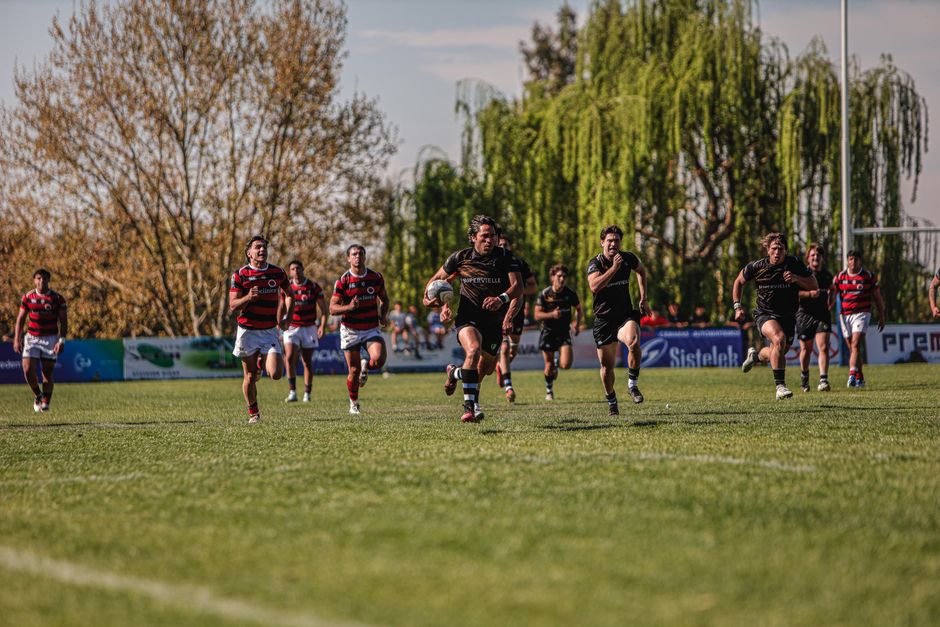
The final whistle goes on a Saturday morning rugby match, and the first question in the car park isn’t the score: it’s “how far did you run?” A few years ago only pro clubs could answer that. Now a GPS tracker for team sports, a small pod that sits in a snug vest between your shoulder blades, gives soccer, football, rugby, lacrosse and field hockey players the same kind of numbers: distance, top speed, sprints, accelerations and a heat map of where you spent the game. Below are five real options sold in 2026, what each one measures, what it costs over time, and how to choose.
Prices change often. The prices below are what we saw at the maker or a major retailer in October 2026; check the current price before you buy.
Our top picks
STATSports Academy (APEX)
- About $320, one payment
- 24 metrics, vest included
- Soccer, football, rugby and more
Catapult One
- About $180 a year, kit included
- 10 Hz GPS pod + vest
- Lacrosse, football, rugby, hockey
Playermaker 2.0
- About $199 incl. 12 months
- Two sensors on your cleats
- 25+ technical and physical metrics
Garmin HRM 600
- Chest strap, records on its own
- Up to 2 months per charge
- 5 ATM, washable strap
Garmin Forerunner 70
- About $250
- Up to 13 days smartwatch
- Up to 23 h GPS
Team-sport trackers compared
| Tracker | Type | Worn | Subscription | About (Oct 2026) |
|---|---|---|---|---|
| STATSports Academy | GPS pod | Vest, upper back | None | $320 one time |
| Catapult One | 10 Hz GPS pod | Vest, upper back | Yearly membership | $180 a year with kit |
| Playermaker 2.0 | Foot sensors | Straps on both cleats | 12 months included, then $149/yr | $199 |
| Garmin HRM 600 | Heart-rate strap | Chest | None | $160–$170 |
| Garmin Forerunner 70 | GPS watch | Wrist | None required | $250 |
The best GPS trackers for team sports
1. STATSports Academy (APEX): best overall, no subscription
STATSports builds GPS systems for professional teams, and the Academy pack is its version for individual players: a GPS tracker, a performance vest and an app with 24 metrics, including total distance, sprint distance, max speed, high-speed running, accelerations, decelerations, work rate and a strain figure. The maker lists soccer, American football, rugby, baseball, GAA and hockey among the sports it supports. It’s a one-time payment of about $320 at STATSports with no monthly fee. The Pro pack (about $340 on sale) adds a heart-rate belt, grip socks and a tracker case, so you also get heart-rate zones. The app adds 200+ drills and pro masterclasses. Women’s-cut vests are sold too.
- Good: no subscription ever; pro-style physical metrics; drills built into the app.
- Watch out: highest upfront cost; it measures running, not ball skills.
- Best for: serious youth, high-school and adult players who want years of data for one price.
Check the STATSports Academy price on Amazon
2. Catapult One: most sports covered
Catapult’s gear is a familiar sight on pro football and rugby sidelines, and Catapult One brings a 10 Hz GPS pod (10 data points a second) to individual players. The annual membership, about $179.99 billed upfront, includes the starter kit: pod, four-way-stretch vest (youth to XL), charge clip and carry case, plus 12 months of the app. It tracks sprint distance, total distance, top speed, “power plays”, load and intensity, with a positional heat map. Catapult lists the widest set of sports here: soccer, rugby union and league, Gaelic football, hurling, field hockey, tennis, lacrosse, American football, Australian rules and cricket. The pod is IPX6, so rain is fine but it isn’t waterproof, and the maker says it stores over 800 matches.
- Good: lowest first-year cost; 10 Hz GPS; covers lacrosse, football and hockey players.
- Watch out: no free tier: the pod needs an active membership to show your data.
- Best for: multi-sport families and players outside soccer.
3. Playermaker 2.0: best for soccer technique
Playermaker isn’t a GPS vest at all: two small sensors (0.28 oz each) strap onto your cleats and sample movement 1,000 times a second. That lets it count things a back-mounted pod can’t: ball touches, kicking power, possessions, first touch, turns and how much you use your weaker foot, alongside distance, top speed, sprints and work rate. The kit is about $199 with 12 months of the app; it then renews at $149 a year unless you cancel. Playermaker says it works indoors and outdoors, on cleats or turf shoes, for players from age 8. It’s built for soccer, so football, rugby and lacrosse players should look at the vests above.
- Good: technical metrics nothing else here measures; works indoors and in futsal halls.
- Watch out: soccer only; yearly renewal after the first 12 months.
- Best for: young soccer players working on touch and their weak foot.
Check the Playermaker 2.0 price on Amazon
4. Garmin HRM 600: best heart-rate add-on
GPS tells you how far and how fast; heart rate tells you how hard it was for you. The HRM 600 is Garmin’s premium chest strap, and the useful trick for team sports is that it can record a session on its own (heart rate, calories, and more) and sync it to Garmin Connect later, so you can leave the watch in your bag while you play. It sends heart rate and HRV over Bluetooth and ANT+, so it also pairs with many apps and gym machines. Garmin quotes up to two months per charge, a 5 ATM water rating, and the strap goes in the wash. It’s about $160–$170 at major retailers.
- Good: chest-strap accuracy; records without a watch; rechargeable.
- Watch out: no GPS of its own; check your league allows a strap under the jersey.
- Best for: pairing with a GPS vest, or tracking effort in basketball, hockey or futsal indoors.
Check the Garmin HRM 600 price on Amazon
5. Garmin Forerunner 70: best watch for off-field training
Most leagues won’t let you wear a watch in a match, but your preseason running, conditioning and off-season work is where a GPS watch earns its keep. The Forerunner 70, launched in May 2026, is Garmin’s least expensive running watch at about $250: a 1.2-inch AMOLED touchscreen, built-in GPS, wrist heart rate, Training Readiness, HRV status, sleep tracking and free Garmin Coach plans. Garmin lists up to 13 days in smartwatch mode, and the Amazon listing says up to 23 hours of GPS. If you want something bigger, see our best Garmin for runners guide.
- Good: full recovery stack at the lowest Garmin price; no subscription needed.
- Watch out: usually not allowed in official matches; single-frequency GPS.
- Best for: preseason fitness, sprint sessions and tracking sleep between games.
Check the Garmin Forerunner 70 price on Amazon
How to choose a GPS tracker for your sport
- Check your sport is supported. Catapult lists lacrosse, American football, rugby and hockey; STATSports lists soccer, American football, rugby, GAA and hockey; Playermaker is soccer only.
- Count the cost over three seasons. STATSports is one payment; Catapult is about $180 every year; Playermaker renews at $149 a year after the first.
- Check the rules first. Soccer’s Laws of the Game ban jewelry, and US high-school soccer (NFHS) allows tracking devices only if they’re secured, safe and worn under the uniform or on the shoes, not on the arm. Ask your league or referee before game day.
- Get the vest size right. The pod should sit tight between the shoulder blades; a loose vest bounces and skews speed data. Catapult and STATSports both sell youth sizes.
- Use the numbers for recovery too. A week with far more sprint distance than usual is a good reason for an easier day, more sleep and some recovery work.
Playing soccer? Our soccer hub has a full soccer wearables guide. For sleep and recovery between games, compare Whoop vs Oura vs Garmin, or browse all GPS watches and trackers.
Team-sport GPS tracker questions
What GPS trackers do pro teams use?
Catapult and STATSports both supply professional clubs in soccer, football and rugby. Their consumer products (Catapult One and STATSports Academy) use the same idea, a GPS pod in a vest on the upper back, packaged for one player and a phone app.
Do GPS vests work for American football and lacrosse?
Yes, if the app supports the sport. Catapult One lists both lacrosse and American football, and STATSports lists American football. The vest goes under the shoulder pads or jersey; check with your coach and league that it’s allowed in games.
Do I need a subscription?
It depends on the brand. STATSports Academy is a one-time purchase with no subscription. Catapult One needs an active yearly membership (about $180, kit included). Playermaker includes 12 months, then renews at $149 a year.
Is a GPS watch as good as a vest?
For running and conditioning, a GPS watch is great. In matches it’s usually not allowed, and a vest pod is built for the short sprints, cuts and decelerations of team sports. Many players use both: a vest on game day, a watch for training and sleep.
What age is a team-sport tracker for?
Playermaker says from age 8, and Catapult and STATSports sell youth vest sizes. For kids, keep the focus on fun and effort, and treat the numbers as a talking point, not a target.