This article contains affiliate links: if you buy through them we may earn a commission, at no extra cost to you. Learn more.
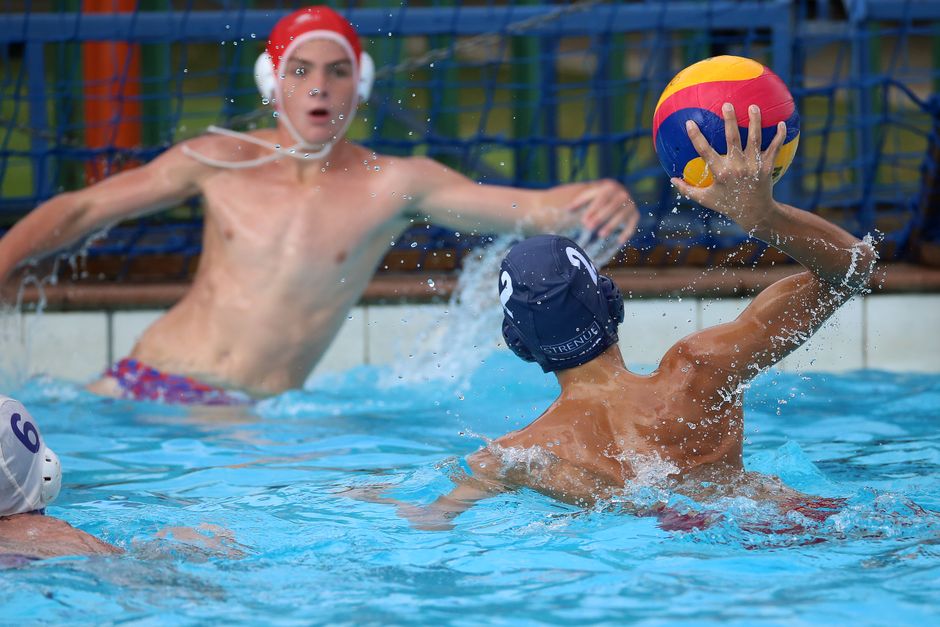
Twelve-year-olds treading water before the whistle at a summer tournament, parents packed onto the pool deck with umbrellas and coolers. A Saturday-night high school rivalry in Southern California, the bleachers chanting while a center fights for position two meters from the goal. A college final decided by a buzzer-beater. The Olympic pool, where a goalkeeper rises out of the water to her waist to stop a shot. Water polo is swimming, wrestling and throwing all at once, played in water too deep to stand in, and it is the oldest team sport on the Olympic program: men’s water polo debuted at the 1900 Games.
Water Polo, page by page
- Rules: how the game works at every level
- Leagues & associations: pro, college, high school and youth
- Youth & high school: ages, safety and recruiting, for players and parents
- Injuries & sports health: prevention, concussion, when to see a pro
- Training & conditioning: before: off-season to in-season
- Game day: during: fueling, hydration, heat
- Recovery: after: games, tournaments, sleep
- Nutrition & supplements: what to eat, tested supplements
- Best wearables: trackers and watches for the sport
- Gear: the complete equipment list
Buying guide · Our Water Polo buying guide compares the gear we'd pick, with prices and sizing:
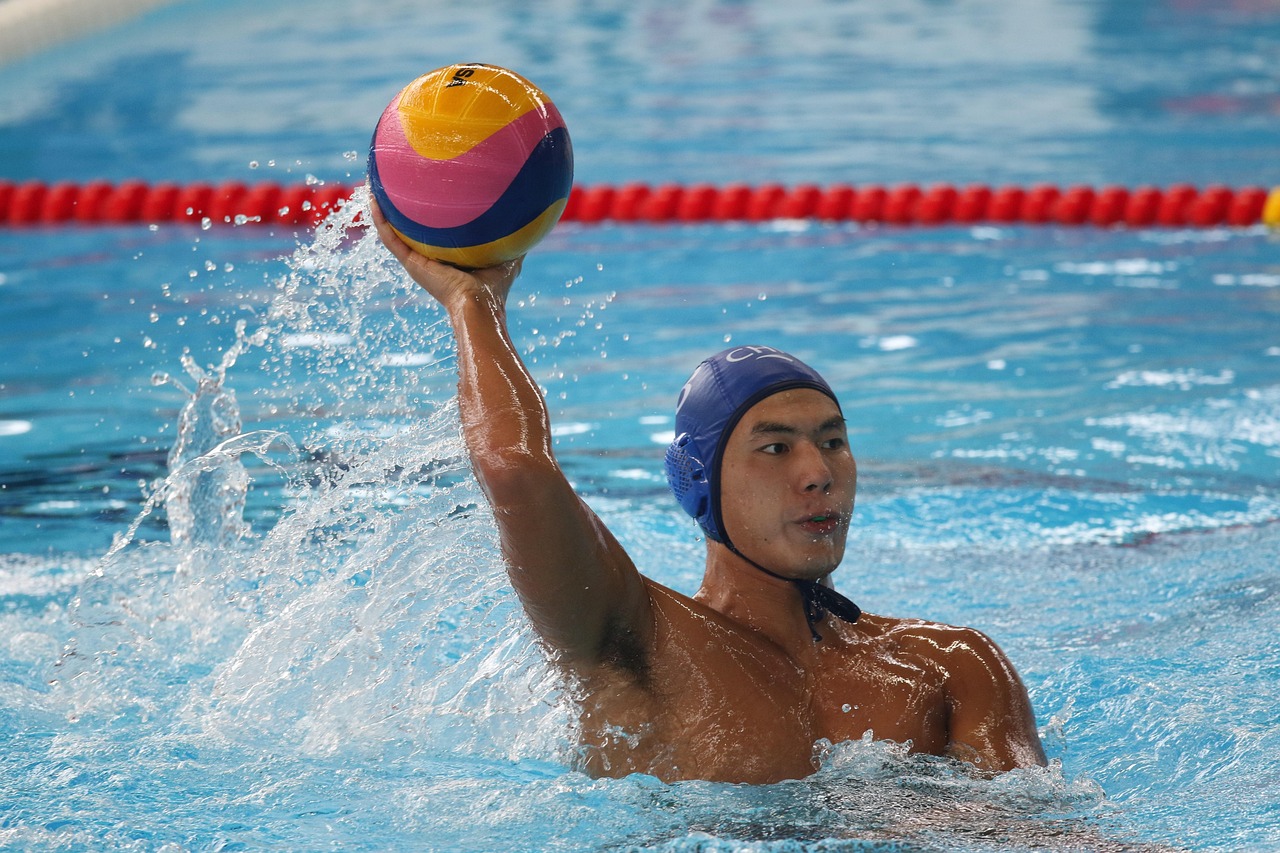
This page is water polo for players, parents and coaches: how the game works, every level from Splashball to the Olympics and, above all, how to stay healthy: shoulder, head, hand and ear injuries, concussion, water safety and when to see a professional. Then training, recovery and gear. For stroke work and swim training, see our swimming guide.
Water polo at a glance
| Players per side | 7 in the water, one of them the goalkeeper (red cap). International teams list up to 14 players: 12 field players and 2 goalkeepers. 10U plays 5v5 and 12U plays 6v6 under USA Water Polo’s youth rules. |
|---|---|
| Game length | Four periods of 8 minutes of actual play (the clock stops on every whistle) under World Aquatics and NCAA rules. High school varsity usually plays four 7-minute periods. |
| Shot clock | 28 seconds under World Aquatics rules (with resets to 18 seconds); 30 seconds in NCAA and high school play. |
| Field of play | 25 meters between the goal lines in World Aquatics games, about 20 meters wide; water at least 1.8 meters deep (2 meters at the Olympics and World Championships). Goal: 3 meters wide, 0.9 meters high from the water. |
| Governing bodies | World Aquatics worldwide; USA Water Polo in the US; NFHS for high school; NCAA for college. |
| Main physical demands | Constant treading (the “eggbeater” kick), sprint swimming, overhead throwing, and wrestling for position with an opponent. |
| Most common injuries | Shoulder injuries, head and face injuries including concussions, finger and hand injuries, cuts to the face and mouth. |
How water polo works
Two teams of seven try to throw the ball into the other team’s goal; the team with more goals wins. Field players may touch the ball with only one hand at a time and may not stand on or push off the bottom of the pool. Only the goalkeeper, inside the 6-meter area, may use both hands or punch the ball. Each period starts with a “swim-off”: both teams line up on their goal lines and sprint for the ball in the middle.
Most whistles are ordinary fouls, such as holding or pushing a player who has the ball out of the way, and the fouled team gets a quick free throw. Holding, sinking or pulling back a player who does not have the ball is an exclusion foul: the offender swims to the re-entry area and the attack plays six against five for 18 seconds under World Aquatics rules (20 seconds in college and high school) or until a goal or a change of possession. A foul that stops a probable goal inside 6 meters gives a penalty throw from the 5-meter line. Three personal fouls (exclusions or penalties) and a player is out for the rest of the game. Our water polo rules page has the details, the positions and the differences by level.
Water polo at every level
Kids and youth
Many kids start with Splashball, USA Water Polo’s learn-to-play program for ages 5 to 12, built to teach basic skills in a fun, recreational setting. From there, club teams play by age group (10U, 12U, 14U, 16U and 18U). The younger groups play a smaller game: 10U plays 5v5 on a course of about 15–18 meters with four 5-minute quarters and a size 2 ball, and 12U plays 6v6 on about 20 × 15 meters with four 6-minute quarters and a size 3 ball. The summer highlight is the USA Water Polo Junior Olympics, which USA Water Polo calls the world’s largest water polo tournament. Our youth water polo guide covers the swim skills kids need first and answers parents’ questions.
High school
High school water polo is played under NFHS rules, and it is concentrated in a few states. In the NFHS participation survey for 2024-25, 21,756 boys at 1,053 schools and 18,023 girls at 1,067 schools played. California alone counted 14,641 boys and 11,968 girls, about two-thirds of the national total, followed by Texas, Illinois and Florida. In California, boys usually play in the fall and girls in the winter.
College
The NCAA crowns one National Collegiate champion each for men (in December) and women (in the spring), plus Division III championships. California schools dominate: UCLA beat USC 11–10 with a goal at the buzzer to win the 2025 men’s title, and USC beat California 10–9 for the 2026 women’s title, a result USC counts as its eighth national championship. The Collegiate Water Polo Association (CWPA) runs both varsity and club competition across much of the country, so you don’t have to be from California to play in college. See water polo leagues and associations.
National teams and the Olympics
Women’s water polo joined the Olympics at Sydney 2000. The US women won three straight Olympic golds, in 2012, 2016 and 2020. At Paris 2024, Serbia beat Croatia for the men’s gold and the US men won bronze in a shootout against Hungary; Spain won the women’s gold over Australia. At LA28, the water polo tournaments will be played at the Long Beach Aquatics Center, and for the first time the women’s event will have 12 teams, the same as the men’s.
Adults and Masters
College club teams, adult clubs and Masters water polo, with its own USA Water Polo national championships, keep adults playing for decades. Coming back after years away? Rebuild your swim fitness and shoulders before full-contact scrimmages.
Sports health for water polo players
Water polo is a contact sport played while swimming, and the injuries reflect that. A 2021 systematic review of 41 studies found that the head, fingers and shoulders are the most common injury sites: sudden injuries to the hands and head mostly come from contact with the ball or an opponent, and training injuries mostly hit the shoulder. This section is general information, not medical advice. If you’re hurt, see a professional, and see our water polo injuries page for more.
The most common water polo injuries
- Shoulder: in five years of Pac-12 injury data on NCAA men and women, the shoulder was the most injured body part (20.6% of injuries), with shoulder tendinopathy the most common shoulder diagnosis. Most cost little time away from the pool.
- Head and face: 18.8% of injuries in the same college data. In US emergency rooms, more than half of water polo injuries in 13- to 25-year-olds were to the head and neck, most often cuts, sprains and strains, bruises and fractures.
- Concussion: the most common single diagnosis in the college data (11.4% of injuries), and most happened outside games, in practice. In a survey of USA Water Polo members, 36% said they had had a concussion playing water polo, and goalkeepers were at higher risk. A 2026 college study found the same: goalkeepers’ concussions mostly came from the ball hitting the head, while field players’ came from contact with another player.
- Hands and fingers: jammed and broken fingers from blocking shots and catching hard passes, 11.7% of college injuries for the hand, wrist and forearm together.
- Mouth and teeth: in a survey of 347 players, 57.9% had at least one mouth or face injury in a single season, mostly cuts inside the mouth, yet very few wore a mouthguard.
- Hips and groin: less common but serious. In the college data, half of the surgeries were for the hip and groin area, most of them for femoroacetabular impingement (FAI).
Shoulder care
The evidence on the water polo shoulder is still small, but it points the same way. A 2021 review found low-level evidence linking shoulder injuries to weak or stiff shoulders and to large volumes of overhead throwing. In a 2021 study of international players, those who got hurt had lost more internal rotation (the ability to turn the arm inward) than those who stayed healthy. And in a 2026 trial with 46 young players, a 10-week Thrower’s Ten shoulder exercise program three times a week improved shoulder stability and flexibility. Ask your coach, athletic trainer or physical therapist for a shoulder program, and don’t throw through shoulder pain. Our swimming injuries page covers swimmer’s shoulder, which water polo players share.
Concussion: recognize and remove
The CDC’s HEADS UP program asks coaches and parents to watch for a player who looks dazed or confused or is suddenly slow to react, and to listen for headache, dizziness or balance problems, sensitivity to light or noise, feeling slowed down, trouble concentrating, irritability or sleep changes. In the water, a dazed player is also a drowning risk, so get them to the side right away.
- Remove the player from the water if you see signs after a blow to the head, whether from the ball, an elbow or the goal post.
- Keep them out for the rest of that day and until a healthcare provider clears them. USA Water Polo’s rules let a referee stop the game for up to three minutes to assess a player after a head impact; a player with a suspected concussion takes no further part in that game.
- Return slowly: getting back to sport goes in steps and usually takes a week or more.
- Call 911 for danger signs: seizures, passing out or growing drowsiness, a headache that gets worse and won’t go away, or one pupil larger than the other.
Ears, mouth and water safety
World Aquatics, NCAA and high school rules all require a cap with ear guards, and they’re there for a reason: a ball or hand to the side of the head can hurt the ear. Hours in the pool also bring swimmer’s ear, an infection of the outer ear canal; the CDC suggests keeping water out with a cap or ear plugs, tilting your head to drain each ear and towel-drying afterward, and never putting cotton swabs in the ear canal. High school and NCAA rules allow mouthguards without special permission. And because water polo is played in deep water, never train breath-holding or long underwater swims alone or competitively: the American Red Cross, the YMCA of the USA and USA Swimming warn that hyperventilating and extended breath-holding can cause hypoxic blackout. More on our water polo gear page.
When to see a doctor, physical therapist or athletic trainer
See a professional for shoulder pain that doesn’t settle or that wakes you at night, a finger that looks crooked or won’t straighten, a cut that won’t stop bleeding, ear pain or discharge, a hip or groin that aches with every kick, or any concussion signs. A sports medicine physician manages most sports injuries without surgery; the American Medical Society for Sports Medicine says about 90% of sports injuries are non-surgical. A physical therapist guides rehab and the return to play. Athletic trainers are licensed or regulated health care professionals in all 50 states; if your school or college has one, start there.
Training and conditioning for water polo
Swim fitness first: water polo players swim a lot, mostly heads-up freestyle so they can see the ball, plus sprints on every counterattack. Our swimming training page covers how swim workouts are built. Legs: the eggbeater kick holds a player up to shoot, block and wrestle, so coaches add eggbeater sets, often with arms up or holding weight. Shoulders and core: a band program like the Thrower’s Ten fits in a few minutes before or after practice; a simple set like the THERABAND resistance band kit is all you need (see our resistance bands guide). More on our water polo training page.
Game day: the sports-nutrition position statement from the American College of Sports Medicine and two dietitians’ groups recommends a pre-exercise meal that is high in carbohydrate, moderate in protein, low in fat and fiber, made of familiar foods and eaten roughly 1–4 hours before. You still sweat in the pool, so keep a water bottle on the bench, especially at outdoor tournaments; on long, hot tournament days many players add electrolytes (see our electrolyte powder guide). See water polo game day.
Recovery after water polo games
Sleep comes first: the CDC, citing the American Academy of Sleep Medicine, recommends 9–12 hours a night for children 6–12, 8–10 hours for teens and 7 or more for adults. Eat between games and have a real meal afterward; a protein shake helps when a meal is hours away (see our protein powder guide).
Simple tools help many players feel better between games: a foam roller for lats and upper back, a small massage gun for tight shoulders and legs, and soft recovery shoes for the wet pool deck. They’re about comfort, not treatment; pain that doesn’t go away needs a professional. Our water polo recovery page and recovery tools guide have more.
Gear for water polo
- Cap with ear guards: required in every game, fastened under the chin, numbered on both sides; goalkeepers wear red. Teams usually buy a matching numbered set, and players keep their own practice cap.
- Suit: a sturdy, double-lined water polo suit or brief that survives being grabbed. High school rules require non-transparent one-piece suits for girls and suits that fully cover the buttocks for boys.
- Mouthguard: allowed in high school and college without special permission, and worth wearing, given how common mouth injuries are.
- No swim goggles in games: high school rules list them among the items players must remove, and the NCAA allows only approved prescription contact-sport goggles. Goggles are fine for swim sets in practice.
- Ball by size: size 5 for men and high school boys, and at the Junior Olympics for 16U and 18U boys; size 4 for women, high school girls, girls’ age groups from 14U and 14U boys; size 3 for 12U; size 2 for 10U.
Four picks for the bag: the KAP7 HydroGrip size 4 ball (about $40 on Amazon in October 2026), the KAP7 HydroGrip size 5 men’s game ball (also about $40), the Shock Doctor Gel Max mouthguard (about $12) and the OOFOS OOahh Slide for the pool deck. Caps and suits are on our water polo gear page.
KAP7 HydroGrip Water Polo Ball (Size 4)
- Size 4
- Official NCAA women's ball, NFHS (maker)
- About $40 on Amazon
KAP7 HydroGrip Water Polo Ball (Size 5)
- Size 5
- Official NCAA men's ball (maker)
- About $40 on Amazon
Shock Doctor Gel Max Mouthguard
- Gel-Fit liner
- Youth and adult sizes
- About $12
OOFOS OOahh Slide
- OOfoam slide
- APMA Seal of Acceptance
- Machine washable
More in Recovery & Regeneration.
Water polo FAQs
How long is a water polo game?
Four 8-minute periods of actual play in international and NCAA games, and usually four 7-minute periods in high school varsity. Because the clock stops on every whistle, a game takes much longer than 32 minutes on the wall clock. Youth games are shorter: four 6-minute quarters at 12U and four 5-minute quarters at 10U.
Can water polo players touch the bottom of the pool?
No. Standing on, walking on or jumping off the bottom to play the ball is a foul under World Aquatics rules, except for the goalkeeper inside the 6-meter area. Games are played in deep water, at least 1.8 meters in World Aquatics competition.
What are the most common water polo injuries?
Shoulder injuries, head and face injuries including concussions, and hand and finger injuries. Contact with the ball or an opponent causes most sudden injuries, while the shoulder takes the strain of training. See a sports medicine doctor, physical therapist or athletic trainer for pain that lasts.
Why do water polo caps have ear guards?
To protect the ears from balls, hands and elbows. The rules require them: World Aquatics calls for caps with malleable ear protectors, and NFHS requires every player in the water or on the bench to wear a cap with protective ear guards.
Do you need to be a good swimmer to play water polo?
Yes. Water polo is played in water too deep to stand in, so players must swim and tread water comfortably. Kids’ programs such as Splashball are a gentle start, but a child should be comfortable in deep water first. Our swimming guide covers lessons and swim teams.
The players who last warm up their shoulders, wear a mouthguard, sleep, eat and listen to pain. Keep exploring: the rules, youth water polo, our swimming guide, the recovery tools guide and the other sports on our sports hub.