This article contains affiliate links: if you buy through them we may earn a commission, at no extra cost to you. Learn more.
Eight riders lined up behind a metal gate at the top of a ramp on a Tuesday night at the local track. “Riders ready, watch the gate.” The lights flash, the gate slams down, and a pack of kids, teens and a couple of dads sprint into the first turn shoulder to shoulder. Across town, a teenager is filming a line at the skatepark: a bunny hop to a rail, a tailwhip over the box, a wave to his friends. And every few years, the same two worlds meet on the Olympic stage. That’s BMX: racing on dirt and freestyle on everything else.
BMX, page by page
- Rules: how the game works at every level
- Leagues & associations: pro, college, high school and youth
- Youth & high school: ages, safety and recruiting, for players and parents
- Injuries & sports health: prevention, concussion, when to see a pro
- Training & conditioning: before: off-season to in-season
- Game day: during: fueling, hydration, heat
- Recovery: after: games, tournaments, sleep
- Nutrition & supplements: what to eat, tested supplements
- Best wearables: trackers and watches for the sport
- Gear: the complete equipment list
Buying guide · Our BMX buying guide compares the gear we'd pick, with prices and sizing:
This page is BMX for riders and the people who look after them: how racing and freestyle work, what the sport looks like from a balance-bike class to the Olympics, and, most of all, how to keep riding for years. Sports health is the heart of it: the BMX injuries that riders get most, the gear the rules require and why, how to spot a concussion after a crash, and when to see a professional. Then training, recovery and the gear that matters. If you ride road, gravel or track, see our cycling guide; for trails and bike parks, the mountain biking guide.
BMX at a glance
| Two sides of the sport | BMX racing: up to eight riders sprint from a start gate around a dirt track with jumps, rollers and banked turns. BMX freestyle: tricks, judged or just for fun, in skateparks (park), on city spots (street), on dirt jumps (dirt), on a halfpipe (vert) or on flat ground (flatland). |
|---|---|
| Race length | Usually under 40 seconds, on a track around 350–400 meters long, according to the UCI. Elite riders reach close to 60 km/h (about 37 mph). |
| Bikes | Mostly 20-inch wheels; “cruiser” classes race 24-inch wheels. Race bikes are light, with one gear and a brake; freestyle bikes are stronger and often carry pegs. |
| Governing bodies | The UCI worldwide (including the Olympics); USA Cycling for the US national teams; USA BMX, the sanctioning body for local and national racing in the US and Canada. |
| Olympic events | BMX racing since Beijing 2008; BMX freestyle park since Tokyo 2020. Both return at Los Angeles 2028, for men and women. |
| Most common injuries | Scrapes, cuts and bruises, then fractures; most injuries are to the arms and shoulders (wrist, hand, collarbone). Head injuries and concussions happen too, which is why racers wear full-face helmets. |
How BMX works
BMX racing
BMX (bicycle motocross) racing grew out of kids copying motocross on their bikes in Southern California in the late 1960s and 1970s. Today a race starts on a ramp, eight meters high for elite riders and five meters for younger or less experienced riders at international events, according to the UCI. Up to eight riders line up with their front wheels against the gate; when it drops, they pedal down the hill and fight for position through the first turn. Local tracks are smaller, and the rules say starting hills for beginners should be less tall and less steep.
A race day is built from motos, short qualifying heats. At USA BMX tracks, riders race two or three motos, and either the best finishers transfer to the main event or, in small classes, points from three motos decide the order. Classes are set by age, gender, skill level (Novice, Intermediate, Expert) and wheel size. Our BMX rules page explains motos, gates, classes and the fouls officials watch for.
BMX freestyle
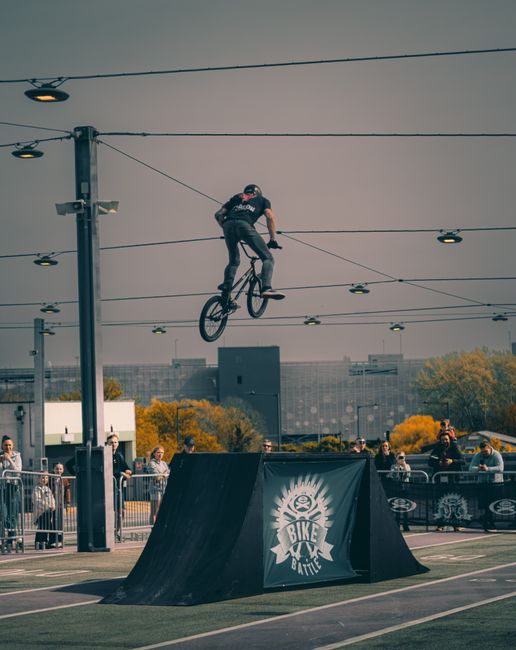
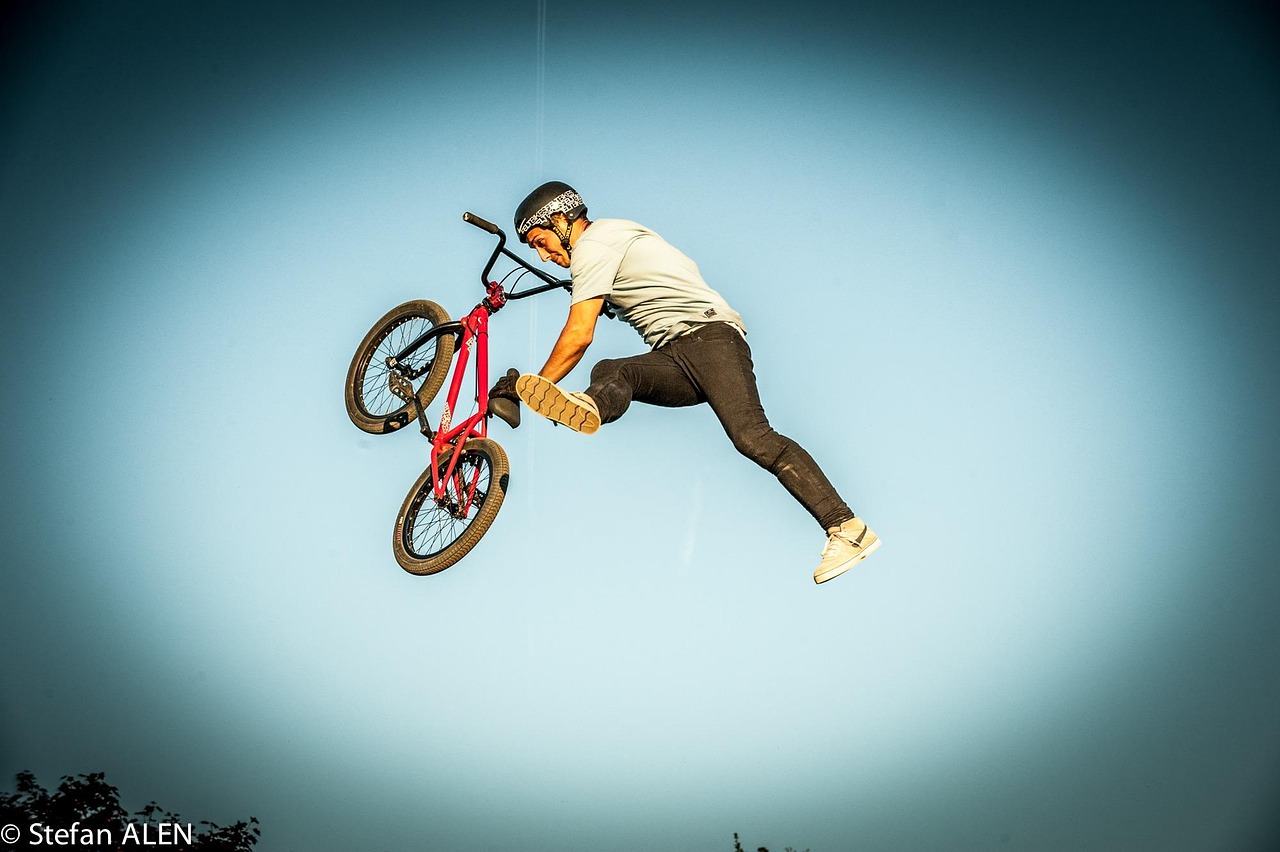
Freestyle is about tricks: airs, spins, tailwhips, barspins and grinds. Most freestyle riding isn’t a contest at all; it’s a session with friends at a skatepark, a street spot or a set of dirt jumps. In contests, judges score runs. At the Olympics, riders get 60-second runs in a park, and the UCI says judges look at difficulty, execution, style, originality, flow, height and amplitude, with no imposed tricks. Flatland, which the UCI describes as “breakdancing on a bike,” is judged on routines of linked tricks on a flat surface.
BMX at every level
Kids and beginners
BMX starts young. USA BMX runs a Balance Bike class for riders 5 and under on push bikes without pedals, plus classes for electric balance bikes for ages 3 to 7, and pedal-bike classes start at “5 & Under.” New riders can try a track on a one-day trial membership, and USA BMX says local tracks often have loaner bikes and helmets. USA BMX and BMX Canada list more than 300 tracks in the US, Canada and Curaçao. Freestyle kids usually start at a skatepark or pump track. Our youth BMX guide covers starting ages, gear rules for kids and parents’ questions.
Teens and college
BMX isn’t a high school sport under the NFHS or an NCAA sport. Teen racers move up through USA BMX districts, state and Gold Cup series and the national series, earning wins to advance from Novice to Intermediate to Expert. College riders race in USA Cycling’s collegiate program: the 2026 Collegiate BMX National Championships ran March 20–22 in West Monroe, Louisiana, where Marian University won the team title. Freestyle teens progress through local jams, amateur contests and video parts.
Pro, Olympic and international
The UCI runs the BMX Racing World Cup and world championships (the first official BMX world championships were held in 1982 in Dayton, Ohio), plus the BMX Freestyle World Cup and the Urban Cycling World Championships for park and flatland. In the US, USA Cycling crowns national champions; in 2026, elite racing nationals were held in Rock Hill, South Carolina, and freestyle nationals in South Jordan, Utah. USA BMX’s biggest race, the Grand Nationals, fills Tulsa’s Expo Square every Thanksgiving week (November 25–29 in 2026) with more than 3,600 riders from all 50 states and 25 countries, according to Visit Tulsa. On the freestyle side, the X Games hold BMX park, street and dirt contests, and in 2026 launched the team-based X Games League. At Los Angeles 2028, BMX racing is set for July 15–16 and freestyle park for July 28–29. Our leagues and associations page has the details.
Adult riders
BMX isn’t just for kids. USA BMX has Novice, Intermediate and Expert age groups up to 56 and over, women’s classes up to 51 and over, and cruiser classes up to 66 and over, so plenty of parents race the same night as their kids. Adult bodies take longer to heal, so gear up fully, build speed gradually and save the biggest jumps for when you’re fresh.
Sports health for BMX riders
Crashes come with BMX, and research shows it. At the Tokyo 2020 Olympics, BMX racing (27% of athletes injured) and BMX freestyle (22%) were among the sports with the highest injury rates, alongside boxing and skateboarding. A 2025 review of injuries across all competitive cycling disciplines found BMX had the highest injury incidence. The good news: most injuries are skin wounds and bruises, and the right gear and habits lower the risk. This section is general information, not medical advice. If you’re hurt, see a professional.
The most common BMX injuries
- Scrapes, cuts and bruises: the most common injury type across competitive cycling, BMX included, in the 2025 review; a 2025 scoping review of BMX research also lists contusions, lacerations and fractures as the most common injuries.
- Arm and shoulder injuries: riders reach out or land on a shoulder when they fall. In the 2025 review, about 65% of BMX injuries were to the upper limbs, the highest share of any cycling discipline. The American Academy of Orthopaedic Surgeons (AAOS) names collarbone and wrist fractures among common cycling fractures.
- Fractures: the second most common injury type in cycling overall. At the 1989 BMX European Championship (976 riders aged 6 to 40), 72% of injuries were minor, and three-quarters of the fractures were in the arms.
- Head injuries and concussions: less common than arm injuries but the most serious. AAOS says bike helmets cut the risk of serious head injury by nearly 70%.
- Knee and ankle injuries from landings and pedal slips, plus overuse aches for riders who jump and pump for hours.
Protective gear: what the rules say
At USA BMX tracks, every rider must wear a helmet with a permanent strap and enclosed shoes, and the rulebook “highly recommends” a full-face helmet; long sleeves and long pants are recommended (short sleeves need elbow protection, shorts need knee and shin pads). UCI international racing goes further: a full-face helmet with a visor at least 10 cm long, full-finger gloves, a long-sleeved jersey and long pants or shorts with full knee-and-shin protection. The Consumer Product Safety Commission (CPSC) lists ASTM F2032 as the helmet standard for BMX and ASTM F1952 for downhill racing; many full-face race helmets carry both, on top of the CPSC bike standard. No helmet has been proven to prevent concussions, so the rest of this section still matters. More on choosing it all on our BMX gear page.
Concussion: recognize and remove
The CDC’s HEADS UP program asks riders, parents and coaches to watch for someone who looks dazed or confused or is slow to react after a crash, and to listen for headache, dizziness, balance problems, sensitivity to light or noise, trouble concentrating or feeling “off.”
- Stop riding right away if you see signs after a knock to the head or a hard crash, even if the helmet “took the hit.”
- Stay off the bike for the rest of the day and until a healthcare provider says it’s OK. USA BMX’s concussion policy asks for a written release from a health care professional before a rider returns to racing.
- Replace the helmet: CPSC notes bike helmets are built for one serious impact.
- Call 911 for danger signs: a seizure, passing out, growing drowsiness, a headache that gets worse, repeated vomiting, or one pupil larger than the other.
Habits that help
- Ride your level. Learn the track or park at practice speed before racing it, and build up to bigger jumps one step at a time. The BMX scoping review found few prevention strategies tested, but noted that fewer riders per race could help, one reason beginners race in small classes.
- Check the bike. USA BMX requires working brakes and grips that cover the bar ends, and bans kickstands, chain guards and pegs on the race track.
- Respect the heat. Dirt tracks and concrete parks get hot. The National Athletic Trainers’ Association (NATA) recommends easing into hot-weather activity over 7–14 days. Drink, find shade between motos, and call 911 for confusion, collapse or a very high body temperature.
When to see a doctor, physical therapist or athletic trainer
See a professional for a wrist or collarbone that’s swollen, deformed or painful to move after a fall (fractures can feel like sprains), a shoulder that won’t lift, a knee or ankle you can’t put weight on, a deep cut, pain that doesn’t settle, or any concussion signs. A sports medicine physician manages most injuries without surgery (the American Medical Society for Sports Medicine says about 90% of sports injuries are non-surgical) and refers on when needed. A physical therapist guides rehab and the return to riding. Athletic trainers are licensed or regulated health care professionals in all 50 states, and bigger races often have first aid on site.
Training and conditioning for BMX
BMX racing is an all-out sprint: the gate start alone takes explosive power, and a small 2026 study of ten international-level riders linked short-burst peak pedaling power with faster starts. Useful off-bike work: squats, deadlifts and jumps for leg power, upper-body and core strength for pumping and pulling the bike, and neck and shoulder strength for crashes. A study of youth racers found neck braces and stronger neck muscles may lower head accelerations. On the bike: gate starts, manuals, pumping rollers and cornering. Freestyle riders build balance, timing and confidence with progressions on smaller features first. See our resistance bands for athletes for simple home work.
Race days are long, with short bursts. Eat a carb-based meal of familiar foods 1–4 hours before, as the American College of Sports Medicine’s sports-nutrition position statement recommends, keep water nearby, and pack snacks for the gaps between motos. On hot days many riders add electrolytes (see our electrolyte powder guide).
Recovery after racing and riding
Sleep comes first: the CDC, citing the American Academy of Sleep Medicine, recommends 9–12 hours for children 6–12, 8–10 hours for teens and 7 or more for adults. Then food and fluids after riding, and a rest day after a big race weekend. Many riders use a foam roller or massage gun for tight quads, hips and forearms, and soft recovery slides after a day in riding shoes. They’re about comfort, not treatment; pain or swelling that doesn’t go away needs a professional. See the recovery tools guide.
Gear for BMX
- Bike: a race bike (light, aluminum frame, brake, sized by rider height) for the track; a freestyle bike (steel, wider tires, often pegs) for parks and street. Many tracks have loaners for first tries.
- Helmet: full-face for racing; look for CPSC plus ASTM F2032 (BMX) and/or ASTM F1952 (downhill).
- Gloves: full-finger (required in UCI racing).
- Clothing and pads: long sleeves and long pants, or elbow and knee-and-shin pads.
- Shoes: closed, flat-soled shoes for flat pedals (required for riders 12 and under and Novices at USA BMX).
Prices change often. The prices below are what we saw on Amazon in October 2026; check the current price before you buy.
A solid starting kit: the Bell Sanction 2 full-face helmet, which the maker says meets the CPSC bike standard and carries ASTM downhill and BMX certifications (about $140); Fox Racing Dirtpaw gloves with a padded palm and knuckle guards (about $40); a beginner race bike like the Mongoose Title Pro, with an aluminum frame and a linear-pull brake; and the OOFOS OOahh Slide for after the race.
Bell Sanction 2 Full-Face Helmet
- CPSC + ASTM downhill and BMX (maker)
- 14 vents, removable cheek pads
- Sizes XXS 48 to XL 61 cm
Fox Racing Dirtpaw Gloves
- Full-finger, padded Clarino palm
- TPR knuckle guards
- About $40
Mongoose Title Pro BMX Race Bike
- Aluminum frame, 20-inch wheels
- Riders about 5 ft 3 in to 5 ft 8 in
- Linear-pull brake
OOFOS OOahh Slide
- OOfoam slide
- APMA Seal of Acceptance
- Machine washable
Bikes by discipline, helmet standards, pads, shoes and recovery gear are on our BMX gear page.
BMX FAQs
What is the most common BMX injury?
Scrapes, cuts and bruises are the most common, followed by fractures. Most BMX injuries are to the arms and shoulders, from reaching out or landing on a shoulder in a fall: about 65% in a 2025 review of competitive cycling injuries. Collarbone and wrist fractures are typical.
Do you need a full-face helmet for BMX racing?
In UCI international racing, yes: a full-face helmet with a visor is required, and open-face helmets aren’t allowed. At USA BMX tracks, a helmet with a permanent strap is required and a full-face helmet is “highly recommended.” Most racers wear one. Look for CPSC certification plus ASTM F2032 (BMX) or ASTM F1952 (downhill).
What age can kids start BMX?
Very young. USA BMX’s Balance Bike class is for riders 5 and under on push bikes, and pedal classes start at “5 & Under.” UCI-sanctioned races need riders to be at least 5. Kids need a helmet, long sleeves and pants, and closed shoes from day one.
Is BMX in the Olympics?
Yes, twice over. BMX racing joined at Beijing 2008 and BMX freestyle park at Tokyo 2020, the first judged cycling event in Olympic history, according to the UCI. Both are on the Los Angeles 2028 program for men and women.
What’s the difference between BMX and mountain biking?
BMX bikes are small (mostly 20-inch wheels), usually single-speed and built for short sprints, jumps and tricks on tracks and in parks. Mountain bikes have bigger wheels, gears and suspension for long rides on trails. See our mountain biking guide for the trail side.
How is BMX freestyle judged?
At the Olympics, five judges score each 60-second park run from 0.00 to 99.99 and the scores are averaged. In the final, each rider’s better of two runs counts. Judges look at difficulty, execution, style, originality, flow, height and amplitude.
BMX gives back speed, friends and the feeling of landing something new. The riders who keep at it wear the gear, ride their level, build up gradually and listen to their bodies. Keep exploring: our BMX rules page, the skateboarding guide if you share the park, and every other sport on our sports hub.