This article contains affiliate links: if you buy through them we may earn a commission, at no extra cost to you. Learn more.
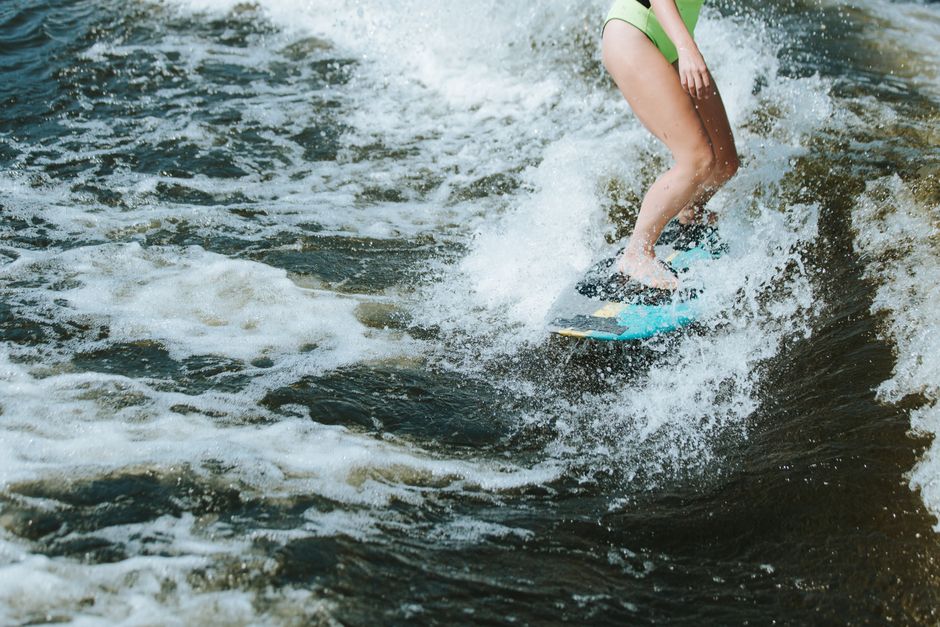
Late afternoon, the lake gone glassy, the boat sitting low with its ballast tanks full. A rider in the water calls “Hit it!”, pops up on a small board holding a short rope, and slides into the curl of the wave a few feet behind the stern. A couple of pumps to find the sweet spot, then she tosses the rope into the boat and just surfs, no line, no handle, the same endless wave for as long as her legs last. Everyone on board cheers. That moment, letting go of the rope, is what wakesurfing is about, and it’s why the sport has spread from a few lakes to world championships in about two decades.

Wakesurfing, page by page
- Rules: how the game works at every level
- Leagues & associations: pro, college, high school and youth
- Youth & high school: ages, safety and recruiting, for players and parents
- Injuries & sports health: prevention, concussion, when to see a pro
- Training & conditioning: before: off-season to in-season
- Game day: during: fueling, hydration, heat
- Recovery: after: games, tournaments, sleep
- Nutrition & supplements: what to eat, tested supplements
- Best wearables: trackers and watches for the sport
- Gear: the complete equipment list
Buying guide · Our Wakesurfing buying guide compares the gear we'd pick, with prices and sizing:
This guide covers wakesurfing for riders, drivers and parents at every level: how it works, the board styles, the competitions from local contests to the IWWF World Championships, and above all how to stay healthy. Wakesurfing is slower and gentler on the body than most towed sports, but the rider spends the whole ride right behind the boat, close to the exhaust and the propeller. Sports health is the heart of this page: carbon monoxide, propeller safety, life jackets, the rope, falls, sun and cold water, and when to see a professional. Then training, lake-day fuel, recovery and gear.
Wakesurfing at a glance
| The sport | Riding the wave a boat makes, on a small surfboard-like board, without holding a rope once you’re up. The rope is only for getting up and getting back into position. |
|---|---|
| Board styles | Surf style (thicker, more volume and rocker, bigger fins), skim style (thin, flat, small or no fins, made for spins) and, more recently, foil boards. |
| The boat | An inboard-drive boat with the propeller under the hull, ballast to make the wave bigger, running slowly, about 10–12 mph. Board makers warn never to wakesurf behind outboard, sterndrive or jet boats. |
| Competition | Judged runs of two passes on a course of about 750–900 feet. Judges score difficulty, risk, intensity, variety and execution. |
| Who runs it | The World Wake Association (WWA), the Competitive Wake Surf Association (CWSA), USA Water Ski & Wake Sports (through USA Wake Sports) and, worldwide, the International Waterski & Wakeboard Federation (IWWF). Not an Olympic sport. |
| Biggest safety rules | A Coast Guard-approved life jacket, an observer or wide-angle mirror where the law requires it, the engine off when anyone is near the stern, nobody on the swim platform while the engine runs, and ride far enough back to stay out of the exhaust. |
How wakesurfing works
Getting up and letting go
A wakesurfer starts in the water with heels on the board and a short, thick rope in hand. As the boat pulls away, the rider lets the board come up under the feet and stands, then works up to the steep part of the wave. Once the board is riding the push of the wave, the rider tosses the rope back toward the boat and surfs free. Fall off the wave and the driver circles back with the rope.
The boat and the wave
Wakesurf boats add weight with built-in ballast tanks or bags and use shapers or “surf systems” to push the wave to one side, making a clean, steep face for a regular or goofy rider. They run slowly, typically around 10–12 mph. Because the rider is only a few feet behind the stern, wakesurfing is only for boats with an inboard drive, where the propeller sits under the hull. Board maker CWB’s owner’s manual, like other makers’ warnings, says to use its wakesurfers behind boats with an inboard drive only, never behind outboard, inboard/outboard (sterndrive) or jet drive boats.
Surf, skim and foil
The WWA rule book sorts boards into two styles. Surf style boards are thicker, with more volume, more pronounced rocker and fins typically more than 2.75 inches: they carve and pump like a small surfboard and are the usual choice for beginners. Skim style boards are thin, with lower volume, less rocker and fins typically under 2 inches or none, built for spins, shove-its and a loose, skate-like feel. Many competitions now add foil divisions, riding a hydrofoil board on the wave. Our wakesurfing gear guide explains how to pick a style and size.
How competitions work
In WWA events, each rider gets two passes through a course about 750 to 900 feet long, roughly 45 to 60 seconds per pass. Judging starts once the rider drops the rope on the course. Three or more judges score each run on difficulty, risk, intensity, variety and execution, from airs and spins to carves and switch riding. A rider can fall up to twice per pass, and a third fall ends the run. Riders may switch to a second board between passes and transfer from one side of the wake to the other as often as they like. Rules, divisions and judging are covered on our wakesurfing rules and boat safety page.
Wakesurfing at every level
Kids and families
Wakesurfing is one of the most family-friendly towed sports: the speeds are slow, the rider is close to the boat and easy to talk to, and kids often learn on short, wide boards made for them. There’s no official minimum age. What matters is that a child is comfortable in the water, wears a snug, Coast Guard-approved life jacket sized for their weight, and has an adult watching who knows the boat rules. In WWA competition, the youth division is for boys and girls 12 and under, with surf and skim combined. Our youth wakesurfing page covers first rides, kids’ boards and parents’ questions.
Teens and college
Teens move up through amateur divisions by ability, in both surf and skim. Internationally, the IWWF runs junior categories: at the first IWWF World Wakesurf Championships, in 2024, medals were awarded in Grom/Under-14 and Under-18 divisions. Wakesurfing has no NCAA or high school championship; college-age riders enter the amateur divisions of WWA and CWSA events, and some ride with college wake clubs.
Adults and masters
Most wakesurfers never enter a contest; they surf with friends and family on summer weekends. Because the board stays on the water and nobody is jumping a big wake at speed, many adults pick up wakesurfing in their 30s, 40s and beyond. For those who want to compete, the WWA rule book has amateur, semi-pro and pro divisions for men and women in surf and skim, a Masters division for riders 35 and over, adaptive divisions for seated, standing and prone riders, and open foil divisions.
Pros and international
As of the 2026 season, the top of the sport has several tours. The WWA’s World Series of Wake Surfing ran six stops ending with the World Wake Surfing Championship, October 1–3, 2026, on Lake Silver in Winter Haven, Florida, where 137 riders from the United States, Canada, Japan and Korea qualified. The Nautique Wakesurf Series includes the USA National Championships (July 22–26, 2026, in Boca Raton, Florida), and the CWSA keeps a world ranking. Worldwide, the IWWF made wakesurf a discipline with its own council; its first World Wakesurf Championships, in Hong Kong in 2024, drew 20 national federations, and the US team won overall gold. The 2026 IWWF Worlds are set for October 9–17 in Hangzhou, China. The full picture is on our leagues and associations page.
Sports health for wakesurfers
Wakesurfing has far less published injury research than wakeboarding or water skiing; we found case reports but no large injury studies. What is well documented are the boat dangers: exhaust, the propeller and drowning. This section is general information, not medical advice. If you’re hurt, see a professional. Our wakesurfing injuries page goes deeper.
Carbon monoxide: the hidden risk behind the boat
A wakesurfer rides at slow speed just a few feet off the stern, right where exhaust collects. In a 2004 NIOSH study done with the Coast Guard, a wake surfer about 10 feet behind a ski boat breathed an average of about 17 ppm of carbon monoxide; an exhaust system that moved the outlet cut that by about 80%. The Coast Guard warns that carbon monoxide poisoning looks like seasickness: irritated eyes, headache, nausea, weakness or dizziness. If a rider feels that way, get them out of the wave and into fresh air, and get medical help if it doesn’t pass quickly. Board makers tell wakesurfers to ride far enough behind the boat to stay out of the exhaust and to limit time in the wave. And never let anyone hang on the swim platform or “teak surf” while the engine runs: the Coast Guard calls teak surfing “NEVER a safe activity.”
The propeller and the engine
In the Coast Guard’s 2024 statistics there were 169 incidents in which someone was struck by a propeller, with 30 deaths and 158 injuries, and towed water sport mishaps caused another 15 deaths and 189 injuries. On an inboard the propeller is under the hull, not behind it, but it still spins whenever the engine is in gear. The Coast Guard’s advice: shut off the engine when people in the water are near the boat, keep a rider in the water on the driver’s side and in view, and keep everyone off the swim platform while the engine runs. Our rules page walks through a safe pickup.
The rope, the board and falls
Falls in wakesurfing happen at low speed, usually into soft water, but the board, its fins and the rope are all close by. A 2023 case report described a 40-year-old wakesurfer whose arm got tangled in the rope during a fall, rupturing the biceps muscle; the authors noted that in wakesurfing it’s beginners who are at risk and should be warned. Hold the handle, never loop the rope around a hand, wrist or arm, and let go when you fall. Cover up with your arms as you surface so a loose board doesn’t hit your head. Anyone who looks dazed, can’t remember the fall or reports headache, dizziness, nausea or blurry vision after a hit to the head should stop for the day: the CDC’s HEADS UP advice is to keep them out until a healthcare provider clears them, and to call 911 for danger signs like a worsening headache, repeated vomiting, a seizure or passing out.
Life jackets and drowning
In 2024, 87% of boaters who drowned, where life jacket use was known, weren’t wearing one, and alcohol was the leading known factor in boating deaths. Wear a Coast Guard-approved life jacket whenever you ride. Check the label: the Coast Guard notes some approved jackets say they are not approved for water skiing, wakeboarding or tubing. Competition-style “comp vests” without Coast Guard approval don’t meet most state rules, though Pennsylvania lets wakesurfers wear a water ski wetsuit instead of a life jacket. The WWA requires every contestant to wear a Coast Guard-approved jacket or one that will float an unconscious rider.
Sun and cold water
Wakesurfing sessions are long and sunny, and UV reflects off the water. The American Academy of Dermatology recommends a broad-spectrum, water-resistant SPF 30 or higher sunscreen, reapplied every two hours and after getting wet; a long-sleeve UPF shirt helps too. Early- and late-season water is cold even on warm days: the Coast Guard notes that cold shock from a sudden plunge lasts about a minute, and you can lose useful movement in your arms and hands within about 10 minutes. Wear a wetsuit and keep sets short. When thunder roars, get off the water.
When to see a doctor, physical therapist or athletic trainer
See a professional for any concussion signs, a shoulder or arm that was yanked by the rope and hurts or looks different, a knee that pops or swells, a fin cut that gapes, back pain that lasts or runs down a leg, or symptoms that might be carbon monoxide and don’t clear quickly in fresh air. A sports medicine physician manages most sports injuries without surgery; a physical therapist guides rehab and the return to riding; an athletic trainer, if your school or club has one, is a good first stop.
Training, lake day and recovery
Wakesurfing is a balance and legs sport: long stretches in a low, athletic stance, constant small corrections, pumping to stay in the pocket and, for skim riders, spins on a slippery board. Off the water, many riders work on single-leg strength, hip and ankle mobility, core and balance drills, plus some shoulder and grip work for the rope. See our wakesurfing training page. A lake day is long, hot and stop-and-go: bring real food, more water than you think and, on hot days, an electrolyte such as Nuun Sport; our Lake Day page has the details and nutrition and supplements covers the rest. Afterward, sleep comes first (the CDC recommends 7 or more hours for adults and 8–10 for teens). A foam roller or small massage gun is popular for tired legs; that’s comfort, not treatment. More on our recovery page, and for watches that track a session, see best wearables for wakesurfing.
Respect the lake: where to wakesurf
Wakesurf waves are bigger than ordinary boat wakes by design. A University of Minnesota study found that wakesurf boats needed more than 425 to 500 feet, depending on how they were run, before their waves shrank to the level of typical recreational boats. The industry’s Wake Responsibly campaign asks wakesurfers to stay at least 200 feet from shore, docks and other boats, and some states write distances into law: 200 feet at no-wake speed in Pennsylvania, 300 feet from shore and at least 15 feet of water in Maine, and designated wake sports zones on certain lakes only in Vermont. Check your state and lake before you ride.
Gear for wakesurfing
- A board that matches your size and style. The Hyperlite Broadcast (about $375) is a surf-style board the maker says suits beginners through advanced riders. The Liquid Force Rocket (about $300) comes with a padded handle and a 24-foot rope with two takeoff sections, a handy starter package.
- A Coast Guard-approved life jacket that fits snugly, such as the neoprene Hyperlite Indy (about $70, Coast Guard Level 70).
- A short, thick, floating wakesurf rope, never a long wakeboard rope.
- A wetsuit or UPF top for cold water and sun, and recovery gear for after the session.
Hyperlite Broadcast Wakesurfer
- Surf style
- Layered fiberglass over foam core
- Beginner to advanced
Liquid Force Rocket Wakesurfer with Rope
- Winged swallow tail, fuller outline
- Padded handle
- 24 ft rope, 2 takeoff sections
Hyperlite Indy Life Jacket
- USCG approved, Level 70
- Neoprene, snug fit
- Drains quickly
Our full wakesurfing gear guide compares boards, ropes, life jackets and wetsuits. Ride on a rope with bindings instead? See our wakeboarding guide. For after the lake, browse Recovery & Regeneration.
Wakesurfing FAQs
Is wakesurfing easier than wakeboarding?
Many people find it easier to start: the boat goes slowly, there are no bindings, and falls are usually gentle. Staying in the wave without the rope takes practice, and advanced skim and surf tricks are as hard as anything in wake sports.
Can you wakesurf behind any boat?
No. Board makers say to wakesurf only behind inboard-drive boats, where the propeller is under the hull, and never behind outboard, sterndrive or jet boats, because the rider is just a few feet from the stern.
How fast does the boat go for wakesurfing?
Slowly, typically about 10–12 mph. The right speed depends on the boat, ballast and rider; in competition the rider is responsible for telling the driver the settings before leaving the dock.
Is carbon monoxide really a risk when wakesurfing?
Yes. The rider surfs at slow speed close to the stern, where exhaust collects. Ride far enough back, limit time in the wave, keep everyone off the swim platform while the engine runs, and treat headache, dizziness or nausea as a reason to stop and get fresh air.
Do you have to wear a life jacket to wakesurf?
In most places, yes, and it’s the safe choice everywhere. State rules differ (Pennsylvania, for example, allows a water ski wetsuit instead), so check your state, and wear a Coast Guard-approved jacket whenever you can.
Is wakesurfing an Olympic sport?
No. Its world federation, the IWWF, is recognized by the International Olympic Committee and runs a World Wakesurf Championship, but wakesurfing is not on the Olympic program.
Wear the vest, ride back out of the exhaust, keep the rope off your hands and the engine off near people in the water. Next: rules and boat safety, youth wakesurfing, competitions and associations, gear, or compare with our surfing and water skiing sections.