This article contains affiliate links: if you buy through them we may earn a commission, at no extra cost to you. Learn more.
Friday night at Lumpinee Stadium in Bangkok: the pipe and drums start, two fighters in Mongkon headbands kneel and move slowly around the ring in the Wai Kru, and the crowd goes quiet. Halfway around the world, a teenager in Ohio laces up 10 oz gloves for her first USA Muaythai tournament, a body protector strapped over her singlet. In a suburban gym, a coach in Thai pads calls “Teep! Kick! Knee!” to a dentist who started training at 45 to get fit. Muay Thai is all of these: an old fighting art, a youth and amateur sport with world championships, a professional business and one of the hardest workouts you can do.
Muay Thai, page by page
- Rules: how the game works at every level
- Leagues & associations: pro, college, high school and youth
- Youth & high school: ages, safety and recruiting, for players and parents
- Injuries & sports health: prevention, concussion, when to see a pro
- Training & conditioning: before: off-season to in-season
- Game day: during: fueling, hydration, heat
- Recovery: after: games, tournaments, sleep
- Nutrition & supplements: what to eat, tested supplements
- Best wearables: trackers and watches for the sport
- Gear: the complete equipment list
Buying guide · Our Muay Thai buying guide compares the gear we'd pick, with prices and sizing:
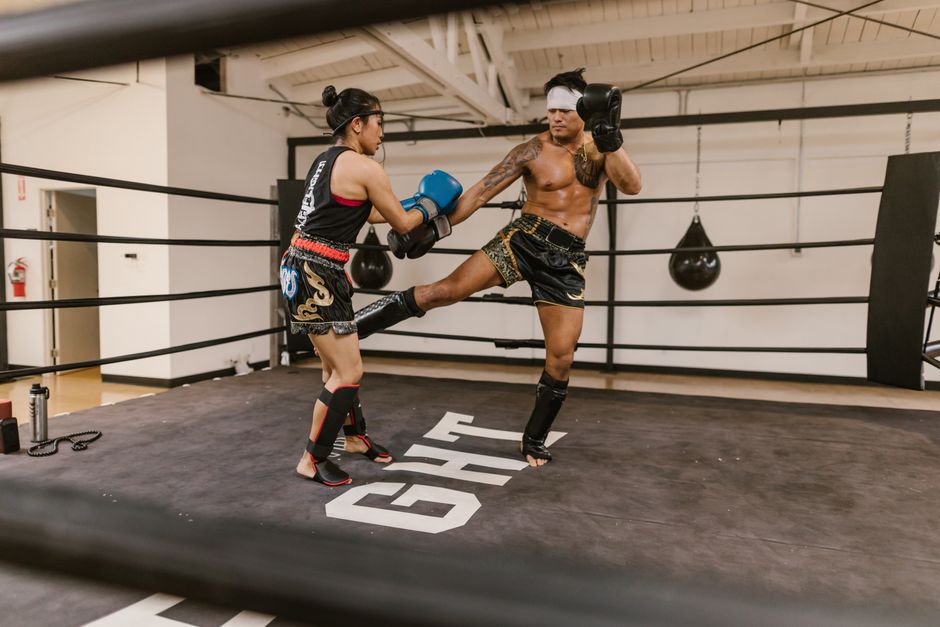
Muay Thai is the striking sport of Thailand, often called “the art of eight limbs” because fighters strike with fists, elbows, knees and shins, and fight in the clinch, where they tie up at close range. This guide covers how it works, every level from U8 kids to stadium pros, and sports health throughout: the injuries Muay Thai fighters get, the safety rules that protect them, head knocks, making weight and when to see a professional. It’s general information, not medical advice. If you’re more interested in kickboxing (no elbows, little or no clinch), it has its own guide: kickboxing.
Muay Thai at a glance
| What’s allowed | Punches, kicks, knees and elbows to any target except the groin and the back of the neck, plus the clinch. Throws without striking, joint locks and tackles are fouls. |
|---|---|
| Disciplines (IFMA) | Full-contact Muay Thai, semi-contact “technical” Muay Thai, and the no-contact cultural disciplines Wai Kru and Mai Muay. |
| Bout length | Amateur (IFMA): always 3 rounds, 3 minutes for elite, down to 1 minute for U8 and U10. Pro: 3 × 3 minutes in ONE, 5 rounds for titles; WBC Muaythai title fights 5 × 3 minutes with 2 minutes’ rest. |
| Ring | 6 to 6.5 m square inside the ropes (IFMA), padded floor, red and blue corners. |
| How you win | Knockout, the referee stopping the contest, disqualification, or on points (10-point must, round by round). |
| Governing bodies | IFMA worldwide, fully recognized by the IOC since 2021; USA Muaythai in the US; state athletic commissions for US pro events; the Sports Authority of Thailand and the big stadiums in Thailand. |
| Most common injuries | Cuts, bruised and fractured shins, feet and hands, sprains and strains, foot problems from barefoot training, dental injuries and concussion. |
How Muay Thai works
Two fighters of the same weight class, called Nak Muay, meet in a roped ring. Before the first round, each one performs the Wai Kru, a ritual of respect for teachers and tradition, wearing the sacred Mongkon headband, while traditional music plays (a Java pipe, small cymbals and two drums; a recording is allowed when there’s no live band). Then the Mongkon comes off and the fight starts.
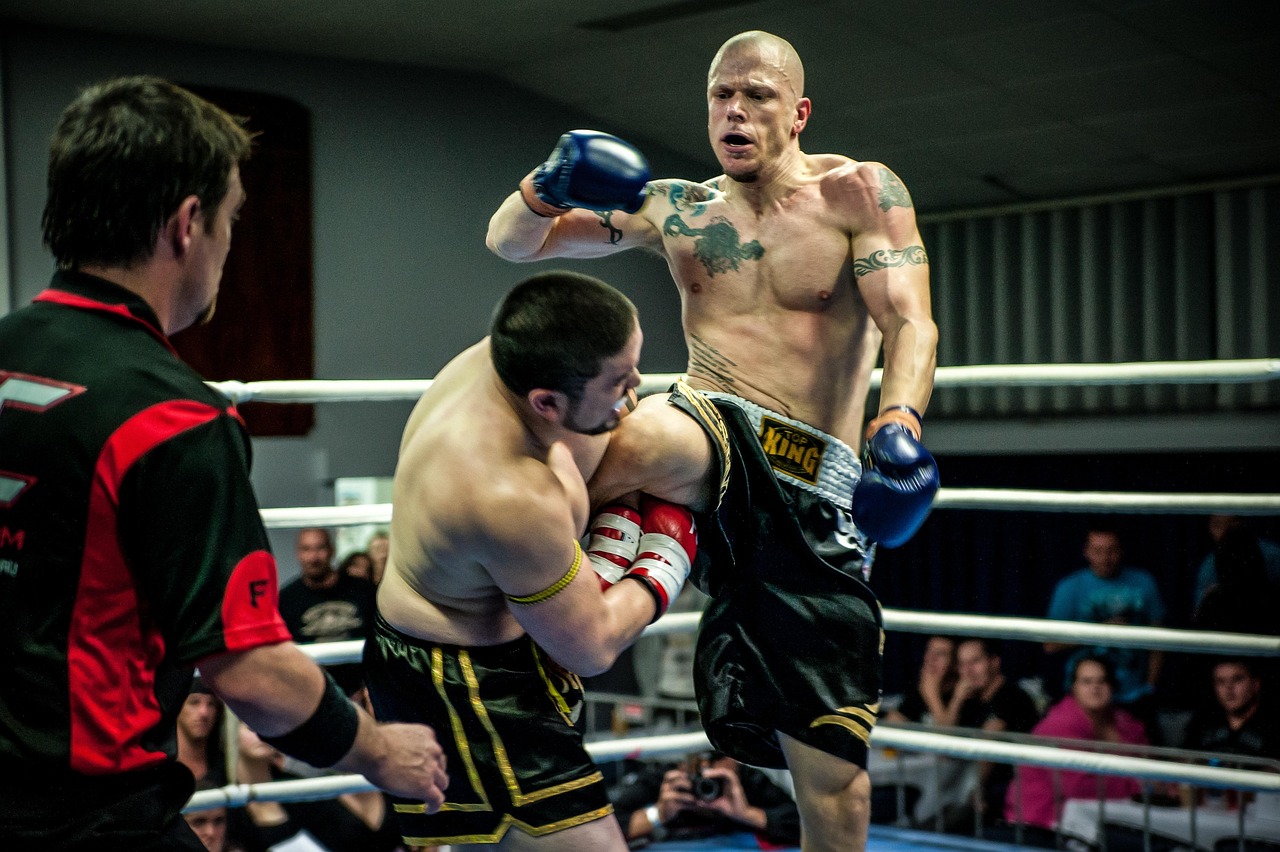
- Strikes: under IFMA rules, a scoring “Muaythai skill” is a punch, kick, knee or elbow that lands with force and intent on a legal target. The round kick with the shin, the push kick (teep) and the knee are the sport’s trademarks.
- The clinch: fighters may tie up and throw knees and elbows, or off-balance each other, until the referee calls “Yaek” (break). Lifting the opponent, hip throws, hooking the legs and holding a caught leg while pushing more than two steps are fouls.
- Scoring: judges use the 10-point must system: the winner of each round gets 10, the loser 9 or less. IFMA judges count clean Muaythai skills first, then how forceful they were; blocked and weak strikes don’t score. WBC Muaythai judges look at damage, dominance and disruption. A fighter who goes down must take a mandatory count of eight.
IFMA bouts can’t end in a draw, and weight classes run from 45 kg to over 91 kg for elite men (over 75 kg for women). The details are on our Muay Thai rules page.
Muay Thai at every level
Kids and youth
Amateur Muay Thai has a full youth ladder. IFMA’s age groups start at U8 (ages 6 and 7) and go up in two-year steps to U18, with strict limits on what kids may do: U8 and U10 fighters may not strike the head at all, U12 and U14 may not throw elbows or knees to the head, every youth fighter wears a head guard and a body protector, and rounds are short: 1 minute at U8 and U10, 1.5 minutes at U12 and U14, 2 minutes at U16 and U18. Youth fighters also need a grading level (IFMA’s “Khan” system) to enter its events.
Pediatricians are cautious. The American Academy of Pediatrics (AAP) says martial arts can give kids vigorous exercise and real fitness, but contact training and competition should wait until a child shows the physical and emotional maturity, and the skill, in non-contact work. It notes that the few Muay Thai studies found higher injury rates in beginners than in experienced fighters, that there’s no evidence soft headgear reduces concussion risk, and it supports rules that take blows to the head out of youth competition. Our youth Muay Thai page covers ages, rules, gear and how to choose a gym.
Teens and amateurs
Most Muay Thai fighters are amateurs. In the US, USA Muaythai, a nonprofit and the sole US national federation of IFMA, recognized under the US Olympic & Paralympic Committee, runs national tournaments for youth and adults, including its Grand Nationals, and selects Team USA for IFMA world championships. Amateurs fight in head guards, cloth shin and elbow guards and 10 oz gloves, with a doctor certifying them fit on each day of competition. Some states also regulate amateur Muay Thai through their athletic commissions, so local rules vary. There’s no NCAA Muay Thai; college students train through clubs.
Olympic and international
Muay Thai isn’t an Olympic sport yet, but it’s well inside the Olympic family. IFMA, founded in 1992 and now counting 146 member federations, received provisional IOC recognition in December 2016 and full recognition at the 138th IOC Session in Tokyo in July 2021. Muay Thai has been on the official World Games program since the 2017 Games, was fought at the Chengdu 2025 World Games, and made its European Games debut in Kraków in 2023. IFMA’s 2026 calendar includes its Youth World Championships in Greece in November. It isn’t on the LA28 Olympic program, and no decision on later Games has been announced as of October 2026. Who runs what is on our Muay Thai organizations page.
Professional
Pros drop the head guard and shin guards. In Thailand, the two great stadiums are Bangkok’s Rajadamnern, which held its first fights in December 1945, and Lumpinee, opened in 1956 and run by the Royal Thai Army; both opened their rings to women only recently (Lumpinee’s first female card was in November 2021, Rajadamnern’s first female bouts in July 2022). ONE Championship has held a weekly Muay Thai-heavy show, ONE Friday Fights, at Lumpinee since January 2023; its Muay Thai bouts use 4 oz MMA gloves, three 3-minute rounds (five for world titles) and a hydration test before the weigh-in. In the US, pro events need a state athletic commission, and the Association of Boxing Commissions (ABC) approved model rules for pro Muay Thai in 2024: 3-minute rounds, 3 or 5 per bout.
Adults, masters and fitness Muay Thai
Most people who train Muay Thai never fight. Bag and pad classes count toward the CDC’s weekly target for adults: 150 minutes of moderate or 75 minutes of vigorous activity, plus muscle strengthening on at least 2 days. Adults who want to compete can: IFMA runs Masters divisions from 35 to 50, with 2-minute rounds and body protectors for the 40+ and 45+ groups.
Sports health for Muay Thai fighters
Muay Thai builds fitness, coordination and confidence, and it carries real risks. This section is general information, not medical advice. If you’re hurt, see a professional.
The most common injuries
- Arms and legs: in a survey of 195 Muay Thai fighters, 55% reported an injury in their most recent fight, mostly to the arms and legs; fighters who wore more protective equipment were less likely to report one. The AAP notes sprains and strains are more common in less experienced Muay Thai fighters and fractures in more experienced ones.
- Feet and toes: a study of 123 Muay Thai fighters training barefoot in Thailand found calluses (59%), tight calf muscles (57%) and toe deformities (49%), linked to long hours of training.
- Teeth: 14% of Muay Thai athletes in a UK survey had had a dental injury, most often a chipped or broken tooth.
- Head: concussion is part of every striking sport, and knees and elbows in the clinch add to the blows a fighter takes.
More on each, with prevention, on our Muay Thai injuries page.
The safety rules that protect fighters
Amateur Muay Thai rules are built around protection. IFMA requires a head guard, cloth shin and elbow guards, a groin guard for men and women, a form-fitted mouthguard, chest protection for women in senior divisions and a body protector for youth. A doctor clears every fighter on each competition day. After a knockout or a stoppage for head blows, IFMA bars fighters from competing or sparring for at least 30 days (90 days after two in 90 days, a year after three in 12 months), and they need a neurologist’s clearance to come back; the same rules apply to head injuries in training. Pro events add a ringside doctor, pre-fight medicals and suspensions set by the commission.
Concussion: recognize and remove
The CDC’s HEADS UP program asks coaches and parents to watch for an athlete who looks dazed or confused or is slow to react, and to listen for headache, dizziness or balance problems, sensitivity to light or noise, feeling foggy, trouble concentrating, irritability or sleep changes.
- Remove the fighter from sparring or competition right away.
- Keep them out the rest of the day and until a healthcare provider clears them.
- Return in steps, and never before the federation’s or commission’s suspension ends.
- Call 911 for danger signs: a seizure, passing out or growing drowsiness, a headache that gets worse, repeated vomiting, or one pupil larger than the other.
Making weight the safe way
Weight classes tempt fighters to cut fast. In a study of 24 Australian combat events, Muay Thai winners had lost an average of 5.9% of their body weight in the week before the weigh-in, and losers 4.6%. The AAP warns young athletes against unhealthy methods such as restricting fluids, and dehydration was behind the deaths of three college wrestlers in 1997, as the CDC reported. Rule makers push back: IFMA weighs fighters the day before the tournament and again on each morning they compete, and ONE tests hydration before the weigh-in. Fight at a weight you can make while eating and drinking normally, and plan changes with a registered dietitian. Our Muay Thai nutrition page covers fight week.
When to see a doctor, physical therapist or athletic trainer
See a professional for any concussion signs, a shin or foot that stays painful or swollen, a hand or wrist that won’t move normally, a cut that won’t close, a rib that hurts to breathe after a knee, or hip and knee pain that keeps coming back. A sports medicine physician handles most of these, a physical therapist guides the return to training, and an athletic trainer can help where one is available.
Training and conditioning
Fight fitness is built in rounds. Research on Muay Thai and kickboxing bouts describes repeated bursts of high-intensity striking with short pauses, demanding both aerobic and anaerobic fitness. Most Nak Muay mix running, skipping rope, shadowboxing, bag and pad rounds, clinch work, and strength training for the hips, legs, core and neck. Many use a heart-rate strap to keep easy days easy (see our heart rate monitor guide), and the mental side is trainable too: mental training tools for athletes. The full plan is on our Muay Thai training page.
Fight day: the sports-nutrition position statement from the American College of Sports Medicine and two dietitians’ groups recommends a pre-exercise meal high in carbohydrate, moderate in protein and low in fat and fiber, made of familiar foods and eaten roughly 1-4 hours before. After the weigh-in, refuel with familiar food and fluids; many fighters add electrolytes (see our electrolyte powder guide). The plan for the whole day, from the medical check to the Wai Kru, is on our fight day page; trackers for pad rounds are on our Muay Thai wearables page.
Recovery after training and fights
Sleep comes first: the CDC, citing the American Academy of Sleep Medicine, recommends 9-12 hours a night for children 6-12, 8-10 for teens and 7 or more for adults. Then real meals with protein; many fighters use a shake when a meal is hours away (see our protein powder guide). IFMA even writes rest into its rules: at least 7 days after a one-round contest, 14 days after up to four rounds and longer after a multi-day tournament.
For tight hips, calves, shins and shoulders, many fighters use a foam roller or a massage gun, and soft recovery shoes after hours barefoot on the mat. They’re about comfort, not treatment. Our combat sports recovery gear guide and Muay Thai recovery page go deeper.
Gear for Muay Thai
- Gloves: heavier for sparring (often 16 oz for adults), lighter for bag and pads. IFMA amateur events supply 10 oz gloves.
- Hand wraps: under every pair of gloves; IFMA allows up to 5 m (about 197 in), with tape only as a single strap at the wrist.
- Shin guards: for every kicking drill with a partner, covering shin and instep.
- Mouthguard, head guard and groin guard: required in amateur competition and smart for any sparring.
- Muay Thai shorts: wide-legged so you can kick and knee; IFMA requires the word “Muaythai” on the front in competition.
Four picks to start: the Fairtex BGV1, a classic Muay Thai glove handmade in Thailand in 8 to 16 oz; Fairtex SP5 shin guards with instep padding, sized XS to XL; the Shock Doctor Gel Max mouthguard in youth and adult sizes; and Venum Classic Muay Thai shorts, made in Thailand. Add Fairtex HW2 hand wraps. The full list, from Thai pads to banana bags, is on our Muay Thai gear page.
Fairtex BGV1 Muay Thai Gloves
- Leather, tight-fit design
- 8 to 16 oz
- About $139
Fairtex SP5 Shin Guards
- Shin and instep padding
- Two hook-and-loop straps
- Sizes XS to XL
Shock Doctor Gel Max Mouthguard
- Boil-and-bite gel liner
- Youth and adult sizes
- About $12
Venum Classic Muay Thai Shorts
- Lightweight polyester
- Elastic waist with drawstring
- About $50
For after the gym, browse Recovery & Regeneration and Training & Performance.
Muay Thai FAQs
What’s the difference between Muay Thai and kickboxing?
Both use punches and kicks. Muay Thai adds elbows, knees and a full clinch, where fighters tie up and strike or off-balance each other, and keeps traditions like the Wai Kru. Kickboxing styles range from controlled point fighting to K1, which allows knees and a brief clinch but no elbows. See our kickboxing guide.
Is Muay Thai in the Olympics?
Not yet. IFMA has had full IOC recognition since 2021, and Muay Thai is on the World Games program and was part of the 2023 European Games, but it isn’t on the LA28 Olympic program.
What age can kids start Muay Thai?
Many gyms teach young kids non-contact skills. IFMA’s youngest competition group is U8 (ages 6-7), with 1-minute rounds and no strikes to the head. The AAP advises waiting on contact until a child is ready, so talk it over with your child’s doctor.
Do you need to be fit to start Muay Thai?
No. Most beginners’ classes are bag and pad work where no one hits you back, and fitness comes with the training. Build up gradually, and check with a doctor first if you have a heart condition or haven’t exercised in a while.
How long after a knockout can you fight or spar again?
Under IFMA rules, at least 30 days with no competition or sparring, 90 days after two in 90 days, a year after three in 12 months, and only with a neurologist’s clearance. Pro commissions set their own suspensions, and your doctor may say longer.
Why do Muay Thai fighters do the Wai Kru?
It’s a ritual of respect for teachers, family and tradition, and it doubles as a last calm moment and a warm-up before the bell. IFMA requires it before the first round, with the Mongkon headband, and even runs Wai Kru contests judged on the performance alone.
Muay Thai rewards the people who respect it: good coaches, controlled sparring, real rest and honest answers about head knocks. See also our recovery tools guide and the other combat sports on our sports hub, like boxing and MMA.