This article contains affiliate links: if you buy through them we may earn a commission, at no extra cost to you. Learn more.
Saturday morning at a strip-mall gym: a row of eight-year-olds in tiny gloves and bright Muay Thai shorts practice a teep, a jab and a knee, then line up to kick the pads their coach holds. Before class they bow to the coach the way the older fighters do. Nobody hits anybody in the head; the loudest sound is laughing. For a lot of families, Muay Thai for kids means exactly this: fitness, focus, respect and confidence. For some, it grows into tournaments. This page is for parents: what pediatricians say, starting ages, the youth rules and protective gear, how to choose a gym, and the questions parents ask most.

For the sport at every level, start at our Muay Thai hub. If your child is weighing other options, see our youth pages for kickboxing, martial arts and boxing.
First, what pediatricians say
The American Academy of Pediatrics (AAP) clinical report on martial arts for young people is the best guide for parents. Its main points:
- The upside is real: martial arts can give kids vigorous exercise and improve fitness.
- Contact should wait: kids should learn from qualified instructors, and sparring and competition should wait until a child has shown the physical and emotional maturity, and the skill, in non-contact training.
- Non-contact is lower risk: injuries are relatively uncommon in non-contact training; sparring and competition carry more.
- Headgear isn’t a concussion shield: there’s no evidence soft headgear reduces concussion risk, and kids shouldn’t be encouraged to play more aggressively because they wear it.
- Fewer head blows: the AAP supports rule changes that take blows to the head, and points for them, out of youth competition.
On Muay Thai specifically, the report notes that research is limited, that a study found injury rates higher in beginners than in professionals, and that modified youth bouts ban knees to the head. Talk it over with your child’s doctor, especially before sparring or competition starts.
Starting ages and the youth ladder
Many gyms run non-contact classes for young children. Amateur competition under IFMA, the world federation (USA Muaythai in the US), is organized by age, counted by year of birth. Every bout is 3 rounds:
| Division | Ages | Rounds | What’s not allowed |
|---|---|---|---|
| U8 | 6-7 | 3 × 1 minute | No strikes to the head |
| U10 | 8-9 | 3 × 1 minute | No strikes to the head |
| U12 | 10-11 | 3 × 1.5 minutes | No elbows or knees to the head |
| U14 | 12-13 | 3 × 1.5 minutes | No elbows or knees to the head |
| U16 | 14-15 | 3 × 2 minutes | No extra limits |
| U18 | 16-17 | 3 × 2 minutes | No extra limits |
In other words, the youngest kids can’t strike the head at all, and elbows and knees to the head wait until 14. Kids fight in their own weight classes, as light as 16 kg (about 35 lb) for U8, in separate boys’ and girls’ divisions. They also need a minimum grade in IFMA’s “Khan” system: Khan 1 for U8 and U10, up to Khan 5 for U18. Elite (adult) competition starts at 18.
Youth rules that protect kids
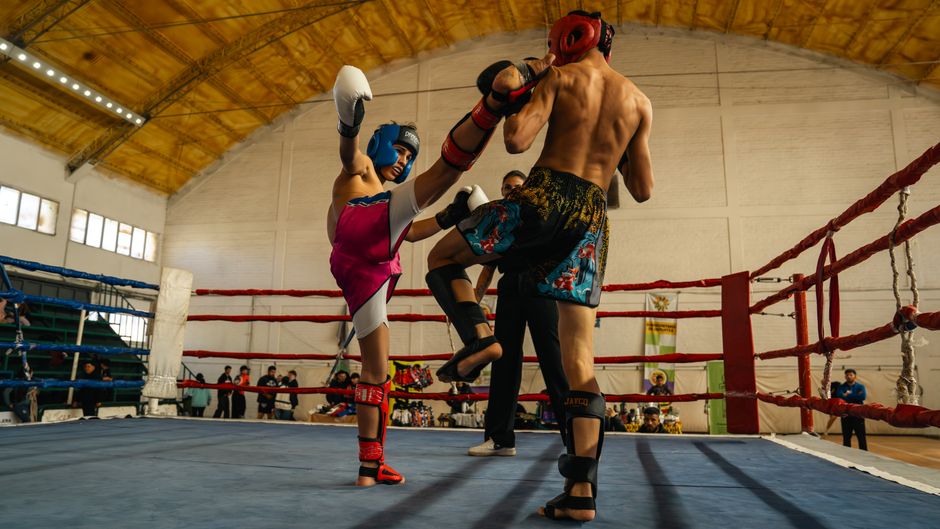
- Full protective gear: an IFMA-approved head guard, cloth shin and elbow guards, 10 oz gloves, a groin guard, a mouthguard that isn’t red or pink, and a body protector for every youth division.
- Early stoppages: for U16 and younger, two compulsory counts in the whole bout end it.
- Doctors every day: a medical declaration signed by a doctor before the event, and a doctor’s clearance on each day of competition. From 16, fighters also need recent blood tests for HIV and hepatitis B and C.
- Parents sign: for athletes under 18, a parent or guardian signs the medical forms, and any medical testing needs their informed consent.
- Knockout rules: after a knockout or a stoppage for head blows, no competition or sparring for at least 30 days (longer after repeat knockouts), and a neurologist must clear the child to return. The rules apply to head injuries in training too.
- Rest after tournaments: at least 7 days after a one-round bout, rising to 28 days after ten or more rounds in a tournament.
Pro Muay Thai is for adults: WBC Muaythai sets 18 as the minimum age for its title fights outside Thailand. In Thailand itself, children fighting for money has long been debated; in 2018 a bill to bar children under 12 from the ring met strong opposition from fighters. That’s a different world from youth amateur rules, and not the path most families here are looking at. The full rules are on our Muay Thai rules page.
Gear that fits a child
Gloves are sized by ounces, which follow body weight. Title Boxing’s chart lists youth gloves of 6-8 oz for kids up to about 100 lb and training gloves of 8-10 oz up to 90 lb; coaches use heavier gloves for sparring than for pad work. Youth hand wraps run up to 120 inches. Shin guards should cover shin and instep and stay put with two straps. The American Dental Association notes boil-and-bite mouthguards fit better than stock ones, custom guards come from a dentist, and kids need replacements more often as their mouths grow.
Starter picks: Everlast Prostyle 2 Youth Boxing Gloves, Venum Kids Elite Shin Guards (sizes for ages 3-11), RDX Kids Headgear for sparring, the Shock Doctor Gel Max in youth size, and Fairtex Youth Muay Thai Shorts for the full look. More on our Muay Thai gear page.
Everlast Prostyle 2 Youth Boxing Gloves
- Triple-layer foam
- Full-length wrist strap
- About $31
Venum Kids Elite Shin Guards
- Sizes for ages 3-11
- Multi-density foam, hook-and-loop
- About $70
RDX Kids Headgear
- Triple-layer padding
- Adjustable chin strap
- About $40
Shock Doctor Gel Max Mouthguard
- Youth and adult sizes
- Boil-and-bite gel liner
- About $12
Fairtex Youth Muay Thai Shorts
- Micro satin
- Elastic waist, drawstring
- About $40
Choosing a gym
- Watch a kids’ class first. Look for small groups, lots of pad and bag work, and a coach who keeps contact light and stops drills early.
- Ask about sparring. When does it start, how is it controlled, and is head contact allowed? The AAP’s advice is that contact waits until a child is ready.
- Ask about head knocks. Does the coach know the CDC HEADS UP signs, and will they remove a child who has them and wait for a doctor’s clearance?
- Ask about membership. Is the gym a USA Muaythai member, and which events do its kids enter?
- Ask about safeguarding. Are coaches background-checked, and are kids ever alone with an adult?
- Look at the mats. Clean mats and a rule about clean feet matter in a barefoot sport; skin infections spread on dirty mats.
Weight, food and growing bodies
Weight classes can tempt kids to cut weight. The AAP’s report on weight control in young athletes warns against unhealthy methods such as restricting food or fluids and sweating weight off; plan any weight change with your child’s doctor or a registered dietitian. IFMA weighs fighters every morning they compete, so a child who dehydrates to make weight has to do it again the next day. Kids should fight at the weight they are, eat real meals and drink water. The CDC recommends 9-12 hours of sleep for children 6-12 and 8-10 for teens. Variety helps too: in a clinical study, young athletes who specialized in one sport, or trained more hours a week than their age in years, had a higher injury risk. For nerves before a first tournament, see our mental training tools guide; for injuries, our Muay Thai injuries page; and for what kids should eat around training, our Muay Thai nutrition page.
Parents’ FAQs
What age can my child start Muay Thai?
Many gyms offer non-contact classes for young kids. IFMA’s youngest competition group is U8 (ages 6-7), with 1-minute rounds and no strikes to the head. The AAP advises waiting on contact until your child is ready physically, emotionally and technically.
Is Muay Thai safe for kids?
Non-contact training carries a relatively low risk of injury, according to the AAP; sparring and fights carry more. Youth rules remove the riskiest strikes: no head strikes for U8 and U10, no elbows or knees to the head through U14, and body protectors for all youth. Controlled sparring and a coach who stops it early matter most.
Does headgear prevent concussions?
No. Headgear helps with cuts and bruises, but the AAP says there’s no evidence it reduces concussion. Fewer head blows, through rules, defense skills and light sparring, is what protects the brain.
What gear does my child need for a first class?
Usually just comfortable shorts, a T-shirt and water; many gyms lend gloves. After a few weeks, buy your child’s own gloves, hand wraps and a mouthguard, then shin guards and headgear before partner drills and sparring.
Do kids have to do the Wai Kru?
In IFMA competition, every fighter performs it before the first round, wearing the Mongkon headband. Many kids love it: it’s a calm, proud moment before the bell, and gyms teach it as part of the sport’s respect for teachers.