This article contains affiliate links: if you buy through them we may earn a commission, at no extra cost to you. Learn more.
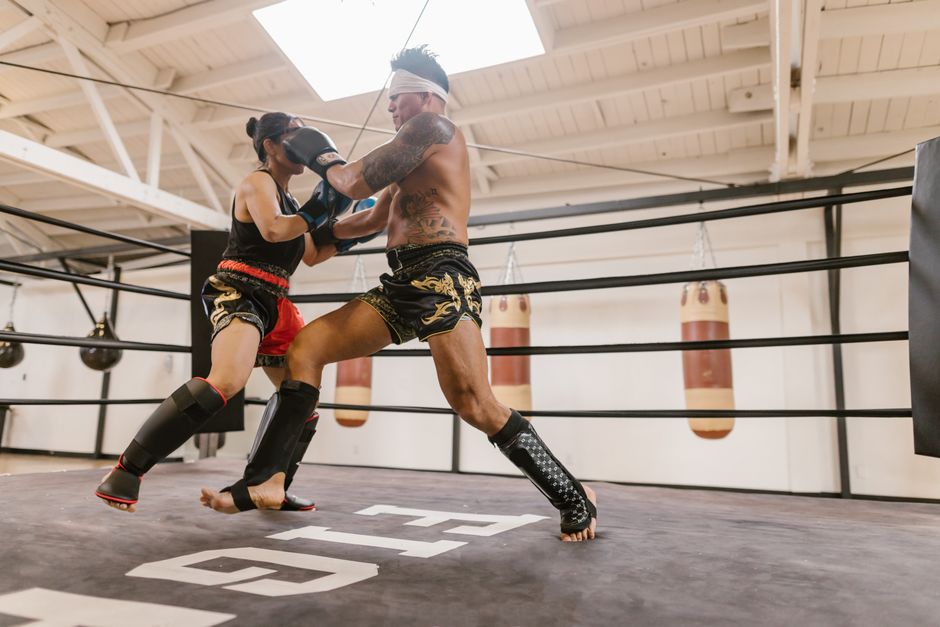
Saturday morning at a Muay Thai gym. The radio plays, the pads pop, and a row of fighters works roundhouse kicks while the coach shouts “teep!” from the corner. Later, two of them pull on shin guards, elbow pads and headgear for a few light rounds while two more work the clinch. Muay Thai is the “art of eight limbs”: punches, kicks, knees and elbows all land on a real person, and the clinch adds pulling and off-balancing. This page covers the Muay Thai injuries that show up again and again, what the research shows, how to cut the risk in sparring, and the signs that mean “stop and get it checked”, whether you train for fitness, fight amateur under IFMA rules, or hold a pro license.
General information, not medical advice. If you’re hurt, see a sports medicine doctor, physical therapist (PT) or certified athletic trainer (AT). For the big picture of the sport, start at our Muay Thai hub.
Where Muay Thai fighters get hurt
In a UK study of 152 Muay Thai practitioners, the legs were the most injured area in every group, beginners through pros. A Swiss survey of 419 Muay Thai, K-1 and kickboxing athletes found about two in three had been hurt in training; legs led in training (75% of training injuries) and the head in competition (68%). Most injuries were bruises, strains and sprains.
At official amateur Muay Thai championships with doctors ringside, 91% of 663 athletes finished with no health problem; the most frequent issues were nosebleeds, concussion and rib injuries, and the authors credit the referee’s early stoppage (RSC) with preventing some. Pro fights, with smaller gloves, no headgear and up to five rounds, carry more risk; pro kickboxing records, the closest cousin with data, show cuts and fractures leading (see our kickboxing injuries page).
Concussion and repeated head impacts: the honest picture
Muay Thai allows full-power strikes to the head with fists, shins, knees and elbows, and knockouts win fights. There’s no way to make that head-safe. What the research shows, in plain terms:
- Head hits add up, mostly in sparring. A 2026 case study put a sensor mouthguard on a world-class Muay Thai fighter during seven sparring sessions before a bout: it recorded 590 head impacts, most of them low but with occasional high rotational peaks. In boxers and MMA fighters, more sparring has been linked to a blood marker of nerve-cell damage and to slower thinking.
- Long-term risk is real but not fully mapped. Muay Thai-specific long-term brain studies are thin; most of what’s known about chronic traumatic encephalopathy (CTE) comes from boxing.
Recognize a concussion and stop
The CDC’s HEADS UP program: if you think an athlete may have a concussion, remove them from activity the same day until a health care provider clears them. Watch for a dazed look, slow answers or clumsiness, and for headache, dizziness, nausea, blurry vision or fogginess. Call 911 or go to the emergency department for the CDC’s danger signs: one pupil larger than the other, a headache that gets worse, slurred speech, weakness or numbness, repeated vomiting, seizures, increasing confusion, or loss of consciousness.
Time off after a knockout
- Amateur (IFMA rules, May 2026): after a knockout or a referee stoppage for head blows, no competition or sparring for at least 30 days; two within 90 days means 90 days out; three within 12 months means 12 months out. A neurologist must certify you fit before you return, and the rules apply equally to a head injury in training.
- Pros in the US: state athletic commissions set medical suspensions. California, for example, sidelines any fighter knocked out or stopped by TKO for at least 30 days. A commission suspension covers fights, not your gym, so the sparring break is up to you and your coach.
Sparring limits that protect your brain
No governing body sets a safe number of sparring rounds. These habits keep head contact down:
- Most sparring light and technical. Body-and-legs rounds, clinch rounds and “touch” or “play” sparring, the light, flowing style many Thai camps use, teach timing with far fewer head shots. Hard rounds belong in a fight camp, in small doses.
- Match partners by size and experience, with a coach watching. Beginners shouldn’t spar hard at all, and elbows to the head have no place in everyday sparring.
- Gear up every time: fitted mouthguard, headgear, shin guards and elbow pads. Headgear helps mostly against cuts, not concussion, and in a pilot study of K-1 rules bouts fighters landed more direct head strikes when wearing it.
- Never spar with symptoms. A headache, dizziness or fog from the last session means no sparring until a doctor says so.
Shin and foot injuries
Muay Thai kicks and checks with the shin, so the lower leg is both weapon and shield. A 2026 review of leg-kick research explains the trade-off: kicking with the shin loads the shinbone, while kicking with the top of the foot risks the small foot bones and ankle.
- Shin bruises and bumps: the classic lump after a checked kick. A lump that keeps growing or hurts at rest should be checked.
- Calf “dead leg” and a rare emergency: in 2026, doctors reported an elite kickboxer who developed acute compartment syndrome after repeated calf kicks in sparring and needed emergency surgery. The American Academy of Orthopaedic Surgeons (AAOS) describes this as a surgical emergency: pain far worse than the injury seems to explain, a tight, swollen calf, tingling or burning. Go to the emergency department.
- Foot and toe fractures: AAOS lists kicking something hard as a common cause. Pain, swelling and trouble walking mean see a doctor soon.
- Shin pain that won’t go away: pain in one spot of the shinbone that lingers for weeks, or hurts at night, needs imaging. A case report of a professional Muay Thai fighter with persistent shin pain found a bone lesion, a reminder that it isn’t always “just conditioning”.
Padded shin guards that cover the instep, like the Fairtex SP5 or the budget Venum Kontact, protect both partners in drills and sparring. Our Muay Thai training page looks at shin conditioning myths versus evidence.
Hands and wrists
AAOS names the boxer’s fracture, a break in the hand bone behind the little finger, most often from hitting something hard with a closed fist: watch for swelling, a sunken knuckle or a finger that crosses its neighbor when you make a fist, and get it seen soon. Wrist pain lasting more than a day after a bad punch should be checked too, since a scaphoid fracture may not show on the first X-ray (AAOS). Pros under ONE Championship’s Muay Thai rules fight in 4 oz gloves, far less padding than the 10 oz gloves of IFMA amateur bouts. Wrap every session, use padded bag gloves, and land with a straight wrist. A 180-inch wrap like the Hayabusa Perfect Stretch covers most adult hands.
Knees and the clinch
Two things load the knee: twisting on the support leg when you throw a full-power roundhouse, and taking kicks to the joint. The leg-kick review links the pivoting support leg to rotational stress on the knee’s ACL and meniscus. In the clinch, IFMA bans hip throws, hooking the legs, lifting and joint locks, and good gyms enforce the same in sparring. California’s pro rules make linear kicks to the front or side of the knee a foul. AAOS says an ACL tear often comes with a pop, swelling within hours and a knee that gives way; that always needs a doctor.
Cuts, especially from elbows
Elbows set Muay Thai apart, and a sharp elbow across the brow opens cuts. IFMA won’t let an athlete compete with a dressing on a cut on the face or scalp, and it requires HIV, hepatitis B and hepatitis C blood tests from age 16. IFMA makes elbow pads mandatory in competition; wear them for partner elbow drills too. A deep cut, one near the eye or one that won’t stop bleeding needs a doctor the same day. A crooked or blocked nose after a strike should be checked for a fracture.
Rib injuries
Body kicks and clinch knees land on the ribs, one of the most frequent problems at official Muay Thai championships. MedlinePlus explains that a broken rib hurts more when you breathe or cough, takes at least six weeks to heal, and shouldn’t be tightly wrapped, because that stops the deep breaths that keep the lungs clear. Call a doctor for shortness of breath, coughing up blood, a fever, or pain so bad you can’t breathe deeply. Trouble breathing after a body shot is an emergency.
Skin: shared mats, sweat and heat
Clinch work means skin-to-skin contact with sweaty partners. The National Athletic Trainers’ Association (NATA) advises showering after every session, not sharing towels or gear, and keeping any suspicious rash off the mats until it’s checked. A 2026 case report described a Muay Thai fighter back from training in Thailand with a rare bacterial skin infection on his legs, possibly spread through contact and mats in humid settings.
Protective gear worth having
Every major ruleset requires a mouthguard; a boil-and-bite guard like the Shock Doctor Gel Max is a starting point, and a dentist can fit a custom one. For sparring, add headgear such as the Venum Challenger 2.0. See Muay Thai gear for the rest and the rules page for what’s legal at each level.
Fairtex SP5 Muay Thai Shin Guards
- Covers shin and instep
- Two hook-and-loop straps
- Sizes XS–XL
Venum Kontact Shin Guards
- Shin-to-foot foam padding
- Hook-and-loop straps
- About $28
Shock Doctor Gel Max Mouthguard
- Boil-and-bite fit
- Adult and youth sizes
- About $12
Venum Challenger 2.0 Headgear
- Foam over head, temples, cheeks
- Hook-and-loop strap + laces
- About $70
When to see a sports medicine doctor, PT or athletic trainer
- Right away (emergency): any concussion danger sign or loss of consciousness, trouble breathing after a body shot, a calf or shin that’s tight, swollen and hurts far more than it should, or sudden vision changes.
- Within a day or two: a suspected concussion, a sunken knuckle, a sore wrist, a foot you can’t walk on, a cut that may need stitches, a knee that popped or swelled.
- Soon: shin pain in one spot that lingers for weeks, rib pain that isn’t easing, a rash that keeps returning, headaches or memory changes that build over weeks of sparring.
Once cleared, see Muay Thai recovery; for children, youth Muay Thai explains how the rules limit contact. For the close cousins of this sport, see boxing injuries and MMA injuries.
Muay Thai injuries: FAQs
What is the most common injury in Muay Thai?
In training, leg injuries such as bruised shins and thighs. In fights, head and face injuries lead, mostly cuts, nosebleeds and bruises; concussions and rib injuries also happen.
How long after a knockout can I spar again in Muay Thai?
Under IFMA rules, at least 30 days with no competition or sparring after one knockout or stoppage for head blows, 90 days after two within 90 days, and 12 months after three within a year, plus a neurologist’s clearance. A doctor may advise longer.
Does headgear prevent concussions in Muay Thai?
Not reliably. Headgear helps against cuts, but there’s little evidence it prevents concussion. Limiting hard sparring matters more.
Should I wrap a cracked rib from a body kick?
No. MedlinePlus advises against tight wrapping, because deep breaths help keep the lungs clear while the rib heals over at least six weeks. Get emergency help for any trouble breathing.
Are elbows allowed for kids in Muay Thai?
Not to the head. In IFMA competition, children under 12 may not strike the head at all, and under-14s may not use elbows or knees to the head; youth fighters wear headgear and body protectors. Ask any gym how it handles contact for children.