This article contains affiliate links: if you buy through them we may earn a commission, at no extra cost to you. Learn more.
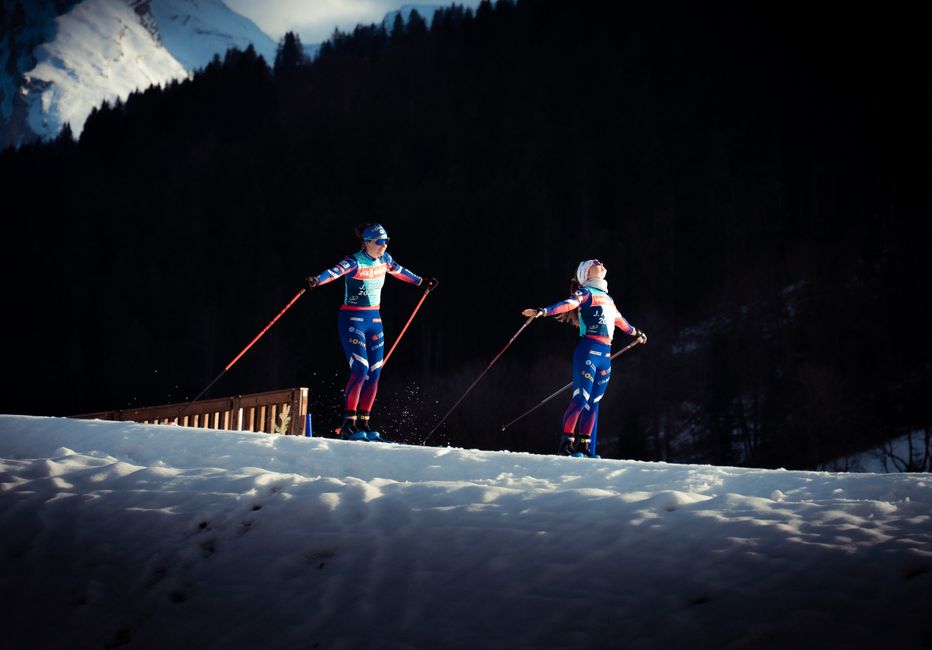
Fresh corduroy on a golf course at 7 a.m., the only sound the swish of skis and your own breathing. A Tuesday-afternoon practice where a pack of second graders chases a coach through the woods, playing tag on skis. Thousands of skiers in waves under the start banner in Cable, Wisconsin, setting off on the 50 kilometers to Main Street in Hayward. And the Olympic sprint final, six skiers elbow to elbow up the last hill. Cross-country skiing, or Nordic skiing, is one of the oldest ways to travel on snow and one of the toughest endurance sports in the world, and you can start it at four and keep doing it at eighty.
Cross-Country Skiing, page by page
- Rules: how the game works at every level
- Leagues & associations: pro, college, high school and youth
- Youth & high school: ages, safety and recruiting, for players and parents
- Injuries & sports health: prevention, concussion, when to see a pro
- Training & conditioning: before: off-season to in-season
- Game day: during: fueling, hydration, heat
- Recovery: after: games, tournaments, sleep
- Nutrition & supplements: what to eat, tested supplements
- Best wearables: trackers and watches for the sport
- Gear: the complete equipment list
Buying guide · Our Cross-Country Skiing buying guide compares the gear we'd pick, with prices and sizing:
This page is cross-country skiing for skiers and the people who look after them: how the sport works (classic and skate technique, the race formats, biathlon briefly), what it looks like at every level from the Bill Koch League to the World Cup, and, most of all, how to stay healthy doing it. Sports health is the heart of it: the injuries Nordic skiers get, why so many endurance skiers deal with breathing problems in the cold, frostbite and hypothermia, concussion, and when to see a professional. Then training, recovery and the gear that matters. Downhill skiers have their own section: see our skiing guide.
Cross-country skiing at a glance
| Techniques | Classic (skis parallel, often in set tracks: diagonal stride, double poling, herringbone) and skate or “free” technique (a skating push off the edges of the skis). |
|---|---|
| Race formats | Interval start (one at a time against the clock), mass start, pursuit, skiathlon (half classic, half skate), sprint (qualifier, then heats of six), team sprint and relay. |
| Olympic program | 12 events at Milano Cortina 2026, six for men and six for women at the same distances for the first time: 10 km, 20 km skiathlon, 50 km mass start, classic sprint, team sprint and 4 × 7.5 km relay. |
| Governing bodies | FIS (International Ski and Snowboard Federation) worldwide; U.S. Ski & Snowboard in the US; NCAA in college; state associations in high school; IBU for biathlon. |
| Main physical demands | Whole-body endurance: legs, hips, core, back, shoulders and arms all drive the skis, often for an hour or more, in the cold and sometimes at altitude. |
| Most common health issues | Knee (MCL) and thumb sprains from falls, overuse problems, cold injuries (frostbite, hypothermia) and, in elite skiers, asthma and exercise-induced breathing problems. |
How cross-country skiing works
You move yourself across the snow on long, light skis, with your heel free and two poles to push with. The rulebook of the International Ski and Snowboard Federation (FIS) defines two techniques. Classic covers the diagonal stride (arms and legs moving opposite, like walking with a glide), double poling with or without a kick, herringbone up steep hills and turning steps; skating isn’t allowed. Free technique allows every technique, and in practice that means skating: pushing off the inside edge of one ski, then the other, while you pole.
Classic skis need grip under the foot, from kick wax or from a built-in pattern or “skin,” and glide at the tips and tails. Skate skis are shorter and only need glide. That’s why ski centers groom two kinds of trail: parallel classic tracks set in the snow, and a wide, flat skate lane beside them. The first rule of trail etiquette follows: don’t skate in the classic tracks, and don’t walk or snowshoe on either. More in our trail etiquette and racing rules page.
Race formats
- Interval start: skiers go one at a time, usually 30 seconds apart, and the fastest time wins.
- Mass start: everyone starts together and the first across the line wins, like the Olympic 50 km.
- Pursuit: starting times come from an earlier race, so the leader starts first and the first to the finish wins.
- Skiathlon: a mass start in classic, a ski change in a pit box in the stadium, then skate to the finish.
- Sprint: an individual time-trial qualifier, then knockout heats of six. At the Olympics the top 30 qualify for five quarterfinals.
- Team sprint and relay: two skiers alternate laps in the team sprint; in the 4 × 7.5 km relay, two legs are classic and two are skate.
Biathlon, briefly
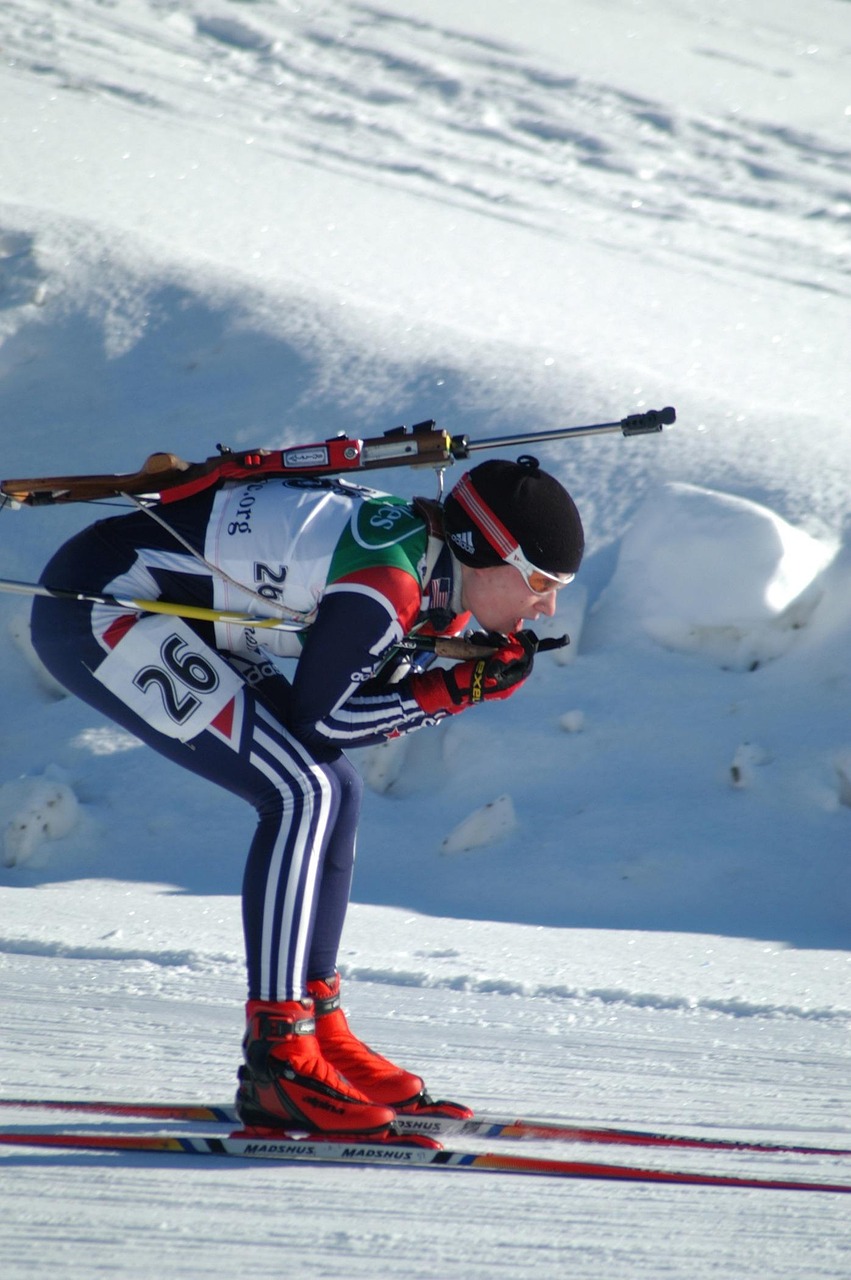
Biathlon combines skate skiing with rifle marksmanship: athletes stop at a range to shoot at five targets 50 meters away, prone and standing, and each miss costs a 150-meter penalty loop or, in the individual race, a minute added to their time. It’s governed by the International Biathlon Union (IBU) and has been an Olympic sport for men since 1960 and for women since 1992. The skiing, fitness and health advice on this site applies to biathletes too; for the shooting side, learn from a certified club coach and your national federation’s safety rules. Nordic combined (ski jumping plus cross-country) is the other branch of the Nordic family.
Cross-country skiing at every level
Kids and youth
Many American Nordic skiers start in a club youth program. The best known is the Bill Koch Youth Ski League, run by the New England Nordic Ski Association (NENSA) for kids from pre-K and kindergarten through 8th grade. It began in 1977, the season after Bill Koch won the first U.S. Olympic medal in men’s cross-country skiing, and turns 50 in 2026-27. Its mission is to introduce kids to a lifelong sport “in a fun, inclusive, and safe environment.” Many regions have their own programs, such as Junior Nordic in Anchorage for ages 6 to 14, where the emphasis is on fun and technique rather than competition. Kids’ events like the non-competitive Barnebirkie (ages 3 to 13) give every finisher a medal. See our youth cross-country skiing page.
High school
Nordic skiing is a school sport in the snow states. The 2024-25 participation survey of the National Federation of State High School Associations (NFHS) counted 6,508 cross-country skiers in 12 states: 3,326 boys and 3,182 girls. Minnesota is by far the biggest, with about 3,400 skiers from nearly 140 schools, followed by Alaska. Many high school skiers also race with a club, and the best go on to the U.S. Ski & Snowboard Junior National Championships in the U16, U18 and U20 age classes.
College
NCAA skiing is co-ed and combines alpine and Nordic: men and women race slalom and giant slalom plus classical and freestyle cross-country, and the team title is decided by points across all of it. Skiers qualify through East, Central and West regions, and the 2027 championships are set for Stowe Mountain Resort and the Craftsbury Outdoor Center in Vermont, March 10–13. Club racing runs through the United States Collegiate Ski & Snowboard Association (USCSA), which counts more than 40 Nordic teams.
World Cup, Olympics and Paralympics
The FIS Cross-Country World Cup runs every winter, with a program FIS sets each season. At Milano Cortina 2026, races were held in Tesero in the Val di Fiemme, and Team USA won three medals: Ben Ogden took silver in the classic sprint, the first U.S. men’s Olympic cross-country medal since Bill Koch’s silver in 1976, then a second silver in the team sprint with Gus Schumacher; Jessie Diggins won bronze in the 10 km freestyle, her fourth Olympic medal, the most of any American cross-country skier. Para cross-country has been in the Paralympics since 1976, with standing, sit-ski and vision-impaired classes (vision-impaired skiers race with a guide). More on our leagues and associations page.
Adults and citizen racing
Most Nordic skiers never race, and that’s the beauty of it: an hour on the trails after work, a weekend tour, a lit loop at night. For those who want a goal, citizen races (“loppets”) welcome everyone. The American Birkebeiner, founded in 1973, is North America’s largest cross-country ski marathon: 50 km skate or 53 km classic from Cable to Hayward, Wisconsin, with skiers from all 50 states and 25 countries. Shorter races the same weekend, the 29 km Kortelopet and 15 km Prince Haakon, are open from age 13. The 2027 Birkie is on Saturday, February 27.
Sports health for cross-country skiers
The good news first: reviews describe cross-country skiing as a low injury-risk sport with many health benefits, and a review of the research estimated between 0.49 and 5.63 injuries per 1,000 skier days. But falls, cold, long hours of repetitive training and huge volumes of cold air all leave their mark. This section is general information, not medical advice. If you’re hurt or something doesn’t feel right, see a sports medicine doctor, physical therapist or athletic trainer.
The most common injuries
- Knee sprains: in that review, sprains of the medial collateral ligament (MCL) on the inside of the knee were the most common injury, usually from a fall or a ski catching an edge.
- Skier’s thumb: a sprain of the thumb’s ulnar collateral ligament, from falling with a hand strapped to a pole. AAOS advises having a doctor check even a mild thumb sprain that doesn’t get better quickly.
- Overuse injuries: the poling and skating motions, repeated thousands of times, can strain the shoulders, low back, hips and lower legs. In a year-long study of Swedish ski high school athletes aged 16 to 19, injuries were more common in the pre-season than in the race season, and younger athletes and those with a past serious injury were at higher risk.
- Cold injuries: frostbite and hypothermia show up often in the research, even if nobody has counted exactly how often.
Breathing: “skier’s asthma”
Hard exercise in cold, dry air means breathing huge volumes of it, and researchers have long noticed what that does to skiers’ airways. In a Swedish study published in the BMJ, 33 of 42 elite cross-country skiers had asthma symptoms or overly sensitive airways, compared with one of 29 non-skiers, and the authors pointed to strenuous exercise in cold air as the most likely reason. If you cough, wheeze, feel tight in the chest or can’t catch your breath during or after skiing, don’t just push through it: see a doctor, who can test your breathing and talk about options. A buff or neck gaiter over the mouth on the coldest days is something many skiers use for comfort.
Cold: frostbite and hypothermia
Nordic skiers sweat hard, then stop on a windy ridge, and that’s when cold catches up. The CDC notes that hypothermia can happen even above 40°F if you’re chilled by rain, sweat or water. Shivering, confusion, fumbling hands, slurred speech or drowsiness are warning signs: get the person somewhere warm, out of wet clothes and warm the core, and get emergency care if their temperature is below 95°F. For frostbite (white or grayish-yellow, firm or numb skin), warm the area gently and don’t rub it. The American Academy of Pediatrics (AAP) notes that fingers, toes, ears and noses are most at risk, recommends several thin layers, and advises keeping kids off the snow when the wind chill is below about −15°F.
Concussion: recognize and remove
Head injuries are less common than in downhill skiing, but icy descents and race crashes happen. The CDC’s HEADS UP program says to watch for a skier who seems dazed or confused, and to listen for headache, dizziness, balance problems, sensitivity to light or noise, or feeling foggy. Anyone with a possible concussion should stop skiing that day and be checked by a health care provider before going back. Call 911 for danger signs such as a worsening headache, repeated vomiting, seizures, unusual drowsiness or slurred speech.
More on knees, thumbs, backs and breathing on our cross-country skiing injuries page.
Training and conditioning
Ski fitness is built in summer and fall. Sports medicine reviews say that alongside aerobic and harder interval training, skiers should do ski-specific strength work to build force and the endurance to keep producing it through a race, and that simple short time trials are a cheap way for juniors to track progress. Many skiers run, hike with poles, bike and roller ski in the off-season (wear a helmet on roller skis, which have no brakes). Build volume gradually, since the Swedish study found injuries peaking in the pre-season. Our training page covers a season plan, and our VO2 max training guide and best wearables for cross-country skiing help with heart rate and zones.
Ski days, race days and recovery
For long days and races, the American College of Sports Medicine (ACSM) joint position on sports nutrition suggests about 30–60 grams of carbohydrate per hour for exercise lasting one to two and a half hours, and up to 90 grams an hour for longer events like a ski marathon. Cold blunts thirst, so drink on a schedule, and carry your bottle in an insulated belt or inside your jacket so it doesn’t freeze. Afterward: get into dry clothes fast, eat and drink, and sleep (the CDC recommends at least 7 hours for adults, 8–10 for teens). See our ski day and race day page, recovery page and nutrition and supplements page.
Gear for cross-country skiing
Start with the technique you’ll ski. Classic skis are longer and have a grip zone; for most beginners, retailers suggest a waxless (fishscale or skin) classic or touring ski. Skate skis are shorter and stiffer, with stiff-cuffed boots. Skis are sized mainly by your weight (their flex), so a shop fitting beats any chart. Boots and bindings must match: NNN, Prolink and Turnamic boots and bindings are interchangeable, while SNS is a separate system. Poles are longer for skating: makers like Fischer suggest about 84% of your height in centimeters for classic and 89% for skate. Then wax: glide wax on the tips and tails, and kick wax matched to the temperature, or a wipe-on paste for waxless skis. Our cross-country ski gear page walks through all of it.
Prices change often. The prices below are what we saw at the maker or a major retailer in October 2026; check the current price before you buy.
Swix Classic Kick Wax Kit (V40, V45, V55 + cork)
- Three Swix hard kick waxes
- Cork to rub them in
- About $30
Whitewoods Cross Trail Nordic Ski Poles
- Sizes 120–160 cm
- Fiberglass-wrapped aluminum
- About $49
Smartwool Classic Thermal Merino Base Layer Crew
- 100% merino wool
- Midweight
- About $100
Hyperice Normatec Go
- Calf compression sleeves
- 7 pressure levels
- About $379
The Swix kick wax kit has three hard kick waxes for cold to around-freezing snow plus a cork; Whitewoods Cross Trail poles are an affordable touring pole with a fiberglass-wrapped aluminum shaft and padded straps, sold in 5 cm steps from 120 to 160 cm; and a merino layer like the Smartwool Classic Thermal crew stays warm when you sweat. After a long day, many skiers like Normatec Go calf sleeves (see our compression boots guide) or a small Hypervolt Go 3 massage gun (massage gun guide). These are comfort tools, not treatment.
Cross-country skiing FAQs
What is the difference between classic and skate skiing?
Classic skiing keeps the skis parallel, usually in set tracks, with a kick-and-glide stride and double poling; the skis need grip wax or a grip pattern under the foot. Skate skiing pushes off the edges in a V like ice skating, on a wide groomed lane, with shorter skis, stiffer boots and longer poles. Classic is usually easier to learn first.
Is cross-country skiing the same as Nordic skiing?
Mostly, yes. “Nordic skiing” is the family of free-heel skiing sports: cross-country skiing, ski jumping, Nordic combined and biathlon. In everyday North American use, “Nordic skiing” usually means cross-country.
Is cross-country skiing dangerous?
It’s considered a low injury-risk sport. The most common injuries are knee (MCL) and thumb sprains from falls, plus overuse problems and cold injuries. Dress in layers, choose trails that match your skill, and see a professional for pain that doesn’t go away.
Why do cross-country skiers get asthma?
Researchers think breathing large volumes of cold, dry air during hard exercise, year after year, is the most likely reason asthma symptoms and sensitive airways are much more common in elite skiers than in non-skiers. If you have symptoms, see a doctor for testing.
Is cross-country skiing good exercise?
Yes. It works the legs, hips, core, back and arms at once, and it’s one of the classic endurance sports. Reviews also point out its health benefits and few long-term risks. Start gradually and take a lesson if you’re new.
Cross-country skiing gives back quiet winter mornings, a fitness that lasts a lifetime and a sport the whole family can share. The skiers who keep going dress for the cold, build their training slowly, listen to their lungs and their joints, and know when to call it a day. Keep exploring: our recovery tools guide, alpine skiing for downhill days, our soccer guide for a team sport, and every other sport on our sports hub.