This article contains affiliate links: if you buy through them we may earn a commission, at no extra cost to you. Learn more.
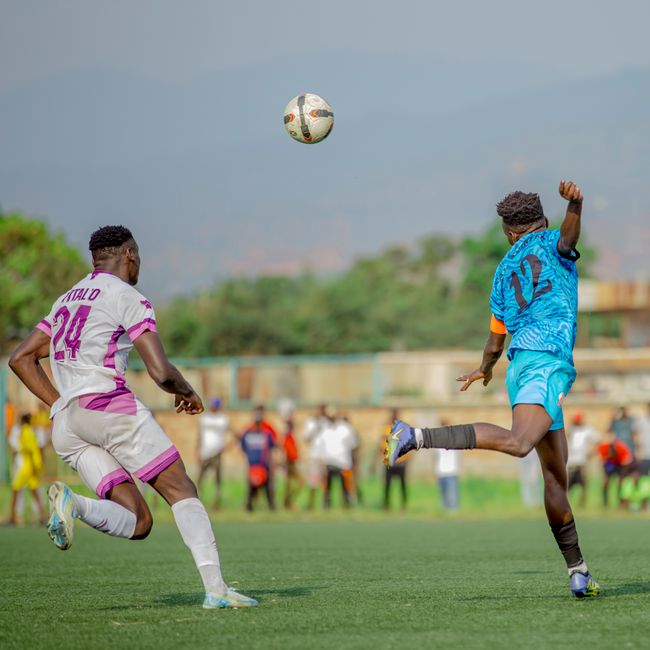
Orange slices at halftime of a Saturday-morning youth game. Stadium lights, a marching band and the whole town in the bleachers on a Friday night in the fall. A packed stadium singing through a World Cup match. Soccer is the world’s game, and in the US it starts young: US Youth Soccer alone registers nearly 2.5 million youth players a year, according to the American Academy of Orthopaedic Surgeons (AAOS).
Soccer, page by page
- Rules: how the game works at every level
- Leagues & associations: pro, college, high school and youth
- Youth & high school: ages, safety and recruiting, for players and parents
- Injuries & sports health: prevention, concussion, when to see a pro
- Training & conditioning: before: off-season to in-season
- Game day: during: fueling, hydration, heat
- Recovery: after: games, tournaments, sleep
- Nutrition & supplements: what to eat, tested supplements
- Best wearables: trackers and watches for the sport
- Gear: the complete equipment list
Buying guide · Our Soccer buying guide compares the gear we'd pick, with prices and sizing:
This page is soccer for athletes and the people who look after them: how the game works, what it looks like at every level from kids to pros, and, most of all, how to stay healthy playing it. Sports health is the heart of it: the injuries soccer players get most, the warm-up that research says can prevent many of them, how to spot a concussion, how to handle the heat and when to see a professional. Then training, recovery and the gear you really need.
Soccer at a glance
| Players per side | 11, including one goalkeeper (a game can’t start or go on with fewer than 7). Kids play small-sided: 4v4, 7v7, 9v9. |
|---|---|
| Game length | Pro, international and college: two 45-minute halves. High school (NFHS): two 40-minute halves. Youth: shorter, by age (for example 4 × 10 minutes at U6–U8). |
| Field | 100–130 yards long, 50–100 yards wide (international games 110–120 × 70–80). Goal: 8 yards wide, 8 feet high. Grass or artificial turf. |
| Governing bodies | FIFA worldwide (the rules are written by IFAB); U.S. Soccer in the US; NFHS for high school; NCAA, NAIA and NJCAA for college. |
| Main physical demands | Stop-and-go running: mostly low intensity, plus 150–250 brief intense actions per game at the top level (sprints, cuts, jumps, tackles, kicks). |
| Most common injuries | Ankle and knee sprains, muscle strains (hamstring, groin, quad, calf), ACL tears, concussions, overuse injuries (Achilles tendinitis, shin splints). |
How soccer works
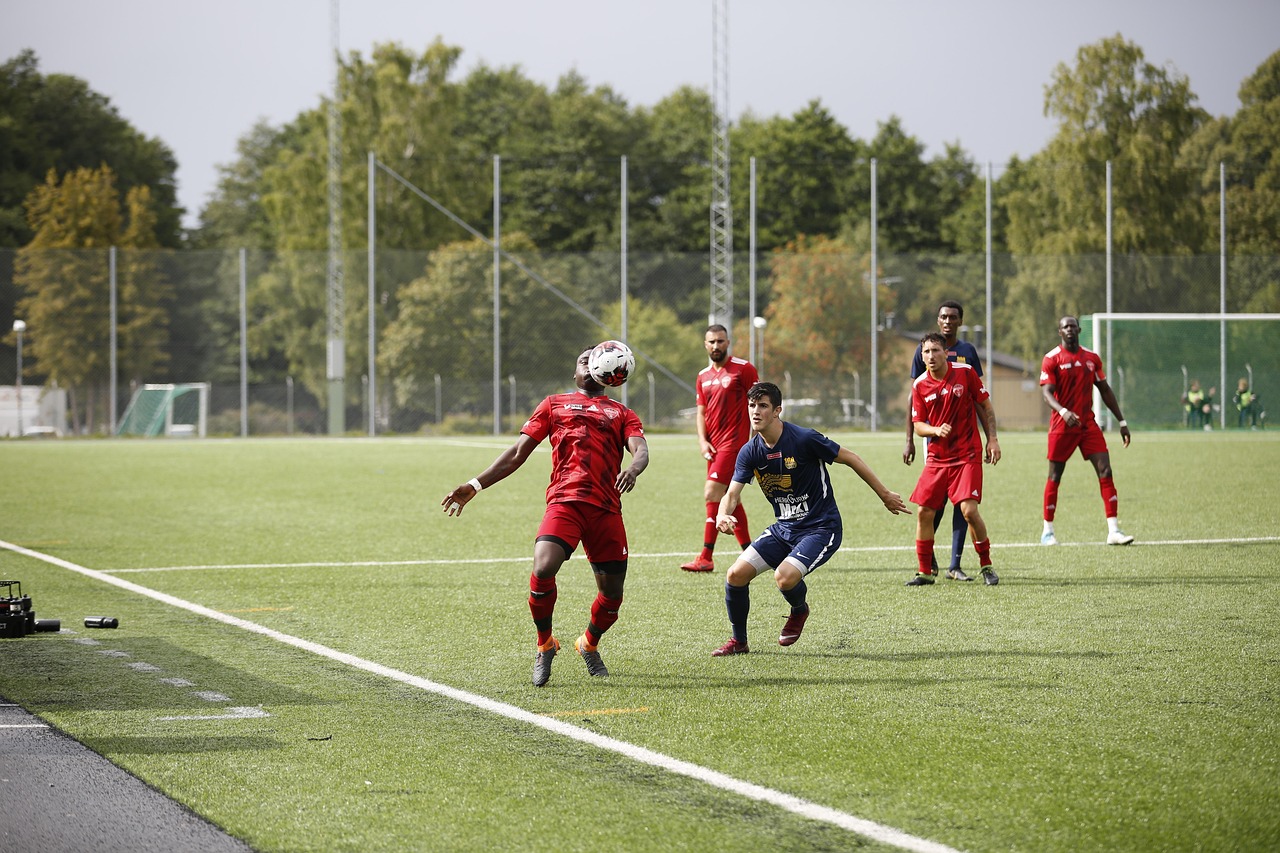
Two teams try to put the ball in the other team’s goal; the team with more goals wins. Only the goalkeeper may handle the ball, and only inside their own penalty area. Everyone else plays it with feet, thighs, chest or head; a deliberate handball is a foul.
Ball out over the sideline: throw-in. Over the end line: goal kick or corner kick, depending on who touched it last. Fouls such as tripping or a reckless tackle give the other team a free kick, or a penalty kick if defenders commit them in their own penalty area. The offside rule, in short, stops attackers from waiting behind the last defenders for the ball. A yellow card is a caution; a red card sends a player off, and the team plays a player short. The clock runs continuously and the referee adds stoppage time; knockout games can go to extra time and penalties.
Soccer at every level
Kids and youth
Most kids start in a recreational league through US Youth Soccer, AYSO (where “Everyone Plays” at least half of every game) or a local club; some move on to travel and competitive club teams. U.S. Soccer’s small-sided standards keep the game small so kids touch the ball more: 4v4 with no goalkeepers and a size 3 ball at U6–U8 (four 10-minute quarters), 7v7 with a size 4 ball at U9–U10 (two 25-minute halves) and 9v9 at U11–U12 (two 30-minute halves). Then comes the full 11-a-side game.
Heading rules for kids: under U.S. Soccer’s Recognize to Recover guidelines, players in U-11 programs and younger don’t head the ball in practices or games. In U-12 and U-13 programs, heading practice is limited to 30 minutes a week and no more than 15–20 headers per player per week. Referees enforce it by age group: a deliberate header in a restricted game gives the other team an indirect free kick. Ask your league how it applies the rules.
High school
Most high school soccer in the US is played under rules from the National Federation of State High School Associations (NFHS): two 40-minute halves, or four 20-minute quarters where a state association chooses that. Each state association runs its own season and playoffs.
College
The NCAA runs men’s and women’s soccer championships in Division I, II and III, with the finals in December; NCAA games are two 45-minute periods. The NAIA and the NJCAA (two-year colleges) have their own national championships, which gives players many routes to play in college.
Pro and national teams
Major League Soccer (MLS) has 30 clubs in 2026, each playing a 34-game regular season. The National Women’s Soccer League (NWSL) grew to 16 teams in 2026 with Boston Legacy FC and Denver Summit FC, and the USL runs pro leagues such as the USL Championship. Abroad, the best known are England’s Premier League, Spain’s La Liga, Germany’s Bundesliga, Italy’s Serie A and Mexico’s Liga MX.
National teams play for the FIFA World Cup. The 2026 edition, from June 11 to July 19, was the first with 48 teams and the first hosted by three countries: 104 matches in 16 cities across the United States, Canada and Mexico. Soccer is also an Olympic sport: the women’s tournament has no age limit, while the men’s is an under-23 event with up to three older players per team, and the rules stay in place for Los Angeles 2028.
Adult and recreational
Sunday leagues, coed rec leagues, over-30 and over-40 divisions, indoor soccer, futsal and pickup games keep millions of adults playing. If you’re coming back after years away, AAOS’s advice fits: don’t go “from couch to cleats” overnight. Build your playing time and intensity up gradually.
Sports health for soccer players
Soccer mixes sprinting, cutting, jumping and contact, so injuries come with the game. The good news: the American Medical Society for Sports Medicine (AMSSM) says about 90% of sports injuries are non-surgical, and smart warm-ups lower the risk. This section is general information, not medical advice. If you’re hurt, see a professional.
The most common soccer injuries
- Ankle sprains: AAOS lists soccer among the ball sports where ankle sprains are most common, usually when the foot rolls inward.
- Hamstring and groin strains: in a study of 51 professional men’s teams in Europe, muscle injuries were 31% of all injuries; of those, 37% were hamstrings, 23% adductors (groin), 19% quadriceps and 13% calves.
- ACL tears: the anterior cruciate ligament usually tears when a player pivots, cuts or lands with the knee straight. Reviews find female soccer players have about 2–3 times the ACL injury risk of male players, and a 2025 meta-analysis of teen athletes found the highest per-season ACL risk among girls was in soccer.
- Concussions: in a study of US high school soccer, heading was the activity most often linked to concussions, but the most common cause was contact with another player, even in heading-related concussions. Girls had a higher concussion rate than boys.
- Overuse injuries: AAOS names Achilles tendinitis and shin splints. In young athletes, a clinical study linked specializing in one sport, and playing more hours a week than their age in years, with a higher injury risk.
Injury prevention: the FIFA 11+ warm-up
The FIFA 11+ is a free, roughly 20-minute warm-up built by FIFA’s medical research centre with sports-injury researchers in Oslo and Santa Monica. It has 15 exercises in three parts: slow running with active stretching and partner contacts; strength, jumping and balance work for the core and legs; and faster running with cutting and changes of direction. It needs no equipment and is meant to replace a team’s normal warm-up at least twice a week.
The research is encouraging. In a trial of 1,892 Norwegian girls aged 13–17 (BMJ, 2008), teams using the program had a lower risk of injuries overall and of severe injuries, although the main measure, lower-limb injuries, fell short of statistical significance. In NCAA Division I and II men’s soccer (2015), teams using it had 8.09 injuries per 1,000 athlete-exposures versus 15.04 in the other teams. A 2017 review of six trials with 6,344 players found about 30% fewer injuries. If your team has no structured warm-up, ask a coach or athletic trainer about it.
Concussion: recognize and remove
The CDC’s HEADS UP program asks coaches and parents to watch for a player who looks dazed or confused or is suddenly slow to react, and to listen for headache, dizziness or balance problems, sensitivity to light or noise, feeling slowed down, trouble concentrating, irritability or sleep changes.
- Remove the player from play right away if you see signs after a knock to the head or body.
- Keep them out for the rest of that day and until a healthcare provider clears them. Don’t try to judge how serious it is yourself.
- Return slowly: returning to sport goes in steps and usually takes a week or more.
- Call 911 for danger signs: seizures, passing out with growing drowsiness, a headache that gets worse and won’t go away, or one pupil larger than the other or double vision.
In youth soccer, U.S. Soccer’s rules let a player with a suspected head injury be substituted for evaluation without it counting against the team’s substitutions, so there’s no reason to rush. The CDC offers free HEADS UP online training for youth coaches.
Heat and hydration
Preseason often lands in summer heat, and the EPA notes that about 9,000 US high school athletes are treated for heat-related illness each year. The National Athletic Trainers’ Association (NATA) recommends easing athletes into the heat over 7–14 days. AAOS suggests about 24 ounces of non-caffeinated fluid two hours before exercise and 8 ounces right before. Give kids frequent water breaks. Call 911 for confusion, collapse, hot dry skin or very heavy sweating, a racing pulse, seizures or a very high body temperature; for exertional heat stroke, NATA recommends fast cold-water immersion by trained staff on site.
When to see a doctor, physical therapist or athletic trainer
AAOS’s advice is simple: don’t play through pain. See a professional for pain that doesn’t settle, swelling, a knee that “pops” or gives way, a joint you can’t put weight on or that looks out of shape, or any concussion signs. A sports medicine physician manages most sports injuries without surgery and refers to physical therapy or a surgeon when needed. A physical therapist guides rehab and the return to play. Athletic trainers are licensed or regulated health care professionals in all 50 states who work with physicians; if your school or club has one, start there.
Training and conditioning for soccer
Preseason: build fitness gradually rather than cramming it into the first week of practice, and give your body time to adjust to the heat. Soccer fitness means repeated sprints with short recoveries, so mix in interval running, agility and speed work (see our speed training equipment guide) with leg and core strength.
In season: keep the FIFA 11+ or a similar warm-up at least twice a week, keep some strength work, and watch the total load, especially for young players on several teams. Many athletes track sleep and strain with a wearable (see Whoop vs Oura vs Garmin), and the mental side matters too: mental training tools for athletes.
Game day: the sports-nutrition position statement from the American College of Sports Medicine and two dietitians’ groups recommends a pre-exercise meal that is high in carbohydrate, moderate in protein, low in fat and fiber, made of familiar foods and eaten roughly 1–4 hours before. Arrive with fluids on board, warm up properly, and drink at breaks and halftime; on hot days many players add electrolytes (see our electrolyte powder guide). Afterwards, cool down and stretch, then refuel and rehydrate.
Recovery after soccer games
Recovery starts with the basics. Sleep comes first: the CDC, citing the American Academy of Sleep Medicine, recommends 9–12 hours a night for children 6–12, 8–10 hours for teens and 7 or more for adults. Then real food and fluids after the game; many players reach for a protein shake when a meal is hours away (see our protein powder guide). For a personal plan, the same position statement recommends a registered dietitian.
Simple tools help many players feel better between games: a foam roller or massage gun for tight calves and quads, compression boots after a tournament weekend, and soft recovery shoes once the cleats come off. They’re about comfort, not treatment; pain or swelling that doesn’t go away needs a professional. Our recovery tools guide compares them all.
Gear for soccer
- Shin guards: required by the Laws of the Game, covered by the socks. AAOS notes that lower-leg injuries are most often caused by inadequate shin guards.
- Cleats by surface: makers label them FG (firm ground: natural grass), SG (soft ground: wet, muddy grass), AG (artificial grass), TF (turf: short, carpet-like turf) and IC or IN (indoor courts). AAOS suggests molded cleats over screw-in ones.
- Ball size by age: size 3 for U6–U8, size 4 for U9–U12 (U.S. Soccer standards) and size 5, the full-size ball of 27–28 inches around, from U13 and up.
- Goalkeepers: gloves, and padded shirts or shorts if they like.
Three simple picks for a soccer bag: the Select Numero 10, a size 5 ball the maker says meets NFHS and NCAA requirements; Vizari Malaga shin guards, hard-shell guards with hook-and-loop straps in kids’ to adult sizes; and the OOFOS OOahh Slide, the soft recovery slide from our recovery shoes guide, for after the final whistle.
Select Numero 10 Soccer Ball (Size 5)
- Size 5
- NFHS and NCAA approved (maker)
- Ships deflated
Vizari Malaga Shin Guards
- Hard shell
- Hook-and-loop straps
- Kids 4-6 to adult sizes
OOFOS OOahh Slide
- OOfoam slide
- APMA Seal of Acceptance
- Machine washable
For more after the game, browse Recovery & Regeneration and Training & Performance.
Soccer FAQs
What age can kids start playing soccer?
U.S. Soccer’s small-sided standards start at U6: 4v4, no goalkeepers, a size 3 ball and four 10-minute quarters. Programs for younger kids vary by club, so ask locally.
How long is a soccer game?
Ninety minutes (two 45-minute halves) in pro, international and NCAA college soccer, plus stoppage time. High school games under NFHS rules are 80 minutes, and youth games are shorter, from 40 minutes of play at U6–U8 to 60 at U11–U12.
How many players are on a soccer team?
Eleven on the field per side, one of them the goalkeeper, and a game can’t continue if a team drops below seven. Youth teams play 4v4, 7v7 or 9v9 depending on age.
Is heading safe for kids?
U.S. Soccer’s guidelines say no heading in U-11 programs and younger, and limited heading practice in U-12 and U-13. In high school players, most concussions came from contact with another player, so safe play matters as much as limiting headers.
How can soccer players lower their risk of an ACL injury?
Strength, balance and landing work, for example the FIFA 11+ at least twice a week; a meta-analysis found injury-reduction training lowered ACL tear rates in soccer. It matters most for girls and women, who have about 2–3 times the risk. An athletic trainer or physical therapist can check your technique.
What should I eat before a soccer game?
A familiar meal that is mostly carbohydrate, with some protein and not much fat or fiber, about 1–4 hours before kickoff, plus fluids. Try new foods in practice, not on game day, and talk to a registered dietitian for a personal plan.
How do I recover after a tournament weekend?
Eat and drink between games, find shade, and get a full night’s sleep each night. Afterwards, keep the next day easy: light movement, good meals and early bed. Pain, swelling or concussion symptoms that last are a reason to see a professional, not to push on.
Soccer asks a lot of the body, and the players who last are the ones who warm up well, sleep, eat and listen to pain. Keep exploring: our recovery tools guide, electrolytes and Nutrition & Supplements for game days, speed training gear for the preseason, and the other sports on our sports hub.