This article contains affiliate links: if you buy through them we may earn a commission, at no extra cost to you. Learn more.
Monday morning after a Sunday game, a college soccer player lies on her back on a reformer, feet on the footbar, and slides the carriage out and in while her coach counts the breaths. In a high school weight room, the baseball team ends practice with fifteen minutes of mat work: the hundred, single-leg stretches, a slow roll-up. A marathoner in his fifties takes a Saturday class at the studio next to the coffee shop because his physical therapist suggested it. And a ballet dancer warms up on a mat in a corner of the studio the way dancers have since Joseph Pilates first taught them in New York. Pilates for athletes is quiet, slow and harder than it looks, and that’s the point.
Pilates, page by page
- Rules: how the game works at every level
- Leagues & associations: pro, college, high school and youth
- Youth & high school: ages, safety and recruiting, for players and parents
- Injuries & sports health: prevention, concussion, when to see a pro
- Training & conditioning: before: off-season to in-season
- Game day: during: fueling, hydration, heat
- Recovery: after: games, tournaments, sleep
- Nutrition & supplements: what to eat, tested supplements
- Best wearables: trackers and watches for the sport
- Gear: the complete equipment list
Buying guide · Our Pilates for Athletes buying guide compares the gear we'd pick, with prices and sizing:
This page is Pilates for athletes and the people who coach and care for them: what Pilates is, mat versus reformer, how it fits at every level from kids to pros, and what the research really says about Pilates benefits for core strength, flexibility and back pain (and where it doesn’t say much). Sports health is the heart of it: how to practice safely, who should check with a doctor first, and when to see a professional. Then training, recovery and the gear worth owning.
Pilates at a glance
| What it is | A mind-body exercise method created by Joseph Pilates, who called it “Contrology.” A review of 119 research papers described it as exercise that focuses on strength, core stability, flexibility, muscle control, posture and breathing. |
|---|---|
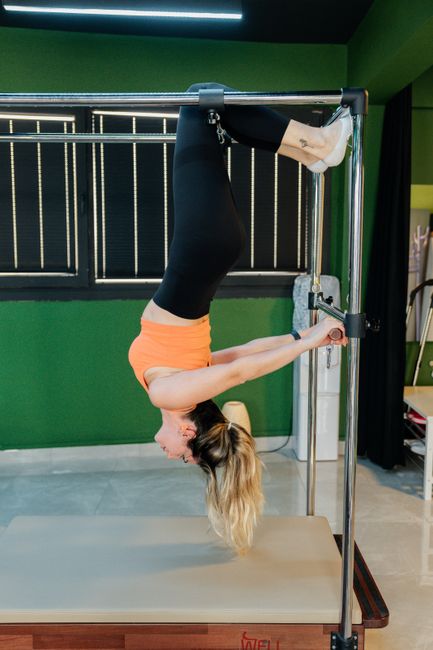
| Two main ways to do it | Mat (body weight, sometimes a ring, ball or band) and equipment, mainly the reformer, plus the Cadillac or trapeze table, the tower, the Wunda chair and barrels. See methods, principles and etiquette. |
| Who does it | About 13.8 million people in the US, according to Sports & Fitness Industry Association data reported in August 2026, with steady growth since 2020. |
| Teachers | Pilates isn’t a licensed profession. Teachers train with programs such as Balanced Body, BASI or STOTT PILATES, and can take the national NCPT exam. See teachers and certification. |
| What research shows | Gains in flexibility and muscular endurance in some trials; for chronic low back pain, a Cochrane review found Pilates beats minimal treatment but isn’t proven better than other exercise. Many studies are small. |
| Safety | Low-impact and generally safe for healthy people with a qualified teacher. Home reformers have springs or cords and moving carriages: follow the maker’s rules, and keep young children away. |
How Pilates works for athletes
Joseph Pilates was born in Germany in 1883, a sickly child who threw himself into gymnastics, bodybuilding and boxing. Interned in Britain during World War I, he refined his system of exercises in the camps, and in the mid-1920s he moved to New York, where he and his wife Clara opened a studio and taught many dancers and performers. He published Your Health in 1934 and Return to Life Through Contrology in 1945, the book with his original 34 mat exercises, and patented his own apparatus. He died in 1967. In 2000 a federal court in New York ruled that “Pilates” is the generic name of an exercise method, like yoga or karate, not a trademark, which is why anyone can call a class Pilates today.
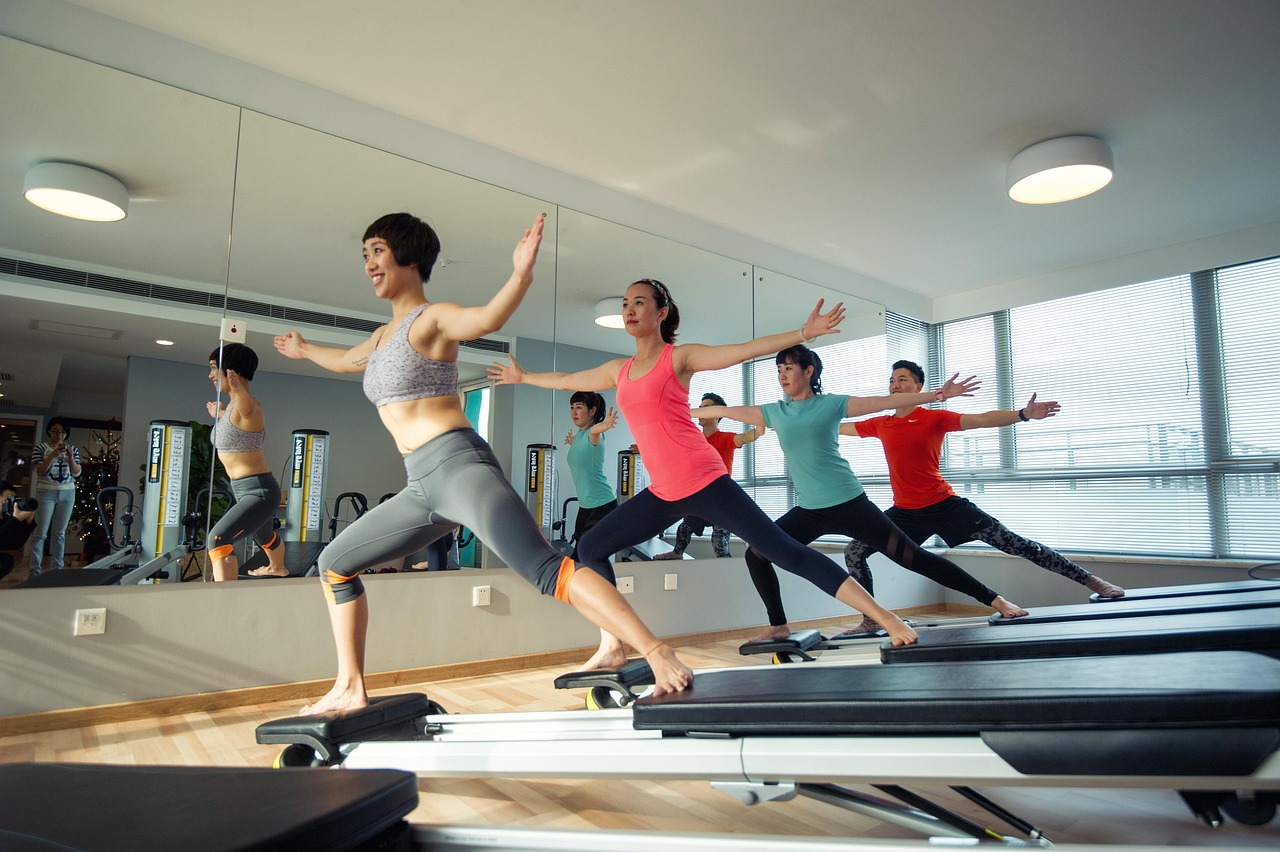
A class is a series of controlled exercises, usually lying on your back, on your side, kneeling or sitting, with careful breathing and a lot of attention to how your pelvis, ribs and spine are lined up. On the mat you work against your own body weight. On the reformer, a sliding carriage attached to springs, the springs add resistance or help, depending on the exercise. Classes range from slow and rehab-friendly to fast and sweaty.
For an athlete, Pilates does three jobs. Trunk and hip control: holding your spine and pelvis steady while arms and legs move, the same job your core does when you sprint, cut, throw or swing. Mobility with control: moving hips, spine and shoulders through their range while staying strong at the ends. Body awareness and breathing: slow, precise reps teach you to notice when one side works harder than the other. It isn’t a replacement for heavy strength training, speed work or conditioning; most athletes add it on top, one or two sessions a week. Our Pilates training page shows how to fit it into a season.
Pilates and yoga are often lumped together, and they overlap: both use breath, mats and slow control. Yoga mixes postures with breathing and meditation and holds stretches longer; Pilates is closer to a strength-and-control workout with exact repetitions. Many athletes do both. See our yoga for athletes section.
Pilates at every level
Kids and young athletes
The CDC recommends at least 60 minutes of activity a day for children and teens 6 to 17, including muscle-strengthening activities on at least 3 days a week, and Pilates-style mat work can count. The research on Pilates in young people is early: a 2020 review of 11 studies found it appeared to improve flexibility, strength and postural control in children with musculoskeletal problems, and a 2023 review of 15 studies called the evidence too thin and too mixed to draw firm conclusions. Studio policies on minimum age vary, and home reformer makers such as Balanced Body say to keep children under 12 away from the machine. More on our Pilates for kids and teen athletes page.
High school and college
Coaches use mat Pilates for warm-ups, core circuits and off-season work; some teams use reformers in the training room. Studies in athletes are small but interesting: 16 youth volleyball players who did 8 weeks of mat Pilates held a sport-specific plank test longer afterwards; in a pilot study of 15 youth soccer players, the 8 who added 15 mat Pilates sessions over five weeks gained leg strength, with no change in posture; and adolescent baseball players gained trunk and leg strength after 8 weeks of reformer and Cadillac training in small studies without strong control groups. Promising, not proof. Pilates isn’t a school or NCAA sport; it’s a training tool.
Pro and elite athletes
At the top level, Pilates usually sits inside a team’s strength, conditioning and rehab program, often taught by a physical therapist or a teacher who works with the medical staff. It has long been part of dancers’ training, and Joseph and Clara Pilates taught students of George Balanchine and Martha Graham. If you’re working with a team’s performance staff, ask how Pilates fits your load and injury history; that matters more than which method you pick.
Adult and recreational athletes
This is where Pilates is biggest: studio reformer classes, gym mat classes and online sessions at home. In a trial of 50 active middle-aged men and women, a 12-week mat class twice a week for an hour improved abdominal endurance, hamstring flexibility and upper-body muscular endurance compared with a control group, but not posture or balance. A 2026 review of 12 studies in adult women found gains in sit-and-reach flexibility. If you’re a runner, cyclist, golfer or weekend tennis player, one or two sessions a week is a common way to start.
Sports health and Pilates
Pilates is low-impact and usually gentle on joints, which is why physical therapists often use it. That doesn’t make it a treatment. This section is general information, not medical advice. If you’re hurt, see a sports medicine doctor, physical therapist or athletic trainer.
What the research says about back and neck pain
- Cochrane review (2015): 10 trials with 510 people with low back pain. Compared with minimal treatment, Pilates reduced pain in the short and medium term, but there was no conclusive evidence it beats other forms of exercise. Evidence quality was low to moderate, and minor or no side effects were reported. The authors said the choice can come down to preference and cost.
- Network meta-analysis (JOSPT, 2022): 118 trials with 9,710 adults with chronic low back pain. Almost every kind of exercise helped compared with no exercise; Pilates ranked highest for pain and disability, followed by strength, core and mind-body programs.
- Neck pain: NCCIH, the US government’s center for complementary health research, cites a 2023 review of 25 reviews (17,321 people) that found Pilates, along with other exercise types, had short-term benefits for chronic neck pain compared with no exercise.
Put simply: Pilates is a good, well-studied way to move with back pain, but it isn’t magic, and most exercise beats doing nothing. For pain that’s new, sharp or getting worse, get it checked before you choose a class. For young athletes, AAOS notes that a stress injury in the low back (spondylolysis) is a common cause of back pain in kids and teens in sports that bend the back backward repeatedly, like gymnastics and football; back pain that doesn’t settle, or tingling, numbness or weakness in the legs, needs a doctor.
Practicing safely
- Tell your teacher about injuries, surgery, pregnancy or medical conditions before class so they can change exercises.
- Pregnancy: ACOG, the obstetricians’ group, lists modified Pilates among activities that are generally safe in pregnancy, while advising against hot Pilates and lying flat on your back for long periods. Check with your own doctor or midwife.
- Machines: keep hands and feet clear of moving parts, never stand on the footbar, and get a teacher to show you the reformer before you load the springs.
- Stop if you feel pain, dizziness or shortness of breath; the reformer maker Balanced Body puts that in its manual too.
- Coming back from injury or concussion: follow your clinician’s return plan, and don’t use Pilates to skip steps. Common injuries and warning signs are on our Pilates injuries page.
When to see a doctor, physical therapist or athletic trainer
See a professional for pain that doesn’t settle within a few days, pain that wakes you at night, a joint that swells or gives way, back pain with leg numbness or weakness, or any symptom that worries you. A sports medicine physician manages most sports injuries without surgery; a physical therapist builds the rehab plan, sometimes using Pilates equipment; and athletic trainers, licensed or regulated health care professionals in all 50 states, are the first stop at many schools and clubs.
Training with Pilates
Off-season: two or three sessions a week builds a base of trunk control and mobility; it pairs well with a strength program. The 2022 back pain analysis found the best results with Pilates once or twice a week, but that’s a back pain finding, not an athletic one. In season: keep it short and easy, for example a 15- to 20-minute mat routine after practice or on a light day, and save the hard reformer classes for the off-season. Bands and loop bands make mat work harder at home (see our resistance bands guide). Game day: a few gentle mat exercises can be part of a warm-up, but a heavy class isn’t; see Pilates before and after games.
Pilates for recovery
An easy mat session with slow breathing is a popular way to move on a rest day without adding fatigue. Recovery still starts with sleep: the CDC recommends 8 to 10 hours for teens and 7 or more for adults. Many athletes add a few minutes on a foam roller or a massage gun after class, and slip into recovery shoes afterwards. These are comfort tools, not treatment. More on our Pilates recovery page and in our recovery tools guide.
Gear for Pilates
For mat Pilates you need very little: a mat with enough cushion for your spine, and maybe a ring, a soft mini ball and a band. A dense mat such as the Manduka PRO (6 mm, 71 × 26 in) cushions the spine during roll-ups; the Gaiam Pilates Ring adds light resistance for inner thighs and arms; a 9-inch ProBody mini ball goes behind your back or between your knees; and a THERABAND resistance band kit adds pull. Studios usually ask for grip socks. Home reformers are a big purchase with real safety rules; our Pilates gear page covers them.
Manduka PRO Yoga Mat 6 mm
- 6 mm dense cushioning
- 71 x 26 in
- Latex-free, lifetime guarantee
Gaiam Pilates Ring Fitness Circle
- Foam-padded handles
- Inner and outer grips
- Light resistance
ProBody Pilates Mini Ball (9 in)
- 9 in diameter
- Latex-free PVC
- Straw inflator
TriggerPoint GRID 1.0 Foam Roller
- 13 x 5 in
- Multi-density surface
- Hollow core
For more, browse Training & Performance and Recovery & Regeneration.
Pilates FAQs
Is Pilates good for athletes?
Many athletes use it for trunk control, mobility and body awareness, and small studies in volleyball, soccer and baseball players found gains in core endurance or strength. It works best as an addition to your sport’s strength and conditioning, not a replacement.
What are the main benefits of Pilates?
In trials, regular Pilates has improved flexibility and muscular endurance, especially of the abdominal muscles, and helped people with chronic low back or neck pain compared with doing nothing. Effects on posture and balance are less consistent, and many studies are small.
Is mat or reformer Pilates better?
Neither is “better.” Mat Pilates is cheap and portable and relies on your own body weight; the reformer’s springs can make exercises easier or harder and add variety. Most research on back pain used both. Try a few beginner classes of each.
How often should athletes do Pilates?
One or two sessions a week is a common start, often two or three in the off-season and shorter, easier sessions in season. Many trials used two sessions a week for 8 to 12 weeks.
Does Pilates help with back pain?
For chronic low back pain, a Cochrane review found Pilates better than minimal treatment but not clearly better than other exercise, and a large 2022 analysis ranked it among the most effective exercise options. New, severe or worsening pain, or pain with leg numbness or weakness, needs a doctor first.
What’s the difference between Pilates and yoga?
Yoga combines postures, breathing and meditation, often with longer stretches. Pilates is a series of precise, controlled strength exercises with breathing, on a mat or machines like the reformer. Both can fit an athlete’s week; see our yoga for athletes section.
Pilates rewards patience: slow reps, honest breathing and a teacher who watches your form. Keep exploring our Pilates training plan, injuries and safety, nutrition, wearables and the other sports on our sports hub.