This article contains affiliate links: if you buy through them we may earn a commission, at no extra cost to you. Learn more.
A 7 a.m. game before work, two friends sweating through a best-of-five in a white box while the city wakes up. A Saturday junior tournament, kids in goggles refereeing the match after theirs. A glass court in the middle of a hall, the pros sliding into the corners and the crowd groaning at a let call. Squash is one of the most intense games you can play with a racket: about 32 feet of court, four walls, a small rubber ball and nowhere to hide. And it’s heading for its biggest stage yet: squash makes its Olympic debut at the Los Angeles 2028 Games.
Squash, page by page
- Rules: how the game works at every level
- Leagues & associations: pro, college, high school and youth
- Youth & high school: ages, safety and recruiting, for players and parents
- Injuries & sports health: prevention, concussion, when to see a pro
- Training & conditioning: before: off-season to in-season
- Game day: during: fueling, hydration, heat
- Recovery: after: games, tournaments, sleep
- Nutrition & supplements: what to eat, tested supplements
- Best wearables: trackers and watches for the sport
- Gear: the complete equipment list
Buying guide · Our Squash buying guide compares the gear we'd pick, with prices and sizing:
This page is squash for players and the people who look after them: how the game works, what it looks like from junior tournaments to the PSA World Tour and LA28, and, most of all, how to stay healthy playing it. Sports health runs through all of it: the injuries squash players actually get (mostly ankles, knees, thighs and hips), why protective eyewear matters so much in this sport, collisions and concussion, the heat of a closed court, and when to see a professional. Then training, recovery and the gear you really need. It’s general information, not medical advice.
Squash at a glance
| Players | Singles: one against one. Doubles is played on a wider court (25 feet instead of 21). |
|---|---|
| Scoring | Point-a-rally (PAR) to 11: every rally scores, and at 10-all you must win by 2. Matches are best of five games (sometimes best of three). |
| Court | 9.75 m (32 ft) long and 6.40 m (21 ft) wide. Front-wall out-line 4.57 m (15 ft), service line 1.83 m (6 ft), tin 0.48 m (1 ft 7 in) high, back-wall out-line 2.13 m (7 ft). |
| Ball | A 40 mm hollow rubber ball. The double-yellow-dot ball is the official one for top play; single-yellow, red and blue dots bounce more and suit club players and beginners. |
| Governing bodies | World Squash (the World Squash Federation) worldwide; US Squash in the US; the PSA runs the pro tour; the College Squash Association (CSA) runs college squash. |
| Main physical demands | Repeated sprints, lunges, twists and quick changes of direction in a small space, with short rests between rallies and 2 minutes between games. |
| Most common injuries | Lower-limb soft-tissue injuries (ankle and heel, thigh, knee, hip and groin), back pain, and eye and face injuries from the ball or racket. |
How squash works
Each rally starts with a serve. The server keeps one foot inside a service box and hits the ball straight to the front wall, between the service line and the out-line, so that it lands in the opposite back quarter of the court. Then the players take turns: each return has to reach the front wall above the tin (the low strip at the bottom of the front wall) and below the out-line, before the ball bounces twice on the floor. It can hit the side and back walls on the way. Miss, hit the tin or send the ball out, and you lose the rally.
The winner of each rally scores a point and serves next. A game goes to 11, and at 10-all it carries on until someone leads by 2. Two players share the same small space, so the rules are built around two principles World Squash puts at the very top of its rulebook: safety and fair play. After you hit, you must clear so your opponent has a fair view of the ball, direct access to it, room to swing and the freedom to hit to any part of the front wall. When that doesn’t happen, the player can stop and ask for a let (the rally is replayed) or be awarded a stroke (the point). Our squash rules page explains lets, strokes, the serve and scoring in detail.
Squash at every level
Kids and juniors
Most kids start at a club, a school program or one of the urban squash programs that combine squash with tutoring and mentoring. Young beginners use shorter, lighter rackets and bigger, bouncier balls, so rallies last and the game is fun. US Squash junior tournaments run in five age divisions (U11, U13, U15, U17 and U19), all with PAR scoring to 11 and best-of-five matches, and players referee the match after theirs. Protective eyewear is required. The junior squash page covers rankings, eyewear and parents’ questions.
High school
High school squash in the US is mostly played by school teams and leagues rather than state athletic associations. Each February, US Squash runs the U.S. High School Team Championships in the Philadelphia area. The 2026 edition, which US Squash calls the world’s largest squash tournament, had more than 1,700 players on 210 teams in fourteen divisions, playing on 68 courts at eight venues.
College
Squash isn’t an NCAA championship sport. Instead, the College Squash Association, part of US Squash, runs intercollegiate squash, with varsity and club divisions for men and women. The top team title is the Potter Cup for men and the Howe Cup for women; in March 2026 Trinity College beat Harvard 5–3 for the program’s 18th national team title, and Penn beat Princeton 5–4 for the Howe Cup. Colleges may start recruiting juniors on September 8 of 11th grade.
Pro: the PSA World Tour
The Professional Squash Association (PSA) runs the pro tour for men and women. Its tiers go from the World Championships (a 128-player draw) and the season-ending World Tour Finals (eight men and eight women) through Platinum events (48-player draws) to Gold, Silver and Bronze (24-player draws) and smaller levels. The 2025-26 PSA World Championships were held in Giza, Egypt, in May 2026. Many pro matches use video review: each player gets a set number of challenges on let and stroke decisions.
The Olympics: LA28
After many bids, squash finally made it. On October 16, 2023, the IOC Session approved squash as one of five extra sports for Los Angeles 2028, alongside baseball/softball, cricket (T20), flag football and lacrosse (sixes). There will be two events, men’s and women’s singles, with 16 players in each draw, at the Comcast Squash Center at Universal Studios from July 15 to 24, 2028. Players qualify through continental games, the PSA world rankings, a host-country place, a universality place and a final qualifying tournament. More on the squash leagues and associations page.
Adult and recreational
Box leagues, club ladders, round-robins, doubles and friendly games keep adults playing for decades. In the US, results entered on Club Locker feed the US Squash rating (the Universal Squash Rating), which runs from about 1.5 for a beginner to 7.0 for a top pro, so you can find opponents at your level. If you’re coming back after years away, build up gradually: squash is a stop-start sprint sport, and the first few weeks are when calves, knees and backs complain.
Sports health for squash players
Squash packs sprints, lunges and twists into a closed room with a fast ball and an opponent close by. Injuries come with that, but many can be prevented. This section is general information, not medical advice. If you’re hurt, see a professional.
The most common squash injuries
A 2026 systematic review of squash injuries and illnesses found that lower-limb soft-tissue injuries were the most common, while noting that the studies measured injuries in very different ways. Among England’s funded elite players from 2004 to 2015, about three quarters of injuries were in the lower limb: the ankle and heel (about 21%), thigh (13%), knee (11%) and hip and groin (9%) led the list, and most were soft-tissue injuries. Back problems are also part of the sport, because squash asks for deep lunges and constant twisting.
- Ankle sprains and heel and Achilles pain: from lunging, pushing off and changing direction on a hard floor.
- Thigh, hip and groin strains: deep lunges to the front corners and quick recoveries to the middle (the “T”).
- Knee pain: repeated lunging and landing.
- Low back pain: bending and rotating, especially when fitness is low or play ramps up suddenly.
- Eye and face injuries: from the ball or a racket (more below).
For ankles that have been sprained before, many players use a lace-up brace; see our best ankle braces for athletes. For achy knees, our knee sleeves guide explains what sleeves can and can’t do. A brace isn’t a fix: pain that changes how you move needs a look from a sports medicine doctor, physical therapist or athletic trainer.
Protect your eyes
A squash ball is small, fast and soft enough to squeeze on impact, and a racket swings close to your face. The American Academy of Ophthalmology rates racquet sports, squash included, as high-risk for eye injury and recommends eyewear that passes ASTM F803, with polycarbonate lenses; ordinary glasses aren’t enough. A 2023 systematic review found that in a median of 93% of racket-sport eye injuries, no eyewear was worn; in squash and racquetball, lensless eye guards didn’t protect because the ball can squash through the opening, and only eyewear meeting updated ASTM (or similar) standards was linked with no eye injuries. Yet in one survey of adult players in Australia, 92% didn’t protect their eyes properly.
The rules follow the evidence: World Squash recommends eyewear for every player and makes it mandatory at its junior and doubles events, and US Squash requires all players and coaches on court at its accredited events to wear eyewear meeting ASTM F3164 (the legacy F803 is still accepted). Our squash gear page lists good options.
Collisions and concussion
Players crash into walls and sometimes into each other, and a swinging racket can catch an opponent. That’s why the rules punish dangerous swings and turning and reward players who stop instead of playing through. If a player takes a blow to the head and seems dazed, confused or slow, or has a headache, dizziness or blurry vision, the CDC’s HEADS UP advice applies: stop play for the day and see a healthcare provider before returning. Call 911 for seizures, passing out, a headache that gets worse or one pupil larger than the other.
Heat, the heart and listening to your body
Courts can be warm and still, and a hard match is all-out effort. The 2026 review also flagged cardiovascular strain and overheating as risks in the research on squash. Drink before and between games, don’t play through chest pain, unusual breathlessness, fainting or palpitations, and if you’re returning to the game later in life or have a heart condition, talk to your doctor first. The electrolyte guide helps for long tournament days.
When to see a professional
See a sports medicine doctor, physical therapist or athletic trainer for pain that lasts more than a few days, swelling, a joint that gives way, a pop at the back of the heel, pain that changes how you move, or any eye injury (an eye hit by a ball should be checked by a doctor the same day). The American Medical Society for Sports Medicine notes that about 90% of sports injuries are non-surgical, so getting checked early usually means a faster return.
Training and conditioning for squash
Squash fitness is repeated short bursts: sprint, lunge, recover to the T, repeat. Good training builds that engine and the legs and trunk that keep you safe while doing it.
- Warm up properly: a few minutes of easy movement, then ghosting (moving to the corners without a ball) and lunges before you hit. The match warm-up on court is only 4 minutes.
- Strength: squats, split squats, calf raises, hip and core work twice a week support the lunges and twists the game asks for.
- Conditioning: court sprints and ghosting intervals match the stop-start demand of rallies better than long jogs alone.
- Build up gradually: add matches and hard sessions a little at a time, especially early in the season.
- Kids: the American Academy of Pediatrics warns that early single-sport specialization and intense training can lead to overuse injuries and burnout; other sports build the athleticism squash needs.
A chest-strap heart rate monitor such as the Polar H10 shows how hard intervals really are; see our best heart rate monitors.
Recovery after matches
A tournament can mean two or three matches a day. Between them, drink, eat something mostly carbohydrate and easy to digest, and keep moving gently. A pre-match meal 1 to 4 hours before play works for most athletes, according to the joint position of the American College of Sports Medicine and sports dietitians. Afterwards, an easy cool-down, a real meal with protein and a full night’s sleep do most of the work: the CDC recommends 7 or more hours for adults and 8 to 10 for teens.
Many players add a foam roller like the TriggerPoint GRID 1.0 for calves, quads and hips, and comfortable slides like the OOFOS OOahh after hours on a hard floor. These are comfort tools, not treatment. Compare more in our recovery tools guide and best foam rollers.
Gear for squash
Prices change often. The prices below are what we saw at the maker or a major retailer in October 2026; check the current price before you buy.
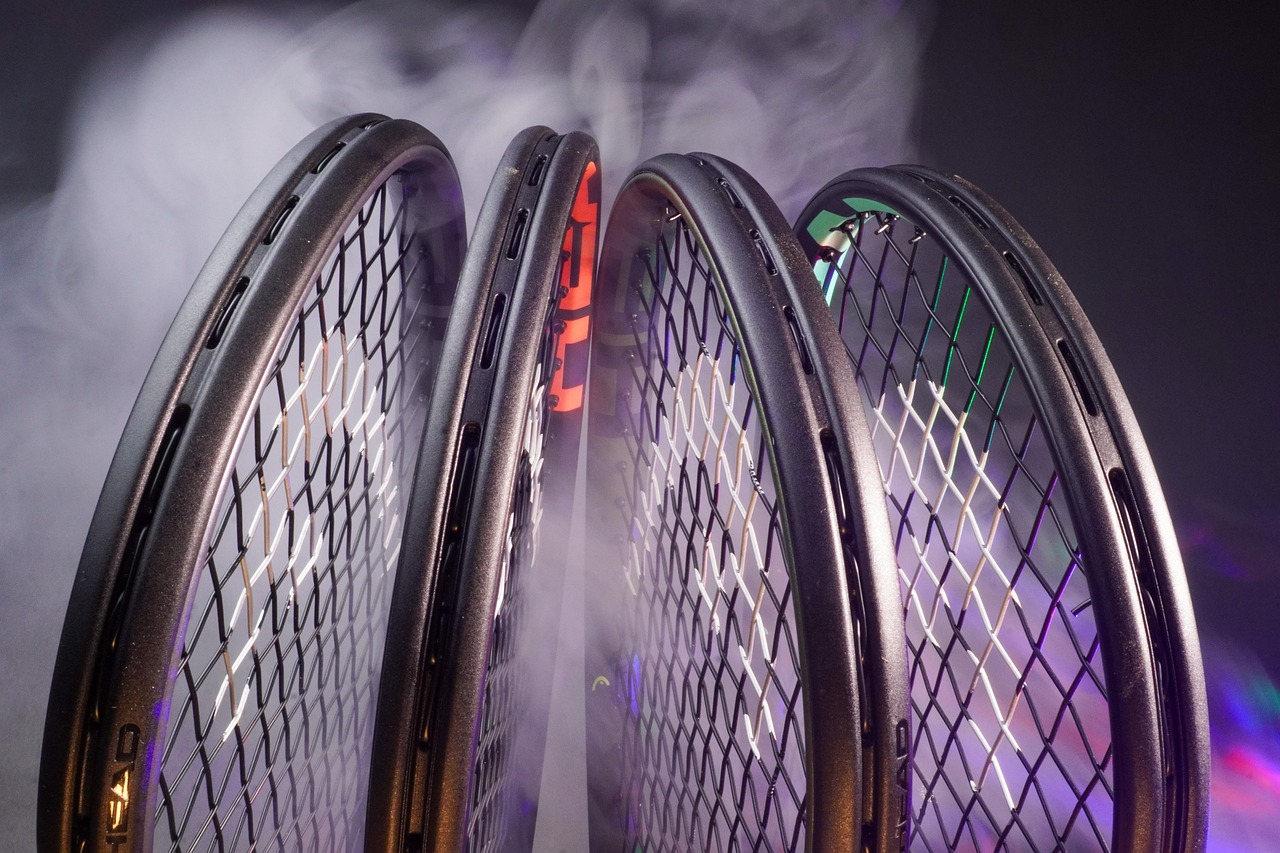
You need a racket, the right ball for your level, protective eyewear and non-marking indoor court shoes. The eyewear matters most: the Dunlop Vision goggles have polycarbonate lenses and, the listing says, meet ASTM F803 and are World Squash approved (about $20). For the ball, the Dunlop Pro double yellow dot is the standard for good players (about $48 for 12), while the Dunlop Competition single yellow gives about 10% more hang time for club play. The HEAD Nano Ti 110 (110 grams, about $110) is a popular all-round racket. Full details on our squash gear page.
Dunlop Vision Protective Squash Eyewear
- Polycarbonate lenses
- Meets ASTM F803, WSF approved (listing)
- Adjustable strap
Dunlop Pro Double Yellow Dot Balls (12)
- Double yellow dot
- Lowest bounce, for good players
- Box of 12
HEAD Nano Ti 110 Squash Racket
- 110 g, head heavy
- 500 sq cm head
- Nano titanium frame
ASO EVO Ankle Stabilizer
- Lace-up with stabilizing straps
- Fits in court shoes
- Left or right foot
OOFOS OOahh Slide
- OOfoam slide
- APMA Seal of Acceptance
- Machine washable
Squash FAQs
How is squash scored?
With point-a-rally (PAR) scoring to 11: whoever wins a rally scores a point, no matter who served. At 10-all, a player must win by 2. Matches are usually best of five games, sometimes best of three.
Is squash in the Olympics?
Yes, for the first time at Los Angeles 2028. The IOC approved it in October 2023. There will be men’s and women’s singles, 16 players each, at the Comcast Squash Center at Universal Studios from July 15 to 24, 2028.
Do you have to wear goggles in squash?
At US Squash accredited events, yes: all players and coaches on court must wear eyewear meeting ASTM F3164 (F803 is still accepted), and World Squash makes it mandatory at junior and doubles events. In a friendly game it’s your choice, but eye doctors strongly recommend it. Lensless guards don’t protect against a squash ball.
What are the most common squash injuries?
Lower-limb soft-tissue injuries: ankle and heel, thigh, knee, hip and groin. Back pain and eye and face injuries also happen. Warming up, strength work, building up gradually and wearing proper eyewear all help; lasting pain needs a sports medicine professional.
Which squash ball should a beginner use?
A bouncier ball. The double yellow dot is the slowest and is meant for good players; a single yellow, red or blue dot ball stays up longer, which makes rallies easier and more fun while you learn. Our gear page has a chart.
Can you play squash in college?
Yes. The College Squash Association runs varsity and club squash for men and women. Coaches may begin recruiting on September 8 of 11th grade, and US Squash junior rankings are widely used to find players.
Squash rewards fitness, patience and a fair, safe way of playing, and the players who last are the ones who protect their eyes, look after their ankles and knees, and rest between hard matches. Keep exploring: squash rules, junior squash, squash gear, our tennis and pickleball sections, and every other sport on our sports hub.