This article contains affiliate links: if you buy through them we may earn a commission, at no extra cost to you. Learn more.
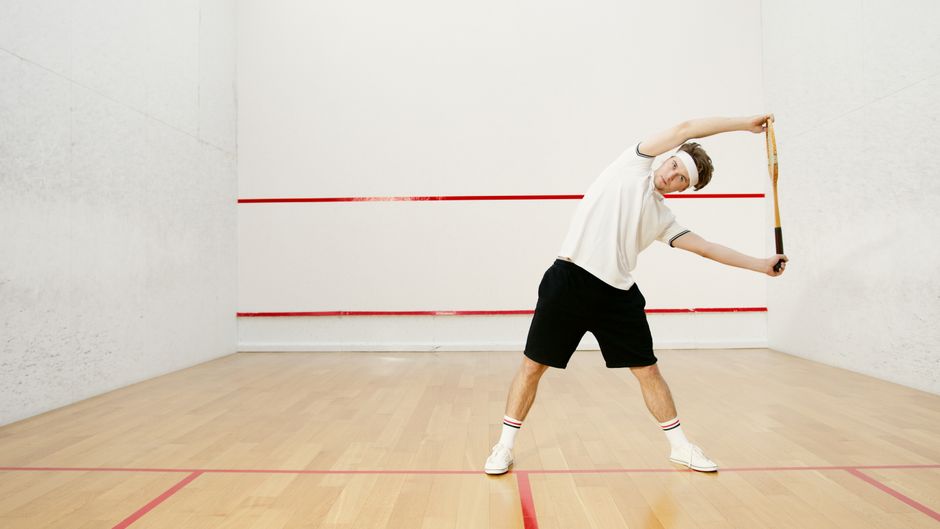
Tuesday night league at the club. You lunge for a boast, and the ball comes off the side wall straight at your face. It cracks against your goggles and drops to the floor. You both laugh a little nervously and play a let. Without the goggles, that rally could have ended at an eye hospital. Squash is fast and great for your heart, but its injuries follow clear patterns. This page covers them in plain language: eyes first, then ankles, Achilles, knees, the low back, racket and ball strikes, and the heart in older players. For each, what lowers the risk and when to get checked.
This page is general information, not medical advice. If you’re hurt, see a sports medicine doctor, physical therapist (PT) or certified athletic trainer (AT); for eyes, an ophthalmologist. For the bigger picture of the sport, start at our squash hub.
How risky is squash?
Less than its speed suggests. A 2026 systematic review of squash injury research (12 studies) found most injuries are lower-limb soft-tissue injuries: sprains and strains around the ankle and knee. The low back and shoulder also come up often. Eye and face injuries were less common but more serious. In England’s funded elite players from 2004 to 2015, 76% of injuries were in the lower limb. The ankle and heel came first (about 21%), then the thigh (13%), knee (11%) and hip and groin (9%).
Eye injuries and protective eyewear
This is the injury squash is known for, and the one you can most clearly prevent. The ball is small enough to fit into the eye socket, and it can come off any wall or your opponent’s racket. In an Australian eye hospital’s five-year review of 1,793 sports eye injuries, squash was linked to more than four times the odds of a hyphema (bleeding inside the front of the eye) than other sports. In a Portuguese series of eye injuries from “modern” sports, squash was the most common cause (29%), and 75% of those patients had a severe injury, often retinal breaks.
What protects you. A 2024 systematic review of eye injuries in squash, racquetball, tennis and badminton found that in the larger studies, a median of 93% of eye injuries happened to players wearing no eyewear. It also found:
- Open, lensless eye guards don’t work in squash. The ball squashes on impact and can still push through the opening into the eye. Lab tests in the 1980s showed the same thing.
- Everyday glasses and contact lenses can make injuries worse. The American Academy of Ophthalmology (AAO) warns that regular glasses aren’t protective and can shatter. It recommends polycarbonate sports eyewear that meets ASTM standards for racquet sports.
- Only eyewear that meets current standards (ASTM or similar) was linked to no eye injuries at all in the studies reviewed.
The rules. US Squash requires all players and coaches to wear protective eyewear on court, in singles and doubles, at events it accredits or its districts organize, including tournaments, clinics and leagues. The eyewear must meet ASTM F3164, the current US standard for racket-sport eye protectors; the older ASTM F803 is still accepted. Players under 19 must wear approved eyewear in junior competitions internationally. World Squash makes eyewear mandatory for all doubles and junior events it sanctions, and recommends it for every player, every time, including the warm-up. In practice, many adults still play without it: in a survey of adult players in Melbourne, 92% weren’t wearing suitable eye protection.
Goggles we’d start with: the Dunlop Sports Vision (polycarbonate lenses; the listing says it meets ASTM F803 and is WSF approved), the Harrow Shield Pro (wrap-around polycarbonate; the listing cites ASTM F803) and, for kids, Dunlop’s junior eyewear. For competition, check the model against the list your event uses. If you wear glasses, ask an optician about prescription lenses in certified sports frames.
Dunlop Sports Vision Protective Squash Eyewear
- Clear polycarbonate lenses
- Listing: ASTM F803, WSF approved
- Adjustable strap, pouch included
Harrow Shield Pro Eyewear
- Polycarbonate eye guard
- Anti-fog inner lens
- Listing: ASTM F803
ASO EVO Ankle Stabilizer
- Lace-up with figure-8 straps
- Fits left or right foot
- Low profile, fits in court shoes
After a hit to the eye, see an eye doctor promptly if you have any change or loss of vision, real pain, bleeding or bruising around the eye (AAO). The AAO’s warning signs of a torn or detached retina, which a serious eye injury makes more likely, are sudden flashes of light, many new floaters at once, a shadow at the side of your vision or a gray curtain over part of it. Any of these means calling an ophthalmologist immediately.
Ankle sprains
Squash is lunges, sudden stops and quick turns on a hard floor, and the ankle takes the strain. AAOS describes a sprain as ligaments stretched past their limit; expect pain, swelling and an ankle that feels like it “gives out”. The National Athletic Trainers’ Association (NATA) says the strongest risk factor for a sprain is a previous sprain. It recommends a balance and neuromuscular training program of at least three months, and taping or bracing for practice and matches for athletes who’ve sprained before. A lace-up brace like the ASO EVO fits in most court shoes; our best ankle braces for athletes guide compares others. If you can’t put weight on it, or it might be broken, see a doctor.
Achilles tendon: the pop in the back corner
It’s a classic story among squash players: a push-off from the back of the court, a sound like a gunshot and the feeling that someone kicked your heel. AAOS explains that the Achilles usually tears when the calf is stretched quickly, as when you push off or land. You may hear a pop, have sudden pain and swelling near the heel, and be unable to stand on your toes on that side. In a US study of 406 Achilles ruptures, most happened during sport. The lead author reported that racquetball and squash together caused 9% of the sports ruptures. Most patients were men in their 40s. A suspected rupture needs a doctor the same day or the next. Don’t try to “walk it off”.
Heel or tendon pain that’s stiff in the morning and returns every session is worth showing to a PT. Many physios recommend a proper warm-up before the first lunge (see match day), gradual calf strengthening and extra care after a layoff.
Knees
The deep lunge to the front corner loads the knee hard; about 11% of England’s elite players’ injuries were at the knee. Quadriceps strength dropped 16% after one hour of match play in one study, which is one reason movement can fall apart late in a long match. AAOS’s warning signs for a serious knee injury apply here as everywhere: a pop, the knee giving way, or swelling within hours. Get that checked. Knee pain that keeps returning, or swelling after every match, is worth a PT visit. Many players with sore knees like a sleeve for warmth and support (see our best knee sleeves), but a sleeve doesn’t replace a diagnosis.
Low back
Squash keeps you low and twisting, and the low back is among the most reported problem areas. AAOS notes that most activity-related back soreness settles within a few weeks. See a doctor quickly if back pain comes with leg weakness, numbness, loss of bladder or bowel control, or fever. Pain that keeps you off court for more than a couple of weeks should be seen by a sports medicine doctor or PT. The trunk and hip strength work on our squash training page is a sensible start.
Hit by the racket or the ball, and concussion
Two players share one small box, so the racket and ball sometimes find a face, a hand or the back of a head. A survey of 653 squash players and coaches in Switzerland, Germany and France found that 4.5% of players had injured their own teeth, and 20% had seen a dental injury on court. Only one person wore a mouthguard. If a tooth is knocked out, see a dentist right away. Fast action gives the best chance of saving it.
Concussions happen too, from a racket, a ball, a fall or a crash into a wall or your opponent. A 2025 review found that only Canada had squash-specific concussion guidance among the leading squash nations. So follow the general rule from the CDC’s HEADS UP program: if you suspect a concussion, stop playing and don’t return that day until a health care provider has checked you. Signs include headache, dizziness, nausea, blurry vision, confusion or feeling “foggy”. Call 911 for danger signs: one pupil bigger than the other, a headache that gets worse, slurred speech, repeated vomiting, seizures, growing confusion or loss of consciousness. A possible head injury isn’t one to play through, whatever the score.
The heart: older players and sudden effort
Squash is one of the most intense things a middle-aged recreational player can do. In veteran men playing competitive games, heart rate rose by 150% and stress hormones rose sharply: normal in a healthy heart, but a possible trigger for dangerous rhythms in someone with coronary artery disease. A classic study of 60 sudden deaths linked to squash (mean age 46) found that most were caused by coronary heart disease. Forty-five of the 60 had warning symptoms beforehand, most often chest pain. The authors thought screening and advice could have prevented some of these deaths. Cardiac events remain rare, and the 2026 review calls the overall rate low. But the message for older and returning players is clear:
- Get checked before you go hard. The American College of Sports Medicine’s screening looks at how active you are, any symptoms, known heart, metabolic or kidney disease, and how hard you plan to exercise. If you’re inactive or have risk factors or a heart condition, see your doctor before taking up competitive squash.
- Never play through chest symptoms. Chest pain or pressure, unusual breathlessness, fainting or feeling faint, or pain spreading to the jaw, neck, back or arm: stop and call 911 (CDC).
- Build up, warm up, and don’t play when you’re ill. Ease into match play after time off, and know where your club’s AED (defibrillator) is. The American Heart Association says CPR given right away can double or triple a person’s chance of surviving cardiac arrest.
When to see a sports medicine doctor, PT or athletic trainer
- Right away (emergency): chest pain or collapse, concussion danger signs, an eye injury with any vision change or blood in the eye, a knocked-out tooth, a possible fracture.
- Within a day or two: a pop at the heel or knee, you can’t bear weight, a suspected concussion, sudden sharp muscle pain that stopped you playing.
- Soon: heel, knee, back or shoulder pain that keeps coming back, swelling that lasts more than a few days, or pain at night or at rest.
Coming back is a process, not a date: walk, jog, move on court, hit, then play, moving on only when a step causes no pain or swelling. Let the person treating you make the call. Look after the basics on our squash recovery page, and if you play other sports, compare with our soccer injuries page.
Squash injuries: FAQs
Do I have to wear goggles to play squash?
At US Squash–accredited events, yes: all players and coaches on court, in singles and doubles, with eyewear meeting ASTM F3164 (or the older F803). World Squash requires it for doubles and junior events and recommends it for everyone. At your club’s casual games it may not be enforced, but the evidence that goggles prevent eye injuries is strong.
Are open eye guards without lenses OK for squash?
No. Research going back to the 1980s shows a squash ball can squash through the opening and still hit the eye. Choose goggles with polycarbonate lenses that meet the current ASTM standard.
What is the most common squash injury?
Lower-body soft-tissue injuries: ankle and heel problems first, then thigh, knee and hip and groin, according to studies of elite players and a 2026 review. Eye injuries are rarer but can be much more serious.
Is squash safe for players over 50?
Many people play well into later life. Because squash is so intense, check with your doctor before starting or returning, especially if you have heart risk factors or symptoms. Build up gradually, and stop at once and get help for chest pain or faintness.
How do I know if I’ve torn my Achilles?
Common signs are a pop or a feeling of being kicked in the heel, sudden pain and swelling, and trouble standing on your toes on that side (AAOS). Stop playing and see a doctor quickly. Early diagnosis matters for treatment choices.