This article contains affiliate links: if you buy through them we may earn a commission, at no extra cost to you. Learn more.
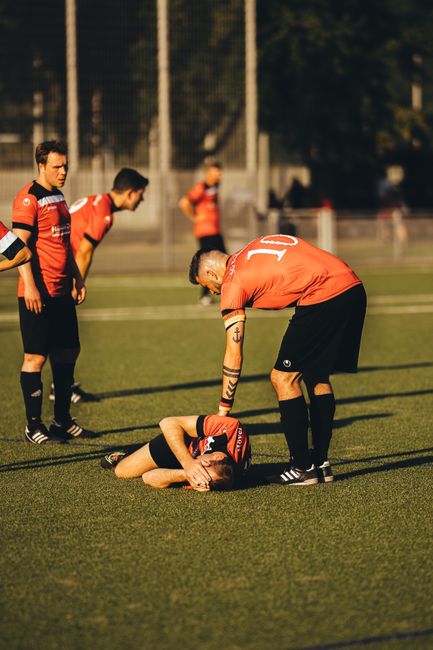
It’s the 70th minute. A winger plants to cut inside and goes down holding her knee. The game stops and the parents go quiet. Everyone on the sideline is asking the same thing: how bad is it, and could we have done anything? This page is about that second question. Soccer is one of the safest ways to stay fit for life, but it has a clear set of injuries that keep showing up, and good research on what lowers the risk. Here they are, in plain language, with the warning signs that mean “stop and get it checked”.
This page is general information, not medical advice. If you’re hurt, see a sports medicine doctor, physical therapist (PT) or certified athletic trainer (AT). For the bigger picture of the sport, start at our soccer hub.
The most common soccer injuries
Ankle sprains
Rolling an ankle on a tackle, a bad landing or an uneven field is the classic soccer injury. The American Academy of Orthopaedic Surgeons (AAOS) names soccer among the cutting and jumping sports where sprains are common: the ligaments around the ankle stretch past their limit and tear. Expect pain, swelling, bruising and a feeling that the ankle “gives out”. The National Athletic Trainers’ Association (NATA) says the most consistent risk factor for a sprain is a previous sprain, which is why the first one deserves proper rehab rather than a quick return. If you can’t put weight on it, or it looks or feels like it could be broken, see a doctor.
Hamstring strains
The sprint for a through ball, then a sudden, sharp pain in the back of the thigh: AAOS describes exactly that, often with swelling within hours and bruising later. Fatigue, tight or weak hamstrings and growth spurts all play a part. In the long-running UEFA Elite Club Injury Study of professional men’s teams, hamstrings were the most commonly hurt muscle group (37% of muscle injuries), and 22% of players had at least one hamstring injury in a season.
Groin and adductor injuries
Long passes, shots and quick changes of direction load the inner thigh. In the same UEFA research, adductors were the second most common muscle group injured (23% of muscle injuries), and hip and groin injuries made up 12–16% of all injuries per season, often with long absences. Groin pain that builds over weeks is easy to ignore; don’t.
ACL and other knee injuries
AAOS explains that most ACL tears happen without contact: pivoting, cutting or landing from a jump with the knee nearly straight. Players often hear a pop, feel the knee give way, and see it swell within 24 hours. Female athletes are at clearly higher risk; AAOS cites rates 2 to 8 times higher than in males. A 2025 meta-analysis of adolescent athletes found the highest ACL risk of all in girls’ soccer, with girls about three times as likely as boys to tear an ACL per game or practice. A suspected ACL injury always needs a doctor.
Shin splints and stress injuries
Pain along the inner edge of the shinbone usually follows a sudden jump in training: more days, longer sessions or harder surfaces, says AAOS. If it doesn’t settle with rest, a doctor may look for a stress fracture, a small crack in the bone. Pain that is sharp in one spot, or that hurts even when walking or at night, is a reason to get checked.
Overuse injuries in young players
Growing bones have softer growth plates. Two names every soccer parent should know: Sever’s disease, the most common cause of heel pain in growing children (Boston Children’s Hospital: usually ages 8–13 in girls, 10–15 in boys; family doctors’ group AAFP notes it often affects soccer players), and Osgood-Schlatter disease, a painful bump just below the knee, common in soccer players around the growth spurt. A child who limps after practice or walks on tiptoes to protect a heel should see a doctor. For more on kids, see youth soccer.
Concussion: recognize it and remove the player
Head-to-head clashes, elbows, falls and balls to the head can all cause a concussion. The CDC’s HEADS UP program is direct: if you think a player may have a concussion, remove them from play. “When in doubt, sit them out.” They stay out for the rest of that day and until a health care provider clears them.
Signs to watch for (CDC): looking dazed or confused, slow answers, clumsiness, forgetting plays, mood changes, vomiting. Symptoms players report include headache, dizziness, nausea, blurry vision, sensitivity to light or noise, feeling foggy or slowed down.
Call 911 or go to the emergency department for the CDC’s danger signs: one pupil larger than the other, a headache that gets worse and doesn’t go away, slurred speech, weakness or numbness, repeated vomiting, seizures, increasing confusion or agitation, not recognizing people or places, or loss of consciousness with growing drowsiness.
Coming back. The CDC describes six gradual steps (back to school and daily life, light aerobic exercise, sport-specific exercise, non-contact drills, full-contact practice, then games), moving to the next step only without new symptoms. The 2022 Amsterdam international consensus statement on concussion in sport recommends only relative rest for the first 24–48 hours, then light activity, with each step usually taking at least 24 hours. The American Medical Society for Sports Medicine (AMSSM) adds that students should get back to the classroom before full return to sport, and that there is no same-day return for a player diagnosed with a concussion. Final clearance comes from a licensed health care provider.
For younger players, US Soccer’s player-safety guidelines say no heading at all for 10 and under, and limited heading in practice for ages 11–13 (at most 30 minutes of heading training a week, 15–20 headers per player per week).
Soccer injury prevention: what the studies found
FIFA 11+ warm-up
FIFA 11+ is a free, roughly 20-minute warm-up of 15 exercises in three parts: running drills, then strength, balance, jumping and agility work, then faster running with cutting. It’s meant to replace your usual warm-up at least twice a week. In the original trial of 1,892 Norwegian girls aged 13–17, teams using it had about a third fewer injuries overall and roughly half the severe and overuse injuries. A 2017 meta-analysis of the FIFA 11+ trials found it reduced soccer injuries by 39%. There’s a version for children too: in a trial of almost 3,900 players under 13, “11+ Kids” cut injuries by 48%. The catch in every study: it works when teams actually do it, every week.
Nordic hamstring exercise
Kneel, have a partner (or a strap) hold your heels, and lower your body forward as slowly as you can. In a trial of 942 Danish male soccer players, a 10-week Nordic program followed by weekly sessions cut acute hamstring injuries by about 70% overall, with an even bigger drop in repeat injuries. A 2019 meta-analysis of 8,459 athletes found programs that include it reduce hamstring injuries by up to 51%. It’s part of FIFA 11+, too.
Groin strength, balance and neuromuscular training
- Copenhagen adduction exercise: a side-plank with the top leg on a bench or partner. In a Norwegian trial, semi-professional men’s teams doing it had a 41% lower risk of groin problems.
- ACL prevention programs: a summary of eight meta-analyses found jump, landing and strength programs halve ACL injuries overall and cut non-contact ACL injuries in female athletes by about two-thirds.
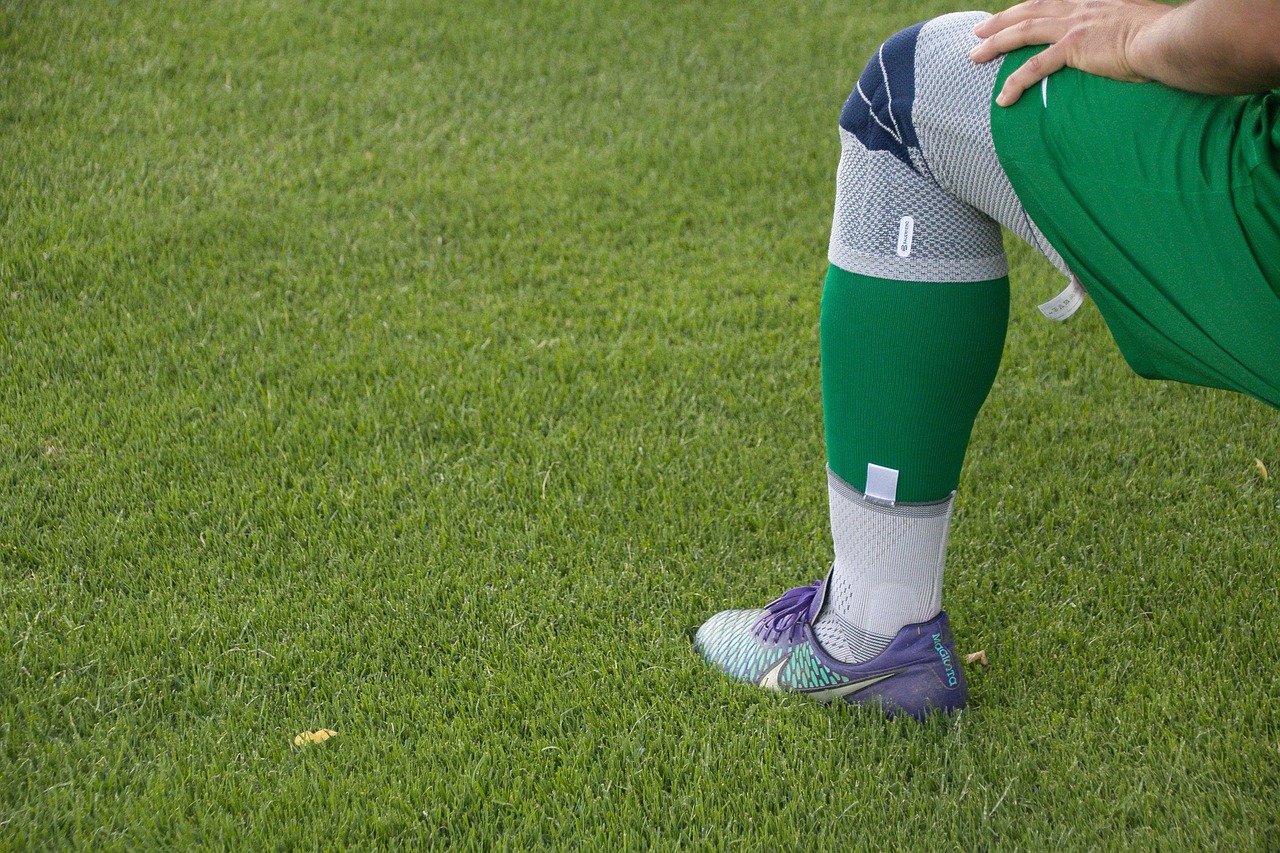
- Ankle balance work: NATA recommends a balance and neuromuscular program of at least 3 months, and says athletes with a previous sprain should wear an ankle brace or tape for all practices and games.
- Load and rest for kids: the American Academy of Pediatrics (AAP) recommends at least 1–2 days off a week from the main sport and 3 months off a year (in 1-month blocks). In one study, kids who played more weekly hours of organized sport than their age in years had higher odds of serious overuse injury.
How to fit this into a week is on our soccer training page.
Gear many players use for prevention work
None of these prevent injuries on their own, and a brace isn’t a substitute for rehab, so ask your PT or athletic trainer what fits your situation. But many players keep these in the bag: a lace-up brace like the ASO EVO Ankle Stabilizer after a sprain, a strap like the NordStick for doing Nordics at home without a partner, and a foam roller like the TriggerPoint GRID for warm-ups and cool-downs.
ASO EVO Ankle Stabilizer
- Lace-up with figure-8 straps
- Fits left or right foot
- Low profile, fits in cleats
NordStick Nordic Hamstring Curl Strap
- Holds heels for Nordic curls
- 350 lb capacity (listing)
- Quick setup, packs for travel
TriggerPoint GRID 1.0
- 13 in, hollow core
- Multi-density surface
- About $40
When to see a sports medicine doctor, PT or athletic trainer
- Right away (emergency): any concussion danger sign, a possible broken bone, a joint that looks out of place, or numbness and tingling.
- Within a day or two: a pop and swelling in the knee, you can’t bear weight, a suspected concussion, or sudden sharp pain in a muscle that stopped you playing.
- Soon: pain that keeps coming back, swelling that lasts more than a few days, a limp in a child, or pain that hurts at night or at rest.
Who does what: a sports medicine physician diagnoses and decides on imaging or referral; a physical therapist guides rehab and the return to running and cutting; a certified athletic trainer is often the first person on the field, at many high schools and colleges, and runs prevention programs. For general first aid while you wait, AAOS lists rest, ice, compression and elevation for sprains and strains, but the plan after that should come from a professional.
Return to play, in general terms
Return is a process, not a date. Most plans move from walking to jogging, sprinting, cutting, training with the team and then games, and only when each step causes no pain or swelling. Coming back too soon is a real risk: a previous injury is one of the strongest risk factors for the next one (NATA on ankles; UEFA data show muscle re-injuries cause longer absences than first injuries). Let the person treating you sign off. Meanwhile, look after the basics on our soccer recovery page.
Soccer injuries: FAQs
What is the most common injury in soccer?
Lower-body injuries dominate: ankle sprains, muscle strains (hamstrings first, then groin/adductors, quadriceps and calves) and knee injuries. In professional men’s soccer, muscle injuries make up about 31% of all injuries, according to UEFA’s long-running injury study.
Does FIFA 11+ really prevent injuries?
The research says yes when teams do it regularly: a 2017 meta-analysis found 39% fewer injuries with FIFA 11+, and the kids’ version cut injuries by 48% in a large trial. Doing it at least twice a week, as written, matters.
Why do female soccer players tear their ACL more often?
Researchers point to several factors, including how players land and cut, strength and body mechanics. What matters most for families is that neuromuscular programs work: a summary of meta-analyses found they cut non-contact ACL injuries in female athletes by about two-thirds.
Can a player go back in after a head knock if they feel fine?
Not if a concussion is suspected. The CDC says remove the player and keep them out the same day until cleared by a health care provider, and AMSSM states there is no same-day return to play after a concussion diagnosis. Symptoms can show up hours later.
Should I wear an ankle brace for soccer?
NATA recommends taping or bracing for practices and games for athletes who have sprained an ankle before. If you’ve never had a sprain, balance training is the stronger first step. Ask your athletic trainer or PT which brace fits your ankle and cleats.
Is heel pain in a young soccer player normal?
It’s common, but it isn’t something to play through. Heel pain in growing kids is often Sever’s disease, an irritated growth plate. A doctor can confirm it; the American Academy of Family Physicians says kids can play again once the heel pain is gone and the doctor says it’s safe.