
This article contains affiliate links: if you buy through them we may earn a commission, at no extra cost to you. Learn more.
A Sunday afternoon in a Texas park: a mat pitch rolled out on the grass, a family cooler under a pop-up tent, a teenager running in to bowl while his uncle keeps score on his phone. Grand Prairie Stadium near Dallas the night the United States beat Pakistan in a Super Over at the 2024 T20 World Cup. A Test match in London or Mumbai that goes five days and still ends in a draw. Cricket is the bat-and-ball game most of the world grew up with, and it’s growing fast in America, with a pro league since 2023 and an Olympic tournament coming to Los Angeles in 2028.
Cricket, page by page
- Rules: how the game works at every level
- Leagues & associations: pro, college, high school and youth
- Youth & high school: ages, safety and recruiting, for players and parents
- Injuries & sports health: prevention, concussion, when to see a pro
- Training & conditioning: before: off-season to in-season
- Game day: during: fueling, hydration, heat
- Recovery: after: games, tournaments, sleep
- Nutrition & supplements: what to eat, tested supplements
- Best wearables: trackers and watches for the sport
- Gear: the complete equipment list
Buying guide · Our Cricket buying guide compares the gear we'd pick, with prices and sizing:
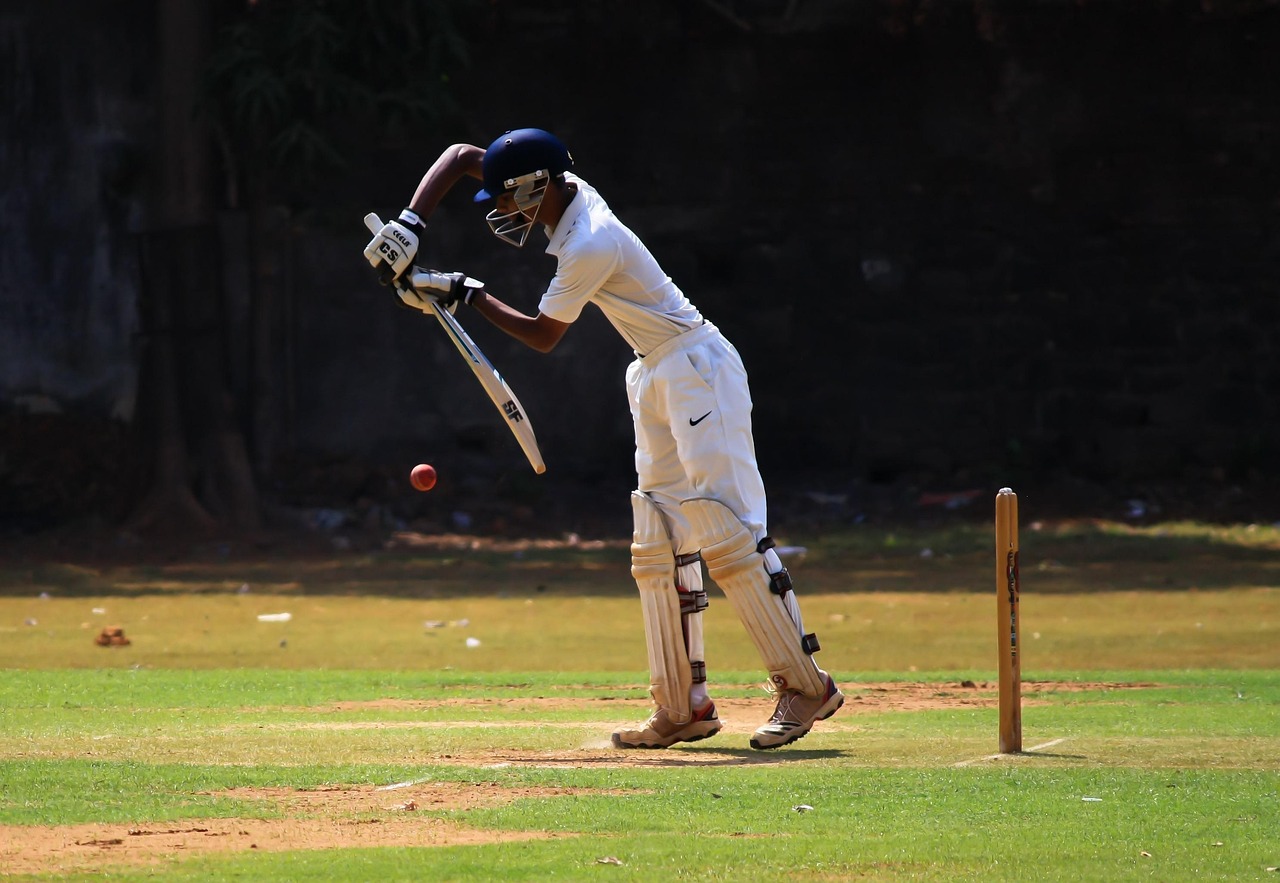
This page is cricket for players and the people who look after them, whether you’re new to the game or grew up with it in Lahore, Kingston or Melbourne: how it works, every level from soft-ball kids to the pros, and, most of all, how to stay healthy playing it. That means the hand and finger injuries that come with a hard ball, the back injuries young fast bowlers get, helmets and concussion, long days in the heat, and when to see a professional. Then training, recovery and the gear you need.
Cricket at a glance
| Players per side | 11. One side bats while the other bowls and fields; then they swap. |
|---|---|
| Formats | Test cricket: up to five days, two innings per side. One-Day Internationals (ODIs): 50 overs per side. Twenty20 (T20): 20 overs per side, about three hours. An over is six legal balls. |
| Field | An oval field with a boundary set before the game. In the middle, the pitch: 22 yards long and 10 feet wide, with a wicket of three stumps (28 inches tall, 9 inches wide) at each end. |
| Ball | Hard, leather-covered, stitched seam. The men’s ball weighs 5.5–5.75 oz; women’s and junior balls are smaller. Kids start with soft balls. |
| Rules and governing bodies | The Laws of Cricket are written by Marylebone Cricket Club (MCC); a new 2026 Code took effect on October 1, 2026. The International Cricket Council (ICC) runs the world game; USA Cricket is the US member. |
| Main physical demands | Fast bowling: repeated sprints and a delivery that loads the lower back with about three times body weight. Batting: long concentration, sprints between the wickets. Fielding: diving, throwing and catching a hard ball. |
| Most common injuries | Hand and finger injuries, thigh bruises from ball strikes, lower-back stress fractures in young fast bowlers, shoulder, knee and hip problems in bowlers, and head injuries from the ball. |
How cricket works
If you know baseball, start here: the bowler (like a pitcher, but with a straight arm and usually a bounce off the ground) delivers the ball to a batter, who defends a wicket instead of a strike zone. Two batters are on the field at once, one at each end of the pitch. When the batter hits the ball, both can run to swap ends, and each swap scores one run. A ball that reaches the boundary scores four; one that clears it on the fly scores six. Batters don’t have to run on every hit, and there’s no foul territory: you can hit the ball anywhere around the field, behind you included.
The bowling side tries to get batters out. The main ways are bowled (the ball hits the stumps), caught (a fielder catches a hit before it bounces), leg before wicket or LBW (the ball hits the batter’s body when it would otherwise have hit the stumps), run out and stumped (the wicket is broken while the batter is out of their ground). After 10 wickets the innings is over (there’s always one batter left with no partner), or, in one-day and T20 games, when the overs run out. Then the other team bats and tries to score more. The bowlers take turns: nobody bowls two overs in a row. Our cricket rules page explains it all step by step, including LBW and the fielding positions.
Cricket at every level
Kids and youth
Most kids start with a soft or tennis ball, a light bat and plenty of turns. In the US, youth cricket runs mostly through clubs and academies, and USA Cricket’s youth pathway goes from hub competitions at U11, U13 and U15 to zonal championships and national tournaments at U15 and U19. In England, the cricket board’s All Stars Cricket (ages 5–8) and Dynamos (8–11) programs use soft balls before kids move to the hard ball. Helmets with a faceguard are the rule for juniors batting against a hard ball. Our youth cricket guide covers ages, formats and parents’ questions.
High school and college
High school cricket is still rare in the US. The best-known program is New York City’s Public Schools Athletic League, which launched varsity cricket in 2008 and has grown to about 30 teams. College cricket is a club sport, not an NCAA one: American College Cricket ran national championships from 2009, and the Collegiate Cricket League now brings together about 50 universities and more than 750 students; the University of North Carolina won its national championship, the Collegiate Cup, in March 2026.
Pro leagues
Major League Cricket (MLC), the US pro T20 league, started in 2023 and plays in early summer. As of the 2026 season it has six teams: the Los Angeles Knight Riders, MI New York, San Francisco Unicorns, Seattle Orcas, Texas Super Kings and Washington Freedom; the Knight Riders won the 2026 final by one run. Its development league is Minor League Cricket, launched in 2021. Around the world, the biggest T20 league is India’s IPL (10 teams), alongside Australia’s Big Bash, the Caribbean Premier League, SA20, Pakistan Super League and England’s The Hundred. See cricket leagues and associations.
International cricket and the Olympics
Twelve ICC Full Members, including England, Australia, India, Pakistan, South Africa, New Zealand and the West Indies, play Test cricket; many more countries play ODIs and T20 internationals. The USA co-hosted the 2024 T20 World Cup with the West Indies and reached the second round. The ICC suspended USA Cricket’s membership in September 2025 over governance problems, but US national teams keep playing ICC events and the Olympic qualification path. Cricket returns to the Olympics at LA28: six men’s and six women’s teams playing T20 at the Fairgrounds in Pomona, July 12–29, 2028. Its only previous Olympic appearance was in Paris in 1900.
Adult and recreational
Weekend club leagues with a hard ball, tape-ball and tennis-ball cricket in parks and parking lots, indoor nets in winter, over-40 and over-50 leagues: most cricket in America is adults playing for fun. If you’re coming back after years away, build up slowly. Bowling and diving catches ask a lot of a body that has been sitting at a desk.
Sports health for cricketers
Cricket isn’t a contact sport, but the ball is hard (140–166 grams, often moving fast), and fast bowling is one of the hardest repeated movements in sport. This section is general information, not medical advice. If you’re hurt, see a professional. Our cricket injuries page goes deeper.
The most common cricket injuries
- Hands and fingers: England’s cricket board (ECB) calls them the most injured body parts in cricket. In six seasons at an English county club, most hand injuries hit the little and ring fingers, and more than half happened while fielding.
- Ball strikes to the thigh and body: the ECB says the thigh is the second most common injury site in recreational cricket, which is why batters wear thigh pads.
- Fast bowlers’ backs: lumbar (lower-back) stress fractures are the classic young fast bowler’s injury. In a 2026 study of 98 youth bowlers aged 10–20, 16.3% had one during the season, most often around the teenage growth spurt.
- Bowlers’ joints: in a survey of 2,294 adult cricketers, bowlers had about two to three times the odds of hip, knee, shoulder and back injuries compared with batters.
- Head and face: a ball to the head can cause a concussion or facial injury, which is why helmets with a faceguard matter (see below).
Protecting young fast bowlers
Bowling workload is the factor coaches can control. In English county cricket, bowlers who sent down more than 234 deliveries in a 7-day peak had about 11 times the odds of a lumbar stress fracture compared with those under 197. The ECB caps how much juniors may bowl: for example, 4 overs per spell and 8 per day at age 11 and under, rising to 6 per spell and 15 per day at 16–17. It also suggests weekly targets (12–16 overs a week at 11 and under, 22–26 at 16–17), rest days between bowling days, and, during a growth spurt, following the limits for the age group below. Bowling too little matters too: the ECB says too few overs a month lowers bone strength. Back pain in a young bowler that doesn’t settle is a reason to see a sports medicine doctor, not to bowl through it.
Helmets, ball strikes and concussion
International cricket requires any batting helmet to meet the British Standard BS 7928:2013 (the 2019 update, A1:2019, added neck protectors), and the ICC keeps a list of compliant models. Under ECB rules, players under 18 must wear a helmet with a faceguard when batting against a hard ball, and when keeping wicket up to the stumps. In 2019 the ICC began allowing concussion replacements in international cricket, so a team doesn’t lose a player for good if one is hit.
Whatever the level, the CDC’s HEADS UP advice applies: watch for a player who looks dazed or confused, has a headache, dizziness, balance problems, sensitivity to light or noise, or trouble concentrating. Remove them from play right away, keep them out for the rest of the day and until a healthcare provider clears them, and let them return in steps. Call 911 for danger signs: seizures, passing out, a headache that gets worse, repeated vomiting or one pupil larger than the other.
Heat, sun and long days
American cricket is a summer sport, and a club game can last most of a day in the sun. The EPA notes that about 9,000 US high school athletes are treated for heat-related illness each year. The National Athletic Trainers’ Association (NATA) recommends easing into the heat over 7–14 days. Drink at every drinks break and between innings, use shade, a wide-brimmed hat and sunscreen, and add electrolytes on hot days (see our electrolyte powder guide). Call 911 for confusion, collapse, or very hot skin with a racing pulse; for exertional heat stroke, NATA recommends fast cold-water immersion by trained staff on site. More on our cricket game-day page.
When to see a doctor, physical therapist or athletic trainer
Don’t play through pain. See a professional for a finger that looks bent or won’t straighten, swelling that doesn’t settle, back pain in a bowler that lasts or keeps coming back, a joint that gives way, or any concussion signs. A sports medicine physician manages most sports injuries without surgery and refers on when needed; a physical therapist guides rehab and the return to bowling or batting; athletic trainers are licensed or regulated health care professionals in all 50 states who work with physicians.
Training and conditioning for cricket
Preseason: build bowling up gradually rather than jumping straight to full spells; the research on lumbar stress fractures links big spikes in bowling workload to injury. Add leg, hip and core strength (see our resistance bands guide), short sprints for running between the wickets, and throwing and catching drills. In the nets, keep the helmet on, even against soft balls if you’re young. Our cricket training page has more.
In season: fast bowlers should count their overs, in matches and in the nets, and keep at least a day off bowling between bowling days. Many players track sleep and strain with a wearable (see the best wearables for cricketers), and the mental side matters in a game of long concentration: mental training tools for athletes.
Match day: the sports-nutrition position statement from the American College of Sports Medicine and two dietitians’ groups recommends a pre-exercise meal high in carbohydrate, moderate in protein and low in fat and fiber, made of familiar foods and eaten roughly 1–4 hours before. On a long day, snack at the breaks and keep drinking. Our cricket nutrition page covers what players eat.
Recovery after cricket
Sleep comes first: the CDC recommends 9–12 hours a night for children 6–12, 8–10 hours for teens and 7 or more for adults. Then real food and fluids after the game. Many players reach for a protein shake when a meal is hours away (see our protein powder guide).
After a long day in the field or a hard spell of bowling, simple tools help many players feel better: a foam roller or massage gun for tight hamstrings, calves and hips, and soft recovery shoes once the spikes come off. They’re about comfort, not treatment; pain that doesn’t go away needs a professional. See our cricket recovery page and recovery tools guide.
Gear for cricket
- Bat: made of wood under Law 5. English willow is lighter and livelier, and costs more; Kashmir willow is harder, heavier and cheaper, a good first bat. Kids use sizes by height.
- Helmet: pick one on the ICC’s BS 7928:2013 list, tested against the ball size you’ll face (junior or men’s).
- Batting protection: pads, gloves, an abdominal guard (box), and a thigh pad; many add an arm guard and chest guard against fast bowling.
- Shoes: spikes for grass, rubber studs for mats and artificial pitches.
- Balls: soft or foam balls for kids and practice, tennis or tape balls for street cricket, leather balls for the real game.
Four picks to start: the Gunn & Moore Purist Geo II helmet, which the maker says complies with BS 7928:2013 (about $91); the Gunn & Moore Noir Delta 404, a knocked-in English willow bat (about $178); the Kookaburra Super Softa, a soft-centered stitched ball for kids (about $26); and the OOFOS OOahh Slide from our recovery shoes guide for after stumps. The full list is on our cricket gear page.
Gunn & Moore Purist Geo II Cricket Helmet
- BS 7928:2013 (maker)
- Geo steel grille
- About $91
Gunn & Moore Noir Delta 404 Bat
- Grade 4 English willow
- Knocked in by the maker
- About $178
OOFOS OOahh Slide
- OOfoam slide
- APMA Seal of Acceptance
- Machine washable
Prices change often. The prices above are what we saw at a major retailer in October 2026; check the current price before you buy.
Cricket FAQs
How long does a cricket game last?
It depends on the format. A T20 game (20 overs per side) takes about three hours, an ODI (50 overs per side) most of a day, and a Test match up to five days. Club and league games in the US are often T20.
Is cricket a dangerous sport?
Not usually, but the hard ball deserves respect. Injury rates in junior club cricket are low and rise with age, and most injuries are to fingers, hands and thighs. A certified helmet, pads, gloves and a box, plus sensible bowling workloads for young fast bowlers, take care of most of the risk.
Do cricketers have to wear helmets?
Under ECB rules, players under 18 must wear a helmet with a faceguard when batting against a hard ball and when keeping wicket up to the stumps, and adults are strongly advised to. In international cricket, any helmet a batter wears must meet BS 7928:2013. Check your league’s rules in the US.
Why do young fast bowlers get back injuries?
Each fast delivery loads the lower spine with about three times body weight, and a teenager’s bones are still developing, especially around a growth spurt. Too many overs in a short time, too little rest, or a previous back injury raise the risk. Overs limits and rest days help.
Will cricket be in the 2028 Olympics?
Yes. LA28 will have six men’s and six women’s teams playing T20 cricket at the Fairgrounds in Pomona, July 12–29, 2028. It’s cricket’s first Olympics since Paris 1900.
What’s the difference between English willow and Kashmir willow bats?
English willow comes from cricket bat willow grown in England; it’s softer and springier, gives more “ping” and needs knocking in and oiling. Kashmir willow is harder and heavier, costs much less and is a common choice for beginners and tennis-ball cricket.
Cricket rewards patience, and the cricketers who keep playing for decades are the ones who wear the right protection, count their overs, drink in the heat and listen to pain. Keep exploring: our recovery tools guide, electrolytes and Nutrition & Supplements for match days, and the other sports on our sports hub, from baseball to soccer.