This article contains affiliate links: if you buy through them we may earn a commission, at no extra cost to you. Learn more.
Your first live game, maybe a Major League Cricket night in Grand Prairie or a club match in a city park: the bowler runs in, the ball thuds into the batter’s pad, and the whole fielding side spins around, arms up, shouting “Howzat?” at the umpire. The umpire thinks for a second, then raises one finger. Out. If you grew up with baseball, cricket rules can look like a puzzle at first, but the core of the game is simple, and once LBW clicks, the rest follows. This page explains how cricket works in plain words: the formats, overs, runs, the ways a batter gets out, LBW, and where the fielders stand, all based on the Laws of Cricket written by Marylebone Cricket Club (MCC).
The basics: two sides, one ball, eleven players
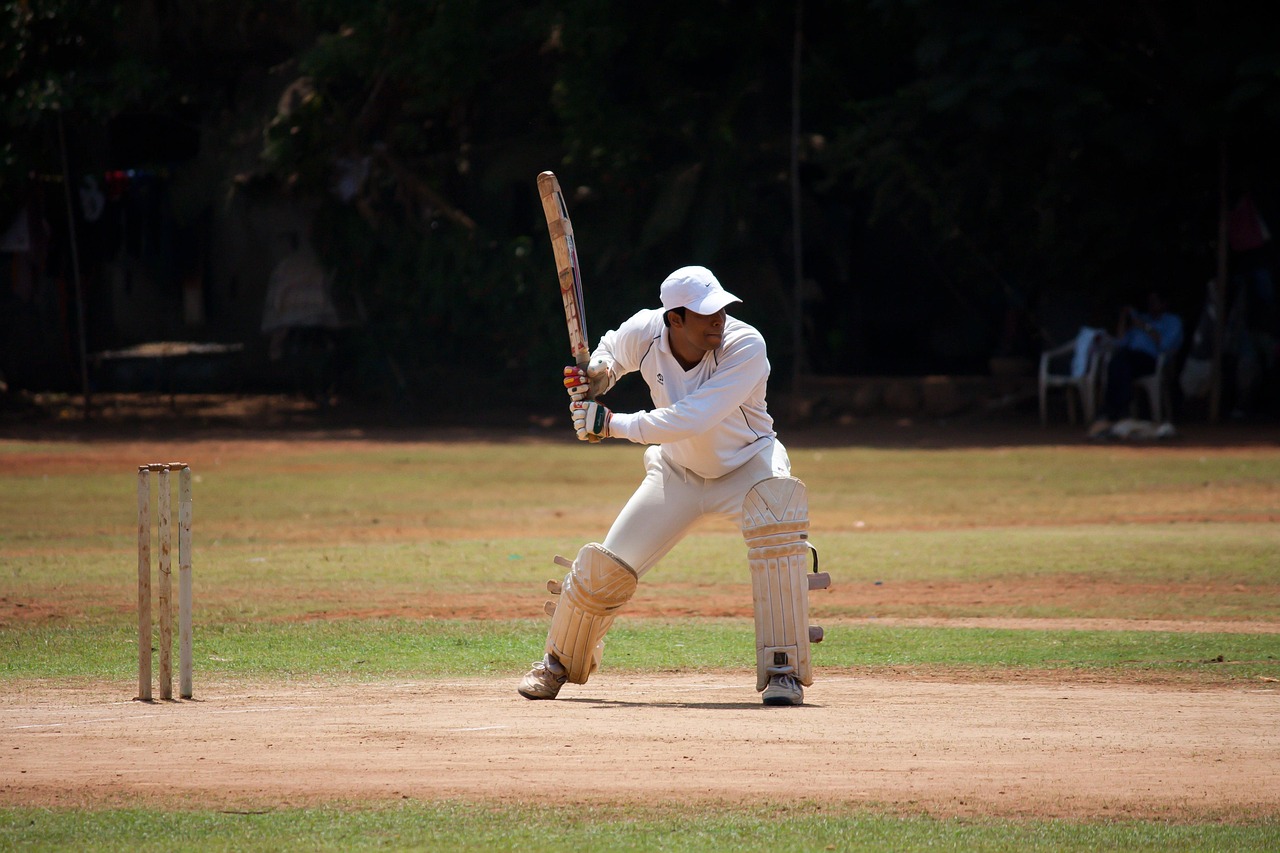
A match is played between two sides of eleven players, one of them the captain (Law 1). A coin toss decides who bats first. One side bats while the other bowls and fields; that turn at batting is an innings. Then the sides swap, and the team with more runs wins. Two batters are on the field at a time, one at each end of the pitch: the striker faces the bowler and the non-striker waits at the bowler’s end, ready to run. The innings ends when 10 batters are out (the last one has no partner), when the overs run out in a limited-overs game, or when the captain declares in a long match.
MCC writes the Laws, and the game’s governing bodies add their own playing conditions on top. A new edition, the 2026 Code, came into force on October 1, 2026 with 73 changes; the biggest include legal laminated bats in open-age cricket, new rules on cricket balls, changes to end-of-day procedures in multi-day matches and a simpler law on overthrows. The Laws also include the Spirit of Cricket: captains are responsible for fair play as well as for following the rules.
The field, the pitch and the wickets
- The field: usually oval, with a boundary the umpires fix before the toss. There’s no standard size.
- The pitch: the strip in the middle, 22 yards long and 10 feet wide. Artificial pitches, common in the US, must be at least 58 feet long and 6 feet wide.
- The wickets: at each end, three wooden stumps 28 inches tall, 9 inches wide in all, topped by two bails.
- The creases: white lines. The batter is safe (“in their ground”) with some part of their body or bat grounded behind the popping crease; the bowler’s front foot must land behind it too.
Formats: Test, ODI and T20
| Format | Length | Innings | Since |
|---|---|---|---|
| Test cricket | Up to five days | Two per side | 1877 |
| One-Day International (ODI) | 50 overs per side, most of a day | One per side | 1971 |
| Twenty20 (T20) | 20 overs per side, about three hours | One per side | 2005 (internationals) |
Only the 12 ICC Full Members play Test cricket. A Test can end in a win, a tie or a draw: if the time runs out before one side has bowled the other out twice, nobody wins. In ODIs and T20s, the team with more runs wins once both innings are done. Limited-overs games also have powerplays, overs with fielding restrictions that reward attacking batting: in T20 cricket, only two fielders may stand outside the 30-yard circle during the first six overs; in ODIs, two in overs 1–10, four in overs 11–40 and five in overs 41–50. T20 is the format of Major League Cricket, the IPL and the LA28 Olympic tournament.
Overs and bowling
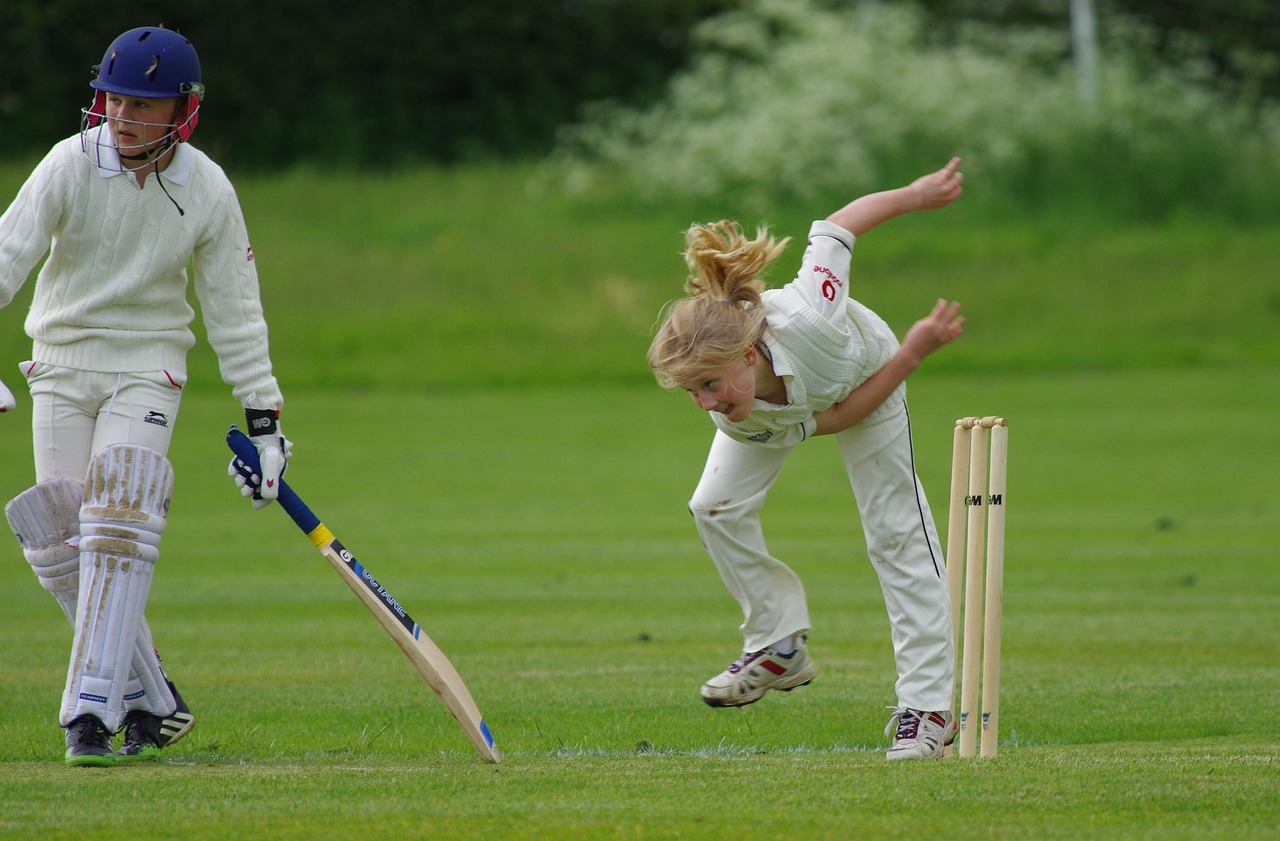
The ball is bowled from each end in turn, in overs of six valid balls (Law 17). After each over, the bowling switches to the other end and a different bowler takes over: no one may bowl two overs in a row. Limited-overs games also cap each bowler’s overs at a fifth of the innings: four in a full T20 game, ten in an ODI.
- A straight arm: the ball must be bowled, not thrown. Once the bowling arm passes shoulder height, the elbow must not straighten until the ball is released. Underarm bowling isn’t allowed unless agreed before the match.
- No ball: called for an illegal delivery, most often when the front foot lands beyond the popping crease. It costs one penalty run and doesn’t count as one of the six; the batter can’t be bowled, caught or out LBW off it.
- Wide: a ball the striker can’t reach with a normal shot, or one that bounces over head height. One penalty run, and it must be bowled again.
- Fast and spin: fast bowlers rely on pace, bounce and swing; spin bowlers turn the ball off the pitch. Most teams carry both.
How runs are scored
- Running: after a hit, both batters run to the other end; each completed swap is one run. They can run two, three or more, or not run at all.
- Boundaries: four runs if the ball reaches or crosses the boundary along the ground, six if it clears it on the fly (unless the umpires and captains agree otherwise).
- Extras: runs not credited to the batter: wides and no-balls (one penalty run each, plus any runs scored), byes (runs when the ball misses bat and body) and leg byes (runs off the batter’s body when they tried to play a shot or dodge).
How wickets fall: the ways to get out
The umpire only gives a batter out when the fielding side appeals (that’s the “Howzat?”), and the appeal must come before the next ball. The common ways out:
- Bowled: the bowler’s delivery breaks the wicket, even if it touched the bat or body first.
- Caught: the ball comes off the bat (or the glove holding it) and a fielder catches it before it touches the ground. Catching it while stepping over the boundary doesn’t count.
- Leg before wicket (LBW): see below.
- Run out: a fielder breaks the wicket while the batter running to that end is out of their ground.
- Stumped: the striker steps out of their ground to play at the ball, misses, and the wicketkeeper breaks the wicket.
- Hit wicket: the batter knocks over their own stumps with bat or body while playing at the ball or setting off for a run.
A few rare ones are in the Laws too: obstructing the field, hitting the ball twice, and timed out (a new batter who takes too long to be ready).
LBW, in plain words
LBW (Law 36) stops batters from simply blocking the stumps with their legs. The striker is out LBW only if all five of these are true:
- The delivery is not a no-ball.
- The ball doesn’t bounce outside the line of the leg stump (the stump nearest the batter’s legs). Pitching in line with the stumps, or outside off stump, is fine.
- It hits the batter’s body or pads before it touches the bat.
- The point of impact is in line with the stumps, or outside off stump if the batter made no real attempt to hit it with the bat.
- The ball would have gone on to hit the stumps.
Height doesn’t save the batter: the impact can be above the bails. In pro cricket, teams can ask for TV replays and ball-tracking to review an LBW call; in club cricket, the umpire’s call stands.
Fielding positions
The captain can place the nine fielders (plus the bowler and wicketkeeper) almost anywhere, and that’s half the strategy. The field is split into the off side (the side the batter faces when standing to bat) and the leg or on side (behind their legs). Common positions:
- Behind the batter: the wicketkeeper, the slips (in a row beside the keeper, waiting for edges) and gully.
- Off side: point, cover, extra cover and mid-off; deep third man and deep point on the boundary.
- Leg side: square leg, midwicket and mid-on; fine leg and deep square leg on the boundary.
- Straight: long-off and long-on on the boundary behind the bowler.
- Close catchers: short leg and silly point stand a few yards from the bat, usually against spin.
Two limits in the Laws: no more than two fielders (besides the keeper) may stand behind the popping crease on the leg side when the ball is bowled, or it’s a no-ball; and in limited-overs games, the powerplay rules above cap how many fielders can be out deep.
Rules that change by level
Governing bodies set junior rules, such as pitch length and ball size. The Laws define three ball sizes:
| Ball (new) | Weight | Circumference |
|---|---|---|
| Size 1 (men’s) | 5.5–5.75 oz (156–163 g) | 8.81–9 in |
| Size 2 | 5–5.25 oz (142–149 g) | 8.46–8.66 in |
| Size 3 | 4.69–4.84 oz (133–140 g) | 8.07–8.27 in |
Safety rules matter most for kids. England’s cricket board (ECB), for example, requires juniors to wear a helmet with a faceguard when batting against a hard ball, keeps fielders aged 13 and under at least 11 yards from the bat (8 yards at 14–15), and limits how many overs young fast bowlers may bowl per spell and per day. US leagues set their own rules, so ask yours. Our youth cricket page has the details, and the cricket injuries page explains why.
What you need to play
For a real match: a leather ball like the Kookaburra County Club (a 5.5 oz, four-piece hand-stitched match and training ball, about $37) and, for anyone batting, a certified helmet such as the Gunn & Moore Purist Geo II (the maker says it complies with BS 7928:2013, about $91). For backyard or tape-ball cricket, lightweight balls like Invicto cricket tennis balls (three for about $17) are all you need. The full kit list is on our cricket gear page.
Kookaburra County Club Cricket Ball
- 5.5 oz men's ball
- 4-piece, hand stitched
- About $37
Gunn & Moore Purist Geo II Helmet
- BS 7928:2013 (maker)
- Geo steel grille
- About $91
Invicto Cricket Tennis Balls (3 Pack)
- Rubber core, felt cover
- Lightweight
- About $17
Prices change often. The prices above are what we saw at a major retailer in October 2026; check the current price before you buy.
Back to the cricket hub, or see cricket leagues and associations, youth cricket and cricket gear. New to bat-and-ball sports? Compare with baseball rules.
Cricket rules questions
How many balls are in an over?
Six valid balls. Wides and no-balls don’t count, so an over with extras can be longer. The same bowler can’t bowl the next over.
What does LBW mean in cricket?
Leg before wicket. The batter is out if the ball, without touching the bat first, hits their body in line with the stumps and would have gone on to hit the stumps, as long as it didn’t bounce outside leg stump and wasn’t a no-ball.
Can a cricket match end in a draw?
Yes, in Tests and other multi-day games: if time runs out before a result, it’s a draw. One-day and T20 games are designed to produce a result once both sides have batted, though weather can still wash them out.
Why don’t batters have to run after hitting the ball?
Because runs are optional. Unlike baseball, there’s no foul territory and no force to run: batters choose when a run is safe. A ball that reaches the boundary scores four or six without running.
Who writes the rules of cricket?
Marylebone Cricket Club (MCC) in London writes the Laws of Cricket; the latest 2026 Code came into force on October 1, 2026. The ICC and national bodies add playing conditions for their competitions, such as powerplays and overs limits.