This article contains affiliate links: if you buy through them we may earn a commission, at no extra cost to you. Learn more.
First light on a northern lake. Two friends slide a loaded canoe off the granite shore, the bow paddler sets an easy rhythm, and the stern paddler finishes each stroke with a little twist that keeps the boat running straight across the glassy water. By noon they’ll shoulder that canoe over a portage trail to the next lake. Elsewhere, a family pushes off from a summer-camp dock and a racer kneels in a sprint canoe waiting for “Go.” Canoeing is all of these: one of the oldest ways to travel on water, and a sport you can keep for life.
Canoeing, page by page
- Rules: how the game works at every level
- Leagues & associations: pro, college, high school and youth
- Youth & high school: ages, safety and recruiting, for players and parents
- Injuries & sports health: prevention, concussion, when to see a pro
- Training & conditioning: before: off-season to in-season
- Game day: during: fueling, hydration, heat
- Recovery: after: games, tournaments, sleep
- Nutrition & supplements: what to eat, tested supplements
- Best wearables: trackers and watches for the sport
- Gear: the complete equipment list
Buying guide · Our Canoeing buying guide compares the gear we'd pick, with prices and sizing:
This page is canoeing for paddlers and the people who look after them: the kinds of canoes and canoeing, how races work, every level from a first rental to the Olympics, and, most of all, canoe safety and staying healthy. The Coast Guard’s numbers make the first lesson plain: every canoeist who drowned in 2024 was not wearing a life jacket. Then shoulders, backs and knees, cold water, training, recovery and the gear that really matters.
Canoeing at a glance
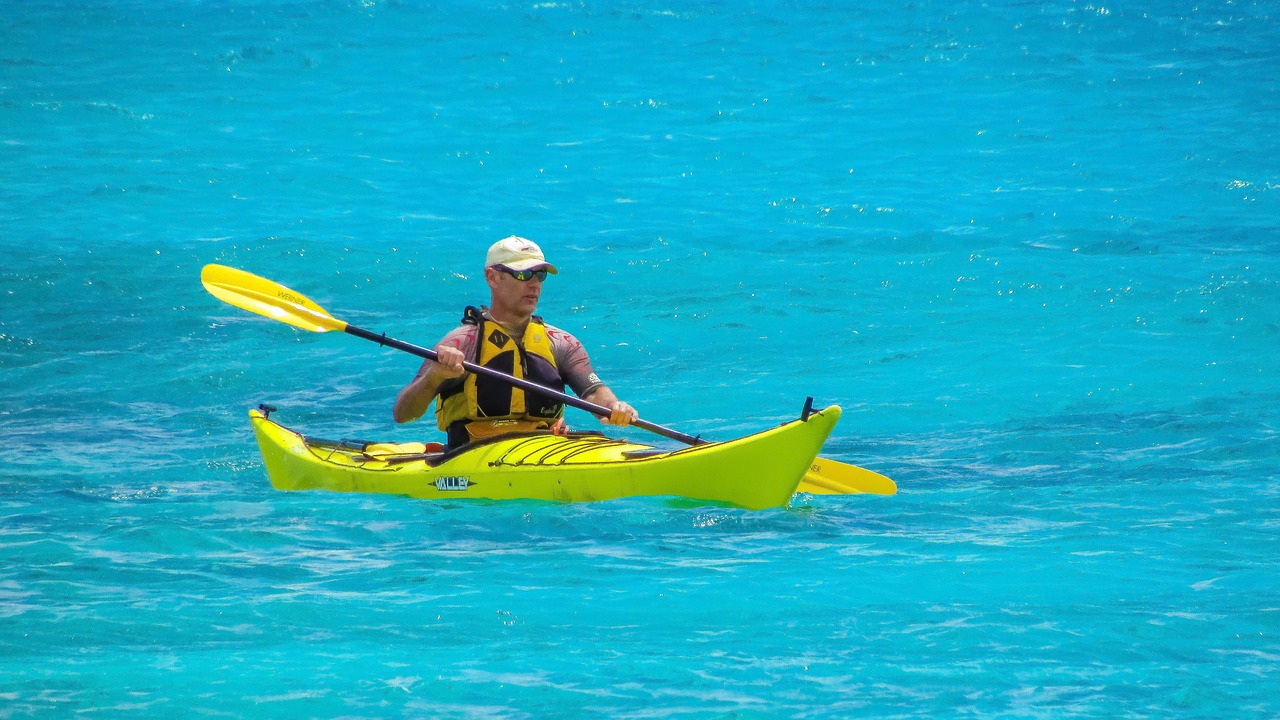
| What makes it a canoe | In racing rules, a canoe is paddled with a single-bladed paddle (a kayak uses a double-bladed one). Most canoeists kneel or sit on a raised seat in an open boat; sprint racers kneel on one knee, slalom racers on both. |
|---|---|
| Kinds of canoeing | Recreational and family paddling, wilderness tripping with portages, whitewater open canoeing, and racing: sprint, slalom (C1), marathon, plus outrigger (va’a) and long-distance river races. |
| Rules | Coast Guard rules apply to every canoe (a life jacket for each person, a sound signal, a white light at night). Rivers run by American Whitewater’s Safety Code; races by Paddle Worldwide (ICF), ACA and race rulebooks. |
| Governing bodies | Paddle Worldwide (the International Canoe Federation’s new name) worldwide; the American Canoe Association (ACA) in the US, also the main instruction body; the United States Canoe Association (USCA) for marathon racing. |
| Olympics | Canoe sprint since Berlin 1936. At LA28: men’s C1 1000 m and C2 500 m, women’s C1 200 m and C2 500 m in Long Beach, and C1 slalom for men and women in Oklahoma City. |
| Main physical demands | Trunk rotation, shoulders and back on one side at a time, grip, knees and hips for kneeling, balance, and aerobic fitness for long days; plus being able to swim and handle cold water. |
How canoeing works
The American Canoe Association’s beginner guide puts the canoe’s strengths simply: canoes have more space for kids, dogs and gear, open boats are easier to load than kayak hatches, and trips with portages draw canoeists because canoes are easier to carry. It also gives the most useful single tip for a new canoeist: you can sit, but “in most canoes you’re safer kneeling,” especially when it’s windy or bouncy, because kneeling keeps your weight lower.
Kinds of canoes
- General recreation canoes are the ones you paddled at summer camp: usually tandem, 15 to 18 feet long, and reasonably good at both turning and going straight.
- Tripping or touring canoes have less rocker and are built for travel. Solo trippers run about 13 to 17 feet; tandems top out around 20 feet.
- Whitewater canoes are short, deep and highly rockered, often fitted with flotation bags so they float higher when swamped.
- Racing canoes range from narrow sprint boats with no rudder to decked slalom C1s and long, light marathon canoes.
In the ACA’s summary, plastic hulls are inexpensive and tough but heavy; composite canoes (fiberglass, Kevlar, carbon) can be very light, which your back will appreciate on a long carry; and aluminum is durable and UV-resistant but heavy.
Paddling a canoe as partners
Tandem canoeing is a partnership. The ACA’s tandem tips: the stern paddler gets in first and out last; trim the boat so the stern sits a little deeper than the bow (the heavier paddler goes in back); paddle on opposite sides, with the bow setting the cadence and the stern steering; and switch sides together, not more often than every 10 strokes. Steering strokes such as the J-stroke, taught from the very first ACA canoe course, let the stern keep the boat straight without switching sides at all.
Rivers and the Class I to VI scale
Rivers are rated on the International Scale of River Difficulty, kept by American Whitewater. Class I (beginner) suits “a wide variety of craft,” including the family canoe; Class II (novice) suits a wide variety of river-specific craft; Class III and up call for whitewater-specific boats and gear, and for open canoes that usually means flotation bags and secured bow and stern lines. The scale “is not exact,” so add margin for cold water and high flows. Our canoeing rules and water safety page explains each class.
Racing in one paragraph
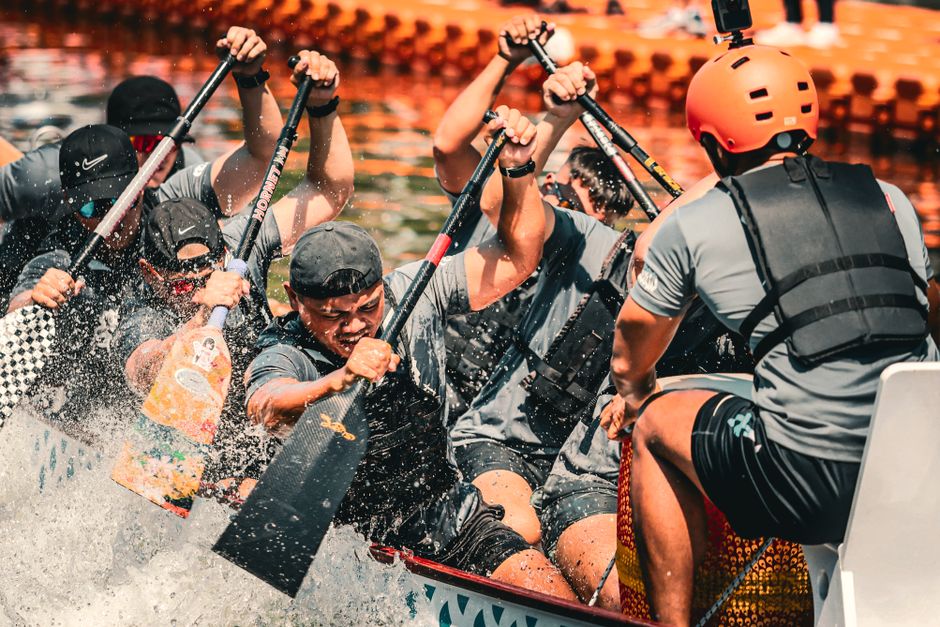
Sprint canoes (C1, C2, C4) race straight lines over 200, 500, 1,000 or 5,000 meters; the boats have no rudder, so the paddler steers with the stroke while kneeling on one knee. Slalom C1 paddlers kneel on both knees in a decked boat and run 18 to 25 gates down a whitewater course: touch a pole and it’s 2 seconds, miss a gate and it’s 50. Marathon races run 10 kilometers or more (short-distance races 3.4 to 10 km), often with portages where paddlers jump out and run with their boats. And North America has its own long-distance classics, such as the 70-mile General Clinton Canoe Regatta and the 260-mile Texas Water Safari.
Canoeing at every level
First time and recreational canoeing
Most people start in a rented canoe on a calm lake, and the best next step is a lesson. The ACA’s Level 1 Introduction to Canoeing covers the boat, the life jacket and the basic strokes for bow and stern, including the J-stroke, on flat water. The ACA’s beginner guide is blunt about one rule: beginning canoeists “should never paddle alone.”
Wilderness tripping
Canoe tripping, paddling and portaging from lake to lake with everything you need, is the heart of canoeing for many people. In Minnesota’s Boundary Waters Canoe Area Wilderness, an overnight trip from May 1 to September 30 needs a quota permit, and a group can be no larger than 9 people and 4 watercraft.
Kids, camps and Scouts
Federal rules require children under 13 to wear a Coast Guard-approved life jacket while the boat is underway, unless your state has its own rule. Many kids learn at summer camp or in Scouts, where the Canoeing merit badge starts with the Scouting America swimmer test and includes a controlled capsize. Northern Tier, Scouting America’s canoe base near Ely, Minnesota, outfits over 4,000 Scouts a year for trips into the Boundary Waters and Quetico. Our canoeing for kids and teens page covers sizing, lessons and junior racing.
Clubs and racing
Sprint racing in the US runs through clubs. The 2026 ACA Sprint National Championships at Harsha Lake in Ohio brought together 212 paddlers from 17 clubs, from the youngest Bantam division through Juvenile, Junior, Senior, Masters and Para. Marathon canoe racing has its own home in the USCA, founded in 1968, and the “Triple Crown” of the General Clinton, the AuSable River Canoe Marathon in Michigan and the Classique in Quebec. Canoeing is not an NCAA championship sport, so college paddling happens through clubs and outing programs.
National teams and the Olympics
Canoe sprint has been an Olympic discipline since Berlin 1936. Women’s canoe joined at Tokyo 2020, with a C1 200 m and a C2 500 m in sprint and a women’s C1 in slalom, which replaced the men’s C2. American Nevin Harrison won the first Olympic women’s C1 200 m in Tokyo at 19. Worldwide the sport is run by the International Canoe Federation, founded in 1924 and relaunched in July 2026 as Paddle Worldwide; its disciplines also include marathon, wildwater, ocean racing and outrigger. In the US, the ACA has been the national governing body for canoe, kayak and paracanoe since October 2017 and selects the national teams. At LA28, canoe sprint is at Marine Stadium in Long Beach (July 25–29, 2028) and slalom in Oklahoma City (July 14–22). Our canoeing organizations page maps the whole pathway.
Canoe safety and sports health
Canoeing health has two halves: everyday strain on shoulders, backs and knees, and rare emergencies where a life jacket and good judgment decide everything. This section is general information, not medical advice. If you’re hurt, see a sports medicine doctor, physical therapist or athletic trainer; in an emergency on the water, call 911 or use VHF channel 16 on the coast.
Life jackets: what the Coast Guard numbers show
The US Coast Guard’s 2024 Recreational Boating Statistics counted 35 reported canoe incidents, 25 canoe deaths and 16 injuries. Of the 25 deaths, 21 were drownings (84%), and all 21 of those canoeists were not wearing a life jacket. Across all paddlecraft (canoes, kayaks and paddleboards), 143 people died. The single most effective thing a canoeist can do is wear the life jacket, not just carry it.
- The law: one Coast Guard-approved wearable life jacket per person, the right size, in good condition and readily accessible. Canoes don’t need a throwable cushion, even at 16 feet and longer. Some states require paddlers to wear one, such as New Mexico year-round and Massachusetts from September 15 to May 15.
- Foam or inflatable: the Coast Guard doesn’t recommend inflatables for anyone under 16 or for non-swimmers. On whitewater, American Whitewater recommends a snug, whitewater-specific vest.
- Stay upright: the ACA’s stability rules are to keep three points of contact when you move, keep your shoulders inside the gunwales, load within the capacity rating and keep weight centered side to side.
Shoulders, backs and knees
Canoeing loads one side at a time, and the research shows it. In a 2025 study of 140 elite teenage flatwater paddlers, the shoulder was the most injured site in canoeists, followed by the lower back, back and knee, and female canoeists had about three times the injury rate of male canoeists (1.51 vs 0.47 injuries per 1,000 training hours). At an Australian 111-km marathon race, more than a third of injuries seen by the medical team involved the shoulder (35.6%), followed by the mid-back (23%) and lower back (17%). Kneeling is hard on knees and ankles, which is why the ACA suggests a kneeling pad. Switch sides regularly on easy days, build trunk and shoulder strength on land, and add distance gradually. Details are on our canoeing injuries page.
Head injuries on whitewater
Rocks are the danger when a canoe flips in shallow rapids, so whitewater canoeists wear helmets, and ACA slalom rules require a helmet and life jacket to start. If someone takes a hit to the head, follow the CDC’s HEADS UP rule, “When in doubt, sit them out”: off the water for the day and until a health care provider clears them. A worsening headache, repeated vomiting, a seizure or unequal pupils mean emergency care now.
Cold water, strainers and low-head dams
The National Weather Service calls water of 70°F or lower “cold water,” and a sudden plunge triggers a gasp reflex that can make you breathe in water. Physiologist Gordon Giesbrecht’s 1-10-1 rule: about 1 minute to control your breathing, about 10 minutes of useful movement, and up to about an hour before hypothermia knocks you out, if you’re floating. American Whitewater says a wetsuit or drysuit is essential below 50°F, and the ACA suggests specialized paddling wear whenever air plus water temperature is below 120°F. On rivers, two hazards kill even on easy water: strainers (trees the current flows through but you don’t) and low-head dams, whose recirculating current can trap a swimmer.
Sun, heat and lightning
UV reflects off the water. The American Academy of Dermatology recommends a broad-spectrum, water-resistant sunscreen of SPF 30 or higher, reapplied every two hours and after swimming or sweating, plus a hat and a long-sleeve top. On hot days, confusion or collapse could be heat stroke: the athletic trainers’ association (NATA) says to cool the person right away, ideally in cold water, and call for help. For storms, NATA’s rule holds on the water too: “When thunder roars, go indoors.”
Training and conditioning for canoeing
Time in the boat is the best training, but a strong canoe stroke comes from rotating the trunk, not just pulling with the arms, and a canoeist spends hours working one side. A simple week has three parts:
- Balance the body: rows, pull-ups or band pull-aparts on both sides, rotator cuff work, and paddling on your “off” side on easy days.
- Trunk, hips and knees: rotational core work, side planks, and hip and ankle mobility so kneeling stays comfortable.
- Engine and water skills: two or three easy aerobic sessions, a harder interval session, plus capsize drills and, for trippers, practice carrying the canoe.
Resistance bands make shoulder work easy at home; see our resistance bands guide. Full routines are on our canoeing training page.
Fuel, hydration and recovery
A day of tripping or a marathon race is a long day of exercise, often far from a store. Pack water and food in a dry bag, drink before you’re thirsty, and eat something every hour or two on long days. Our canoeing race day page and canoeing nutrition page cover fueling, electrolytes and supplements with third-party testing.
After paddling, get warm and dry first, then eat and rehydrate. Many paddlers use a foam roller like the TriggerPoint GRID 1.0 (about $40) on the upper back and lats, or a small massage gun such as the Theragun Mini (about $220); that’s for comfort, not treatment. More on our canoeing recovery page and in our athlete recovery routine.
Gear for canoeing
Prices change often. The prices below are what we saw at the maker or a major retailer in October 2026; check the current price before you buy.
Start with the life jacket you’ll actually wear all day: a paddling vest with big arm openings, like the Onyx MoveVent Dynamic (about $69, Coast Guard and Transport Canada approved). Then a canoe paddle sized to your torso and boat; the Bending Branches Arrow (about $160) is a classic straight-shaft wood paddle with a protected tip. Knees will thank you for kneeling pads such as the North Shore contoured canoe knee pads (about $32, peel-and-stick closed-cell foam). Keep spare clothes and food in a roll-top bag like the Earth Pak 20L dry bag (about $25), and clip a whistle to your vest. Paddle sizing, canoes, car-top carriers, kids’ sizes and whitewater gear are on our canoeing gear page, and GPS watches for paddlers on our canoeing wearables page.
Onyx MoveVent Dynamic Paddle Vest
- USCG and Transport Canada approved
- Mesh lower back for high seats
- SOLAS reflective trim
Bending Branches Arrow Canoe Paddle
- 18-laminate basswood shaft
- Hardwood blend blade, Rockgard tip
- Straight shaft, palm grip
North Shore Contoured Canoe Knee Pads
- Set of two, contoured sides
- Medium-density closed-cell foam
- 3M peel-and-stick backing
Earth Pak 20L Waterproof Dry Bag
- 500D PVC roll top
- Shoulder strap
- Waterproof phone case included
Canoeing FAQs
Is canoeing dangerous?
Day to day, most canoeing problems are sore shoulders, backs and knees, blisters and sunburn. The serious risk is drowning: in 2024 the Coast Guard counted 25 canoe deaths, 21 of them drownings, and none of those 21 was wearing a life jacket. Wearing one, dressing for the water temperature, paddling with others and staying within your skills cut that risk the most.
What’s the difference between canoeing and kayaking?
Canoeists use a single-bladed paddle and usually kneel or sit on a raised seat in an open boat with room for passengers and gear; kayakers use a double-bladed paddle and sit low with their legs forward. Kayaking has its own guide.
Should you kneel or sit in a canoe?
Both work, but the ACA’s beginner guide says that in most canoes you’re safer kneeling, especially in wind or waves, because it lowers your center of gravity. Many rest their rear against the seat edge and use kneeling pads.
Who sits in the back of a canoe?
The stern (back) paddler steers, so it’s usually the more experienced one, and the ACA suggests the heavier paddler sit in back so the stern rides a little deeper than the bow, which helps the canoe track straight. The bow paddler sets the pace.
Is canoeing in the Olympics?
Yes. Canoe sprint has been on the program since 1936, and slalom C1 is raced too. At LA28 there are canoe sprint races for men (C1 1000 m, C2 500 m) and women (C1 200 m, C2 500 m), plus men’s and women’s C1 slalom.
Canoeing gives back for a lifetime: a family paddle at sunset, a week of lakes and portages, a race to the coast. Wear the life jacket, respect cold and moving water, and look after your shoulders and knees. Next: canoeing rules and water safety, canoeing for kids, canoeing injuries, canoeing gear, or compare with our rowing and stand-up paddleboarding sections.