This article contains affiliate links: if you buy through them we may earn a commission, at no extra cost to you. Learn more.
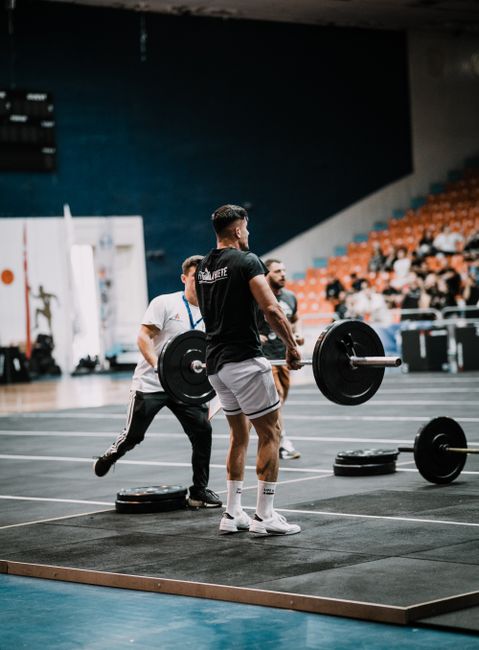
The 6 a.m. class at a garage-door gym, chalk on the rig, the whiteboard reading “21-15-9” and a coach counting down from three. A Friday night in late February, when the whole box stays late to judge each other through the first workout of the Open. A sold-out arena in San Jose in July, where the fittest athletes on earth finish the 20th CrossFit Games. CrossFit is a training method, a gym in almost every town and a sport with its own world championship, and the same workout can be scaled for a beginner, a teenager, a 70-year-old or a Games athlete.
CrossFit, page by page
- Rules: how the game works at every level
- Leagues & associations: pro, college, high school and youth
- Youth & high school: ages, safety and recruiting, for players and parents
- Injuries & sports health: prevention, concussion, when to see a pro
- Training & conditioning: before: off-season to in-season
- Game day: during: fueling, hydration, heat
- Recovery: after: games, tournaments, sleep
- Nutrition & supplements: what to eat, tested supplements
- Best wearables: trackers and watches for the sport
- Gear: the complete equipment list
Buying guide · Our CrossFit buying guide compares the gear we'd pick, with prices and sizing:
This page is CrossFit for the people who do it and the people who look after them: how it works, how it’s organized from the local affiliate to the Games, where HYROX and other functional fitness races fit in, and most of all how to stay healthy doing it. Sports health is the heart of it: the CrossFit injuries people get most, the warning signs of rhabdomyolysis, heat, and when to see a professional. Then training, recovery and the gear that’s worth buying.
CrossFit at a glance
| What it is | In CrossFit’s own words, “constantly varied functional movements performed at relative intensity”: weightlifting, gymnastics and conditioning (running, rowing, jumping rope) mixed in short, hard workouts. |
|---|---|
| Where people train | Affiliates (independent “boxes” licensed to use the name). CrossFit says there are more than 9,000 affiliates worldwide. |
| A typical class | About an hour: warm-up (5–10 min), skill or strength (10–20 min), the workout of the day or WOD (10–20 min), cool-down (5–10 min). |
| Competition | The CrossFit Open (online, open to anyone 14 and up), then Quarterfinals, Semifinals and the CrossFit Games. HYROX and other fitness races run their own seasons. |
| Main physical demands | Strength, power, gymnastics skill, grip, and the engine to keep going when your heart rate is near its top. |
| Most common injuries | Spine (low back), shoulder and knee, in that order in a 2021 meta-analysis; hand rips and wrist pain are common too. Rare but serious: exertional rhabdomyolysis. |
How CrossFit works
A CrossFit workout is a mix of three kinds of movement: weightlifting (squats, deadlifts, presses, cleans and snatches), gymnastics (pull-ups, push-ups, handstands, toes-to-bar, rope climbs, muscle-ups) and monostructural conditioning (running, rowing, biking, jump rope). The workout of the day changes every day, and it comes in a few common formats: for time (finish the work as fast as you can), AMRAP (as many rounds and reps as possible in a set time) and EMOM (a set amount of work every minute on the minute).
The key word is scaling. CrossFit says the same workout can be adapted for a beginner, a grandparent, a competitive athlete or someone coming back after years away. A coach lowers the weight, cuts the reps or swaps a movement (ring rows for pull-ups, step-ups for box jumps) so that everyone gets a similar effort without going past what they can do safely. Doing the workout exactly as written is called “Rx” (as prescribed). There’s more on the rules of competition, movement standards and judging on our CrossFit rules page.
CrossFit at every level
Kids and teens
Many affiliates run CrossFit Kids and teen classes. CrossFit groups kids into preschool (3–5), kids (5–12), preteens (10–12) and teens (12–18) and says the focus is fun and good mechanics first, with lifts practiced unloaded or with light loads until a child moves well and consistently. Teens can compete: the Open and the Games season have 14–15 and 16–17 divisions for boys and girls. HYROX runs Youngstars races for ages 8 to 15. The American Academy of Pediatrics (AAP) supports supervised strength training for kids, with clear limits; our youth CrossFit page covers them, plus parents’ questions.
Everyday athletes at the box
Most people who do CrossFit never compete beyond the Open. They come for a coached hour, a group that knows their name and a workout they don’t have to plan. That’s where a good coach matters most: CrossFit trainers start with the Level 1 Certificate (CF-L1), a two-day course with an online test, and can go on to Level 2, 3 and 4 credentials. Our leagues and associations page explains the credentials and how to choose a gym.
The Open, Semifinals and the Games
The CrossFit Open is the entry point to the sport, and CrossFit calls it the largest participatory sporting event on earth. In 2026 it ran from February 26 to March 16: three workouts over three weeks, done at your affiliate or filmed at home, in Rx, Scaled or Foundations versions. About 254,000 athletes registered, an increase of around 8% from 2025. The top 25% of individuals moved on to online Quarterfinals (March 26–30), the top 2,000 men and women to in-person or online Semifinals between April and June, and the top 30 men, 30 women and 20 teams to the 2026 CrossFit Games, held July 22–26 at the SAP Center in San Jose, California. The 20th Games had 20 scored events, the most ever. Age-group athletes (14–17 and 35 to 70+) and adaptive athletes have their own divisions and finals.
HYROX and other functional fitness races
HYROX is the fast-growing “fitness race”: eight rounds of a 1 km run followed by a workout station, in the same order everywhere: SkiErg 1,000 m, sled push 50 m, sled pull 50 m, burpee broad jumps 80 m, row 1,000 m, farmers carry 200 m, sandbag lunges 100 m and 100 wall balls. You can race it solo (Open or the heavier Pro), in doubles or as a relay team of four. Other bodies and leagues include the International Functional Fitness Federation (iF3), which runs national federations and a World Championships with the goal of Olympic recognition, and the World Fitness Project, a pro league with tour stops in London, Indiana and Copenhagen in 2026. If HYROX is your thing, our running hub helps with the 8 km in between.
Masters athletes
CrossFit has a big following among adults over 35, and the Games season has age groups from 35–39 up to 70+. The same rule applies at every age: scale the loads and the gymnastics to what you can do well today, and build up gradually. Recovery takes a bigger share of the week as you get older; our athlete recovery routine is a good place to start.
Sports health for CrossFit athletes
CrossFit gets a reputation for injuries, so it’s worth looking at what the research says. This section is general information, not medical advice. If you’re hurt, see a professional.
How common are CrossFit injuries?
A 2021 systematic review and meta-analysis by Hülsmann and colleagues looked at 32 studies with 9,306 participants. It found an injury incidence of about 3.2 injuries per 1,000 training hours, and that about 30% of participants reported an injury. The authors concluded that injury rates in CrossFit don’t seem to differ much from other strength sports: they cited 2.4–3.3 per 1,000 hours for weightlifting and 1.0–4.4 for powerlifting.
- Low back and spine (about 27% of injuries in the meta-analysis): linked in earlier research mostly to heavy lifting, such as deadlifts and other powerlifting moves.
- Shoulder (about 26%): linked in earlier research to gymnastics movements, including kipping, ring dips and muscle-ups, and to overhead lifting.
- Knee (about 16%): squats, lunges, box jumps and running volume all load the knee.
- Hands and wrists: torn calluses (“rips”) from pull-ups and toes-to-bar, and sore wrists from front-rack positions, push-ups and handstands. Our wrist wraps for CrossFit guide explains when wraps help.
One finding stands out for anyone choosing a gym: in a 2014 study of 386 CrossFit athletes, Weisenthal and colleagues found about one in five had been injured while training, and injury rates were lower when a trainer was involved. Good coaching, scaling and not chasing a max every day are the simplest injury prevention you can buy. The CrossFit injuries page goes body part by body part.
Rhabdomyolysis: the warning sign to know
Exertional rhabdomyolysis (“rhabdo”) is a rare but serious condition in which damaged muscle releases its contents into the blood, which can harm the kidneys. MedlinePlus, from the US National Library of Medicine, lists severe exertion among the causes and dark, red or cola-colored urine, muscle tenderness, weakness and passing less urine among the symptoms. In a case series of 11 CrossFit-related cases at one US academic center (published 2019), 10 of the 11 patients had dark urine, and more than half were beginners. Severe exertion, heat and dehydration are all on MedlinePlus’s list of causes; in a gym, that usually means a sudden jump in volume, such as a first hard class after a long break or hundreds of reps of one movement. If you have dark urine or muscle pain and swelling far beyond normal soreness after a workout, get medical care the same day. Prompt treatment lowers the risk of kidney damage.
Heat, hydration and head knocks
Many boxes are warehouses with a roll-up door and no air conditioning, and summer workouts often go outside. The National Athletic Trainers’ Association (NATA) recommends easing into the heat over 7 to 14 days. Drink through the day, take water breaks, and stop and get help for confusion, collapse or hot skin; call 911 for those signs. Concussions are not common in CrossFit, but falls from rings, boxes or a missed rope climb happen. The CDC’s HEADS UP advice applies: anyone with signs of a concussion stops for the day and returns only after a healthcare provider clears them.
When to see a doctor, physical therapist or athletic trainer
Don’t train through pain that changes how you move. See a sports medicine physician, physical therapist or athletic trainer for pain that lasts more than a few days, a joint that swells or gives way, numbness or tingling, back pain that runs down a leg, a shoulder that hurts overhead or at night, or any concussion signs. Tell your coach too: a good coach will scale around an injury while you get it checked.
Training and conditioning for CrossFit
Starting out: most affiliates start new members with an on-ramp or foundations program before regular classes. Learn the core lifts with a PVC pipe or empty bar, build strict strength before kipping, and scale the first weeks more than you think you need to. That last part is the main way to avoid both injuries and rhabdo.
Every week: mix hard days with easier ones, and plan rest days instead of waiting until something hurts. Many athletes use a heart-rate strap or a recovery wearable to keep an eye on effort and sleep; see our heart rate monitor guide and HRV for athletes. Our CrossFit training page covers strength, gymnastics progressions, engine work and Open prep.
Competition day: the American College of Sports Medicine’s sports-nutrition position statement, written with two dietitians’ groups, recommends a pre-exercise meal high in carbohydrate, moderate in protein, low in fat and fiber, of familiar foods, about 1–4 hours before. At a local throwdown or a HYROX race with several heats, pack food and fluids for the whole day; our CrossFit competition day page has the checklist, and CrossFit nutrition and supplements covers what to eat and which supplements are third-party tested.
Recovery after CrossFit
Sleep comes first: the CDC, citing the American Academy of Sleep Medicine, recommends 8–10 hours a night for teens and 7 or more for adults. Then a real meal with protein and carbohydrate, and fluids. Many CrossFit athletes use a foam roller, a massage gun or compression boots because it feels good on tight legs and shoulders; they’re about comfort, not treatment. One thing to know if you love ice baths: a 2015 study found that regular cold-water immersion right after strength training reduced long-term gains in strength and muscle, so many lifters keep cold plunges away from their strength days.
We’ve written the step-by-step plan already: our CrossFit recovery routine covers the first 15 minutes after the WOD, the rest of the day, sleep and the weekly pattern. The CrossFit recovery page adds competition weekends and the Open.
Gear for CrossFit
- Training shoes: a flat, stable shoe for lifting that can still handle box jumps, rope climbs and short runs. Examples are the Nike Metcon 10 (about $155) and Reebok’s Nano line.
- Speed rope: for double-unders, a staple of CrossFit workouts. The WOD Nation Jump Rope is an inexpensive adjustable cable rope.
- Grips and chalk: grips like the Bear KompleX carbon 3-hole grips help many athletes protect their hands on pull-ups and toes-to-bar.
- Knee sleeves, belt and wrist wraps: for heavy squats, deadlifts and pressing; see our best knee sleeves and wrist wraps guides.
Three picks for a CrossFit bag: the WOD Nation Jump Rope (about $19, adjustable length), Gymreapers 18-inch wrist wraps (about $20, with a thumb loop) and the TriggerPoint GRID foam roller (about $40) for after class. Our CrossFit gear guide compares shoes, ropes, grips, sleeves, belts and recovery tools in detail.
Gymreapers 18" Wrist Wraps
- 18 x 3 in
- Reinforced thumb loop
- IPF and USPA approved (maker)
TriggerPoint GRID 1.0 Foam Roller
- 13 in multi-density
- Hollow core
- About $40
CrossFit FAQs
Is CrossFit safe for beginners?
It can be, if the workouts are scaled and coached. Research puts CrossFit’s injury rate at about 3.2 per 1,000 training hours, similar to other strength sports, and one study found fewer injuries when a trainer was involved. Start with your gym’s on-ramp program, scale more than you think you need to in the first weeks, and tell the coach about any old injuries.
What are the most common CrossFit injuries?
In a 2021 meta-analysis, the spine (mostly low back) was about 27% of injuries, the shoulder about 26% and the knee about 16%. Hand rips and wrist pain are common too. See a sports medicine doctor, physical therapist or athletic trainer for pain that lasts or changes how you move.
What is rhabdo, and how do I avoid it?
Exertional rhabdomyolysis is serious muscle breakdown after extreme exertion. The warning sign is dark, red or cola-colored urine, often with severe muscle pain, swelling or weakness; get medical care the same day. Lower the risk by building volume gradually, especially after a break, scaling high-rep workouts and staying hydrated in the heat.
How does the CrossFit Open work?
You register online, and each week a new workout is released. You do it at your affiliate with a judge, or film it, and submit your score. In 2026 there were three workouts from February 26 to March 16, each in Rx, Scaled and Foundations versions. Anyone 14 or older (by the season’s cutoff date) can take part.
What’s the difference between CrossFit and HYROX?
CrossFit workouts change every day and include Olympic lifts and gymnastics; the Open’s workouts are announced week by week. HYROX is the same race every time: 8 × 1 km running, each followed by one of eight fixed stations, from the SkiErg to 100 wall balls. Many people do both: CrossFit training builds the strength and engine HYROX needs.
How many times a week should I do CrossFit?
There’s no single answer; it depends on your experience, age, sleep and what else you do. Many coaches suggest beginners start with three classes a week, and many regular members train four or five days with planned rest days. If you feel worse week after week, cut back and talk to your coach.
CrossFit is at its best when it lasts: years of showing up, getting stronger and fitter, and doing the work with people who cheer you through the last rep. Keep exploring: our recovery tools guide, creatine and electrolytes for hard training days, and the other sports on our sports hub.