This article contains affiliate links: if you buy through them we may earn a commission, at no extra cost to you. Learn more.
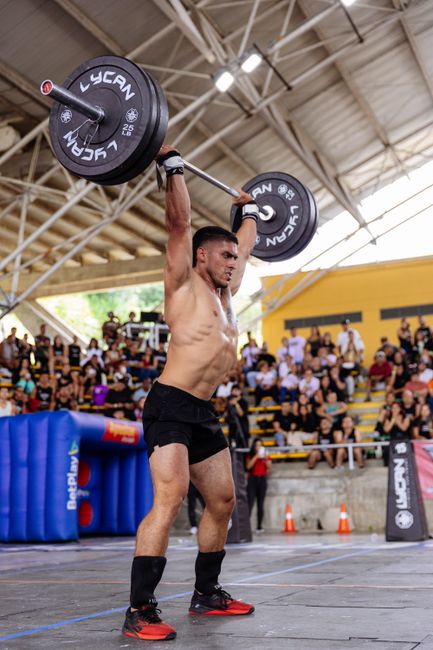
It’s 7:30 on a Saturday in a borrowed warehouse. There’s a heat sheet taped to the wall, a judge’s briefing in the corner, a cooler full of snacks under the bleachers, and three events between you and the final. Event 1 at 9:10, Event 2 just after noon, the finale late in the afternoon if you make the cut. A CrossFit competition day isn’t one workout, it’s a long day of short, very hard efforts with a lot of waiting in between. How you warm up, eat and drink between heats can matter as much as your fitness. This page is your plan, whether it’s your first in-house throwdown, a local team comp, the Open at your own box or a Semifinal floor.
General information, not medical or nutrition advice. If you have diabetes, a heart condition, high blood pressure or another medical condition, plan competition day with your doctor or a registered sports dietitian. More on the sport at our CrossFit hub.
What a competition day looks like
As of the 2026 season, the official CrossFit Games season starts with the Open: three weeks of workouts, done at your own affiliate or gym and scored online (in 2026, from February 26 to March 16). The top 25% of individual and age-group athletes moved on to the online Quarterfinals, then to Semifinals held mostly in person from April to June, and the Games ran July 22–26 in San Jose, California. Most athletes, though, compete at local events: two to five events in a day, scaled, intermediate and Rx divisions, individuals, pairs and teams, often with a final for the top finishers.
Good news from the research: in a survey of 3,049 CrossFit athletes, people who competed didn’t have more injuries than those who only trained. Competition day is about pacing, fueling and judging standards, not about taking risks.
The night before and the morning of
- Read the movement standards and watch the event videos. Most lost reps on game day are “no reps”: a squat not below parallel, a chin not over the bar, a hip not open at the top.
- Pack the bag: shoes, grips, chalk, tape, wrist wraps, jump rope, a water bottle, electrolytes, and more food than you think you’ll need.
- Breakfast you’ve tested in training. The 2016 joint position from the American College of Sports Medicine (ACSM), the Academy of Nutrition and Dietetics and Dietitians of Canada suggests about 1–4 g of carbohydrate per kilogram of body weight in the 1 to 4 hours before exercise, with less fat, fiber and protein close to the start to avoid stomach trouble. Oats with banana, bagels, toast with honey or rice all work. Nothing new on game day.
- Start hydrated: ACSM suggests about 5–10 mL of fluid per kg of body weight in the 2–4 hours before exercise, aiming for pale yellow urine.
Warm-ups for multiple events
Work backward from your heat time, not the start of the day. A simple pattern many coaches use: start a general warm-up about 30–40 minutes before your heat (easy row or bike, then dynamic mobility), move to movement-specific prep (the exact movements in the event, building up to your working weights), then do a short, sharp primer of a few hard reps or a 20–30 second burst about 5–10 minutes before you walk to the floor. Between events, stay warm with layers and short walks rather than lying down for two hours. CrossFit’s own class warm-up is 5–10 minutes; competition warm-ups are longer because you’ll be going at a true max effort.
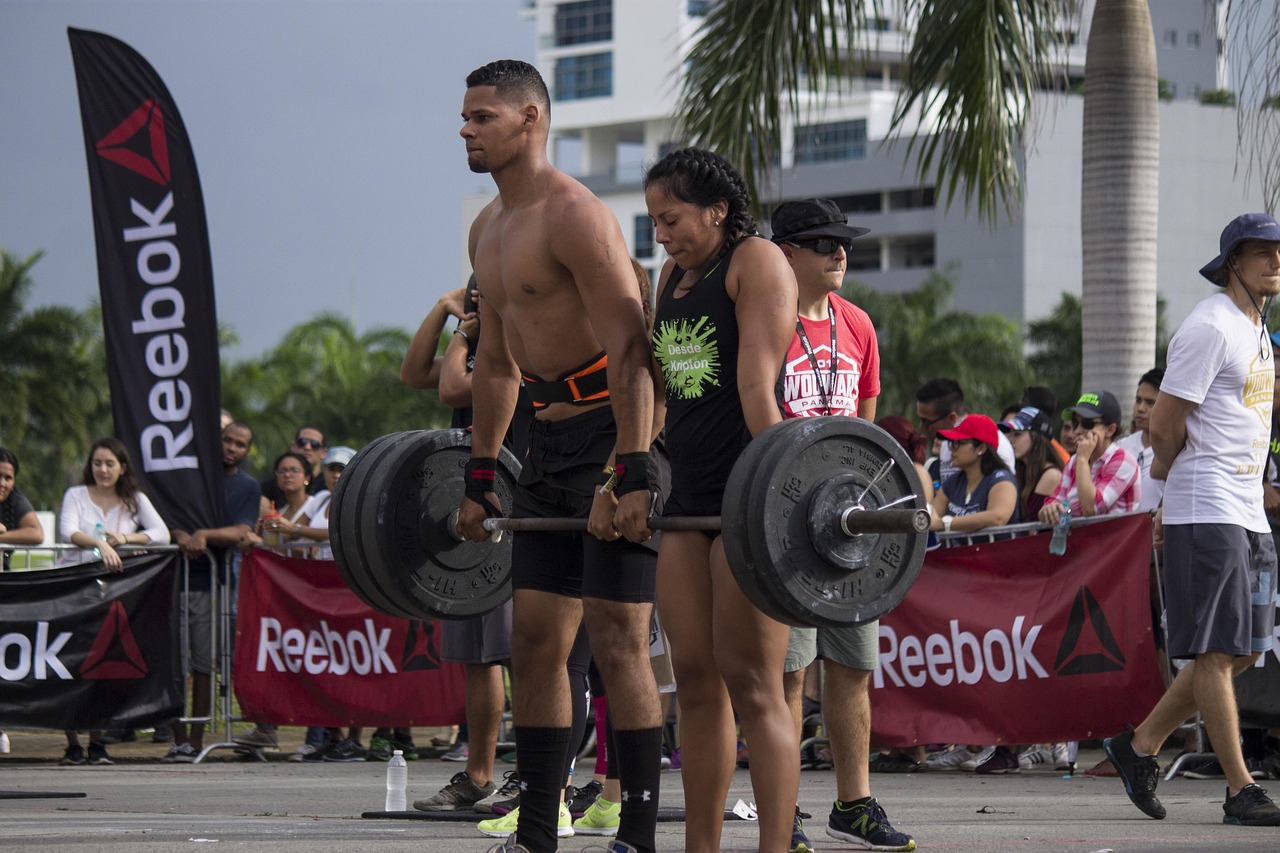
For strength events (a 1-rep-max clean, for example), take more warm-up sets and longer rests between them, and plan your attempts ahead with your coach or a friend.
Fueling between heats
Most CrossFit events are short (often under 15 minutes) but very intense, and they run on carbohydrate stored in your muscles. Several of them in one day add up. ACSM’s position says that when recovery time between hard sessions is short, eating about 1.0–1.2 g of carbohydrate per kg of body weight per hour in the early hours after exercise helps refuel fastest. For a 70 kg athlete that’s roughly 70–85 g an hour, from foods you know sit well. Add a little protein (ACSM suggests 15–25 g after exercise) when there’s a longer gap.
- Less than an hour between events: small, easy carbs: a banana, a sports drink, applesauce pouch, a few dried fruit or rice cakes.
- Two hours or more: a real snack or light meal: a bagel or wrap with turkey, rice with chicken, yogurt and granola.
- Keep it familiar and low in fat and fiber close to your next heat.
- Caffeine: a review of seven studies found a small performance benefit from caffeine in CrossFit workouts. It isn’t for everyone (sleep, anxiety, upset stomach, heart conditions, pregnancy), and it’s not for teens. Never try it for the first time on competition day; stay within the label.
Hydration and heat
Warehouse gyms and outdoor floors can get hot. The aim, from ACSM and the National Athletic Trainers’ Association (NATA), is to lose no more than about 2% of your body weight to sweat, without overdrinking (gaining weight during the day is a warning sign, because of the risk of low blood sodium). Drinking to thirst is a safe strategy if you don’t know your sweat rate. Sip water and an electrolyte drink through the day instead of chugging before your heat. Heavy sweaters and long, hot days are where electrolyte mixes like Skratch Labs Hydration Sport Drink Mix or Nuun Sport tablets earn their place; our best electrolyte powders guide compares more.
Know the heat danger signs. NATA defines exertional heat stroke by confusion or other changes in brain function plus a very high body temperature, and says cooling (cold-water immersion is best) comes first. Anyone confused, collapsing or acting strangely after an event needs medical help right away. Dark, cola-colored urine with severe muscle pain is a different emergency, rhabdomyolysis; see CrossFit injuries.
Skratch Labs Hydration Sport Drink Mix
- 400 mg sodium per serving
- 20 servings
- NSF Certified for Sport (maker)
Nuun Sport Tablets
- 300 mg sodium per tablet
- 1 g sugar
- Informed Choice
Cannon Sports Gym Chalk
- 1 lb, eight 2 oz blocks
- Magnesium carbonate
- About $18
Prices change often; check the current price before you buy. Electrolyte products: follow the label, and check with a doctor or dietitian if you have high blood pressure, kidney or heart problems, or follow a low-sodium diet.
Between events and after the final
- Right after each event: walk it off for a few minutes, drink, then eat according to your next heat time.
- Look after your hands: tape hot spots before they tear and keep grips and chalk handy.
- Don’t re-watch every rep. Check the next event’s standards, then rest your head.
- After the last event: a proper meal with carbohydrate and protein, fluids to replace what you lost (ACSM suggests about 1.25–1.5 L for every kg of weight lost), and a good night’s sleep. Our CrossFit recovery page covers the days after.
What to eat day to day and which supplements have evidence is on CrossFit nutrition and supplements.
CrossFit competition day: FAQs
What should I eat between CrossFit competition events?
Mostly easy carbohydrates you’ve tried before: bananas, rice cakes, bagels, sports drinks. ACSM suggests about 1.0–1.2 g of carbohydrate per kg of body weight per hour when recovery time is short, plus some protein when there’s a longer gap.
How early should I warm up before my heat?
Many athletes start about 30–40 minutes before their heat: general warm-up, then the event’s movements at building weights, then a short primer 5–10 minutes before. Adjust to the schedule and keep warm between events.
Do I need electrolytes at a CrossFit competition?
For a short, cool event, water and normal food usually cover it. For long days, hot gyms or heavy sweaters, an electrolyte drink is a simple way to replace sodium. Aim to lose no more than about 2% of body weight, and don’t overdrink.
Is competing in CrossFit more dangerous than training?
Not according to a survey of 3,049 athletes, which found that competitors didn’t have more injuries than non-competitors. Pick a division that matches your skills, and don’t attempt a movement for the first time on the competition floor.
How does the CrossFit Open work?
As of the 2026 season, the Open is three weeks of workouts released online, done at your gym and submitted with a score. It’s open to anyone, with scaled options, and it’s the first stage toward Quarterfinals, Semifinals and the CrossFit Games.