This article contains affiliate links: if you buy through them we may earn a commission, at no extra cost to you. Learn more.
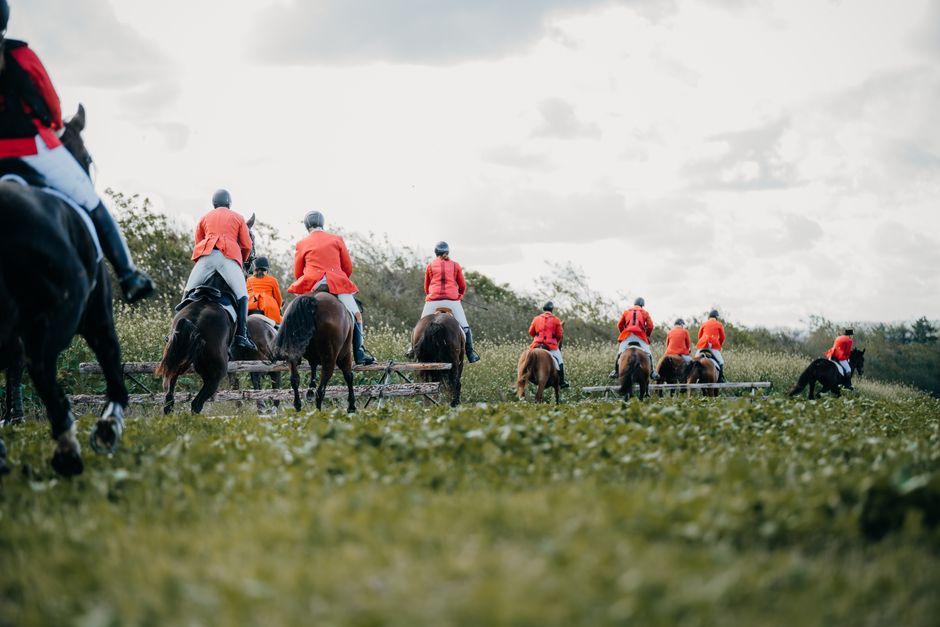
A seven-year-old’s first lesson on a patient school pony, both hands on the reins and a grin under a borrowed helmet. A county-fair 4-H show in July, braided manes and a ribbon taped to the stall. A middle schooler on an IEA team drawing the name of a horse she’s never ridden, then riding it into the ring ten minutes later. A reining horse sliding to a stop in a cloud of dirt, a barrel racer flat out for home, a quiet trail ride through the pines on a Sunday afternoon. And, in the summer of 2028, Olympic eventing, dressage and jumping at Santa Anita Park in California. Horseback riding is one sport with many faces: US Equestrian alone recognizes 11 breeds and 18 disciplines.
Horseback Riding, page by page
- Rules: how the game works at every level
- Leagues & associations: pro, college, high school and youth
- Youth & high school: ages, safety and recruiting, for players and parents
- Injuries & sports health: prevention, concussion, when to see a pro
- Training & conditioning: before: off-season to in-season
- Game day: during: fueling, hydration, heat
- Recovery: after: games, tournaments, sleep
- Nutrition & supplements: what to eat, tested supplements
- Best wearables: trackers and watches for the sport
- Gear: the complete equipment list
Buying guide · Our Horseback Riding buying guide compares the gear we'd pick, with prices and sizing:
This page is horseback riding for riders and the people who look after them: how it works, English and Western, what it looks like at every level from lessons and Pony Club to college teams and the Olympics, and, most of all, how to stay healthy doing it. Sports health is the heart of it, because riding carries real risk: a CDC analysis estimated about 103,000 people a year were treated in US emergency departments for horse-related injuries. Below: the horseback riding injuries that matter most, helmets, kicks and when to see a professional. Then fitness, recovery and gear.
Horseback riding at a glance
| Main styles | English: dressage, show jumping, hunters and equitation, eventing. Western: reining, barrel racing, trail class, horsemanship and ranch riding. Plus trail and pleasure riding. |
|---|---|
| Governing bodies | The FEI worldwide; US Equestrian (USEF) in the US; USEA, USDF, AQHA, NRHA, NBHA and others by discipline. |
| Youth and school | Lesson barns, US Pony Clubs, 4-H horse projects, the Interscholastic Equestrian Association (IEA, grades 4–12). |
| College | IHSA (more than 350 colleges) and NCAA equestrian, an emerging sport for women run with the NCEA. |
| Olympic and Paralympic | Jumping, dressage and eventing (Olympic since 1912; men and women compete together); para dressage (Paralympic since 1996). LA28 equestrian: Santa Anita Park, July 14–29, 2028. |
| Main physical demands | Core stability, balance, leg strength and symmetry in the saddle; heart rates of 150–185 bpm in eventing cross-country and polo; plus hours of barn work. |
| Most common injuries | Falls: broken arms and wrists, head injuries and concussion, back and pelvis injuries. On the ground: kicks and crush injuries. Off the horse: everyday low back pain. |
| Key safety gear | A helmet certified to ASTM F1163 with the SEI tag, boots with a heel, and a body protector (ASTM F1937) for cross-country. |
How horseback riding works
Every ride is a partnership: the rider asks with seat, legs and hands (the “aids”), and a horse with a mind of its own answers. The basic gaits are the walk, trot and canter in English riding, and the walk, jog and lope in Western. How you compete depends on the discipline:
- Dressage: set movements in a lettered arena, each marked 0 to 10.
- Show jumping: faults and time; a knockdown is 4 faults.
- Hunters and equitation: hunters judge the horse; equitation judges only the rider.
- Eventing: dressage, cross-country and show jumping on the same horse.
- Reining: a pattern of circles, spins, sliding stops and rollbacks, scored from a 70 average.
- Barrel racing: a cloverleaf around three barrels against the clock.
- Trail class: a calm horse over obstacles such as a gate, logs and a bridge.
Trail riding has no score, but it has rules of the road. The National Park Service’s trail etiquette says bicyclists yield to hikers and horses, and hikers yield to horses by stepping off to the downhill side. Scoring details, helmet rules and barn safety are on our horseback riding rules and safety page.
Horseback riding at every level
Lessons and first rides
Most riders start with lessons on a school horse. Riding instruction isn’t licensed by the government, so look for an instructor certified through programs US Equestrian lists, such as USDF, USEA, USHJA, ARIA or the Certified Horsemanship Association (CHA). Watch a lesson first. More in our horseback riding for kids guide.
Pony Club and 4-H
The United States Pony Clubs, started in 1954, is the largest equine educational organization in North America. Anyone 25 and under can join, and its ratings run from beginner D levels through C and B to the advanced A. 4-H horse projects are run by each state’s extension service, with state rules: Idaho’s program lets members 8 to 18 handle and ride horses and requires a certified helmet whenever they’re mounted. “Horseless horse” projects let kids without a horse take part too.
School teams: IEA
The Interscholastic Equestrian Association (IEA), formed in 2002, gives students in grades 4 to 12 team competition in hunt seat, Western and dressage, on horses assigned by draw, so no one has to own a horse. It reports about 14,500 members in 46 states.
College: IHSA and NCAA equestrian
The Intercollegiate Horse Shows Association (IHSA), founded in 1967, has more than 350 member colleges and about 7,500 riders; host colleges supply the horses, drawn by lot. NCAA equestrian has been an emerging sport for women since 1998, run with the National Collegiate Equestrian Association (NCEA), with pairs of riders from two teams riding the same horse head-to-head. As of 2026, US Equestrian lists 27 sponsoring colleges with more than 1,400 women on rosters; it needs 40 to become a full NCAA championship sport. More on our equestrian organizations page.
Shows, amateurs and trail riders
US Equestrian licenses competitions from local shows to national championships, and USEA, USDF, AQHA, NRHA and NBHA run their own. Amateur and Non Pro divisions keep adults competing for decades, and the NBHA’s “4D” format lets beginners and pros win in the same barrel race. Many adults never show at all and simply ride the trails.
Olympics and Paralympics
The FEI writes the international rules. Equestrian is one of the few Olympic sports where men and women compete against each other on equal terms. Para dressage is open to riders with physical or vision impairments, in five grades. At LA28, Santa Anita Park, host of the 1984 Olympic equestrian events, hosts both the Olympic and the Paralympic equestrian events.
Sports health for riders
You sit on a large animal with a mind of its own, several feet off the ground. This section is general information, not medical advice. If you’re hurt, see a professional.
Falls: the numbers
- Most injuries come from falling: in the CDC analysis of emergency visits (2001–2003), two-thirds of people were hurt while mounted, usually by falling or being thrown. The head and neck were the most injured area (23%), and an estimated 11,500 people a year had a traumatic brain injury (TBI).
- Head injuries stand out: in US trauma centers from 2003 to 2012, equestrian sports caused 45.2% of adult sports-related TBIs, more than any other sport category in the study. For kids and teens, a CDC report found that 15.3% of riding injuries treated in emergency departments were TBIs, the highest share of any activity it tracked.
- Good riders fall too: in a survey of 357 collegiate equestrians, more than half had fallen in the past year, and concussion was the most reported head injury.
- Kids break arms: a national study of riding fractures in children (2000–2023) found 80% were in the arms, the classic result of putting a hand out to break a fall.
- Backs and pelvis: a national study estimated about 54,800 emergency visits for riding-related spine injuries from 2000 to 2023; the lower back was injured most (49%). Doctors look for spinal and pelvic injuries after a hard fall.
Helmets: every ride, every time
In the US, look for a riding helmet certified to ASTM F1163, with the SEI (Safety Equipment Institute) tag inside. The US Pony Clubs helped create that standard in 1988 and asks for a certified helmet “every ride, every time.” US Equestrian requires a fastened, certified helmet for everyone mounted at licensed hunter and jumper competitions and strongly encourages helmets for all riders.
The evidence is strong. A 2024 review of severe riding injuries concluded that helmets protect against skull fractures and brain injury. In a German matched study of injured riders, those without a helmet had about nine times the odds of bleeding inside the skull. Yet helmets are often skipped: in one study of 142 children hurt at equestrian events, fewer than 1 in 5 (19.7%) had worn one, and the helmeted children had less severe injuries. In a survey of 2,598 adult riders, about three in four always wore one; the top reasons for skipping it were that it felt unnecessary and fit badly.
Fit matters: US Equestrian advises having a helmet fitted by someone qualified. And replace it after a hard fall: Troxel says its helmets are made for one impact and should be replaced every five years or after an accident. In the collegiate survey, 78% of riders said they would not replace a helmet after every fall. For cross-country, eventing rules require a body protector; US Equestrian recommends vests that meet ASTM F1937 or are SEI certified, and the same review found they may protect the chest and ribs.
Concussion: don’t get right back on
After a blow to the head, don’t get back on. The CDC’s HEADS UP program says to remove the athlete from activity for the rest of the day and return only when a healthcare provider clears them: “When in doubt, sit them out.” Watch for headache, dizziness, nausea, confusion or a rider who looks dazed; symptoms can show up hours later. Call 911 for danger signs such as one pupil larger than the other, a worsening headache, repeated vomiting, seizures or loss of consciousness. Never move someone who may have a neck injury.
Kicked, stepped on or crushed
In the CDC analysis, people hurt while not mounted were most often kicked; in a trauma center’s review of facial fractures from horse activities, 59% of patients weren’t mounted and a direct kick caused 55%. A kick to the belly or chest can damage organs even when the person looks fine at first, so get checked. University extension guides teach the basics: approach at the left shoulder and speak as you come; never stand directly behind a horse; never wrap a lead rope around your hand; and wear sturdy boots, not sneakers, at the barn.
The everyday ache: low back pain
Not every problem comes from a fall. In a survey of 347 riders, 62% had low back pain in the past year, more often with more riding hours and daily stable chores.
When to see a doctor, physical therapist or athletic trainer
See a professional after any fall with concussion signs; for an arm, wrist or ankle that looks out of shape or that you can’t use; for back or neck pain after a fall, especially with numbness or weakness; after a kick to the belly or chest; and for back pain that keeps coming back. A sports medicine physician handles most sports injuries without surgery (the American Medical Society for Sports Medicine says about 90% are non-surgical), a physical therapist guides rehab, and an athletic trainer works with many college and school teams. Our horseback riding injuries page goes deeper.
Rider fitness and training
Riding is real exercise: a 2023 review of rider physiology found average heart rates of 150–185 bpm in eventing cross-country and polo, and says that’s no reason to skip strength training, which benefits horse and rider. Symmetry is the hidden challenge: in a simulator study of 147 riders, 99.3% pushed unevenly on the stirrups at the sitting trot. Start with the CDC baseline for adults (150 minutes of moderate activity a week plus 2 days of muscle strengthening), then add core, hip and single-leg work. Many riders use resistance bands at home. A full plan is on our rider fitness page, and apps and fall-detection watches on our riding wearables page.
Show day: long days of tacking up, warm-ups, multiple classes and heat wear riders out. Nerves are real too: in one study, riders’ heart rates rose from about 91 to 150 bpm in a public performance, more than their horses’. Drink regularly and add electrolytes on hot days (see our electrolyte powder guide). More on our horse show day page and our rider nutrition page, which covers iron for women riders.
Recovery after riding
The ride is only part of the day: mucking stalls, carrying buckets and hay, and long drives to shows all add up. Sleep comes first, which is tough with early barn mornings: adults need 7 or more hours and teens 8–10. Eat a real meal after a big day and take rest days. Many riders use a foam roller or a massage gun for tight hips and lower backs, and slip into recovery shoes after a day in boots; they’re about comfort, not treatment. After a fall, our riding recovery page covers the next 48 hours.
Gear for horseback riding
- A certified helmet (ASTM F1163/SEI), fitted in person, replaced after a hard fall.
- Boots with a heel, so a foot can’t slide through the stirrup; US Equestrian requires a distinguishable heel at its competitions, with some breed exceptions.
- A body protector for cross-country and jumping, and for many young riders.
- Gloves and breeches or jeans that don’t rub, plus sun protection and water.
- On the trail: a phone on your body, not the saddle, and a satellite messenger where there’s no signal. Tell someone where you’re riding.
Picks to start with: the ASTM/SEI-certified Troxel Spirit (about $79) and Ovation Deluxe Schooler (about $59) helmets; the Tipperary Eventer Pro body protector (about $465); Ariat Heritage IV Zip Paddock Boots (women’s, about $160); and the Garmin inReach Mini 2 satellite messenger for trail rides (about $325, subscription required). After the barn, the OOFOS OOahh Slide from our recovery shoes guide. The full list is on our horseback riding gear page.
Prices change often. The prices above are what we saw at the maker or a major retailer in October 2026; check the current price before you buy.
Troxel Spirit Riding Helmet
- ASTM/SEI certified (maker)
- DialFit adjustment, full coverage
- About $79
Ovation Deluxe Schooler Helmet
- ASTM F1163-15 and SEI certified
- Dial fit, washable liner
- About $59
Tipperary Eventer Pro Body Protector
- ASTM F1937-04 and SEI certified (maker)
- Extended back covers tailbone
- About $465
Ariat Heritage IV Zip Paddock Boot (Women's)
- Full-grain leather
- 4LR stabilizing shank
- About $160
Garmin inReach Mini 2
- Satellite SOS and messaging
- About 3.5 oz
- Subscription required
OOFOS OOahh Slide
- OOfoam slide
- APMA Seal of Acceptance
- Machine washable
Horseback riding FAQs
What are the most common horseback riding injuries?
Injuries from falls: broken arms and wrists, head injuries including concussion, and back and pelvis injuries. On the ground, kicks are the most common cause. In a CDC analysis of emergency visits, the head and neck were the most injured area, at 23%.
What helmet do I need for horseback riding?
In the US, a riding helmet certified to ASTM F1163 with the SEI tag inside; US Equestrian also accepts some international standards and Snell. Riding helmets are tested for horse-sport hazards: ASTM F1163 includes an equestrian hazard anvil. Have it fitted in person, and replace it after a hard fall.
Do Western riders need a helmet?
US Equestrian’s Western and reining rules don’t require one, but a rider can’t be penalized for wearing one, and some youth programs, such as Idaho 4-H, require a certified helmet whenever a member is mounted. A fall from a Western saddle hits just as hard, so we recommend a certified helmet for every ride.
What age can kids start horseback riding?
There’s no single national age; each barn and program sets its own. For the youngest riders, lessons should be short and led by an adult; 4-H horse projects in Idaho and Utah start riders at 8; IEA teams start in grade 4; and Pony Club is open to anyone 25 and under. A quiet horse and a good instructor matter more than the exact age.
Can you ride in college without owning a horse?
Yes. IHSA (more than 350 colleges) and NCAA equestrian both provide the horses and assign them by draw. NCAA equestrian is an emerging sport for women, with 27 sponsoring colleges as of 2026, and many schools offer riding scholarships.
Is horseback riding good exercise?
Yes. It works core stability, balance and leg strength, and eventing cross-country pushes heart rates to 150–185 bpm. In a survey of more than 2,000 US riders, riding plus barn work and other activity helped many meet the national activity guidelines.
Riding is a partnership no other sport offers. The riders who keep going wear a certified helmet every time, respect the horse on the ground and get checked after a hard fall. Keep exploring: our recovery tools guide, hiking for sharing the trail, soccer, the model for every sport section, and every other sport on our sports hub.