This article contains affiliate links: if you buy through them we may earn a commission, at no extra cost to you. Learn more.
Saturday morning at a local show. In one ring a ten-year-old on a fuzzy pony trots down the centerline of a dressage arena, lips moving as she runs through her test. Next door, a junior jumper waits at the in-gate, chin strap buckled. Across the grounds, a reiner lopes big, fast circles before the spins, and someone’s grandma is tacking up for the trail class. Each of them is playing by a different rulebook. This page explains the horseback riding rules that matter most: who writes them, the helmet rules, how each English and Western discipline is scored, and the everyday horse safety rules for the barn and the trail.
For the big picture of the sport, start at our horseback riding hub. This page goes deep on rules and safety only.
Who writes the rules
Internationally, the FEI (Fédération Equestre Internationale) writes the rules for jumping, dressage and para dressage, eventing, driving and para driving, endurance and vaulting, including the Olympic and Paralympic Games. In the United States, US Equestrian (USEF) publishes the national rulebook for licensed competitions; the 2026 edition took effect on December 1, 2025. Western sports also have their own associations and rulebooks: the NRHA for reining, AQHA for Quarter Horse shows and the NBHA for barrel racing. A schooling show, 4-H show or local trail ride may use simpler club rules, so always read the prize list or ride rules before you go. Who’s who is on our equestrian organizations page.
Helmet rules: what US Equestrian requires
Rule GR801 is the one every rider and parent should know. At US Equestrian licensed competitions, everyone mounted anywhere on the competition grounds must wear a properly fastened riding helmet that meets one of the accepted testing standards and carries its quality tag or label, with the harness secured, unless a division’s own rules say otherwise. Adults may take it off only to accept prizes and during the national anthem, and must buckle it again before the lap of honor. The rider, or a junior’s parent or guardian, is responsible for making sure the helmet meets the standard, fits and is in good condition; officials don’t check.
The accepted standards, as listed by US Equestrian:
- ASTM F1163 (2011 or later), certified through SEI, the Safety Equipment Institute. This is the US standard, and the SEI tag sits inside the helmet.
- PAS 015 (2011 or later, British) or VG1 01.040 (2014-12 or later, European), certified through BSI or IC.
- Snell (2016 or later).
ASTM F1163 is the specification for protective headgear in horse sports and horseback riding: helmets are impact-tested hot, cold, wet and at room temperature, on a flat anvil and an “equestrian hazard” anvil, plus harness and stability tests. US Equestrian is clear that no helmet prevents every injury, and that fit and a correctly adjusted harness are essential; it advises having a helmet fitted by someone qualified. More on choosing one in our horseback riding gear guide.
How it works by discipline:
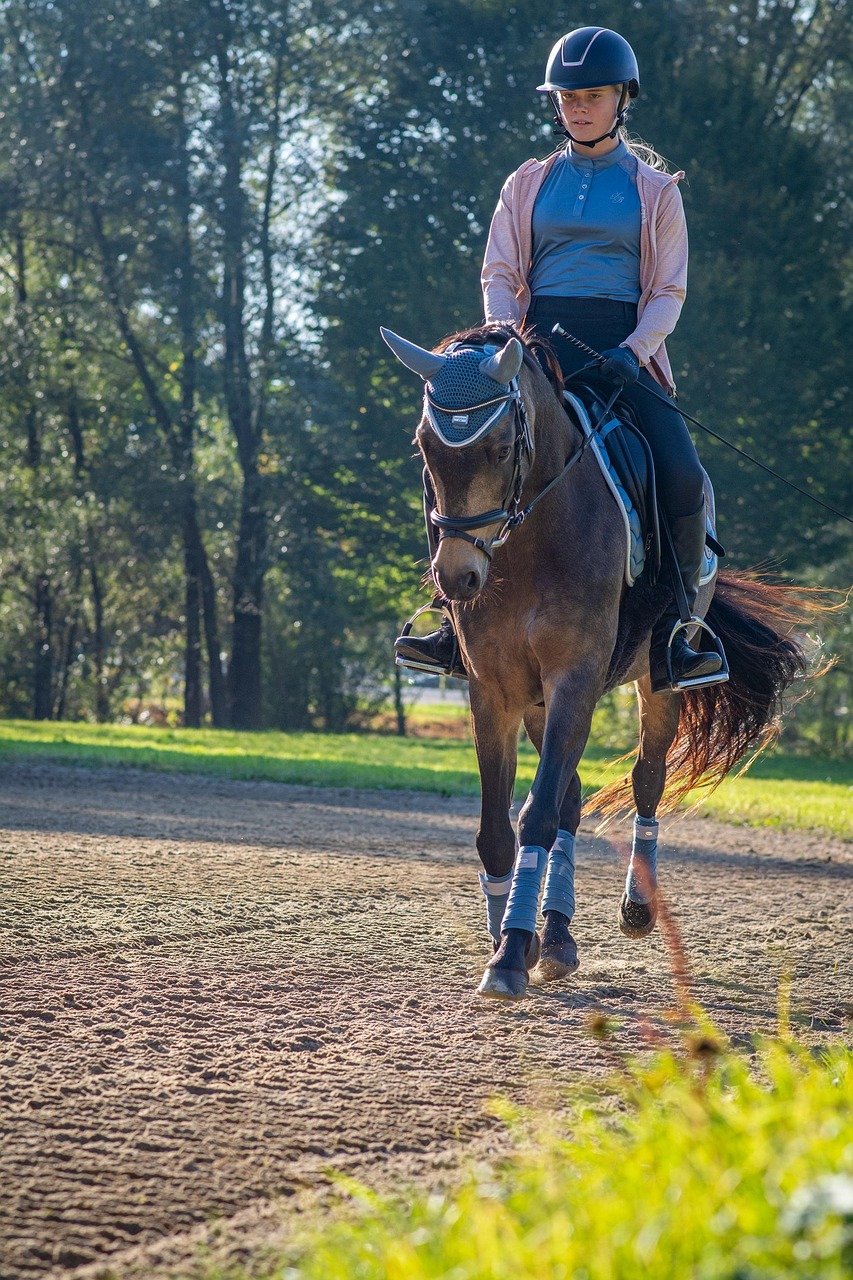
- Dressage (DR120): from the time horses are admitted to the grounds, anyone mounted, competing or not, including para dressage riders, must wear a helmet. A rider without one is stopped until it’s on.
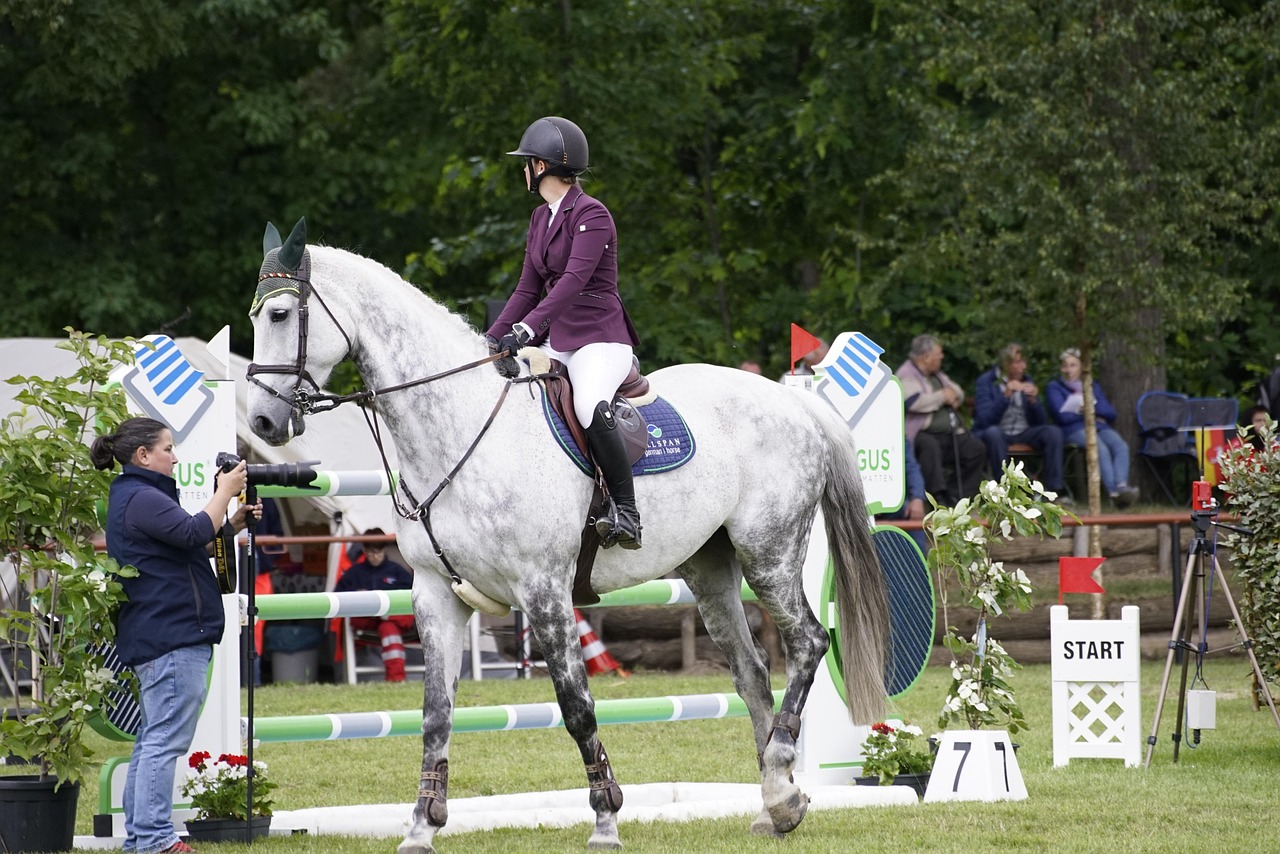
- Hunters and jumpers: helmets always. In the jumper ring, if a helmet comes off or the harness opens mid-round, the rider must stop and fix it; jumping a fence without it fastened means elimination, unless stopping right then would be unsafe.
- Eventing: a helmet from arrival, a body protector for cross-country and its warm-up, and a medical armband or medical data carrier whenever you ride at an event. Inflatable air vests are allowed on cross-country only when worn over a body protector.
- Western and reining divisions: a helmet is not required, but wearing one can never be penalized. Reining rules accept “western hat or protective headgear” as correct attire.
Two more rules from GR801: boots or shoes worn while riding anywhere on the grounds must have a distinguishable heel (a few saddle seat and breed divisions are exempt), and since December 1, 2025, nothing may be attached to a saddle with a rigid, upward-pointing hook or projection that could catch a rider getting off. Any rider in any class may wear a helmet or a body protector or air vest without penalty; USEF recommends vests that meet ASTM F1937 or are SEI certified.
Troxel Spirit Riding Helmet
- ASTM/SEI certified
- DialFit adjustment
- About $79
Ovation Deluxe Schooler Helmet
- ASTM F1163-15 + SEI
- Removable washable liner
- About $59
Ariat Women's Heritage IV Zip Paddock Boot
- Full-grain leather
- 4LR stabilizing shank
- About $160
English disciplines: how they’re scored
Dressage
Dressage is a ridden test of set movements in a lettered arena: the standard arena is 20 by 60 meters and the small arena 20 by 40. Each movement is marked from 0 (“not executed”) to 10 (“excellent”), half marks allowed, plus collective marks, and the result is a percentage. US levels climb from Introductory and Training Level through First to Fourth Level, then the FEI levels used worldwide, starting with Prix St. Georges. Errors of course cost percentage points.
Show jumping (jumpers)
Jumpers are scored objectively, on faults and time. Under US Equestrian’s table of faults, a knockdown is 4 faults; a first refusal or run-out is 4 faults and a second is elimination; each second (or part of one) over the Time Allowed is 1 fault; and a fall of horse or rider is elimination. Many classes end with a jump-off, where clear rounds come back over a shorter course and the fastest clear round wins.
Hunters and equitation
Hunters are judged on the horse: its performance, way of moving and soundness over a course of natural-looking fences. Minor faults include rubbing a jump, late lead changes, spooking or adding or leaving out a stride in a line; knockdowns and refusals are major faults. In equitation classes only the rider is judged: seat, hands, position and how correctly and effectively they use their aids.
Eventing
Eventing is the triathlon of riding: dressage first, then cross-country and show jumping, on the same horse. US levels run Beginner Novice, Novice, Training, Modified, Preliminary, Intermediate and Advanced. The dressage score becomes penalty points and everything adds up; the lowest total wins. On cross-country, a first refusal, run-out or circle is 20 penalties, a second at the same fence 40, and a third is elimination; exceeding the optimum time costs 0.4 penalties per second; and a rider fall is elimination.
Western disciplines: reining, barrels and trail
Reining is a set pattern of circles, lead changes, spins, sliding stops and rollbacks. Under US Equestrian’s reining rules, every horse is scored on a 0-to-infinity scale with 70 as an average performance; each maneuver earns from −1½ to +1½ in half-point steps, and penalties come off for faults like overspinning more than a quarter turn. Off-pattern rides can score zero.
Barrel racing is pure speed: a cloverleaf pattern around three barrels, then a sprint home against the clock. In NBHA competition you may touch a barrel, but knocking one over completely means a “no time”; in runoffs, each barrel down adds 5 seconds. The NBHA’s divisional “4D” format pays riders in several divisions split in half-second steps behind the fastest time, so beginners and pros can both win. Rules differ in other associations and rodeos, so check yours.
Trail class tests a calm, willing horse over obstacles. US Equestrian requires at least six obstacles, chosen from things like a gate to open and close, logs, a bridge, water, backing through obstacles and sidepassing, and the horse must show a walk, jog and lope somewhere on course. It’s judged on manners, response to the rider and quality of movement. Many associations score trail like reining, starting at 70 with each obstacle scored from −1½ to +1½.
Safety rules around horses
Plenty of horse injuries happen on the ground, not in the saddle: in one trauma center’s review of facial fractures from horse activities, more than half the patients were not mounted, and a direct kick was the most common cause. Extension horse specialists teach these basics, and every barn should too:
- Approach at the shoulder, talking. A horse can’t see an object closer than about 4 feet in front of its face or directly behind it. Never approach straight from the front or rear.
- Lead from the left, between the head and shoulder, with the extra rope folded in your hand, and turn the horse to the right, away from you, so you don’t get stepped on.
- Never wrap a lead rope or reins around your hand, wrist or body.
- Tie with a halter and lead rope, using a quick-release knot at about withers height, to something solid; never to reins, fence boards, wire fences, gates or vehicles.
- Helmet and heeled boots for every ride, even a quick one bareback in the field.
On shared trails, the National Park Service’s etiquette is simple: bicyclists yield to hikers and horses, and hikers yield to horses and pack stock by stepping calmly off to the downhill side, because a spooked horse tends to bolt uphill. As a rider, say hello to hikers and bikers so your horse knows they’re people. If a rider falls and hits their head, treat it as a possible concussion: the CDC’s HEADS UP advice is to stop riding for the day, see a healthcare provider and return only with clearance. Our horseback riding injuries page covers falls, concussion and when to see a sports medicine doctor.
Back to the horseback riding hub, or read our guide to horseback riding for kids. Comparing sports? See the soccer rules page. For sore muscles after a long day in the saddle, our recovery tools guide has ideas.
Horseback riding rules FAQs
Do you have to wear a helmet to ride a horse?
At US Equestrian licensed competitions, yes: anyone mounted on the grounds must wear a certified helmet unless a division’s rules say otherwise (Western and reining divisions don’t require one, but allow it without penalty). Some 4-H programs, such as Idaho’s, require a certified helmet whenever a member is mounted, practices included, and many barns do the same. Outside competition it’s your choice, and it’s a good one to make every time.
What does ASTM/SEI mean on a riding helmet?
ASTM F1163 is the US performance standard for horse riding helmets, and SEI is the independent body that certifies helmets to it. A certified helmet carries an SEI tag or seal inside. US Equestrian also accepts PAS 015, VG1 01.040 and Snell-certified helmets.
How many faults is a rail down in show jumping?
Four. A first refusal is also 4 faults, a second refusal is elimination, and each second over the Time Allowed adds 1 fault under US Equestrian’s jumper rules.
How is reining scored?
Every horse starts at 70, an average run. Each maneuver adds or takes away up to 1½ points in half-point steps, and penalties are subtracted for faults. A clean, correct run with no extra quality stays near 70.
Is a safety vest required in eventing?
Yes, for the cross-country phase and its warm-up at US Equestrian events. Air vests are allowed on cross-country only over a body protector, and on their own in dressage and show jumping.