This article contains affiliate links: if you buy through them we may earn a commission, at no extra cost to you. Learn more.
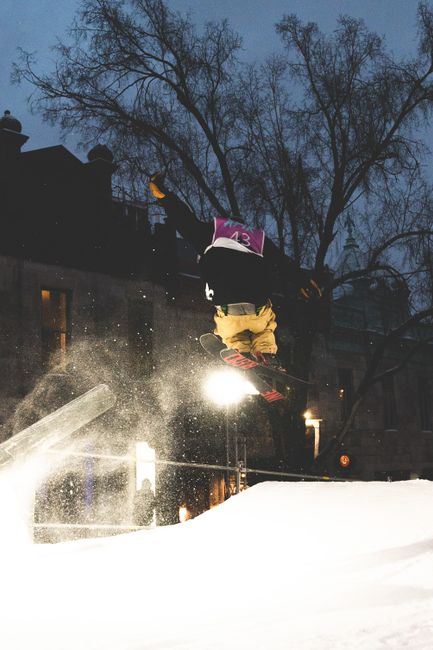
First chair on a powder morning, the lift creaking up through falling snow. A nine-year-old linking her first heel-to-toe turns on the bunny hill and screaming with joy at the bottom. A college club team piling into a van for a rail jam two states away. And every four years, the Olympic halfpipe under the lights, riders spinning high above a wall of ice. Snowboarding began as a backyard toy and grew into an Olympic sport with 11 medal events, and it is still, for most riders, about a day on the mountain with friends.
Snowboarding, page by page
- Rules: how the game works at every level
- Leagues & associations: pro, college, high school and youth
- Youth & high school: ages, safety and recruiting, for players and parents
- Injuries & sports health: prevention, concussion, when to see a pro
- Training & conditioning: before: off-season to in-season
- Game day: during: fueling, hydration, heat
- Recovery: after: games, tournaments, sleep
- Nutrition & supplements: what to eat, tested supplements
- Best wearables: trackers and watches for the sport
- Gear: the complete equipment list
Buying guide · Our Snowboarding buying guide compares the gear we'd pick, with prices and sizing:
This page is snowboarding for riders and the people who look after them: how the sport works, what it looks like at every level from a toddler’s first slide to the Olympics, and, most of all, how to stay healthy doing it. Sports health is the heart of it: the snowboarding injuries riders get most (wrists first), what the research says about wrist guards and helmets, how to spot a concussion, how to handle cold, sun and altitude, and when to see a professional. Then training, recovery and the gear that really matters. If you ski, we have a separate skiing guide.
Snowboarding at a glance
| What it is | Riding down a snowy slope standing sideways on one board, both feet strapped in: regular (left foot forward) or goofy (right foot forward). |
|---|---|
| Competition disciplines | Freestyle, scored by judges: halfpipe, slopestyle, big air. Racing, first across the line wins: snowboard cross and parallel giant slalom (plus parallel slalom at world championships). Para snowboard: snowboard cross and banked slalom. |
| Governing bodies | FIS (the International Ski and Snowboard Federation) worldwide; U.S. Ski & Snowboard in the US; USASA for grassroots and youth competition; USCSA for college. |
| Biggest events | Olympic and Paralympic Winter Games, FIS World Cup and World Championships, X Games Aspen. |
| Olympic events | 11 at Milano Cortina 2026, all held in Livigno, Italy; snowboarding has been Olympic since Nagano 1998. |
| Most common injuries | Upper-body injuries from falls: wrist fractures and sprains, shoulder and collarbone injuries, plus head injuries and knee and ankle injuries. |
How snowboarding works
On a snowboard you steer with your edges: rock onto your toes (toeside) or your heels (heelside), and the board’s curved sides carve a turn. Most riders put their dominant foot at the back for power and steering; a simple test is to have a friend give you a gentle push from behind and see which foot steps forward first. That foot leads. Riding with your other foot forward is called riding “switch.”
Most snowboarding happens at ski resorts, on groomed runs, in terrain parks full of jumps, boxes and rails, and in powder and trees. On the mountain everyone follows the same safety rules as skiers: the National Ski Areas Association’s (NSAA) Your Responsibility Code, whose first point is to stay in control so you can stop or avoid people and objects. In terrain parks, the Park Smart rules apply. Both are explained on our snowboarding rules page.
In competition, freestyle events are judged: six judges score each halfpipe or big air run from 0 to 100, the highest and lowest scores are dropped and the rest averaged, looking at amplitude, difficulty, execution, variety and progression. In big air, a rider’s two best jumps count, and they must be different tricks. Racing is simpler: in snowboard cross, four riders race side by side down a course of banks, rollers and jumps, and the top two in each heat move on. In parallel giant slalom, two riders race head-to-head on matching red and blue courses.
Snowboarding at every level
Kids and youth
There’s no fixed starting age. Burton says kids can start playing on its small Riglet boards as soon as they can stand on their own, often pulled along on a reel indoors or in the yard. On the mountain, the American Academy of Pediatrics (AAP) wants children taught by a qualified instructor in a program designed for kids, never riding alone, and always in a helmet. Ask your resort what age its snowboard lessons start.
Kids who want to compete usually start with the United States of America Snowboard and Freeski Association (USASA), which runs local series at partner resorts and a national championship at Copper Mountain, Colorado, its home since 2008. The youngest classes, Rascals (5–6) and Ruggies (7–8), are free and focused on fun. Our youth snowboarding guide has the details.
Teens and the competition path
Teenagers compete in USASA’s age classes up to Junior (17–18) or join a club affiliated with U.S. Ski & Snowboard, the Olympic and Paralympic national governing body in Park City, Utah. USASA says nearly every member of the U.S. Olympic snowboard and freeski team started at its events. The strongest riders move on to FIS races and contests, the national team and the World Cup.
College
The NCAA doesn’t run snowboarding. College riders compete through the United States Collegiate Ski and Snowboard Association (USCSA): more than 140 member schools and about 5,000 student-athletes in 11 conferences, with alpine snowboard (giant slalom, slalom) and freestyle snowboard (rail jam, slopestyle, big air, boardercross) events, team scoring, and national championships every March.
Pro, Olympic and Paralympic
Snowboarding joined the Olympics at Nagano 1998 with halfpipe and giant slalom. Snowboard cross followed in 2006, slopestyle in 2014, big air in 2018 and mixed team snowboard cross in 2022. Milano Cortina 2026 had 11 medal events for 238 riders. Para snowboard joined the Paralympics at Sochi 2014; in 2026 it had 8 medal events in snowboard cross and banked slalom. Between Games, riders chase the FIS World Cup, the FIS World Championships (next in Montafon, Austria, March 6–21, 2027) and X Games Aspen, back at Buttermilk on January 29–31, 2027. More on our leagues and associations page.
Adult and recreational
Most snowboarders never enter a contest; they ride weekends and vacations. The American Academy of Orthopaedic Surgeons (AAOS) advice fits every rider: get in shape before the season, warm up, take lessons from a qualified instructor, and stop when you’re tired, because many winter sports injuries happen on that “one last run” at the end of the day.
Sports health for snowboarders
Falling is part of learning to snowboard, and both feet are strapped to the board, so riders tend to catch themselves with their hands. According to the U.S. Consumer Product Safety Commission, as cited by AAOS, about 53,000 snowboarding injuries were treated in US hospitals, doctors’ offices and emergency rooms in 2018. This section is general information, not medical advice. If you’re hurt, see a professional.
The most common snowboarding injuries
- Wrist fractures and sprains: reviews call wrist injuries among the most common snowboarding injuries. A 20-year study of US emergency departments (2000–2019) found snowboarders came in mostly with upper-body injuries, while skiers came in mostly with leg injuries.
- Shoulder and collarbone: dislocations, separations and fractures from falling on an outstretched arm or a hard landing.
- Head injuries and concussions: from falls and from collisions with other people, trees or terrain park features.
- Knee and ankle: sprains and ligament injuries, and a fracture of the outer part of the talus bone so linked to the sport that doctors call it “snowboarder’s ankle.” It can look like a simple ankle sprain, so an ankle that stays painful after a fall should be checked.
- Who gets hurt: beginners. In a trial of more than 5,000 snowboarders, riders in their first five days and those on rented gear were more likely to be injured, and a Scottish study found people on their very first day overrepresented among the injured by a factor of 2.2. In the US emergency department study, snowboarders were younger than skiers (average age 20 vs 30).
Wrist guards: the best-studied snowboard protection
Wrist guards have unusually strong evidence for a piece of sports gear. In a randomized trial of 5,029 snowboarders published in 2001, there were 8 wrist injuries among those wearing a brace and 29 among those without, and no injuries were linked to the brace itself. A 2007 systematic review of six studies found wrist guards cut the risk of wrist injury to about a quarter (relative risk 0.23). The AAP recommends that young snowboarders wear gloves with built-in wrist guards. Beginners need them most.
Helmets
A 2010 meta-analysis of 12 studies found skiers and snowboarders wearing helmets were significantly less likely to have a head injury (odds ratio 0.65), with no sign of more neck injuries. The NSAA says helmet use on US slopes grew from 25% in 2002/03 to 90% in 2023/24, and about 96% of kids 17 and under wore one. Look for ASTM F2040, the snow sports standard the CPSC lists for skiing and snowboarding, and remember that no helmet has been proven to prevent concussions. The NSAA puts it well: wear a helmet, but ride as if you weren’t.
Concussion: recognize and remove
The CDC’s HEADS UP program asks riders, parents and coaches to watch for someone who looks dazed or confused or is slow to react, and to listen for headache, dizziness or balance problems, sensitivity to light or noise, feeling slowed down, trouble concentrating or changes in mood or sleep.
- Stop riding right away after a hard fall or a blow to the head if any of these signs show up. Call ski patrol if needed.
- Stay off the snow for the rest of the day and until a healthcare provider clears you. Don’t judge it yourself, and don’t drive.
- Return slowly: going back to sport happens in steps and usually takes a week or more.
- Call 911 or ski patrol at once for danger signs: a seizure, passing out or growing drowsiness, a headache that gets worse, repeated vomiting, or one pupil larger than the other.
Cold, sun and altitude
Mountains are cold, bright and high. The AAP says children lose heat faster than adults and recommends avoiding outdoor play below a wind chill of -15°F, when exposed skin can freeze within minutes. Frostbite shows as skin that burns, then goes numb and turns white or grayish. Hypothermia (shivering, then sluggishness, clumsiness or slurred speech) is an emergency: call 911. Dress in thin layers, change out of wet clothes and take warm-up breaks. The sun is stronger than it feels, too: the EPA says snow can reflect as much as 80% of UV rays, and UV rises about 2% for every 1,000 feet of elevation. Wear goggles, use broad-spectrum sunscreen and drink water through the day, as AAOS advises for every winter sport.
When to see a doctor, physical therapist or athletic trainer
Don’t ride through pain. See a professional for a wrist that’s swollen or tender after a fall (wrist fractures can look like sprains), a shoulder that won’t move normally, an ankle that stays painful, a knee that gives way, or any concussion signs. On the mountain, ski patrol is your first call. Back home, a sports medicine physician manages most sports injuries and refers to physical therapy or a surgeon when needed, and a physical therapist guides rehab and the return to riding. If your club or team has an athletic trainer, start there. Our snowboarding injuries page goes deeper.
Training and conditioning for snowboarding
Before the season: snowboarding loads the legs in a half-squat for long stretches, then asks for quick balance corrections, jumps and landings. AAOS recommends getting in shape before winter sports and warming up before you ride, because cold muscles, tendons and ligaments are more easily hurt. Leg strength (squats, lunges, step-ups), core and rotation work, balance drills and some cardio go a long way, and many riders add jump-and-land practice for the park. See our snowboarding training page, and our resistance bands guide for simple home work.
On the mountain: warm up with a few easy runs, take a lesson when you’re new or stuck, progress slowly in the park, and quit before your legs are gone. Many riders track their days, vertical and heart rate with a watch; see the best wearables for snowboarding. For the day itself, fueling, layers and breaks are on our snowboarding day page.
Recovery after a day on the mountain
Burning thighs, sore wrists and a long drive home: recovery starts with the basics. Sleep comes first; the CDC, citing the American Academy of Sleep Medicine, recommends 9–12 hours a night for children 6–12, 8–10 for teens and 7 or more for adults. Then real food and fluids. On a long trip, some riders use a protein shake when dinner is hours away (see our protein powder guide), and altitude and dry air make water and electrolytes worth packing.
Simple tools help many riders feel better between days: a foam roller or massage gun for quads and calves, compression boots after a big trip, and soft recovery shoes once the boots come off. They’re about comfort, not treatment; pain or swelling that doesn’t go away needs a professional. More on our snowboarding recovery page.
Gear for snowboarding
- Board, boots and bindings: beginners do best on a softer, shorter all-mountain board. Boots matter most for comfort, and bindings must match your boot size. Renting a full season from a local shop is a good start, Burton suggests.
- Helmet: a snow sports helmet certified to ASTM F2040, not a bike helmet. Replace it after a hard impact.
- Wrist guards: worn under or built into gloves, especially for beginners and in the park.
- Goggles and layers: goggles for wind, glare and UV; a wicking base layer (no cotton), an insulating mid layer and a waterproof shell.
Three picks to start: the Smith Mission MIPS, a snow helmet the maker says is certified to ASTM F2040 and CE EN 1077, with Mips, 14 adjustable vents and a dial fit (about $100 to $110); Burton Impact Wrist Guards, low-profile guards with flexible splints that fit under gloves (about $27); and the Hypervolt Go 3 massage gun from our massage gun guide for tired quads after the last chair (about $149). The full list is on our snowboarding gear page.
Smith Mission MIPS Snow Helmet
- ASTM F2040 and CE EN 1077 (maker)
- Mips, 14 adjustable vents
- Dial fit
Burton Impact Wrist Guard
- Flexible tapered splints
- Low profile, under gloves
- Hook-and-loop fit
OOFOS OOahh Slide
- OOfoam slide
- APMA Seal of Acceptance
- Machine washable
Snowboarding FAQs
Is snowboarding harder to learn than skiing?
Many people find the first few days of snowboarding harder, with more falls, and research shows first-day riders are the most likely to get hurt. Take a lesson from a certified instructor, wear wrist guards and a helmet, and stay on easy terrain until you can link turns. If you’re weighing the two, our skiing guide covers the other side.
What is the most common snowboarding injury?
Wrist injuries, mostly from putting a hand down in a fall. Snowboarders get more upper-body injuries than skiers, who get more leg and knee injuries. Wrist guards cut the risk of wrist injury a lot in studies, and a swollen, painful wrist after a fall should be checked by a professional.
Do snowboarders need to wear a helmet?
Most resorts don’t require it for adults, but the evidence and the experts say yes: helmets lower the risk of head injury, and the AAP says all skiers and snowboarders should wear one. About 90% of US skiers and riders already do. Choose a snow sports helmet certified to ASTM F2040.
Am I regular or goofy?
Regular means left foot forward, goofy means right foot forward. Most riders put their dominant foot at the back. Have a friend give you a gentle push from behind: the foot you step forward with usually leads. If it feels wrong on the snow, try the other way.
How many events does snowboarding have at the Olympics?
Eleven at Milano Cortina 2026: halfpipe, slopestyle, big air, snowboard cross and parallel giant slalom for women and men, plus mixed team snowboard cross. The Paralympics added 8 more in para snowboard cross and banked slalom.
What should I do after a hard fall?
Stop and check yourself. If you hit your head and feel dazed, dizzy or headachy, stop riding for the day and get checked. For a painful wrist, shoulder or ankle, call ski patrol rather than riding down on it, and see a doctor if the pain or swelling doesn’t settle.
Snowboarding gives back powder days, friends and a lifetime on the mountain. The riders who keep riding wear wrist guards and a helmet, learn from good instructors, respect the code and the park, and listen to their bodies. Keep exploring: our recovery tools guide, Nutrition & Supplements for long days on the hill, skiing for the other half of your crew, and every other sport on our sports hub.