This article contains affiliate links: if you buy through them we may earn a commission, at no extra cost to you. Learn more.
Seven in the morning at the park courts. Paddles are lined up in the rack to claim the next game, a retired couple is warming up against two teenagers, and somebody calls out “zero, zero, two” to start. By lunch the courts are full and the paddle line is longer. Pickleball has become the sport everyone seems to play: 24.3 million Americans played it in 2025, up from 4.2 million in 2020, according to the Sports & Fitness Industry Association (SFIA). It was America’s fastest-growing sport for the fifth year in a row.
Pickleball, page by page
- Rules: how the game works at every level
- Leagues & associations: pro, college, high school and youth
- Youth & high school: ages, safety and recruiting, for players and parents
- Injuries & sports health: prevention, concussion, when to see a pro
- Training & conditioning: before: off-season to in-season
- Game day: during: fueling, hydration, heat
- Recovery: after: games, tournaments, sleep
- Nutrition & supplements: what to eat, tested supplements
- Best wearables: trackers and watches for the sport
- Gear: the complete equipment list
Buying guide · Our Pickleball buying guide compares the gear we'd pick, with prices and sizing:
This page is pickleball for the people who play it, from first-timers and grandparents to junior players and pros. It covers how the game works, every level from park play to the pro tours, and above all how to stay healthy. A lot of players are in their 60s and 70s, so sports health matters here. We look at the pickleball injuries players get most: falls, wrist fractures, “pickleball elbow,” knees and eyes. We also cover when to see a professional. Then training, recovery and the gear you really need, with links to every page in our pickleball section.
Pickleball at a glance
| Players | Singles (1 vs 1) or doubles (2 vs 2). Doubles is how most people play. |
|---|---|
| Court and net | 20 × 44 feet for both singles and doubles. The net is 36 inches high at the sidelines and 34 inches in the middle. |
| The kitchen | The non-volley zone, 7 feet deep on each side of the net. You can’t hit the ball out of the air while standing in it. |
| Scoring | Usually games to 11, win by 2. In standard scoring only the serving side scores. Rally scoring (a point on every rally) is an approved option. |
| Equipment | A solid paddle (no strings) and a light plastic ball with holes. Indoor balls usually have bigger holes than outdoor balls. |
| Governing bodies | USA Pickleball in the US. Pro play is run by the PPA Tour and Major League Pickleball (both part of the United Pickleball Association) and by the APP Tour. |
| Common injuries | Falls (often wrist and arm fractures in older players), ankle sprains, muscle strains, knee and shoulder pain, “pickleball elbow,” and eye injuries from the ball or a paddle. |
How pickleball works
Pickleball started in the summer of 1965 on Bainbridge Island, Washington. Three dads, Joel Pritchard, Bill Bell and Barney McCallum, made up a game for their bored kids using a badminton court, ping-pong paddles and a plastic ball with holes. USA Pickleball describes it as a mix of badminton, table tennis and tennis. Two things make it its own game:
- The two-bounce rule: the serve must bounce before it’s returned, and the return must bounce before the serving side hits it. After that, players can volley (hit the ball out of the air).
- The non-volley zone, or “kitchen”: the 7-foot area next to the net where you can’t volley. That’s why so many rallies become soft “dinks” at the net instead of smashes.
The serve is underhand. With a volley serve, the paddle has to move in an upward arc and hit the ball below the waist. With a drop serve, you drop the ball and hit it after it bounces. The serve goes diagonally and has to clear the kitchen. In standard doubles scoring, both partners serve before the other team gets the ball. The score has three numbers: your score, their score, and the server number (1 or 2). Our pickleball rules page walks through it step by step, including rally scoring and the 2026 rule changes.
Pickleball at every level
Kids and juniors
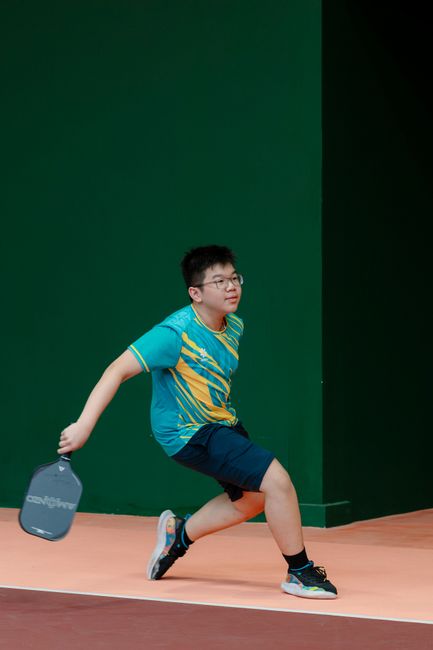
Pickleball isn’t just a retirement-community sport anymore. SFIA found that teens and young adults aged 13–24 now have the highest participation rates of any age group. Most kids first play in PE class, at a summer camp or with their family. USA Pickleball has a youth program with activity plans for ages 8–12 and 13–18. In April 2026 it became the official pickleball program provider for Boys & Girls Clubs of America. Junior tournament events are for players 18 and under. Our youth pickleball page has the details, honestly: youth structure is still young.
High school and college
School pickleball is just starting. Kentucky’s high school association (KHSAA) voted in May 2026 to make pickleball an official fall sport starting in 2027-28. In Utah, the Utah High School Pickleball Association runs a club season with state championships. Pickleball isn’t an NCAA sport, but college club teams compete on collegiate circuits run by the pro tours, such as the APP’s collegiate series and the PPA’s College World Championship. More on our leagues and associations page.
Pro
The PPA Tour and Major League Pickleball (MLP) merged in 2024 under one parent company, the United Pickleball Association (UPA). The PPA Tour runs individual events in tiers (Challengers, Opens, Cups, Majors and a World Championship). MLP is a co-ed team league: in 2026 it lists 20 teams and 13 events from May to August. The APP Tour runs a separate pro schedule of 12 stops in 2026, with TV coverage on CBS Sports and ESPN, plus AARP divisions for players 50+ and 60+.
International
Pickleball is played around the world, with national bodies such as Pickleball Canada. Several world federations have competed for years and are now working toward a single international body, a step toward any future Olympic bid. Pickleball is not on the program for the Los Angeles 2028 Olympics.
Adult and senior rec
This is the heart of the sport: open play at the park, ladder leagues at the club, round robins at the community center. USA Pickleball’s 2025 report counts more than 82,000 courts at over 18,000 locations in the US (from the Pickleheads database). Many players track their level with a DUPR rating, which runs from 2.000 to 8.000, with separate ratings for singles and doubles. Age divisions at the USA Pickleball National Championships go deep: the 2025 event had players aged 11 to 87.
Sports health for pickleball players
Pickleball looks gentle, but it means quick starts, lunges, sudden stops and lots of reaching overhead, often by players who started late in life. Injuries have grown along with the sport. A study of national emergency room data (NEISS) estimated about 1,300 pickleball injuries in 2014 and about 24,500 in 2023, most in people aged 60 to 79. This section is general information, not medical advice. If you’re hurt, see a professional.
The most common pickleball injuries
In a 2025 national survey of 1,758 adult players (average age about 63), about two in three reported some injury or physical complaint in the past year. Two in five had an injury that kept them off the court for at least a day. The knee was the most common site (29%), followed by the thigh, leg and foot, the shoulder (22%), the back (20%) and the elbow (18%). The most serious problems were mostly overuse conditions, sprains and muscle strains. Newer players (under five years of experience), players who played more often each week, and players who didn’t think injury prevention mattered much all had higher odds of injury.
- Falls and fractures: a study of pickleball fractures seen in US emergency rooms (2002–2022) found 87% were in players over 60. Most were in women, most were in the arm (the radius, a wrist bone, was the most common), and 92% came from falls.
- Sprains and strains: younger players are more likely to sprain or strain something from sudden stops and lunges. In one emergency room study, slips, trips, falls and dives caused about 64% of injuries.
- “Pickleball elbow”: an overuse problem on the outside of the elbow, much like tennis elbow. The American Academy of Orthopaedic Surgeons (AAOS) lists it among the sport’s overuse injuries.
- Knees and shoulders: AAOS warns that playing too hard or too long can make arthritic knees swell, and that playing shorter sessions may help.
- Eyes: covered in the next section.
Protect your eyes
In doubles, four players stand close together at the net and the ball comes fast. A study in JAMA Ophthalmology estimated about 1,260 pickleball eye injuries in US emergency rooms in 2024 alone. Eye injuries rose quickly from 2021 to 2024 and were more common in players 50 and older. They included retinal detachments, orbital fractures and bleeding inside the eye. Eye protection isn’t required at any level. The American Academy of Ophthalmology says the ideal protection is wrap-around polycarbonate safety goggles with front and side coverage. ASTM’s racket-sport eyewear standard (F3164) now names pickleball. Regular glasses or sunglasses are better than nothing, but they aren’t built for impact.
Head injuries: recognize and remove
Falling backward and hitting your head on a hard court is a real risk. The CDC’s HEADS UP program lists signs to watch for: looking dazed or confused, being slow to react, headache, dizziness or balance problems, sensitivity to light or noise, and trouble concentrating. A player with these signs should stop for the day and not come back until a healthcare provider clears them. Call 911 for a headache that gets worse and won’t go away, seizures, growing drowsiness or passing out, or one pupil larger than the other.
Heat, hydration and your heart
Outdoor courts get hot. The CDC notes that older adults adjust less well to sudden heat and are more likely to take medicines that affect sweating and temperature control. It recommends drinking more water than usual and not waiting until you’re thirsty. AAOS adds that dehydration can cause weakness and slower reactions, which lead to injuries. The national emergency room study also recorded five deaths from cardiac arrest. If you have a heart condition, or you’re taking up the sport after years of not exercising, talk to your doctor first. Know where the nearest AED is at your courts.
When to see a doctor, physical therapist or athletic trainer
Don’t play through pain. See a professional after any fall onto an outstretched hand with wrist pain or swelling, for an ankle you can’t walk on, a knee that swells after every session, elbow pain that won’t settle, any blow to the eye or change in vision (see an eye doctor the same day), or any concussion signs. A sports medicine physician manages most sports injuries without surgery. A physical therapist guides rehab and strength work. An athletic trainer is a licensed or regulated health professional in all 50 states. Our pickleball injuries page goes deeper.
Training for pickleball
AAOS has five simple tips: stay hydrated, know your limits, wear shoes made for pickleball or tennis, warm up with light movement and easy hitting before going all-out, and take lessons, because bad technique leads to injuries. For older players, the CDC’s activity guidelines add a solid base: at least 150 minutes of moderate activity a week, muscle-strengthening on at least 2 days, and balance work such as heel-to-toe walking. Strong legs and good balance help on the court and help prevent falls. More on our pickleball training page, and see our resistance bands guide for easy strength work at home.
On tournament days you might play several matches over many hours. Eat a familiar, carb-based meal beforehand, bring snacks and plenty of fluids, and add electrolytes on hot days (our electrolyte powder guide compares options). See pickleball tournament day and nutrition and supplements.
Pickleball recovery
Recovery starts with sleep: the CDC recommends 7 or more hours a night for adults and 8–10 for teens. Then food, fluids and a rest day after a hard weekend. Many players also like a foam roller or massage gun for tight calves and forearms, knee sleeves for warmth and comfort, and soft recovery shoes after a long day on hard courts. These tools are about comfort, not treatment. Pain or swelling that doesn’t go away needs a professional. Our pickleball recovery page has a full routine, and older players will find more in recovery over 50.
Gear for pickleball
- Paddle: for sanctioned tournaments it must be on the USA Pickleball approved paddle list. Rec play has no such rule. The rulebook limits paddle length to 17 inches and length plus width to 24 inches. There’s no weight limit.
- Balls: any approved ball can be used indoors or out. In practice, indoor balls have larger holes and outdoor balls smaller holes.
- Shoes: court shoes made for side-to-side movement, as AAOS recommends, not running shoes.
- Eye protection: polycarbonate sports eyewear, especially if you play doubles at the net.
Four picks for the bag. The JOOLA Ben Johns Hyperion is a carbon-fiber paddle with a 16 mm core that the listing marks USA Pickleball approved (about $120 on Amazon in October 2026). The Franklin X-40 is a 40-hole outdoor ball, USA Pickleball approved (about $29). The Tourna Clear eye protection has a polycarbonate lens the maker says meets ASTM F803 (about $17). And the OOFOS OOahh Slide from our recovery shoes guide is for after the last game. Our pickleball gear page and best wearables for pickleball go further.
JOOLA Ben Johns Hyperion Paddle
- Carbon fiber face
- 16 mm polymer honeycomb core
- USA Pickleball approved (listing)
Franklin X-40 Outdoor Pickleballs
- 40 drilled holes
- 26 g, one-piece
- USA Pickleball approved
Tourna Clear Eye Protection
- Polycarbonate wrap lens
- Meets ASTM F803 (maker)
- Anti-fog coating
OOFOS OOahh Slide
- OOfoam slide
- APMA Seal of Acceptance
- Machine washable
Pickleball FAQs
What is the kitchen in pickleball?
The kitchen is the non-volley zone: the 7-foot area on each side of the net, including its lines. You can stand in it any time, but you can’t hit a ball out of the air while you’re touching it, and your momentum after a volley can’t carry you into it.
What are the most common pickleball injuries?
Sprains, strains and overuse problems in the knee, shoulder, back and elbow are the most common. Falls cause most of the serious injuries, especially wrist and arm fractures in players over 60. Eye injuries from the ball or a paddle are rising.
Is pickleball good exercise for older adults?
For many people, yes. It’s social, easy to learn, and gets you moving. The CDC recommends at least 150 minutes of moderate activity a week for adults 65 and up, plus strength and balance work, and pickleball can be part of that. Start with shorter sessions, warm up, and check with your doctor first if you have heart, bone or joint problems.
Do I need eye protection for pickleball?
No rule requires it, but eye doctors recommend it. The American Academy of Ophthalmology suggests wrap-around polycarbonate goggles, and eye injuries in US emergency rooms have climbed quickly since 2021, especially in players 50 and older.
What is a DUPR rating?
DUPR (Dynamic Universal Pickleball Rating) rates players from 2.000 to 8.000 based on match results, with separate singles and doubles ratings. New players start as “not rated,” and DUPR suggests logging 10 to 15 matches before trusting the number.
Can I play pickleball in running shoes?
It’s better not to. AAOS recommends shoes designed for pickleball or tennis, which are built for side-to-side moves and court grip. Running shoes are made for moving forward.
Pickleball gives back a lot: friends, laughter and a reason to get outside every morning. The players who keep playing for years warm up, protect their eyes, watch their footing on lobs, and listen to their bodies. Keep exploring: our recovery tools guide, Nutrition & Supplements, our tennis guide if you play both, and every other sport on our sports hub.