This article contains affiliate links: if you buy through them we may earn a commission, at no extra cost to you. Learn more.
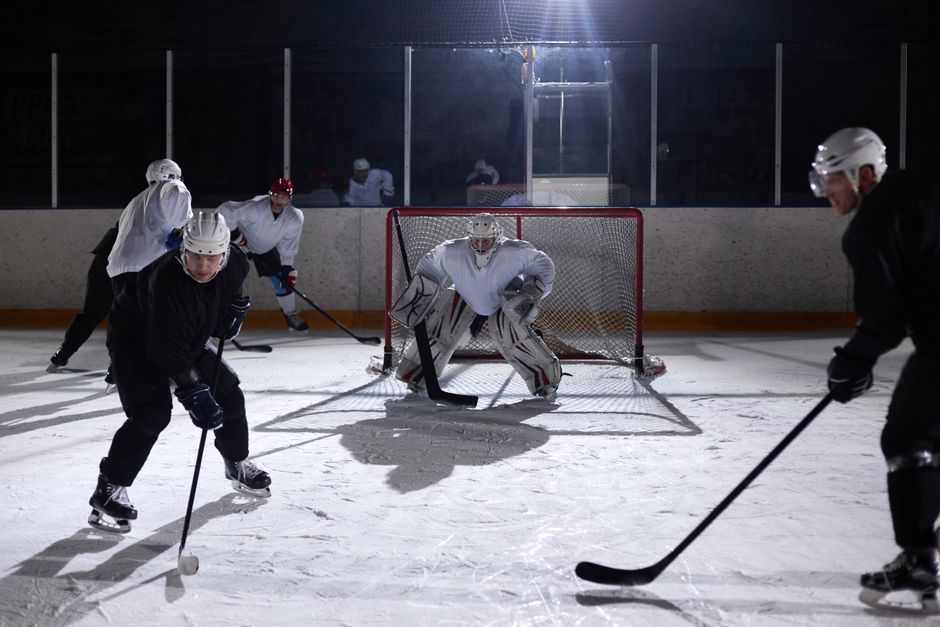
A 6 a.m. practice, breath fogging in a cold rink while the Zamboni makes its last lap. A frozen pond in January, boots for goalposts, the game going until somebody’s mom calls everyone in. And on February 22, 2026, in Milan, Jack Hughes scoring in overtime to give the United States its first Olympic men’s hockey gold since 1980, three days after the U.S. women beat Canada 2-1 in overtime for their own gold. Ice hockey pulls people in young and keeps them for life: USA Hockey counted a record 577,864 registered players in 2024-25, and Hockey Canada more than 603,000.
Ice Hockey, page by page
- Rules: how the game works at every level
- Leagues & associations: pro, college, high school and youth
- Youth & high school: ages, safety and recruiting, for players and parents
- Injuries & sports health: prevention, concussion, when to see a pro
- Training & conditioning: before: off-season to in-season
- Game day: during: fueling, hydration, heat
- Recovery: after: games, tournaments, sleep
- Nutrition & supplements: what to eat, tested supplements
- Best wearables: trackers and watches for the sport
- Gear: the complete equipment list
Buying guide · Our Ice Hockey buying guide compares the gear we'd pick, with prices and sizing:
This page is hockey for players and the people who look after them: how the game works, what it looks like at every level from cross-ice mites to the NHL, PWHL and the Olympics, and, most of all, how to stay healthy playing it. Sports health is the heart of it: the hockey injuries players get most, what research says about body checking at young ages, concussion, skate cuts and neck guards, and when to see a professional. Then training, recovery and the gear that actually protects you.
Ice hockey at a glance
| Players per side | 6 on the ice: 5 skaters and a goalie. Young kids play smaller games, often 4 on 4 across the width of the rink. |
|---|---|
| Game length | NHL, college and international: three 20-minute periods. High school (NFHS): 15-minute periods, up to 17 if the state allows. Youth: up to 20 minutes, often shorter. |
| Rink | NHL: 200 × 85 feet. International (IIHF): 60 meters long and 26 to 30 meters wide. |
| Puck | Vulcanized rubber, about 1 inch thick and 3 inches across, 156–170 grams (about 5.5–6 ounces) under IIHF rules. |
| Governing bodies | IIHF worldwide; USA Hockey and Hockey Canada at home; NFHS and state associations for high school; NCAA for college. |
| Most common injuries | Concussions, shoulder (AC joint) sprains, knee MCL sprains, groin and hip strains, wrist fractures, cuts and dental injuries. |
How ice hockey works
Two teams try to shoot the puck into the other team’s net; the team with more goals wins. Players change on the fly, in short shifts, because skating at full speed is exhausting. Two lines shape the game. Offside: an attacker can’t cross the other team’s blue line before the puck does. Icing: a team can’t shoot the puck from its own half all the way past the other team’s goal line to get it out of danger. In the NHL and college, icing is “hybrid”: the linesman calls it early if a defender would win the race to the puck, to cut down on crashes into the end boards. High school and USA Hockey youth games stop play as soon as the puck crosses the line.
Penalties send a player to the penalty box: 2 minutes for a minor (tripping, hooking, slashing), 5 for a major, and the other team plays with an extra skater on the power play. Fighting is where levels split hardest: an NHL fight usually means a five-minute major, while college and high school players are disqualified, and international rules add a game misconduct. Ties in the NHL regular season go to five minutes of 3-on-3 overtime and then a shootout; playoff games keep playing 20-minute periods until someone scores. The full breakdown by level is on our ice hockey rules page.
Ice hockey at every level
Kids and youth
Most kids start with learn-to-skate, then learn-to-play. USA Hockey’s American Development Model (ADM), launched in 2009, groups players by age (8U, 10U, 12U, 14U and up) and puts the youngest on smaller ice: since 2013-14, all 8U games and scrimmages have been played cross-ice or half-ice, so kids touch the puck far more. The ADM also recommends about three practices for every game. Body checking isn’t allowed in USA Hockey until 14U for boys, and never in girls’ and women’s hockey; Hockey Canada introduces it at U15 in body-checking leagues. Ages, costs and parents’ questions are on our youth hockey page.
High school
In 2024-25, 32,253 boys on 1,682 school teams and 9,589 girls on 904 teams played high school hockey, according to the NFHS. It’s concentrated in the cold-weather states (19 states reported boys’ programs). Since 2024-25, NFHS rules require every player to wear a neck laceration protector in games. Many players also skate for a club team in the same season.
Junior hockey
Hockey has a step most sports don’t: junior leagues for players roughly 16 to 20. In the US, the USHL is the top (Tier I) league, with 16 teams for 2026-27, and the NAHL is Tier II. In Canada, the three major junior leagues of the Canadian Hockey League (OHL, WHL and QMJHL) have 61 teams in 2026-27. A big change: since August 1, 2025, CHL players can play NCAA Division I hockey, which used to be off-limits to them.
College
NCAA Division I has 64 men’s programs in 2026-27 (Maryville is the newest) and 52 women’s teams, plus many more in Division III and club hockey. Denver won the 2026 men’s Frozen Four and Wisconsin the women’s title. College players must wear full face protection, and the NCAA will require cut-resistant neck, wrist and sock protection starting in 2027-28.
Pro
The NHL has 32 teams, and the 2026-27 season is the first with 84 regular-season games under the new labor deal. The Carolina Hurricanes won the 2026 Stanley Cup. Below it, the AHL (32 teams, 72 games) and ECHL (30 teams) develop players. The Professional Women’s Hockey League (PWHL) grows to 12 teams and two conferences in 2026-27, each team playing 30 games; the Montréal Victoire won the 2026 Walter Cup. More on our leagues and associations page.
International and Olympic
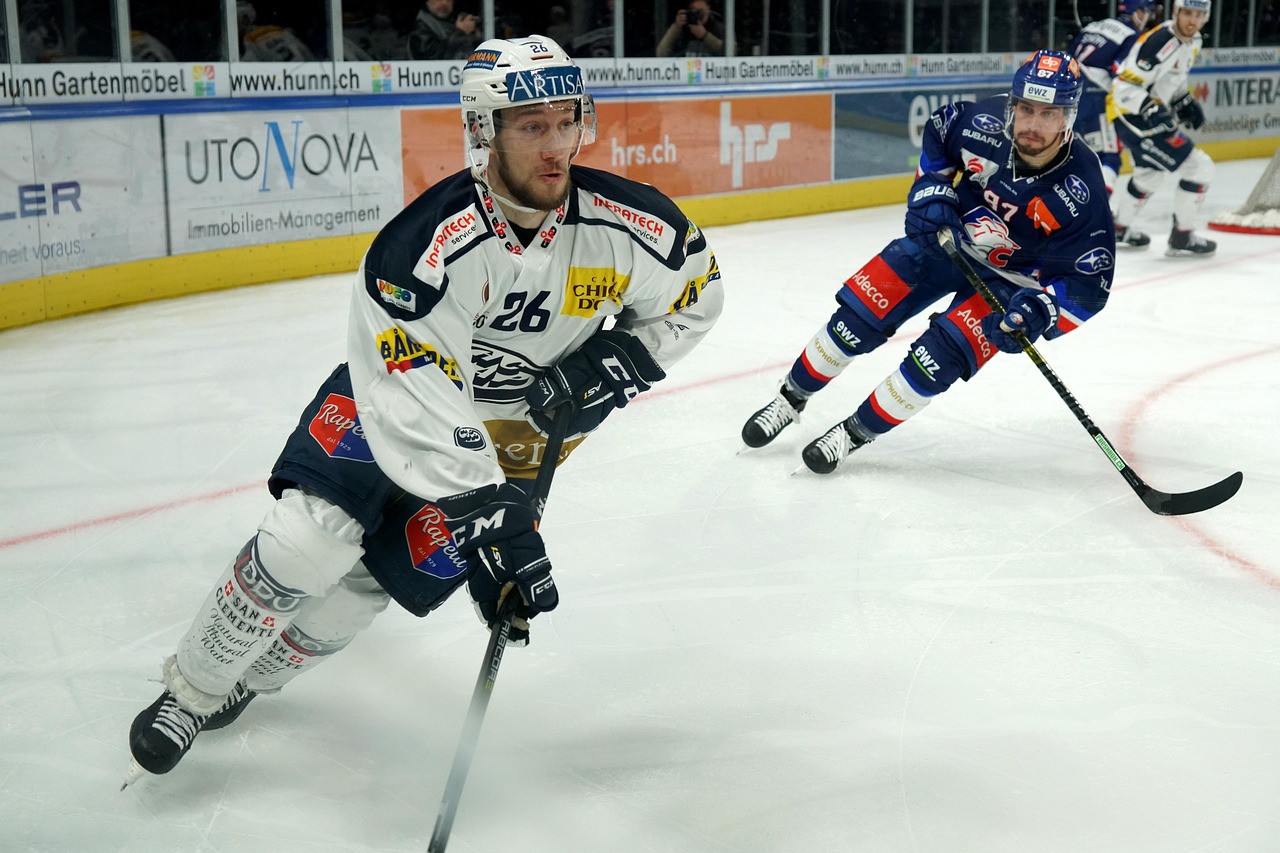
The IIHF runs world championships for men, women and juniors. Men’s hockey has been an Olympic sport since 1920 and women’s since 1998. NHL players returned to the Olympics at Milano Cortina 2026, where the U.S. men beat Canada 2-1 in overtime for gold and Finland took bronze. Since the death of Adam Johnson from a skate cut in an English league game in October 2023, the IIHF has required neck laceration protectors for all players in its competitions.
Adult and recreational
Adult “beer league” hockey runs late at night in rinks everywhere. Most of it is non-checking, and USA Hockey’s adult rules make helmets and face protection a personal choice, though it strongly recommends a certified helmet, full face mask and mouthguard, and a neck guard. If you’re coming back after years away, rebuild your skating legs and fitness before you jump into games.
Sports health for hockey players
The most common hockey injuries
Hockey mixes speed, hard boards, sticks, pucks and sharp blades, so contact injuries lead the list. The American Academy of Orthopaedic Surgeons (AAOS) names sprained ankles and knee ligament tears, MCL injuries from a hit to the outside of the knee, wrist fractures and shoulder dislocations from falls, concussions, broken teeth and, rarely, spine injuries. On the overuse side: lower back strains from the bent skating posture, hamstring and groin pulls from explosive strides, and hip impingement and labral problems, especially in goalies.
College data agree. In NCAA men’s hockey from 2014-15 to 2018-19, the most common diagnoses were concussions (9.6% of injuries), AC joint sprains of the shoulder (7.3%) and MCL tears (3.7%), and injuries happened about seven times more often in games than in practice. More on our ice hockey injuries page.
Body checking and young players
This is where research changed the rules. A 2010 study in JAMA compared 11- and 12-year-olds in Alberta, where body checking was allowed, with Quebec, where it wasn’t, and found more than three times the risk of game injuries and concussions in the checking league. USA Hockey moved checking from 12U to 14U in 2011, and Hockey Canada removed it from Pee Wee (now U13) in 2013. A follow-up in Alberta found that the national policy change cut the injury rate by 50% and the concussion rate by 64% in 11- and 12-year-olds. Checking is a skill: good programs teach angling, body position and how to take a hit long before it’s allowed in games.
Concussion: recognize and remove
The CDC’s HEADS UP program asks coaches and parents to watch for a player who looks dazed or confused or is suddenly slow to react, and to listen for headache, dizziness or balance problems, sensitivity to light or noise, trouble concentrating, irritability or sleep changes.
- Remove the player from the ice right away after a hit to the head or body, or a fall into the boards, if you see any signs.
- Keep them out for the rest of the day and until a health care provider clears them. NFHS and NCAA rules require a health care professional’s OK before a player who showed concussion signs returns.
- Return slowly: getting back to sport goes in steps and usually takes a week or more.
- Call 911 for danger signs: seizures, passing out or growing drowsiness, a headache that gets worse, repeated vomiting, or one pupil larger than the other.
Skate cuts and neck guards
Skate-blade cuts are rare but can be deadly. After Adam Johnson’s death in 2023, neck protection spread fast: USA Hockey has required neck laceration protection for all youth, girls’ and high school players (and officials under 18) in games and practices since August 1, 2024; the NFHS requires it in high school games; Hockey Canada requires BNQ-certified neck guards in minor and female hockey; the IIHF and the three CHL leagues made them mandatory. The NHL strongly recommends them but doesn’t require them. Many players also wear cut-resistant socks and wrist guards. Details on certification are on our hockey gear page.
Hydration in a cold rink
Cold air fools people, but hockey players sweat hard under all that gear. AAOS suggests about 24 ounces of fluid two hours before playing and about 8 ounces every 20 minutes during play. Keep a labeled bottle on the bench, and on long tournament days many players add electrolytes (see our electrolyte powder guide).
When to see a doctor, physical therapist or athletic trainer
Don’t play through pain. See a professional for pain that doesn’t settle, a shoulder that looks out of place, a knee that gives way, groin or hip pain that keeps coming back, any cut near the neck or wrist, or any concussion signs. A sports medicine physician manages most sports injuries without surgery and refers to physical therapy or a surgeon when needed. A physical therapist guides rehab and the return to the ice. Athletic trainers are licensed or regulated health care professionals in all 50 states; if your school or team has one, start there.
Training and conditioning for hockey
Off-season and preseason: hockey shifts are short, all-out bursts, so build a base of aerobic fitness, then add intervals, leg and hip strength, core work and flexibility, as AAOS recommends year-round. Hip and groin strength deserve extra attention, since groin pulls are among hockey’s common injuries. Kids and young teens get the most from playing other sports too: AAOS advises against year-round training in one sport, and the American Academy of Pediatrics warns that specializing too early raises the risk of overuse injuries and burnout.
Before every practice and game: warm up off the ice for 3 to 5 minutes with jumping jacks, a bike or light running, then dynamic stretches like leg swings, arm circles and torso twists, and warm up again on the ice. Many players track heart rate in practice with a chest strap (see our heart rate monitor guide) or watch sleep and strain with a wearable (HRV for athletes). More on our hockey training and game day pages.
Game day: the sports-nutrition position statement from the American College of Sports Medicine and two dietitians’ groups recommends a familiar pre-exercise meal that is high in carbohydrate, moderate in protein and low in fat and fiber, eaten roughly 1 to 4 hours before. Early-morning ice times call for a smaller snack. See hockey nutrition and supplements.
Recovery after hockey games
Hockey schedules are hard on sleep: late ice, early ice and weekend tournaments. Sleep still comes first. The CDC, citing the American Academy of Sleep Medicine, recommends 9 to 12 hours a night for children 6 to 12, 8 to 10 hours for teens and 7 or more for adults. After the game, eat a real meal and drink; many players use a protein shake when dinner is hours away (see our protein powder guide).
Simple tools help many players feel better between games: a foam roller for hips, groin and quads, a massage gun for tight legs, compression boots after a tournament weekend, and soft recovery slides once the skates come off. They’re for comfort, not treatment; pain or swelling that doesn’t go away needs a professional. More on our hockey recovery page.
Gear for hockey
Hockey needs more protective gear than almost any team sport, and fit matters as much as price. Youth, high school and college players must wear a helmet certified by the Hockey Equipment Certification Council (HECC) with a full face mask; check the sticker’s expiration date. In December 2025, Virginia Tech’s Helmet Lab released its first ratings of youth hockey helmets: 10 of the 33 tested earned five stars, including the budget Bauer RE-AKT 55 combo (tested at about $70). Add a cut-resistant neck guard such as the Bauer NLP21 (BNQ certified, about $20), a mouthguard like the Shock Doctor Gel Max (required from 12U up in USA Hockey and in high school), and something comfortable for your feet afterward. Prices change often. These are what we saw on Amazon or in the Helmet Lab’s ratings in October 2026.
Bauer RE-AKT 55 Helmet Combo
- 5 stars, Virginia Tech youth ratings
- Bauer X cage included
- About $70
Bauer NLP21 Neck Guard
- Kevlar cut-resistant fibers
- BNQ and CE certified
- Youth and senior sizes
Shock Doctor Gel Max Mouthguard
- Boil-and-bite gel liner
- Youth and adult sizes
- Detachable strap
OOFOS OOahh Slide
- OOfoam slide
- APMA Seal of Acceptance
- Machine washable
Skates, sticks, pads and how to fit them are on our ice hockey gear page, and the right tracker for hockey is on best wearables for hockey.
Ice hockey FAQs
How long is a hockey game?
NHL, college and international games have three 20-minute periods, plus intermissions and stoppages. High school periods are 15 minutes (up to 17 by state), and youth games are shorter.
At what age is body checking allowed in hockey?
In USA Hockey, at 14U (ages 13 and 14) and older in boys’ and co-ed checking leagues. In Canada, at U15 in body-checking leagues. It’s not allowed at any age in USA Hockey girls’ and women’s hockey, and many recreational leagues stay non-checking for older players too.
Are neck guards mandatory in hockey?
For most young players, yes. USA Hockey requires them for all youth, girls’ and high school players since August 2024, the NFHS requires them in high school games, Hockey Canada requires them in minor and female hockey, and the IIHF requires them in its events. The NHL recommends them, and the NCAA will require cut-resistant neck protection from 2027-28.
What is the most common hockey injury?
In NCAA men’s hockey, concussions were the most common single diagnosis, followed by AC joint sprains of the shoulder and MCL tears of the knee. Groin and hip strains, back strains, cuts and dental injuries are also common.
Did NHL players play in the 2026 Olympics?
Yes, for the first time since 2014. The United States beat Canada 2-1 in overtime on February 22, 2026, for its first men’s gold since 1980, and the U.S. women also won gold over Canada in overtime.
How much does youth hockey cost?
It’s the most expensive common youth sport. A national survey by the Aspen Institute’s Project Play and Utah State University found families spent about $2,583 a year on average, with travel the biggest cost, and travel-team families often spend much more. Our youth hockey page has ways to keep it affordable.
Hockey gives back a lot: speed, toughness, friends for life and a game you can play for life. The players who last wear gear that fits, warm up, sleep, learn to give and take a hit the right way, and get checked out when something hurts. Keep exploring: our recovery tools guide, Nutrition & Supplements, our soccer guide if your skater plays a summer sport, and every other sport on our sports hub.