This article contains affiliate links: if you buy through them we may earn a commission, at no extra cost to you. Learn more.
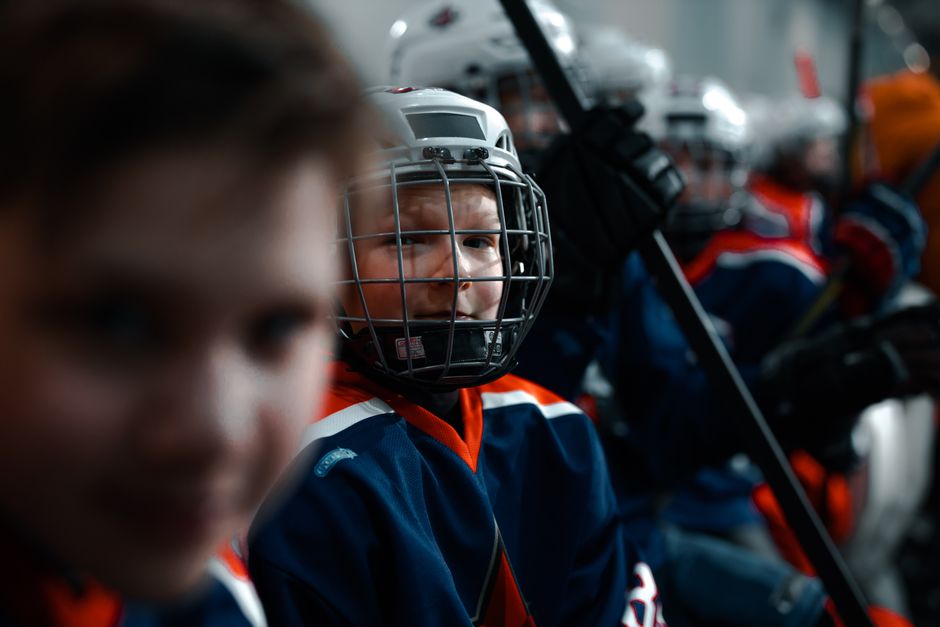
Saturday morning, 7:15. Four games are going on across one sheet of ice, each with a handful of 7-year-olds in helmets that look too big, chasing a puck in a pack while parents in parkas cheer every shot that makes it halfway to the net. A few years later the questions get bigger: when does checking start, which helmet is safest, is a neck guard really required, and how much is all this going to cost? This page answers them. Here is youth hockey in plain words: USA Hockey’s age groups and the American Development Model, body checking rules by age, safety gear, concussion, an honest look at cost, and parents’ most common questions.
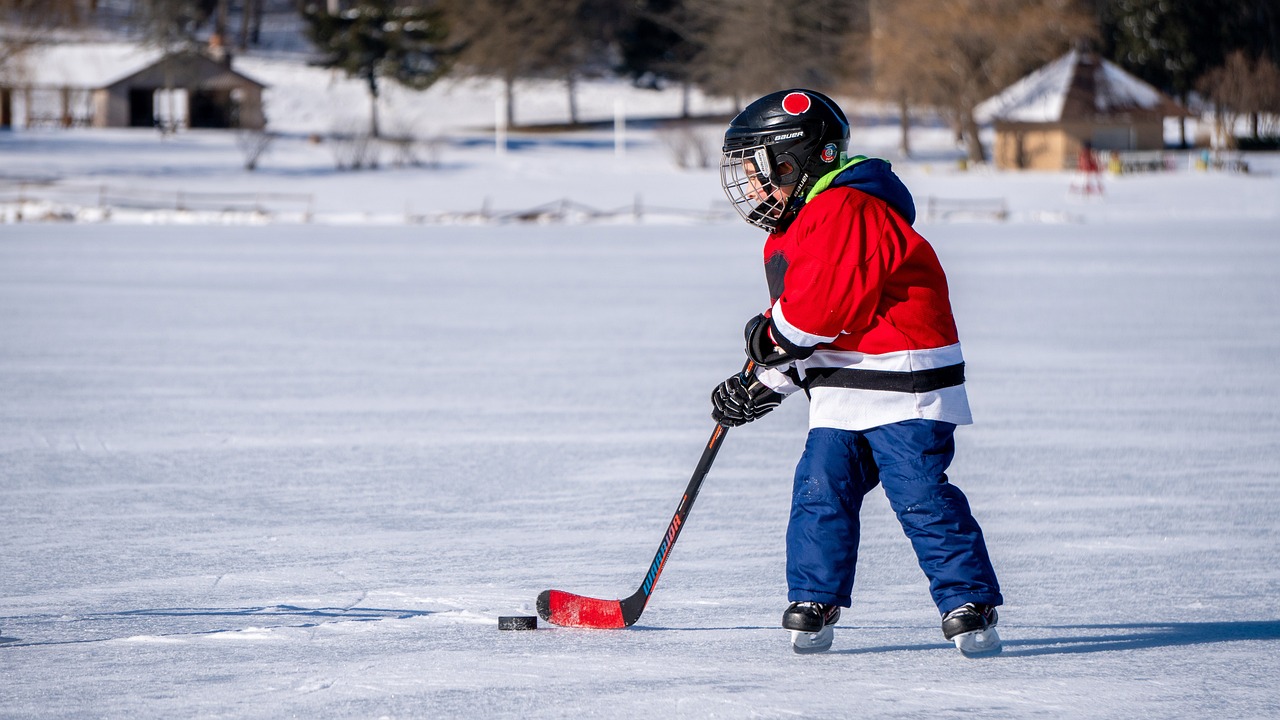
Youth hockey is growing: USA Hockey counted a record 396,525 youth players in 2024-25. For the sport at every level, start at our ice hockey hub.
Age groups and the American Development Model
USA Hockey groups kids by age: 6U and 8U (often called mites), 10U (squirts), 12U (peewees), 14U (bantams), then 16U and 18U. Its American Development Model (ADM), adopted in 2009, matches practice, games and ice size to each age. The core idea: kids learn more in well-run practices than in games, so the ADM recommends about three practices for every game. Here’s what the ADM chart suggests for a season:
| Age group | Ice sessions per season | Practices | Games | Format |
|---|---|---|---|---|
| 6U | 50–60 (2–3 a week) | 34–40 | 16–20 game days | Cross-ice, 7–9 skaters per team, no full-time goalies |
| 8U | 50–60 (2–3 a week) | 34–40 | 16–20 game days | Cross-ice or half-ice, 9–12 skaters, no full-time goalies |
| 10U | 95–100 (3–4 a week) | 75–80 | 20–25 | 10–12 skaters and a goalie |
| 12U | 105–120 (4 a week) | 80–90 | 30–35 | 12 skaters and 2 goalies; checking skills taught |
| 14U and 16U | About 160 (4–5 a week) | 120–130 | 40–50 | Full ice; body checking allowed in boys’ checking leagues |
| 18U | About 200 (5–6 a week) | Team and position practices | Competition becomes more important | Full ice |
Why cross-ice for little kids? Since the 2013-14 season, USA Hockey has required that all 8U games and scrimmages be played cross-ice or half-ice. A full NHL-size rink is huge for a 7-year-old; on a smaller surface they touch the puck far more, skate more and have more fun. The ADM calls ages 9 to 14 the “golden age” of skill development, and USA Hockey points to players like Quinn Hughes, whose overtime goal beat Sweden in the 2026 Olympic quarterfinal, as kids who grew up in the early ADM years.
Body checking rules by age
| Organization | No body checking | Body checking starts |
|---|---|---|
| USA Hockey (boys and co-ed) | 12U and younger (since 2011-12) | 14U, in checking leagues |
| USA Hockey (girls and women) | All ages | Never |
| Hockey Canada | U13 and younger (since 2013) | U15, in body-checking leagues; some house leagues stay non-checking at every age |
| High school (NFHS) | Body checking is legal in boys’ high school hockey; checking from behind and contact to the head are penalized hard | |
What the research says. In a 2010 study in JAMA, 11- and 12-year-olds in Alberta, where checking was allowed, had more than three times the risk of game injuries and concussions compared with Quebec, where it wasn’t. That study pushed USA Hockey and Hockey Canada to move checking up. Afterward, researchers in Alberta found that the 2013 national ban on checking in Pee Wee cut the injury rate by 50% and the concussion rate by 64% for 11- and 12-year-olds. The Canadian Paediatric Society goes further and recommends no body checking in recreational (non-competitive) hockey at any age.
Getting ready for 14U. Checking is a skill taught in steps before it’s allowed in games: USA Hockey’s ADM uses 12U to prepare players for it, and Hockey Canada follows a four-step checking progression that ends with body checking at U15. Ask your 12U coach how they teach angling, body position and safe contact. The full rule details are on our ice hockey rules page.
Safety gear rules for kids
- Helmet and full face mask: USA Hockey requires a HECC-certified helmet and face mask for every youth player, chin strap fastened, with no changes to either. A helmet with an expired or missing HECC sticker is no longer certified, and add-on covers void the certification.
- Neck laceration protector: required for all youth, girls’ and high school players in games and practices since August 1, 2024. BNQ- or HECC-certified guards qualify for now; local associations report that 2026-27 is the last season USA Hockey accepts BNQ-only guards, so check the label when you buy.
- Mouthguard: required from 12U through 18U and in high school, and it must be a colored, non-clear one.
- Everything else: shoulder pads, elbow pads, gloves, padded pants, shin guards and a cup or pelvic protector. USA Hockey makes players personally responsible for them; high school rules require them.
Which helmet? In December 2025, Virginia Tech’s Helmet Lab rated 33 youth hockey helmets (tested with their face masks) and gave 10 of them five stars. Some of the five-star models are among the cheapest: the Bauer RE-AKT 55 combo and Bauer IMS 5.0 combo were tested at about $70 and $65. Fit still matters most; our hockey gear page explains how to fit a helmet, skates and a stick.
Concussion: what every hockey parent should know
The CDC’s HEADS UP advice is simple: when in doubt, sit them out. Watch for a child who seems dazed, confused or slow to respond after a hit or a fall into the boards, or who complains of headache, dizziness, nausea, blurry vision or sensitivity to light or noise. Take them off the ice, keep them out for the rest of the day and until a health care provider clears them, and expect the return to sport to go in steps. Call 911 for danger signs like a worsening headache, repeated vomiting, seizures or unusual drowsiness. USA Hockey has its own concussion return-to-play policy, and every state has a youth concussion law; ask your association how it works. Our hockey injuries page goes deeper.
What youth hockey really costs
Let’s be honest: hockey is the most expensive of the common youth sports. In a national survey by the Aspen Institute’s Project Play and Utah State University, families spent an average of $2,583 a year on one child’s hockey, the most of any sport in the survey. The biggest pieces were travel ($829), registration ($634), equipment ($389), lessons ($389) and camps ($302). Those figures are a few years old, and Project Play’s newer surveys show youth sports spending overall has risen a lot since 2019, so expect more today, especially on travel teams.
- Start with a learn-to-play program. Some beginner programs lend or include gear for the first season, so ask your rink or association before you buy.
- Buy used where it’s safe. Pads, pants, gloves and even skates can come from a gear swap. Helmets are different: check the HECC sticker’s expiration date and buy new if you’re not sure.
- Stay local longer. House and recreational leagues cost far less than travel teams, and the ADM’s practice-heavy plan works at any level.
- Size for now, not for three years. Too-big skates and pads are uncomfortable and protect less.
Girls’ hockey
Girls can play on co-ed youth teams or in girls’ classifications, and USA Hockey’s girls’ and women’s hockey is non-checking at every age. The path keeps going: 9,589 girls played high school hockey in 2024-25, there are 52 NCAA Division I women’s teams, the PWHL has 12 pro teams in 2026-27, and the U.S. women won Olympic gold in 2026. The leagues and associations page has the full map.
The right gear for young players
Four things every young player needs that are easy to get right: a certified helmet and cage that fits, a cut-resistant neck guard, a colored mouthguard and skate guards for walking from the locker room. The Bauer NLP21 neck guard comes in youth (10–14 inch neck) and senior sizes, uses Kevlar fibers and is BNQ and CE certified (about $20). The Shock Doctor Gel Max is a boil-and-bite guard in youth and adult sizes (about $12). Guardog Top Notch hard guards protect blades on rubber floors and cut to size (about $12). Prices change often. These are what we saw on Amazon in October 2026.
Bauer RE-AKT 55 Helmet Combo
- 5 stars, Virginia Tech youth ratings
- Bauer X cage included
- About $70
Bauer NLP21 Neck Guard
- Youth 10-14 in, senior 13.5-17 in
- Kevlar fibers
- BNQ and CE certified
Shock Doctor Gel Max Mouthguard
- Youth and adult sizes
- Gel-fit liner
- About $12
Guardog Top Notch Skate Guards
- Hard, adjustable guards
- Cut to fit 6-12.5 in
- About $12
After a tournament weekend, sore legs feel better with simple comfort tools; see our recovery shoes guide and the hockey recovery page. Another sport in the family? Compare with youth soccer.
Youth hockey questions from parents
What age should a child start hockey?
USA Hockey’s ADM starts at 6U, and its earliest stage is about general movement: skating, gliding, jumping and catching. Most kids begin with a learn-to-skate program, then learn-to-play.
When does body checking start in youth hockey?
At 14U in USA Hockey boys’ and co-ed checking leagues and at U15 in Hockey Canada body-checking leagues. Girls’ and women’s hockey in USA Hockey never allows body checking.
Does my child need a neck guard?
Yes. USA Hockey requires neck laceration protection for all youth, girls’ and high school players in games and practices, and high school rules require it in games too. Buy a BNQ- or HECC-certified guard and check your association’s current rule, since USA Hockey is moving to HECC-certified guards only.
How much does youth hockey cost per year?
The Project Play survey with Utah State University found an average of about $2,583 a year for one child, the most of any youth sport, with travel the biggest cost. Recreational hockey costs much less than travel hockey, and costs have risen since that survey.
How often should a youth hockey player practice?
USA Hockey recommends about three practices for every game. Its chart suggests 2 to 3 ice sessions a week at 6U and 8U, 3 to 4 at 10U and about 4 at 12U, plus some off-ice activity. Playing other sports in the off-season helps too.
What should I do if I think my child has a concussion?
Take them off the ice right away and keep them out for the rest of the day. Have a health care provider check them, and only return to hockey, step by step, after the provider clears them. Call 911 for danger signs like a worsening headache, repeated vomiting or a seizure.