This article contains affiliate links: if you buy through them we may earn a commission, at no extra cost to you. Learn more.
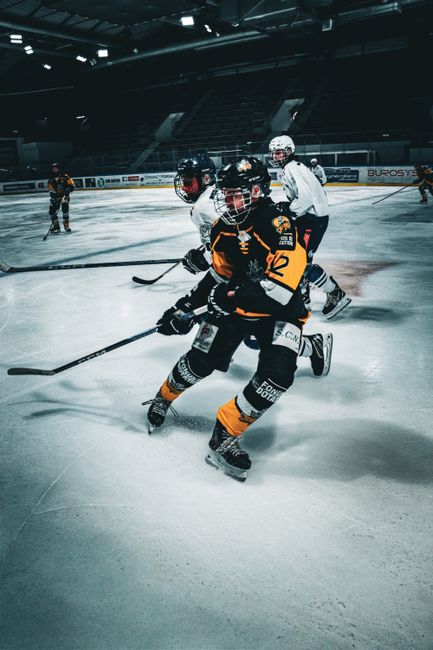
A 6 a.m. practice at the local rink, the Zamboni barely off the ice. A Friday-night high school game with the student section banging on the glass. A college player finishing a check along the boards, or a beer-league defenseman going down to block a shot. Hockey is fast, physical and played on blades, and most ice hockey injuries come from a short list: hits to the head, sore hips and groins, shoulders driven into the boards, knees caught in a collision and, rarely but seriously, cuts from a skate blade. Here’s what research says lowers the risk, what the rules require you to wear, and when to get it checked.
This is general information, not medical advice. If you’re hurt, see a sports medicine doctor, a physical therapist (PT) or a certified athletic trainer (AT). For the big picture of the sport, start at our ice hockey hub.
How often hockey players get hurt
Games are where most hockey injuries happen. Sixteen years of NCAA injury surveillance data for men’s college hockey found 16.27 injuries per 1,000 athlete-exposures (one player in one game or practice) in games, against 1.96 in practices, more than eight times higher. Player-to-player contact caused half of game injuries. Knee sprains and other internal knee injuries were the most common game injury, and pelvis and hip muscle strains were the most common in practice. In NCAA women’s hockey, where body checking isn’t allowed, the game injury rate was still about five times the practice rate, about half of game injuries still came from contact with another player, and concussions were the most common game injury (21.6%), ahead of internal knee injuries (12.9%) and AC joint (shoulder) injuries (6.8%).
Concussion: recognize and remove
Body checking is the big concussion risk in youth hockey. A study of 11- and 12-year-olds in Canada found that players in a league that allowed body checking had about three times the risk of game injuries and close to four times the risk of concussion compared with a league that didn’t. USA Hockey has not allowed body checking in games at 12 & under since 2011, or in any girls’ and women’s classification. The American Academy of Pediatrics (AAP) goes further and recommends keeping checking to the top competitive levels of boys’ hockey, starting no earlier than age 15. Our youth hockey page explains how checking is taught step by step.
The CDC’s HEADS UP program asks coaches and parents to watch for a player who looks dazed or confused, is slow to respond or moves clumsily. Listen for headache, dizziness or balance problems, nausea, vision problems, sensitivity to light or noise, feeling foggy, or mood changes.
- Remove the player from the ice right away if you see signs after a blow to the head or body. When in doubt, sit them out.
- Keep them out for the rest of the day and until a healthcare provider clears them. Don’t try to judge how serious it is yourself.
- Return in steps. Going back to sport is gradual and usually takes a week or more.
- Call 911 for danger signs: a headache that gets worse and won’t go away, repeated vomiting, seizures, passing out or growing drowsiness, slurred speech or weakness, or unequal pupils.
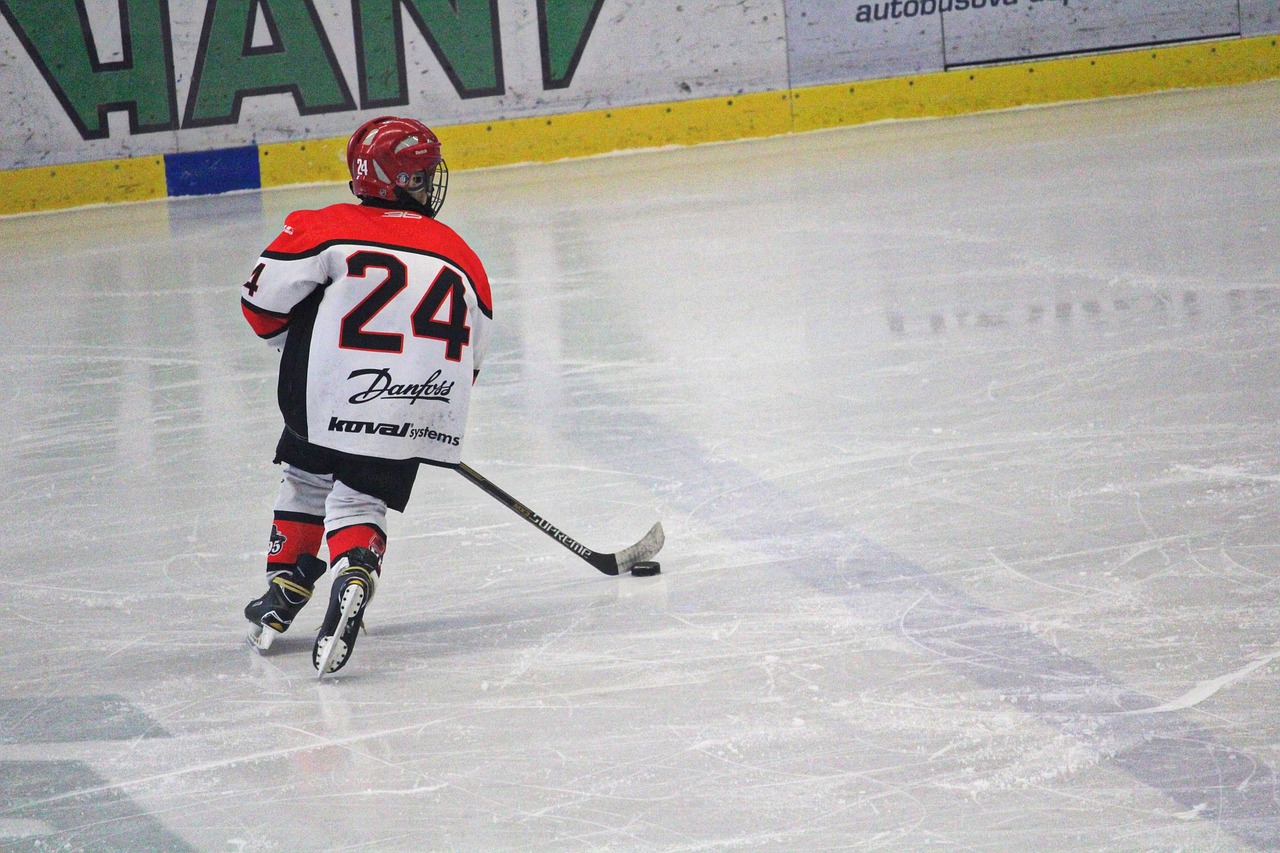
Face and teeth: USA Hockey requires a HECC-certified helmet and full facemask for every player below the adult level, and a colored internal mouthpiece from 12 & under through 18 & under (high school included). The evidence backs full face protection. In a study of 642 college players, players in half shields (visors) had 2.31 times the risk of facial cuts and 9.90 times the risk of dental injuries of players in full shields, with no added concussion or neck injury risk from the full shield. Keep the cage on and the mouthguard in, even in adult hockey.
Skate-blade cuts and neck lacerations
Skate cuts are rare, but they can kill. A review of catastrophic hockey lacerations reported to the US National Center for Catastrophic Sport Injury Research from 1982 to 2025 found 26 cases, ages 13 to 34. Skates caused 24 of them, the neck was hit in 15, and five players died. Of the 15 neck cases, seven players reportedly had no neck protection, and the rest weren’t recorded. The authors call for mandatory neck protection and bleeding-control kits and trained first-aiders at the rink.
The rules changed after American player Adam Johnson died from a skate cut to the neck during a game in England in October 2023. Since August 1, 2024, USA Hockey has required a neck laceration protector for every player in games and practices in all age classifications except adults (youth, girls’, high school, junior and disabled hockey under 18), and it strongly recommends one for adults. Under the 2025–29 rulebook, the guard must be HECC-certified, though BNQ-certified guards are still accepted through the 2026–27 season, and it should cover as much of the neck as possible. A goalie’s hanging throat protector doesn’t count. USA Hockey also recommends cut-resistant socks, sleeves or base layers. Internationally, the IIHF made neck guards mandatory for all players in its competitions starting with the 2024–25 season.
A collar-style guard such as the Bauer NLP7 (adult, 13.5–17 in neck) or the Bauer NLP21 (youth, 10–14 in, Kevlar-blend fabric) is the simplest way to meet the rule. Check the certification sticker against your league’s current rule, since the BNQ grace period ends after 2026–27. Pair it with a mouthguard like the Shock Doctor Gel Max, which comes in youth and adult sizes with a detachable helmet strap.
Bauer NLP7 Neck Guard (Adult)
- Adult, 13.5–17 in neck
- BNQ certified
- Padded, adjustable collar
Bauer Premium NLP21 Neck Guard (Youth)
- Youth, 10–14 in neck
- Kevlar-blend, cut resistant
- Thin, adjustable
Shock Doctor Gel Max Mouthguard
- Youth and adult sizes
- Gel-Fit liner
- Detachable helmet strap
Groin, adductor and hip (FAI) injuries
The skating stride pushes out to the side and pulls back in, over and over, and that puts heavy load on the inner-thigh (adductor) muscles and the hip joint. Reviews put groin strains at roughly 10–11% of all injuries in professional hockey and soccer. Across 25 NCAA sports, men’s hockey had the second-highest rate of adductor strains (2.47 per 1,000 exposures), behind men’s soccer.
Strength is the key finding. In an NHL team study, preseason adductor strength was 18% lower in the players who later strained a groin, and a player whose adductor strength was under 80% of his abductor (outer hip) strength was 17 times more likely to get a groin strain. When the same researchers put the at-risk players through a six-week strengthening program, adductor strains fell from 11 in the two seasons before to 3 in the two seasons after. In soccer, the Copenhagen adduction exercise program cut groin problems by about 41%. See how to build hip and groin work into the off-season on our hockey training page.
Hip impingement (FAI): femoroacetabular impingement is when the ball and socket of the hip pinch, often because of extra bone at the top of the thigh bone (a “cam” shape). It’s common in hockey. In an MRI study of 61 youth players aged 10 to 18 who had no hip pain, hockey players were 4.5 times more likely than young skiers to have the hip shape linked to cam impingement. Having the shape doesn’t mean you have a problem. But deep groin or front-of-hip pain, especially when you sit low, pivot or pull your knee to your chest, a catching or locking feeling, or a “groin pull” that keeps coming back should be checked by a sports medicine doctor. Diagnosing hip and groin pain is tricky, and a sports hernia, a strain and FAI can feel alike.
Shoulder: AC joint separations
The acromioclavicular (AC) joint is where the collarbone meets the top of the shoulder blade. According to the American Academy of Orthopaedic Surgeons (AAOS), the most common cause of an AC separation is a fall directly onto the shoulder, and in hockey that means a fall into the boards or a hard check. In NCAA men’s hockey, body-checking injuries mostly hit the upper body (42%) and head and neck (27%), and AC sprains were more common among checking injuries than other injuries. Signs are pain at the top of the shoulder and sometimes a bump. AAOS notes that most people, even pro athletes, get back to normal function without surgery, with a sling and rehab first. A shoulder that looks out of place, a collarbone that may be broken, or numbness down the arm needs a doctor the same day. Well-fitted shoulder pads are your first protection; see our hockey gear guide.
Knees: MCL sprains
The medial collateral ligament (MCL) runs along the inside of the knee and stops it from bending inward. A hit to the outside of the knee, a skate catching in a rut or a knee-on-knee collision can sprain or tear it. AAOS lists pain and tenderness on the inside of the knee, swelling, stiffness and a knee that feels unstable as the signs, sometimes with a pop. Most MCL injuries are treated without surgery: a hinged knee brace and physical therapy. A knee that swells fast, locks or gives way, or that you can’t put weight on, needs a sports medicine doctor to rule out an ACL or meniscus tear as well.
When to see a doctor, PT or athletic trainer
- Any concussion signs, or a hit to the head with symptoms.
- Any skate cut that won’t stop bleeding: apply firm pressure and call 911 for a neck or deep cut.
- Groin or hip pain that comes back each time you skate hard, or catching and locking in the hip.
- A bump on top of the shoulder, a shoulder that looks out of place, or arm numbness.
- A knee that swelled fast, gives way, or that you can’t put weight on.
- A puck to the foot or hand that keeps hurting or swelling the next day.
A sports medicine physician diagnoses the problem and manages most injuries without surgery. A physical therapist guides rehab and the return to skating. Athletic trainers are licensed or regulated health care professionals who work with physicians, and many high school, junior and college teams have one at the rink. After a concussion, don’t return until a healthcare provider clears you.
Hockey injury FAQs
What is the most common injury in ice hockey?
It depends on the level. In NCAA women’s hockey, concussions were the most common game injury. In NCAA men’s hockey, knee injuries topped game injuries and hip and groin strains topped practice injuries. In youth leagues that allow body checking, checking is the main cause of injuries.
Are neck guards required in hockey?
In USA Hockey, yes for every player below the adult level, in games and practices, since August 1, 2024, and strongly recommended for adults. The IIHF requires them in all its competitions. Pro leagues set their own rules, so check yours.
Why do hockey players get so many groin injuries?
The skating stride loads the inner-thigh muscles hard, especially in quick starts and stops. NHL research found weak adductors compared with the outer hip muscles was a strong warning sign, and a preseason strengthening program cut groin strains sharply.
Is hip impingement (FAI) common in hockey players?
The hip shape linked to cam impingement shows up often in young hockey players: one MRI study found it 4.5 times more often than in young skiers. Many players with the shape have no symptoms. Persistent deep groin or hip pain should be checked by a sports medicine doctor.
Does a full face mask prevent concussions?
No face mask prevents concussions. A full shield greatly lowers facial cuts and dental injuries compared with a half visor, and in one college study players in full shields lost less time per concussion. Recognize and remove is still the rule.
Wear the cage, the mouthguard and a certified neck guard, build strong hips before the season and sit out anything that looks like a concussion. Keep going with our training, game-day and recovery guides, our resistance bands guide for groin and hip work, and the soccer injuries page for more on the Copenhagen program.