This article contains affiliate links: if you buy through them we may earn a commission, at no extra cost to you. Learn more.
July, and the rink is closed for maintenance. A high school forward is in the garage doing lateral bounds, sliding side to side on a slide board, and stickhandling a street puck across the driveway between sets. Across town, a college defenseman runs hill sprints with a heart-rate strap on, and a 40-year-old beer-leaguer does split squats so his hips survive Tuesday nights. That’s hockey training off the ice: building the legs, hips and engine that make you faster in the first three strides and still sharp in the last minute of the third period. This page covers what a shift really demands, off-ice training for skating speed, strength for battles and a healthy groin, conditioning built around shifts, and how young players should train.
General information, not a personal program. If you have pain or a past injury, have a physical therapist, athletic trainer or strength coach adjust it for you. Back to the ice hockey hub.
What a hockey shift demands
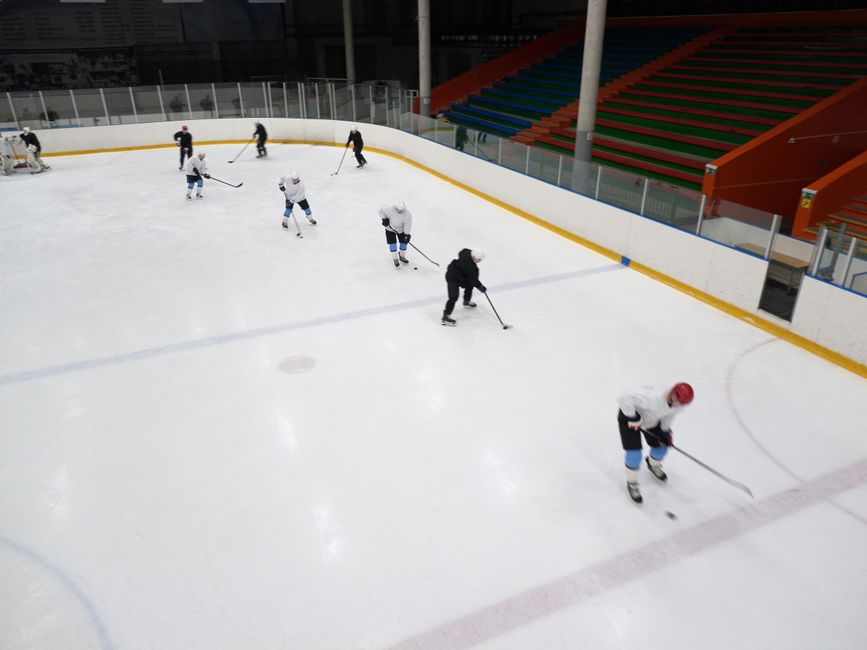
A 2024 review of ice hockey physiology by Vigh-Larsen and Mohr sums up the game: shifts of about 30 to 80 seconds, separated by longer rests on the bench, adding up to roughly 15 to 25 minutes of ice time per player. Nearly half the distance is skated at high intensity, and forwards play an even more intense pattern than defensemen. Heart rate climbs toward maximum in every shift. Both energy systems work hard: the fast phosphocreatine and glycolytic systems power the bursts, and the aerobic system drives recovery between them. The fuel is mostly muscle glycogen, which drops sharply even though each player is on the ice for less than half the game. Tracking data show high-intensity skating falls off late in games.
So hockey fitness has three parts: speed and power for the bursts, strength for battles and a durable body, and an engine that recovers fast between shifts and holds up in the third period.
The training year
- Early off-season: rest first, then other sports and general fitness. Fix any lingering hip, groin or shoulder issue with a PT.
- Main off-season: the time for strength and power in the gym and on the track: lifts, jumps, sprints, plus hip and groin work.
- Preseason: shift-style conditioning and more skating. Build up ice time gradually instead of jumping into full camps.
- In-season: keep one or two short strength sessions a week to hold your gains, and let games and practices provide most of the conditioning.
The session counts above are common practice, not hard rules. The idea that matters most comes from the International Olympic Committee’s consensus on load: sudden jumps in training and games, crowded schedules and travel all raise injury risk, so build up steadily.
Off-ice training for skating speed
Skating is its own skill, so nothing replaces time on the ice with a good skating coach. But off-ice power carries over. In a 2026 study of men’s and women’s college players, faster skaters had more jump power, jump height and reactive strength in a countermovement jump (correlations of 0.43 or higher). In 9- and 10-year-old players, off-ice sprint times, especially the first 6 meters of a 30-meter sprint, were among the best predictors of on-ice performance.
- Short sprints: 10–30 meter sprints with full rest train the first strides, the part of skating speed that wins races to loose pucks.
- Jumps and bounds: squat jumps, broad jumps and especially lateral bounds (side to side, sticking the landing) mimic the push of a stride. Start with landing technique before adding volume.
- Slide board: a slick board with end stops lets you practice the side-to-side stride, the full extension and the recovery, at home. Players use boards like the SPRI Slide Board (71 × 20 inches, booties included) for both technique and conditioning.
- Footwork: an agility ladder such as the SKLZ Quick Ladder is a simple warm-up for quick feet and coordination.
- Hands too: stickhandling off ice with a training puck that slides flat, like the Green Biscuit, keeps your hands sharp all summer.
SPRI Slide Board
- 71 x 20 in
- End stops, booties and bag
- Lateral strength and conditioning
Green Biscuit Original Training Puck
- 3 in wide, 1 in thick
- Stays flat on pavement
- Passing, toe drags, stickhandling
Fit Simplify Resistance Loop Bands (set of 5)
- 12 x 2 in loops
- Extra light to extra heavy
- Carry bag
Strength: legs, hips, core and upper body
Strength makes you harder to knock off the puck and helps your body tolerate the season. A simple plan covers:
- Legs: squats or trap-bar deadlifts, plus single-leg work (split squats, step-ups, lateral lunges) because every stride is on one leg.
- Hips and groin: this is hockey’s must-do. In an NHL study, players whose adductor (inner-thigh) strength was below 80% of their abductor (outer hip) strength were 17 times more likely to strain a groin. A six-week preseason strengthening program for the at-risk players cut groin strains from 11 to 3 over the following two seasons. Copenhagen side planks, band adduction and lateral lunges are common choices; resistance loops like the Fit Simplify set make hip work easy anywhere. More on our hockey injuries page.
- Core: anti-rotation and anti-extension work (planks, Pallof presses, carries) for battles and shooting.
- Upper body and shoulders: rows, presses and pull-ups for board battles, and shoulder-blade control work to help protect the shoulder.
Conditioning for shifts
Long, slow runs don’t match a game made of 30- to 80-second sprints. Shift-style intervals do: hard efforts about as long as a shift, followed by longer rest, repeated in sets. Research backs this kind of work. In a 2022 randomized crossover study, youth national-team players added four weeks of intense speed-endurance training. Their Yo-Yo intermittent recovery test score rose 14%, their maximal oxygen uptake rose 4.8% and their time to exhaustion rose 6.5% compared with normal training.
- Shift intervals: bike, slide board or hill sprints of about shift length, each followed by a longer rest, as on the bench, in a few sets. Off-ice, a bike is easy on the hips and knees.
- Aerobic base: some steady work early in the off-season helps you recover between shifts and between hard days.
- Measure it: a chest strap like the Polar H10 shows how hard each interval was and how fast your heart rate drops in the rest, a good sign of fitness. See our best hockey wearables.
Warm-up and mobility
Before practices and games, warm up off ice: easy cardio, dynamic hip and groin moves (leg swings, lateral lunges, hip openers), a few short sprints or jumps and some shoulder activation. Many teams use a structured routine like this. Hip mobility matters in hockey because the skating position keeps the hips bent for long periods; a PT can check your hip range of motion if you feel pinching.
Young players: athletes first
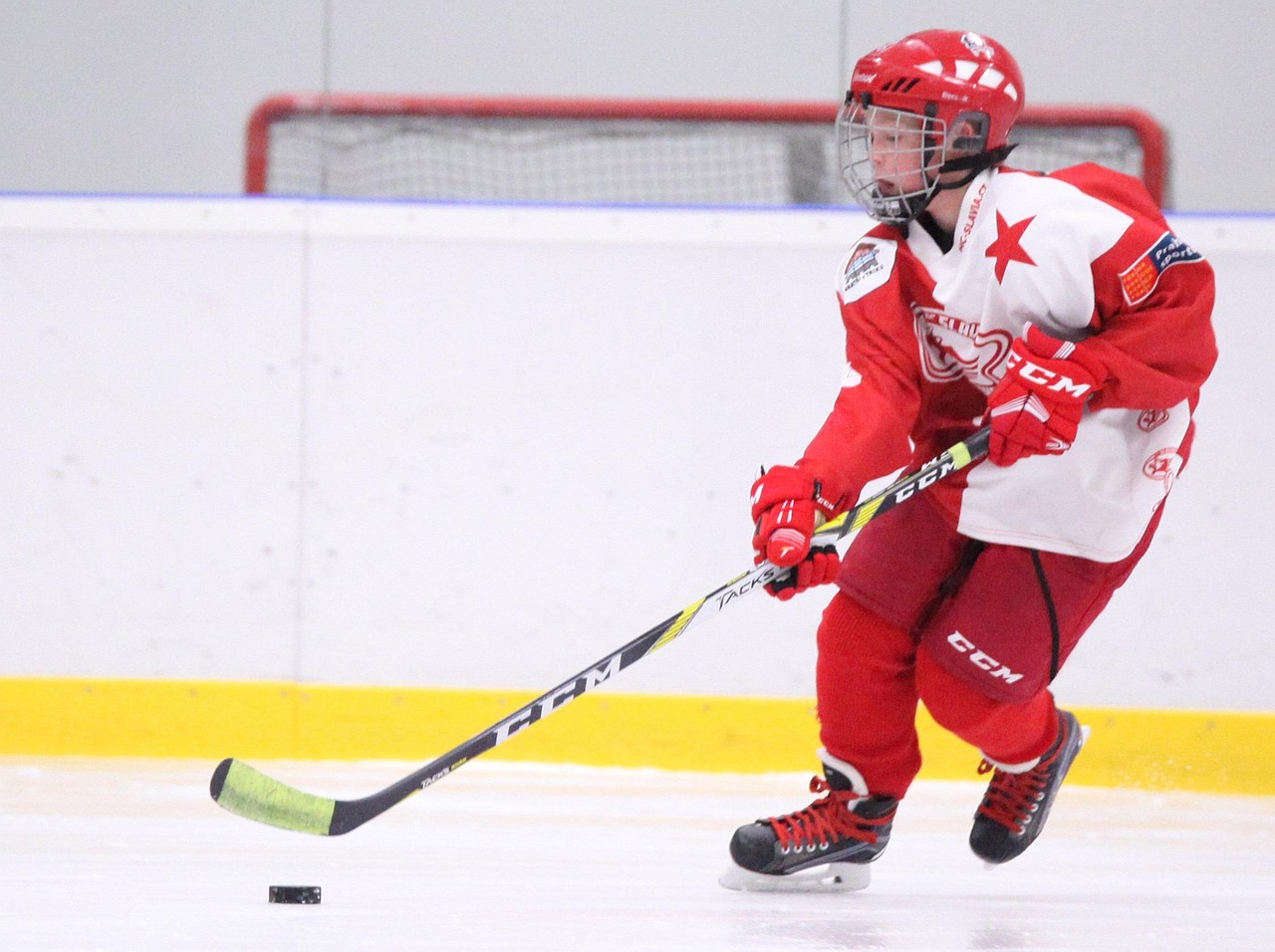
The American Academy of Pediatrics says supervised, technique-first strength training is safe for kids and teens. It suggests 2 to 3 sessions a week of 20 to 30 minutes, learning lifts without weight first, 2 to 3 sets of 8 to 15 reps, adding weight slowly, and no maximal lifts before the body has finished growing. The AAP also warns against early single-sport specialization. A clinical study linked specializing, and training more hours a week than your age in years, to a higher injury risk. For young players, summer means other sports, play, sprinting, jumping and stickhandling for fun, plus 8 to 10 hours of sleep for teens. More on our youth hockey page.
Keep going with hockey game day, recovery and nutrition and supplements. For more equipment, see our speed training equipment and resistance bands guides, and compare with soccer training.
Hockey training questions
How can I skate faster off the ice?
Train short sprints, jumps and lateral bounds, and build single-leg and hip strength. Studies link jump power and short sprint times to skating speed. Then work on stride technique on the ice with a skating coach, because off-ice power only helps if your stride uses it.
How long is a shift in hockey?
Research describes shifts of about 30 to 80 seconds, with players totaling roughly 15 to 25 minutes of ice time in a game. Train with intervals of similar length and longer rest in between.
Does a slide board help hockey players?
Many players and coaches use slide boards to practice the side-to-side stride and for low-impact conditioning when there’s no ice. They’re a supplement to skating, not a replacement.
How do hockey players prevent groin strains?
Strengthen the adductors along with the outer hip, warm up properly and build skating volume gradually in preseason. A preseason adductor program cut groin strains sharply in an NHL team study.
At what age should hockey players start lifting weights?
The AAP says supervised, technique-first resistance training can start in childhood, once a child can follow instructions and has good balance (around 7 or 8). Keep the weights light, focus on form and skip maximal lifts until growth is done.