This article contains affiliate links: if you buy through them we may earn a commission, at no extra cost to you. Learn more.
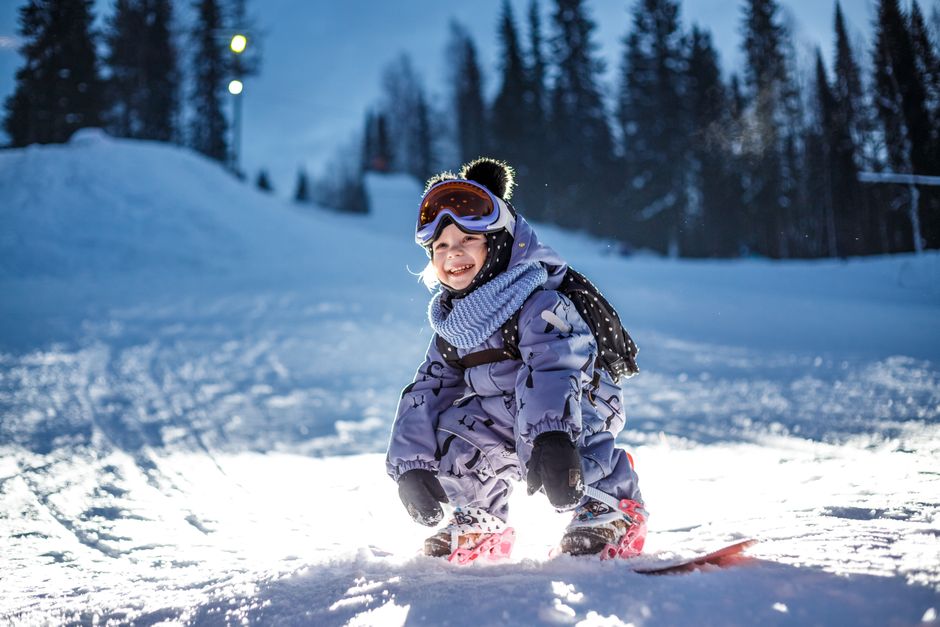
A four-year-old in a puffy suit, standing sideways on a tiny board in the living room while a parent pulls her across the rug on a reel. Two winters later, the same kid is sliding down the magic carpet with an instructor walking backward in front of her. By ten she’s dragging you into the terrain park. Kids’ snowboarding can start almost as soon as a child can stand, and with the right lessons, a good helmet and wrist guards, it can be a sport for life. This page is for parents: when to start, how lessons work, the safety gear that matters most for children, cold and sun on the mountain, and the questions parents ask most.
For the sport at every level, start at our snowboarding hub.
When can kids start snowboarding?
There’s no official minimum age. Burton, which makes the Riglet line of beginner gear for small children, says there’s no specific age to start and that if a child can stand, they can stand sideways on a board. Its Riglet boards can be pulled on a reel around the house or yard, and a removable grab bar called The Handlebar fits Burton kids’ boards from 80 to 110 cm to give a first-timer something to hold, like training wheels on a bike. Some resorts have Riglet Parks with instructors built for exactly this stage.
What matters more than age is readiness: leg strength to stand and balance in boots, the attention span for a lesson, and enjoying the cold. Burton’s advice is to keep it fun, follow the child’s pace, plan around snacks and bathroom breaks, and stop before they’re worn out. Lesson ages vary by resort, so ask your ski school at what age its snowboard lessons start.
Lessons: why a pro beats a parent
The American Academy of Pediatrics (AAP) says kids should learn to ski or snowboard from a qualified instructor in a program designed for children. The research backs it up. In a large Scottish study, people on their very first day were 2.2 times overrepresented among the injured, and being younger than 17 was one of the risk factors among first-day participants. In a trial of more than 5,000 snowboarders, beginners in their first five days and riders on rented gear were injured more often. And in US emergency departments over 20 years, 57% of injured patients under 18 had been hurt snowboarding rather than skiing.
- Book a kids’ group lesson with a certified instructor (in the US, AASI-certified); kids learn from the pro and meet riders their own age, Burton notes.
- Don’t hover. Drop them off, trust the instructor, and let them show you what they learned afterward.
- Stay on easy terrain until they can stop, turn both ways and load a lift. The AAP says slopes should match a child’s ability and experience, and to avoid crowded runs and areas with trees.
- Practice at home. Burton finds indoor sessions on a carpet board help kids learn the basics without cold or crowds.
Helmets for kids
The AAP says all skiers and snowboarders should wear helmets, and if a resort doesn’t require them, parents should require them for their own kids and teens. Families already do: the National Ski Areas Association (NSAA) says nearly 100% of kids 9 and under and about 96% of kids 17 and under wore helmets on US slopes in 2023/24. A 2010 meta-analysis found helmets lowered the risk of head injury in skiers and snowboarders, and the protective effect held in studies that included children under 13.
- Use a snow helmet. The Consumer Product Safety Commission (CPSC) lists ASTM F2040 (and Snell S-98 or RS-98) for skiing and snowboarding. A bike helmet isn’t designed for the slopes.
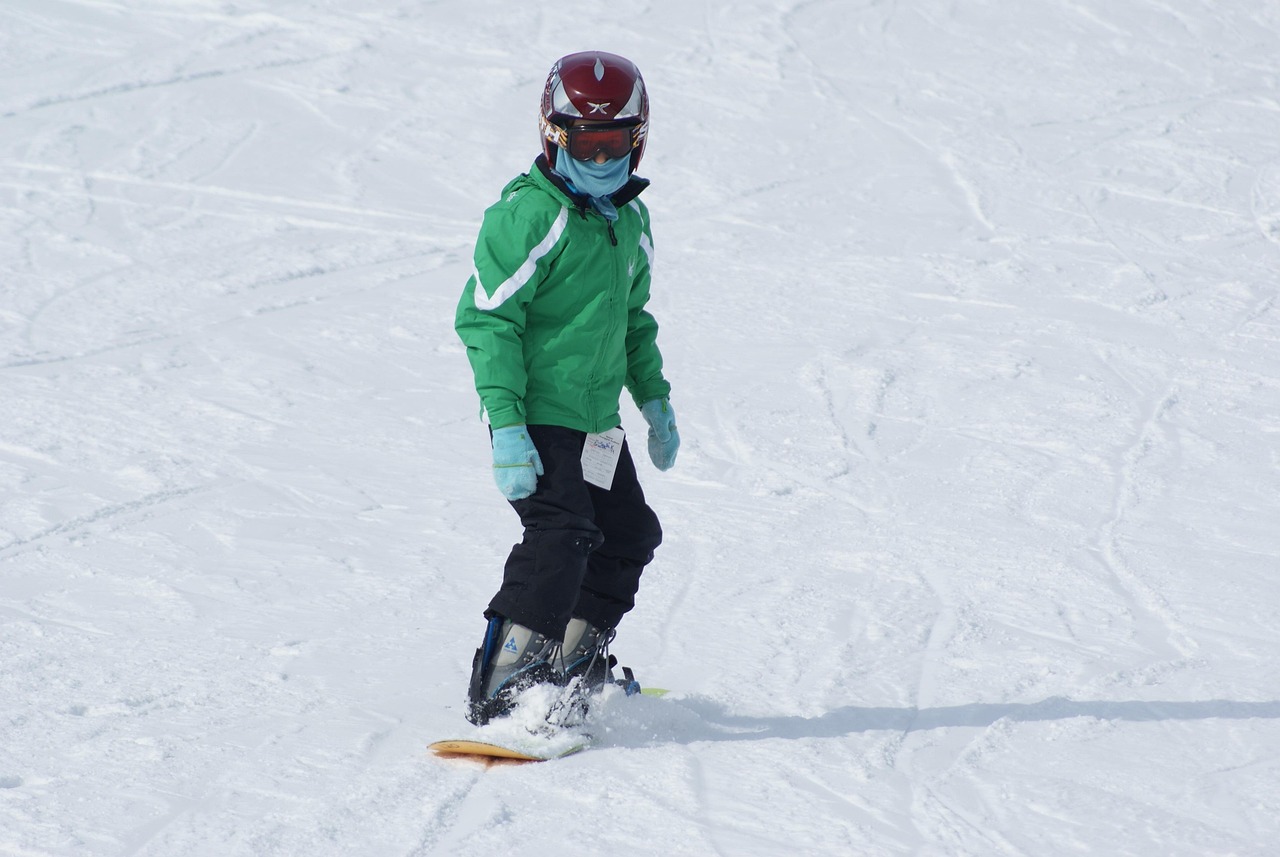
- Fit it now, not to grow into. It should be snug and level, with the strap fastened, and work with the child’s goggles so there’s no gap at the forehead. The CPSC says not to wear a helmet that doesn’t fit.
- Replace it after a hard hit or when it’s outgrown, and remember that no helmet can prevent every concussion.
The Smith Glide Jr. MIPS is a youth snow helmet the maker says is certified to ASTM F2040 and CE EN 1077, with Mips, a dial fit and the widest youth size range in Smith’s line (about $110).
Wrist guards for kids
New snowboarders fall a lot, usually onto their hands, and wrist injuries are among the most common snowboarding injuries. The AAP recommends that snowboarders wear gloves with built-in wrist guards. In a randomized trial of 5,029 snowboarders, those wearing wrist braces had 8 wrist injuries versus 29 in the group without, and a systematic review found wrist guards cut the risk of wrist injury to about a quarter. Choose guards made to fit under snowboard gloves, sized by hand measurement; Pro-Tec Undercover Snow Wrist Guards come down to X-Small (6–7 inches around the knuckles), with removable splints (about $24).
Teach kids to fall, too: the American Academy of Orthopaedic Surgeons notes that learning how to fall correctly and safely, ideally from an instructor, can reduce the risk of injury. Any wrist that’s swollen or painful after a fall should be checked, because a broken wrist can look like a sprain. Our snowboarding injuries page has more.
Cold, sun and staying with your kids
- Watch the wind chill. The AAP says children lose heat faster than adults and that outdoor play below a wind chill of -15°F should be avoided, because exposed skin can freeze within minutes.
- Dress in thin layers with insulated boots, mittens or gloves and a hat or helmet liner, and change wet clothes right away. Burton suggests packing a bag with dry socks, gloves, snacks, sunscreen and tissues.
- Know frostbite and hypothermia. Frostbitten skin may burn, then go numb and turn white or grayish: warm it gently, don’t rub it, and call your pediatrician if numbness lasts. Shivering that turns into sluggishness, clumsiness or slurred speech can be hypothermia: call 911.
- Protect eyes and skin. The EPA says snow can reflect up to 80% of UV rays. Goggles, which the AAP recommends, and broad-spectrum sunscreen on exposed skin.
- Never alone. The AAP says children should never ski or snowboard alone; young children need an adult, and older kids should at least ride with a friend. Agree on a meeting spot, and teach kids how to find ski patrol in an emergency.
Disposable warmers help on frigid days: HotHands Hand Warmers are air-activated and last up to 10 hours (about $7.50 for 10 pairs). Slip them into mittens or pockets and follow the package directions.
Concussion: what parents should know
After a fall or collision, watch for the signs the CDC’s HEADS UP program lists: a child who seems dazed, confused or slow to answer, or who complains of headache, dizziness, blurry vision, nausea or feeling “foggy.” Stop riding for the day, and keep them off the snow until a healthcare provider clears them; return to activity goes in steps. Call 911 or ski patrol right away for a seizure, repeated vomiting, growing drowsiness, a worsening headache or one pupil larger than the other.
Gear that fits a growing kid
Kids’ boards are softer than adult boards, which makes turns easier, and should fit the child now rather than “to grow into,” says the retailer evo. Many families rent by the season from a local shop instead of buying. Some kids’ boots and outerwear have room-to-grow features, such as Burton’s boots with a removable footbed that adds one full size. For boards, boots, bindings and stance setup, see our snowboarding gear page.
First contests: USASA
If your kid catches the competition bug, USASA runs youth-focused events at resorts across the country. The youngest classes, Rascals (5–6) and Ruggies (7–8), are free in the 2027 season and focus on fun; Grommets (9–10), Menehune (11–12), Breaker (13–14), Youth (15–16) and Junior (17–18) follow, by age on December 31. Kids don’t need a coach; parents can drop them at the start but aren’t allowed on the course. Ruggies and older can earn points toward Nationals at Copper Mountain. More on our leagues and associations page and the event formats on our snowboarding rules page.
Smith Glide Jr. MIPS Youth Helmet
- ASTM F2040, CE EN 1077 (maker)
- Mips, dial fit
- Widest Smith youth size range
Pro-Tec Undercover Snow Wrist Guards
- Fits under gloves
- Sizes from XS (6-7 in)
- Removable splints
HotHands Hand Warmers (10 pairs)
- Air-activated
- Up to 10 hours
- About $7.50
If your kid also skis, see our youth skiing guide, and for teens training for contests, our snowboarding training page.
Parents’ questions about kids’ snowboarding
What age can a child start snowboarding?
There’s no fixed age. Burton says kids can start playing on a beginner board as soon as they can stand. For lessons on the mountain, ages vary by resort, so ask your ski school. Readiness (balance, attention span, liking the cold) matters more than a number.
Should my kid ski or snowboard first?
Either works, and many kids try both. Snowboarders tend to get more wrist and arm injuries and skiers more knee and leg injuries, so the protective gear differs a little. Let your child try a lesson and see what sticks. Our skiing guide covers the other option.
Do kids really need wrist guards for snowboarding?
They’re strongly recommended. The AAP advises gloves with built-in wrist guards for snowboarders, and studies show wrist guards greatly reduce wrist injuries, which are among the most common snowboarding injuries. Beginners, who fall the most, benefit most.
How cold is too cold for kids on the slopes?
The AAP suggests avoiding outdoor play when the temperature or wind chill is below -15°F, when exposed skin can freeze within minutes. On cold days, layer up, cover every bit of skin, and take regular warm-up breaks indoors.
Can I teach my child to snowboard myself?
You can help them play and practice, especially at home or on very gentle slopes, but the AAP recommends a qualified instructor in a program designed for children, and Burton notes kids often learn better from someone other than a parent. Use lessons for the fundamentals and ride together afterward.