This article contains affiliate links: if you buy through them we may earn a commission, at no extra cost to you. Learn more.
You can tell how long someone has been doing CrossFit by their bag. Week one: a water bottle and running shoes. Month three: a speed rope coiled in a side pocket and a block of chalk. Year two: grips in a little pouch, knee sleeves, a belt, wrist wraps, a foam roller in the trunk and slides for the drive home. None of it is required to walk into a class, but the right CrossFit gear makes some movements safer and more comfortable and saves your hands and wrists. Here’s what each piece does, who needs it and when, plus the recovery gear many athletes use between WODs.
Buying guide · Our CrossFit buying guide compares the gear we'd pick, with prices and sizing:
Prices change often. The prices below are what we saw at the maker or a major retailer in October 2026; check the current price before you buy.
What you actually need to start
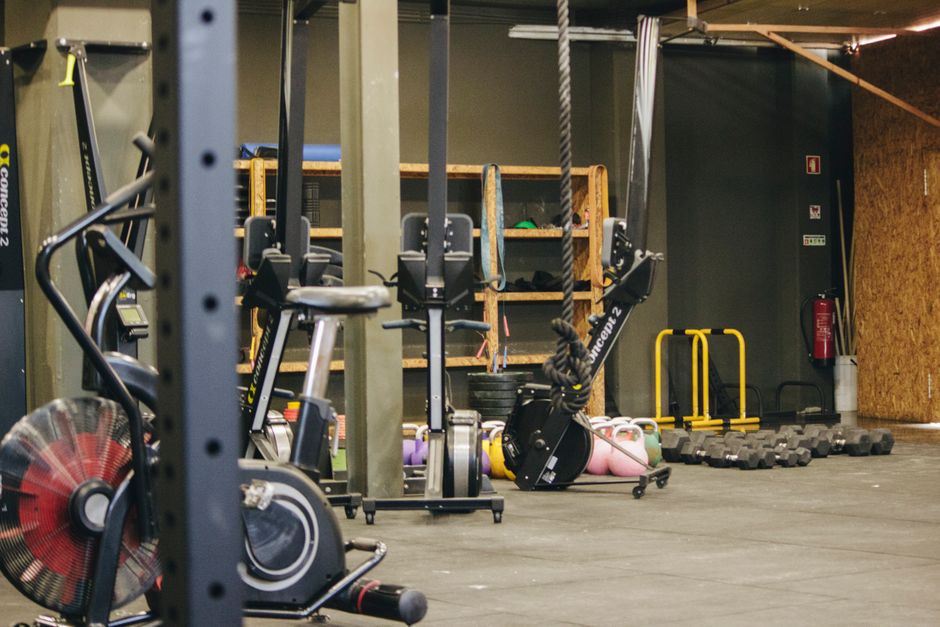
Comfortable clothes, a flat and stable pair of athletic shoes and a water bottle. Your gym supplies the barbells, plates, boxes, balls, rowers and rigs. In competition, each workout lists its equipment (for Open 26.1, for example, a 20-lb or 14-lb ball, a 10-foot or 9-foot target and a 24-inch or 20-inch box), and personal gear like grips, sleeves and wraps is your choice. Buy accessories as you need them, starting with a rope and, once pull-ups start tearing your hands, grips.
Our top picks
Nike Metcon 10
- Hyperlift plate under the heel
- Heel clip for handstand push-ups
- About $155
Rehband RX Knee Sleeve 7mm
- 7 mm neoprene, 1 pair
- Sizes XXS to XXL
- Washable at 40°C
Gymreapers Quick Locking Belt
- 4 in wide
- Quick-locking metal buckle
- Lifetime warranty (maker)
Gymreapers 18" Wrist Wraps
- 18 x 3 in
- Reinforced thumb loop
- IPF and USPA approved (maker)
TriggerPoint GRID 1.0 Foam Roller
- 13 in multi-density
- Hollow core
- About $40
Shoes: flat, stable and a bit tough
A CrossFit shoe has to do several jobs in one workout: stay flat and stable under a heavy squat, handle box jumps and short runs, and survive rope climbs. That’s why training shoes have firm heels, wide bases and tough sides. The Nike Metcon 10 (about $155 at Nike) has a stabilizing “Hyperlift” plate under the heel for squats, deadlifts and cleans, ReactX foam, a wider toe box than earlier versions, a heel clip for handstand push-ups and sticky rubber on high-wear areas. Nike says it fits small and suggests half a size up. Reebok’s Nano line is the other long-running CrossFit shoe family. For HYROX, with 8 km of running, some athletes pick a running shoe with a stable base instead. For heavy Olympic lifting, some lifters add a raised-heel weightlifting shoe.
See the Nike Metcon 10 at Nike
Jump ropes for double-unders
The gym’s ropes are rarely the right length, so a personal speed rope is usually the first thing people buy. Look for a thin cable, fast-spinning handles and an adjustable length; a common rule of thumb is that the handles reach about armpit height when you stand on the middle of the rope, shorter as you get better. The WOD Nation Jump Rope (about $19 on Amazon) is an adjustable alloy-steel cable rope that’s easy to cut down. Whip marks on the shins are part of learning; long socks help.
Check the WOD Nation Jump Rope price on Amazon
Grips, chalk and hand care
Pull-ups, toes-to-bar and muscle-ups pinch the skin of your palms against the bar, and torn calluses (“rips”) can keep you off the rig for a week. Grips sit between your hand and the bar. The Bear KompleX carbon 3-hole grips (about $49 on Amazon; the maker lists its Carbon Comp 3-hole at $54.99 on sale) use a carbon-fiber surface and come in no-hole, 2-hole and 3-hole versions; check the maker’s size chart. Chalk keeps hands dry: Cannon Sports gym chalk comes as eight 2 oz blocks for about $18. File calluses down on rest days, and keep any rip clean and covered.
Check the Bear KompleX grips price on Amazon
Knee sleeves
Neoprene knee sleeves keep the knees warm and give a snug, supported feel on squats, thrusters, wall balls and lunges. Thick 7 mm sleeves suit heavy squats; thinner ones suit long workouts with running. The Rehband RX 7 mm is a CrossFit staple: about $90 a pair on Amazon, with a four-panel anatomical cut, a non-slip finish, sizes XXS to XXL measured around the calf and washable at 40°C. A budget option is the Nordic Lifting 7 mm (about $39 a pair). Sleeves are about comfort; they don’t fix knee pain. If a knee hurts, swells or gives way, see a sports medicine doctor or physical therapist. Our best knee sleeves guide compares six pairs.
Check the Rehband RX Knee Sleeve price on Amazon
Lifting belts
A belt gives you something to brace your core against on heavy squats, deadlifts and cleans. In CrossFit you take it on and off between movements, so a quick-release belt is handier than a stiff leather powerlifting belt with a prong. The Gymreapers Quick Locking Belt (about $35) is 4 inches wide with a metal buckle that unlocks and relocks fast, comes in sizes XS (21–26 in) to 3XL (47–56 in) and has a lifetime warranty from the maker. Many coaches suggest learning to brace without a belt first and saving it for the heaviest sets. A belt isn’t a treatment for back pain; if your back hurts, get it checked.
Check the Gymreapers Quick Locking Belt price on Amazon
Wrist wraps
Front-rack cleans, push presses, handstand push-ups and heavy overhead work bend the wrist back under load. Wraps add support for those sets. Stiffer, longer wraps suit heavy pressing; shorter, more flexible ones keep the movement free for Olympic lifts. The Gymreapers 18-inch wraps (about $20) are 3 inches wide with a reinforced thumb loop; Rogue Wrist Wraps cost about $15 a pair in 12-, 18- or 24-inch lengths. We compare five pairs in our best wrist wraps for CrossFit guide.
Check the Gymreapers Wrist Wraps price on Amazon
Recovery gear
After a week of thrusters and burpees, many athletes reach for a few simple tools. A foam roller like the TriggerPoint GRID 1.0 (about $40, 13 inches, multi-density surface) for quads, calves and upper back. A small massage gun such as the Hypervolt Go 3 (about $149, 1.6 lb). Soft slides like the OOFOS OOahh (about $60) once the training shoes come off. And, for heavy weeks or competition weekends, calf compression like the Hyperice Normatec Go (about $379). These are comfort tools, not treatment; pain that doesn’t settle needs a professional. Our CrossFit recovery routine explains how to fit them into the week, and our foam roller, massage gun and compression boot guides compare more.
Check the TriggerPoint GRID price on Amazon
Check the OOFOS OOahh Slide price on Amazon
How to choose CrossFit gear
- Buy for a problem you have. Torn hands: grips. Sore wrists in the front rack: wraps. Cold, achy knees on squat day: sleeves.
- Size carefully. Sleeves, grips and belts all have size charts based on measurements; follow them.
- Gear supports good technique; it doesn’t replace it. Ask your coach before adding a belt or wraps to every lift.
- Think about transitions. In a WOD, gear that goes on and off fast (quick-release belt, wraps with hook-and-loop) saves time.
- Kids and new members need very little. Shoes, a bottle and a rope. See our youth CrossFit page.
Back to the CrossFit hub, or see the CrossFit rules, CrossFit injuries and the best wearables for CrossFit.
CrossFit gear questions
What gear do I need to start CrossFit?
Just comfortable clothes, flat and stable athletic shoes and a water bottle. The gym supplies the equipment. Most people add a speed rope first, then grips once pull-ups start tearing their hands.
Do I need special shoes for CrossFit?
Not on day one, but a training shoe helps once you lift heavier. Look for a firm, flat heel for squats, enough flexibility for jumping and short runs, and tough sides for rope climbs, such as the Nike Metcon 10 or the Reebok Nano line. Soft, thick running shoes feel unstable under a heavy bar.
Should I wear a lifting belt in CrossFit?
Many athletes use one for their heaviest squats, deadlifts and cleans, and a quick-release belt suits WODs. Many coaches suggest learning to brace without one first. A belt is not a treatment for back pain.
Are hand grips worth it?
If high-rep pull-ups or toes-to-bar tear your hands, many athletes find grips worth it. They come in no-hole, 2-hole and 3-hole styles and in sizes, so check the maker’s chart. Keep looking after your hands either way: file calluses and cover rips.
Knee sleeves or knee brace for CrossFit?
Sleeves are for warmth and a snug feel during squats and lunges; they don’t stabilize an injured knee. If you think you need a brace, have the knee checked by a sports medicine doctor or physical therapist first.