This article contains affiliate links: if you buy through them we may earn a commission, at no extra cost to you. Learn more.
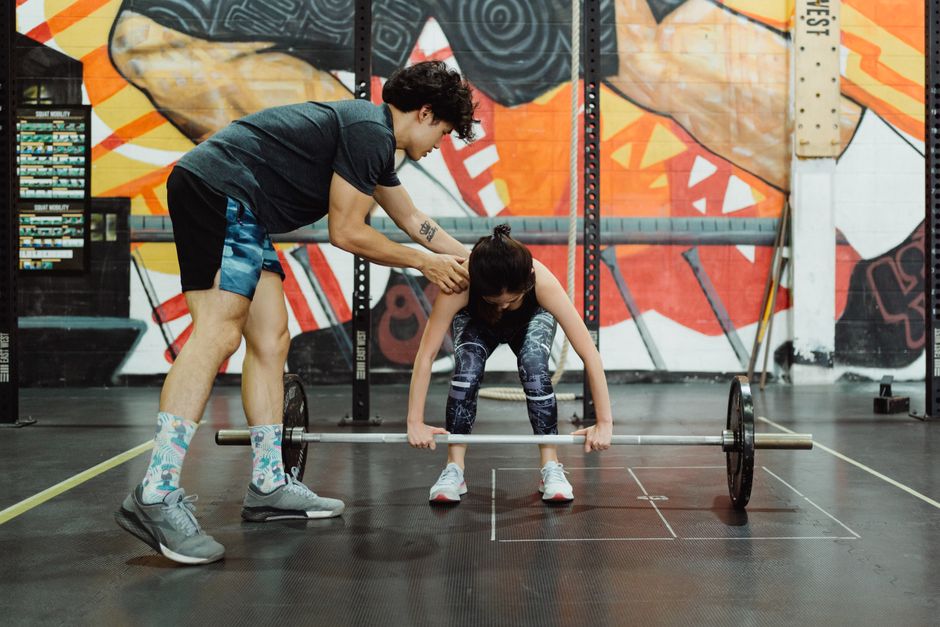
Saturday morning at the box: a dozen kids with PVC pipes, a coach calling out “chest up, knees out”, a relay race with medicine balls and a lot of laughing. Across the gym, a 15-year-old is practicing double-unders for her first Open in the 14–15 division while her dad tries to keep up in the next lane. Youth CrossFit can be a great way for kids to learn to move well, get strong and love training. It works best with the right coaching, the right scaling and parents who know what to look for. This page covers CrossFit Kids and teens, what pediatricians say about strength training, the teen divisions and HYROX’s kids’ races, and the questions parents ask most.
What CrossFit Kids is
CrossFit Kids is CrossFit’s program for children and teens, taught at affiliates and some schools. CrossFit groups kids into four bands: preschool (3–5), kids (5–12), preteens (10–12) and teens (12–18), with programming “tailored to and delivered in an age-appropriate manner”. Classes usually include a warm-up, a short workout and games, in short segments that fit kids’ attention spans.
The priorities are fun and good mechanics, not intensity. CrossFit says all lifts are practiced with no load or light loads until mechanics and consistency are observed, and that with children there are five to seven years before intensity needs to be pushed. The program also stresses careful attention to detail from coaches and open communication between parents and coaches. Coaches can take the CrossFit Kids Certificate Course, a two-day course (in person or as a live webinar) on teaching ages 3 to 17.
What pediatricians say about strength training
The American Academy of Pediatrics (AAP) supports resistance training for children and teens when it’s supervised and focused on technique; its 2020 clinical report found gains with two or three sessions a week for at least eight weeks. AAP’s guidance for families, on HealthyChildren.org, lays out what a good program looks like:
- Qualified supervision: a certified instructor and a coach-to-student ratio of 1 to 10 or less.
- Readiness: AAP notes that balance and postural control are generally developed around age 7 or 8.
- Dose: 2–3 times a week, 20–30 minutes, with at least 10 minutes of warm-up and cool-down.
- Technique first: practice each lift without weight first; then 2–3 sets of 8–15 reps, working all the major muscle groups including the core.
- Progress slowly: raise the weight by no more than 10% a week.
- No maximal lifts (1-rep maxes) until the skeleton is mature, and stop if anything hurts.
That last point matters in CrossFit, where “find your 1-rep max” is a common adult workout. A good kids’ or teen class won’t do it. Ask the coach how they handle heavy days for younger athletes.
Scaling and supervision: a parent’s checklist
- A kids’ or teen class, not a 10-year-old dropped into the adult 6 p.m. WOD.
- Small groups and a coach who is watching every rep, not just running a clock.
- Scaling by default: PVC pipes, light dumbbells, ring rows, step-ups. Loads go up only when movement is consistent.
- Short, playful workouts rather than long grinders. Kids shouldn’t finish every class flat on the floor.
- Water breaks and a cool space. More on heat below.
- Other sports too. The AAP advises delaying single-sport specialization until about age 15 or 16. CrossFit works well as strength and conditioning alongside soccer, swimming or basketball; see our youth soccer page for the same advice in a team sport.
Teens in competition: the Open and HYROX Youngstars
The CrossFit Open has boys’ and girls’ divisions for 14–15 and 16–17. For the 2026 season, athletes had to be at least 13 to create an account and 14 by July 14, 2026, and their age on that date set their division. Teens get their own version of each workout, with Scaled and Foundations options too, and the best qualify through later stages for the age-group finals held alongside the Games in San Jose. The rules are on our CrossFit rules page.
HYROX Youngstars are fitness races for ages 8 to 15, in age groups of 8–9, 10–11, 12–13 and 14–15. The stations follow the adult race, adapted for kids: at one 2026 event, for example, the sled push was 25 m, the youngest did frog jumps instead of burpee broad jumps, and kids under 12 did squats instead of wall balls. A 25-minute warm-up is mandatory, and each child must come with the registered parent or guardian, who collects them at the finish. More on HYROX on our CrossFit leagues and associations page.
Keeping young athletes safe
Heat: the EPA notes that about 9,000 US high school athletes are treated for heat-related illness each year, and NATA recommends easing into hot conditions over 7 to 14 days. Many boxes have no air conditioning, so summer classes need extra water breaks. Call 911 for confusion, collapse or hot skin.
Head knocks: falls from boxes or rings can happen. Under the CDC’s HEADS UP advice, a child with concussion signs (dazed, headache, dizziness, balance problems) stops right away, sits out the rest of the day and returns only when a healthcare provider clears them. When in doubt, sit them out.
Too much, too soon: exertional rhabdomyolysis is rare, but it’s the reason not to let a teen go from nothing to a 300-rep workout. MedlinePlus lists severe exertion, heat and dehydration among its causes and dark, red or cola-colored urine and severe muscle pain or weakness among its symptoms. Get medical care the same day if you see them.
Sleep: the CDC recommends 9–12 hours for ages 6–12 and 8–10 hours for teens. For pain that lasts, a joint that swells or any worry, see a pediatrician, sports medicine doctor, physical therapist or athletic trainer. Our CrossFit injuries page has the details.
What kids need to bring
Not much. Comfortable clothes, flat-soled athletic shoes, a labeled water bottle like the Nalgene Sustain 32 oz (about $16), and for older kids working on double-unders, an adjustable speed rope like the WOD Nation Jump Rope (about $19), which can be shortened as they learn. Leave the belts, sleeves and heavy wraps for later; teens who lift seriously can find them in our CrossFit gear guide.
WOD Nation Jump Rope
- Adjustable length
- Alloy steel cable
- About $19
Back to the CrossFit hub, or see CrossFit training, nutrition and supplements (teens: food first) and our CrossFit recovery routine.
Parents’ questions about youth CrossFit
What age can kids start CrossFit?
CrossFit Kids has classes from preschool (ages 3–5) up, built around play and basic movement. For structured strength training, the AAP notes that balance and postural control are generally developed around age 7 or 8, and stresses qualified supervision.
Is lifting weights safe for kids?
The AAP supports supervised, technique-focused resistance training for children and teens. Its guidance: a qualified coach (1 to 10 or fewer kids), 2–3 sessions a week, lifts learned without weight first, 2–3 sets of 8–15 reps, loads raised by no more than 10% a week and no maximal lifts until the skeleton is mature.
Can my teenager do the CrossFit Open?
Yes, from age 14 (for 2026, 14 by July 14 and at least 13 to create an account). Teens compete in 14–15 and 16–17 divisions with their own workout versions and scaled options. Many gyms run Open nights where teens can be judged alongside adults.
Is CrossFit good for kids who play other sports?
It can be a good way to build strength, coordination and fitness, as long as the total load stays sensible. The AAP recommends delaying specialization in one sport until about 15 or 16, so CrossFit as a second activity fits that advice. Watch for tiredness, falling grades or nagging pain, and cut back if they show up.
What should I look for in a kids’ CrossFit coach?
Training in teaching children (such as the CrossFit Kids course), small groups, light loads and lots of coaching cues, fun games, water breaks, and a coach who talks to you about your child’s progress and any pain. If a coach pushes kids to max out or to train through pain, find another class.