This article contains affiliate links: if you buy through them we may earn a commission, at no extra cost to you. Learn more.
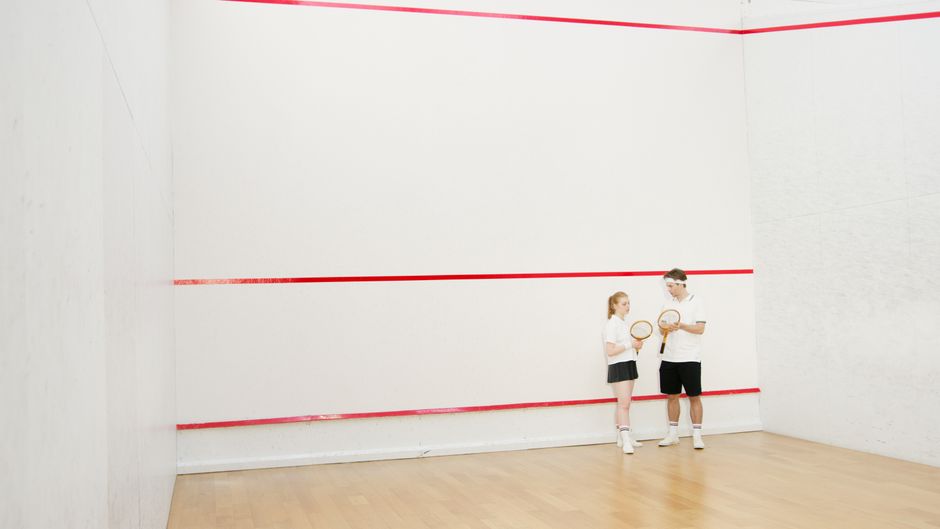
Tuesday night box league at the club: the glass-back court is booked solid, the ball is still warming up in the back corner, and the newest player in the ladder is on a borrowed racket with a grip worn smooth. Two weeks later they ask the group chat which racket to buy. This guide answers that: the best squash rackets in 2026, from a first squash racket for beginners to a club-level carbon frame and two junior rackets, with weight, balance, head size and eyewear explained in plain words.

Prices change often. The prices below are what we saw on Amazon in October 2026; check the current price before you buy.
Our top picks
HEAD Nano Ti 110
- 110 g, head heavy
- 500 sq cm head
- Titanium frame, carbon shaft
Dunlop Tristorm Pro
- 170 g unstrung
- Head-light, teardrop
- Aluminum
HEAD Extreme 145
- 145 g, head-light
- 495 sq cm teardrop
- Graphite, pre-strung
Tecnifibre Carboflex X-TOP V2 125
- 125 g
- 500 sq cm, 350 mm balance
- Dynamix VP strings
Dunlop FX125 Pro Lite
- 125 g unstrung
- 500 sq cm head
- Carbon, Sonic Core foam
Harrow Junior 130
- 25-inch frame
- 130 g, even balance
- Graphite
Dunlop Junior (22 in)
- 22-inch frame
- 180 g, head-light
- Alloy, 500 sq cm
Squash rackets compared
| Racket | Weight | Balance | Head size | Frame | About (Oct 2026) |
|---|---|---|---|---|---|
| HEAD Nano Ti 110 | 110 g | Head heavy | 500 sq cm | Titanium / carbon shaft | $110 |
| Dunlop Tristorm Pro | 170 g unstrung | Head-light | Teardrop (size not stated) | Aluminum | $67 |
| HEAD Extreme 145 | 145 g | Head-light | 495 sq cm | Graphite | $90 |
| Tecnifibre Carboflex X-TOP V2 125 | 125 g | 350 mm | 500 sq cm | Graphite, aramid | $200 |
| Dunlop FX125 Pro Lite | 125 g unstrung | Not stated | 500 sq cm | Carbon fiber | $160 |
| Harrow Junior 130 | 130 g | Even (305 mm) | Open throat | Graphite, 25 in | $55 |
| Dunlop Junior 22″ | 180 g | Head-light | 500 sq cm | Alloy, 22 in | $43 |
The best squash rackets in 2026
1. HEAD Nano Ti 110: best all-round racket
It’s a racket you’ll spot in a lot of club bags. The Nano Ti 110 was among the top sellers in Amazon’s squash rackets list when we looked: 110 grams, head heavy, with a full 500 square centimeter (77.5 sq in) head, a titanium frame and a carbon fiber shaft. Light overall but with the weight up top, it gives newer players some free power on drives without feeling like a club in the hand.
- Good: very light; easy length to the back of the court; a big, forgiving head; fairly priced.
- Watch out: head-heavy frames are a touch slower in quick volley exchanges; the listing doesn’t state the string pattern or factory string.
- Best for: beginners who play weekly, returning players and most club and league players.
Check the HEAD Nano Ti 110 price on Amazon
2. Dunlop Tristorm Pro: best budget racket for beginners
For your first few months on court, an affordable aluminum frame is fine, and the Tristorm Pro is one of the better ones. Dunlop lists a 170-gram unstrung frame, a head-light balance that it says improves maneuverability and reduces fatigue, and a teardrop shape with longer main strings for more rebound. The listing calls it an entry-level racket for beginners and recreational players.
- Good: low price from a big squash brand; head-light and easy to swing; teardrop power for short swings.
- Watch out: at 170 g it’s heavier than graphite frames; aluminum frames feel less lively than graphite.
- Best for: first-timers, gym and rec-center players, and a spare racket for friends.
Check the Dunlop Tristorm Pro price on Amazon
3. HEAD Extreme 145: most stable starter racket
The Extreme 145 is a graphite step up from aluminum that still welcomes beginners. HEAD calls the 145-gram frame the heaviest in its power series, for stability and control for beginning club players, and pairs it with a 495 sq cm oversized teardrop head, a head-light balance and longer main strings for a stronger trampoline effect. It comes pre-strung, and HEAD says its Innegra fibers add shock absorption.
- Good: solid and stable on blocks and drops; big sweet spot; ready to play out of the box.
- Watch out: 145 g is heavy next to the 110 to 125 g frames here; “shock absorption” is the maker’s claim. Lighter 120 and 135 g versions sit on the same listing.
- Best for: new club players who want graphite and a racket that feels steady in the hand.
Check the HEAD Extreme 145 price on Amazon
4. Tecnifibre Carboflex X-TOP V2 125: best for club and league players
The Carboflex line has been on the pro tour since 2004, and the X-TOP V2 is the current version. The 125-gram model lists a 500 sq cm head, a 350 mm balance point, Tecnifibre’s SpeedShaft and a factory string job in Dynamix VP, the brand’s premium squash string. Tecnifibre says aramid fibers at the top of the frame add shock resistance, and a PTFE coating helps the frame slide off walls and floor. The same listing has 120, 130 and 135 g versions and a 125 NS with a smaller grip.
- Good: a racket you won’t outgrow; premium strings already in; four weights to pick from.
- Watch out: about $200; stock was limited when we looked; more than a true beginner needs.
- Best for: intermediate players in leagues and ladders, and strong juniors moving to adult frames.
Check the Tecnifibre Carboflex X-TOP V2 price on Amazon
5. Dunlop FX125 Pro Lite: lightest adult frame
Dunlop’s FX125 Pro Lite is a 125-gram (unstrung) carbon fiber frame with a full 500 sq cm head, which the listing says gives a large sweet spot for forgiveness and power. Dunlop builds Sonic Core Infinergy foam into the frame and a Flex Touch resin into the throat, both aimed at feel and less vibration, and pitches the racket at intermediate to advanced players who want power with quick handling.
- Good: very light and fast at the front of the court; big head for its weight.
- Watch out: about $160 and only a few in stock when we looked; balance isn’t stated; the vibration claims are the maker’s.
- Best for: improving players who volley a lot and want a quick, light frame.
Check the Dunlop FX125 Pro Lite price on Amazon
6. Harrow Junior 130: best for older juniors
Once a child outgrows a short alloy racket but isn’t ready for a full 27-inch frame, a 25-inch graphite junior bridges the gap. Harrow’s Junior 130 is made from high modulus graphite, weighs 130 grams, and has an even balance (305 mm) and a forgiving open-throat head, according to the listing. It comes in two color schemes.
- Good: real graphite at a junior price; light and balanced for learning technique.
- Watch out: the listing gives no age range; check the child’s height and reach with a coach.
- Best for: juniors in clinics and their first US Squash junior tournaments.
Check the Harrow Junior 130 price on Amazon
7. Dunlop Junior 22″: best for ages 5 to 7
Small kids need a short racket they can actually control. Dunlop’s junior frame is 22 inches long, made of alloy, weighs 180 grams with a head-light balance and keeps a full 500 sq cm head, and Dunlop calls it an ideal first racket for ages 5 to 7. A 23.5-inch version for ages 7 to 10 is on the same listing.
- Good: right length for little arms; tough alloy for a first season; inexpensive.
- Watch out: kids grow out of it fast; pair it with a slow, bouncy mini squash ball.
- Best for: young beginners in after-school or club mini squash.
Check the Dunlop Junior squash racket price on Amazon
How to choose a squash racket
- Weight: World Squash allows up to 255 grams, but the adult rackets we looked at run from 110 to 170 grams. Lighter frames are quicker and easier on the arm over a long match; heavier frames feel more stable and need less effort to drive the ball deep. Graphite frames usually sit around 110 to 145 g; aluminum starter frames are heavier.
- Balance: head-heavy rackets (like the Nano Ti 110) add power to each swing; head-light rackets (Tristorm, Extreme) are easier to whip around at the front of the court. Some makers give balance in millimeters from the handle end, such as 350 mm or 305 mm; a higher number puts more weight toward the head.
- Head size and shape: the rules cap the strung area at 500 sq cm, and most adult rackets use all of it. Teardrop heads (the Tristorm and Extreme) have longer main strings for more rebound; many players find traditional heads a little more controlled.
- Junior rackets: go by size, not age alone. Short alloy frames (about 22 to 23.5 inches) suit ages 5 to 10; 25-inch graphite juniors bridge to the full 27-inch (686 mm) adult length. Older kids often move to a light adult frame; the Tecnifibre Carboflex Junior (about $100) is a step-up junior option.
- Grip and strings: a fresh overgrip changes the feel more than you’d think, so replace it often. Most rackets come pre-strung; restring when the strings go dull or one breaks.
- Budget: about $45 to $70 gets a decent aluminum starter; about $90 to $110 a forgiving graphite racket like the Extreme or Nano Ti; $160 to $200 a club-level carbon frame.
Buy protective eyewear with the racket
The American Academy of Ophthalmology and the American Academy of Pediatrics rate squash as a high-risk sport for eye injuries and recommend polycarbonate eyewear that meets ASTM F803; regular glasses don’t count. A 2023 systematic review found that lensless eye guards didn’t work in squash because the ball deforms and gets through. US Squash requires eyewear meeting ASTM F3164 (or the older F803) for all players and coaches on court at accredited events, and World Squash requires it at junior and doubles events. The Dunlop Vision Protective Eyewear (about $20) states on its listing that it meets ASTM F803 and is WSF approved. Make sure eyewear fits snugly and replace it if it cracks.
A racket can’t prevent injuries. If an elbow, shoulder or wrist keeps hurting, see a sports medicine doctor, physical therapist or athletic trainer before you change equipment. For balls by dot color, court shoes and grips, see our squash gear list. Buying for a child? The junior squash guide covers mini squash, tournaments and eyewear rules, and squash injuries explains the calf, knee and eye problems the sport is known for. After a long tournament day, our best recovery shoes and best massage guns guides can help. Everything else is on the squash hub and in our squash blog.
Squash racket questions
What is the best squash racket for beginners?
A forgiving racket with a full-size head that isn’t too heavy. The HEAD Nano Ti 110 (about $110) is the popular all-round choice; on a tighter budget, the Dunlop Tristorm Pro (about $67) is a head-light aluminum starter, and the HEAD Extreme 145 (about $90) is a stable graphite option.
How heavy should a squash racket be?
Most graphite adult rackets weigh about 110 to 145 grams; the rules allow up to 255 g. Lighter is quicker and easier on the arm; heavier feels more solid. The Carboflex X-TOP V2, a club favorite, comes in 120, 125, 130 and 135 g versions.
Head-heavy or head-light?
Head-heavy if you want more easy power on drives from the back. Head-light if you volley a lot, play a fast game at the front, or tire late in matches. Even balance sits in between and suits most juniors.
What size squash racket does my child need?
Dunlop sizes its alloy juniors at 22 inches for ages 5 to 7 and 23.5 inches for ages 7 to 10. Older or taller juniors usually move to a 25-inch graphite junior like the Harrow Junior 130, then to a light adult racket. A club coach can check the fit in a few minutes.
Do I need goggles to play squash?
Yes, we’d always wear them. Eye doctors rate squash as high risk and recommend ASTM F803 polycarbonate eyewear, and US Squash requires ASTM F3164 or F803 eyewear at its accredited events. Juniors need it at every tournament.