This article contains affiliate links: if you buy through them we may earn a commission, at no extra cost to you. Learn more.
The first squash session usually goes like this: a borrowed racket, a ball that dies in the back corner, and running shoes that leave black streaks on the floor. A few smart buys fix all of that. Squash needs little squash equipment, but each piece matters: a racket that suits your swing, the right ball for your level (the dots aren’t decoration), eyewear that really protects, non-marking court shoes and a fresh grip. Here’s the squash gear list we’d put in a bag, plus the recovery kit for tournament weekends.
Buying guide · Our Squash buying guide compares the gear we'd pick, with prices and sizing:
Prices change often. The prices below are what we saw at the maker or a major retailer in October 2026; check the current price before you buy.
The quick checklist: a racket, a tube of balls for your level, protective eyewear (ASTM F3164 or F803), clean non-marking indoor court shoes, a spare grip, a towel, a big water bottle and something comfortable for your feet afterward.
Our top picks
Dunlop Vision Protective Squash Eyewear
- Meets ASTM F803, WSF approved (listing)
- Polycarbonate lenses
- Adjustable strap
HEAD Nano Ti 110 Squash Racket
- 110 g, head heavy
- 500 sq cm head
- Nano titanium frame
Tecnifibre Carboflex X-TOP (V2) 120
- 120 g
- 500 sq cm head
- Pre-strung, Dynamix VP
Dunlop Pro Double Yellow Dot Balls (12)
- Double yellow dot
- Lowest bounce
- Box of 12
Dunlop Competition Single Yellow (3)
- About 10% more hang time
- Intermediate and junior players
- 3-ball tube
Tourna Grip XL (15 pack)
- Dry feel, tackier with sweat
- 15 grips + finishing tape
- Made in the USA (maker)
OOFOS OOahh Slide
- OOfoam slide
- APMA Seal of Acceptance
- Machine washable
Squash rackets
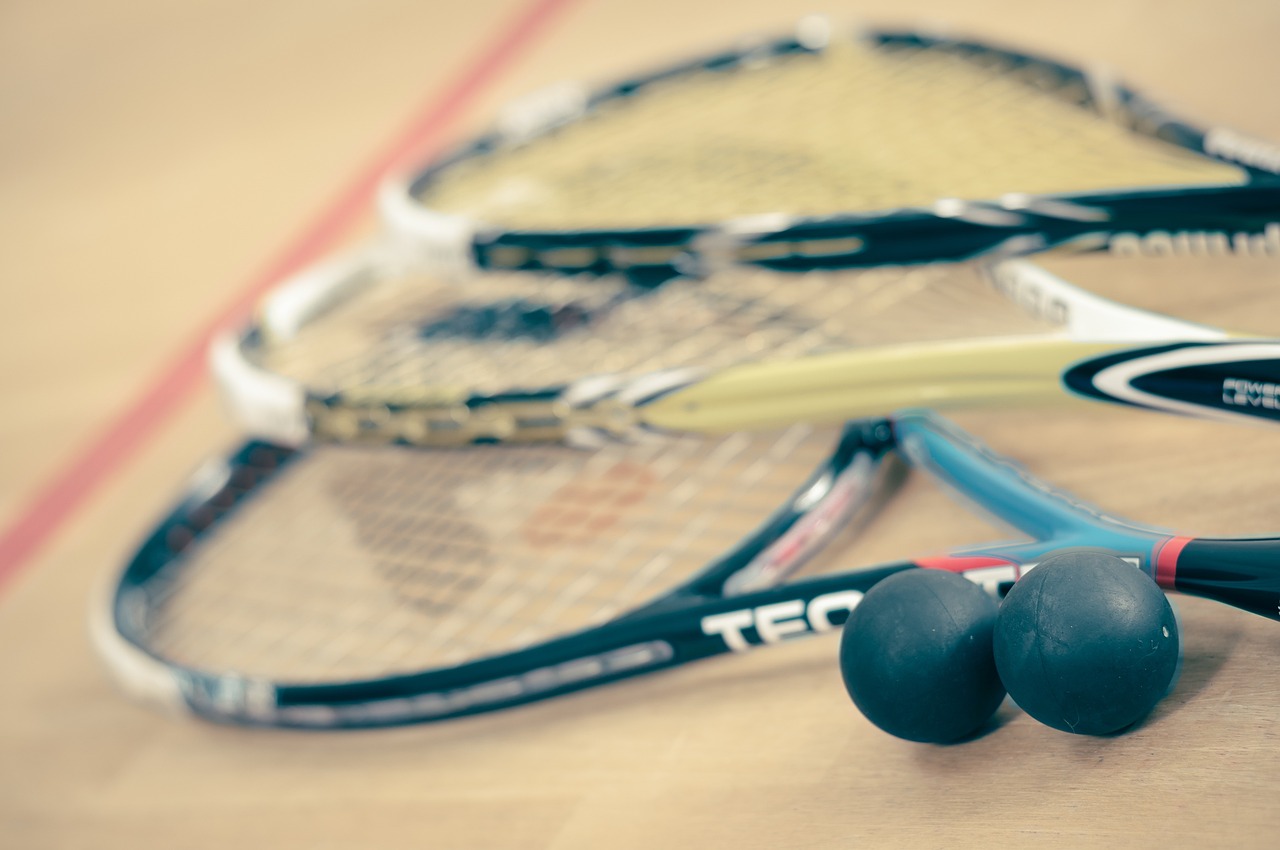
World Squash limits a racket to 686 mm (27 inches) long, 215 mm wide, a strung area of 500 square centimeters and a weight of 255 grams, with bumper strips that won’t mark the walls. Most adult rackets use the full 500 cm² head; the real choices are weight and balance. The rackets we looked at weigh about 110 to 135 grams. Lighter frames are quicker to swing and easier on the arm; head-heavy frames add power to each swing; even or head-light frames feel more maneuverable at the front of the court.
- HEAD Nano Ti 110: a top seller in Amazon’s squash rackets; 110 grams, head heavy, with a 500 cm² head and a nano-titanium frame. A forgiving all-round racket for beginners and club players (about $110).
- Tecnifibre Carboflex X-TOP (V2) 120: the lightest Carboflex, 120 grams, pre-strung with Tecnifibre’s Dynamix VP string; the X-TOP series also comes in 125, 130 and 135 grams (about $210).
- Kids: the Dunlop Fun Junior is a 22-inch, 180-gram alloy racket for ages 5 to 7 (about $43); the Tecnifibre Carboflex Junior suits older, serious juniors (about $100). See our junior squash guide.
Check the HEAD Nano Ti 110 price on Amazon
Squash balls by dot color
Squash balls have to be warmed up to bounce, and the colored dots tell you how lively they are. World Squash’s specification sets the standard ball at 40 mm and 24 grams; the double yellow dot is the one used at world championship level. The bouncier balls stay up longer (“hang time”), which gives beginners time to reach them and keeps rallies going in cold courts.
| Ball | Bounce | Best for |
|---|---|---|
| Double yellow dot (e.g. Dunlop Pro) | Lowest; the official standard for top play | Good club players, tournaments, pros |
| Single yellow dot (e.g. Dunlop Competition) | About 10% more hang time than the Pro | Intermediate players, rising juniors, cold courts |
| Red dot (e.g. Dunlop Progress) | About 20% more hang time; slightly bigger | Improving and recreational players |
| Blue dot (e.g. Dunlop Intro, formerly Max) | About 40% more hang time; bigger again | Adult beginners |
| Green dot | Made to play slower at high altitude | Courts at elevation |
| Mini squash balls (red, orange, no dots) | Big and very bouncy | Kids starting out |
Our picks: the Dunlop Pro double yellow (about $48 for 12), the Dunlop Competition single yellow (about $14 for a 3-ball tube; Dunlop is the official ball of the PSA World Tour) and, for brand-new adults, the Dunlop Intro (about $20, stock was low when we checked). If rallies keep dying in the back corners, drop down a dot.
Check the Dunlop Pro squash ball price on Amazon
Protective eyewear (ASTM F803 and F3164)
This is the most important thing you’ll buy. The American Academy of Ophthalmology rates squash as a high-risk sport for eye injuries and recommends polycarbonate eyewear that passes ASTM F803; street glasses don’t count. A 2023 systematic review found that lensless eye guards failed in squash because the ball deforms and gets through, while eyewear meeting updated ASTM or similar standards was linked with no eye injuries. US Squash requires eyewear meeting ASTM F3164 (or the legacy F803) for all players and coaches on court at its accredited events, and World Squash requires it at junior and doubles events, so juniors must have it.
- Dunlop Vision: clear polycarbonate lenses and an adjustable strap; the listing says it meets ASTM F803 and is World Squash approved (about $20).
- Tourna Clear Eye Protection: a light wraparound polycarbonate lens with a brow guard and anti-fog coating; the maker says it meets ASTM F803 (about $17).
- Dunlop Junior Protective Eyewear: sized for juniors, World Squash approved per the listing, with anti-fog lenses, a strap and a pouch (about $34). Check the packaging for the ASTM marking US tournaments require.
Whatever you buy, it must fit snugly, be worn as designed (no popped-out lenses) and be replaced if it cracks. If you wear glasses, look for goggles that take prescription lenses or fit over glasses and carry the right standard.
Check the Dunlop Vision eyewear price on Amazon
Non-marking court shoes
Clubs require clean, non-marking indoor court shoes, usually with gum-rubber soles, and many ask you not to wear your court shoes outside, because street dirt and black soles damage and mark the wooden floor. Running shoes are built for straight-line running; squash needs low, stable shoes that grip on lunges and side steps. Two indoor court shoes sold for squash: the HEAD Grid 2.0 Low (non-marking, about $80) and the Salming Eagle 2 (about $130). Sizes and stock change quickly, and fit is personal, so try them on with your playing socks. If you’ve sprained an ankle before, a lace-up brace like the ASO EVO fits inside a court shoe; see our ankle brace guide.
Grips
Squash is sweaty, and a slick handle costs you control. Many players keep a spare grip in the bag and rewrap as soon as the handle gets slick. The Tourna Grip XL starts with a dry feel and, the maker says, gets tackier as you sweat; the 15-pack comes with finishing tape (about $25). Change it when it looks shiny or feels slippery.
Recovery gear for the bag
Squash is hard on calves, quads, hips and knees. A foam roller like the TriggerPoint GRID 1.0 (about $40) works on legs and hips between matches; a small massage gun like the Theragun Mini (about $220) fits in a racket bag; a knee sleeve like the Bauerfeind GenuTrain gives some players a feeling of support; and recovery slides like the OOFOS OOahh (about $60) feel good after a long day on a hard floor. These are comfort tools, not treatment: if pain lasts more than a few days, see a sports medicine doctor, physical therapist or athletic trainer. Compare more in our foam rollers, massage guns, knee sleeves and recovery shoes guides.
Check the OOFOS OOahh Slide price on Amazon
Back to the squash hub, or see squash rules, junior squash and leagues and associations. Play other racket sports too? See our tennis gear and pickleball gear lists.
Squash gear questions
Which squash ball should I use?
Match the dot to your level. Beginners do best with a blue or red dot ball, club players with a single yellow, and good players with the double yellow, the standard for top play. If the ball dies before you can reach it, go one step bouncier.
What eyewear is required for squash?
At US Squash accredited events, eyewear meeting ASTM F3164, or the older ASTM F803, for all players and coaches on court. World Squash requires eyewear at junior and doubles events. Lensless guards and regular glasses don’t protect against a squash ball.
Can I play squash in running shoes?
It isn’t a good idea. Most clubs require non-marking indoor court shoes, and running shoes aren’t built for the lunges and side-to-side movement squash asks for. Keep a clean pair just for the court.
How heavy should a squash racket be?
The rules allow up to 255 grams, but most adult rackets we looked at weigh about 110 to 135 grams. Lighter is quicker and easier on the arm; heavier or head-heavy frames add power. Try a few before you buy if you can.
Why do squash balls have dots?
The dots show how much the ball bounces. Double yellow is the slowest and lowest-bouncing; single yellow, red and blue bounce progressively more and stay up longer, which helps players who are learning. A green dot ball is made for high altitude.