This article contains affiliate links: if you buy through them we may earn a commission, at no extra cost to you. Learn more.
The night before the first ski of the season: skis on the kitchen table, the waxing iron warming up, an argument about which kick wax to bring, and a pile of layers by the door because the forecast says 12°F at the trailhead and you’ll be sweating in ten minutes. Cross-country ski gear is simpler and cheaper than downhill gear, but it has its own logic: classic and skate need different skis, boots and poles, and boots and bindings have to match. Here’s the whole Nordic ski equipment list, by technique, with wax basics, layers and the recovery gear for afterward.
Buying guide · Our Cross-Country Skiing buying guide compares the gear we'd pick, with prices and sizing:
Prices change often. The prices below are what we saw at the maker or a major retailer in October 2026; check the current price before you buy.
The quick checklist: skis for your technique (classic, skate or touring), boots and bindings of the same system, poles sized for your technique, glide wax plus kick wax or a waxless grip zone, a wool or synthetic base layer, a light warm layer, a windproof jacket, a hat, gloves, socks, a water bottle that won’t freeze, and sunglasses or a headlamp depending on the hour.
Our top picks
Rossignol EVO XT 55 Positrack (Tour Step-in)
- Waxless kick and glide
- Short-size touring ski
- About $207
Whitewoods 302 NNN Touring Boots
- NNN binding system
- 100 g Thinsulate lining
- About $90
Whitewoods Cross Trail Nordic Ski Poles
- Sizes 120–160 cm
- Fiberglass-wrapped aluminum
- About $49
Swix Classic Kick Wax Kit (V40, V45, V55 + cork)
- Three hard kick waxes
- Cork included
- About $30
Swix F4 Universal Liquid Glide Wax
- All-temperature
- Wipe-on liquid, 100 ml
- About $19
Smartwool Classic Thermal Merino Base Layer Crew
- 100% merino wool
- Midweight
- About $100
Hyperice Normatec Go
- Calf compression sleeves
- 7 pressure levels
- About $379
PEET Original Boot Dryer
- Fanless, silent, 36 W
- Dries overnight
- About $50
Skis by technique
- Classic skis have a grip zone under the foot (the “kick zone”) and glide zones at the tips and tails. Waxable classic skis use kick wax in the grip zone; racers like them because the wax can be matched to the day. Waxless classic skis get grip from a fishscale pattern or a strip of “skin” (mohair or similar), with almost no upkeep, and retailers suggest them for most beginners.
- Skate skis are shorter and stiffer, with no grip zone: only glide wax.
- Touring and backcountry skis are wider and sturdier for off-track and ungroomed snow, and some have steel edges for control.
Sizing: unlike alpine skis, Nordic skis are sized mostly by your weight, because their stiffness (flex) decides how they work under you. A classic ski has to be stiff enough to glide on its tips and tails, yet soft enough that your kick presses the grip zone into the snow. Specialty shop Gear West lists skate skis in 5 cm steps from 171 to 191 cm and classic skis from 181 to 206 cm, with classic about 10 cm longer for the same skier, and recommends a shop fitting rather than a chart alone.
For new skiers who want to get on the trails without waxing, the Rossignol EVO XT 55 Positrack is a waxless touring ski with Rossignol’s Positrack grip base, a short-size design the maker says adds control and ease of use, a light wood core and a Tour Step-in binding (about $207). Check that your boots match the binding before you buy.
Check the Rossignol EVO XT 55 Positrack price on Amazon
Boots and bindings: make sure they match
Boots by technique, from retailer Ski Rack’s guide:
- Classic boots: light, a narrower fit and a sole that flexes at the toe.
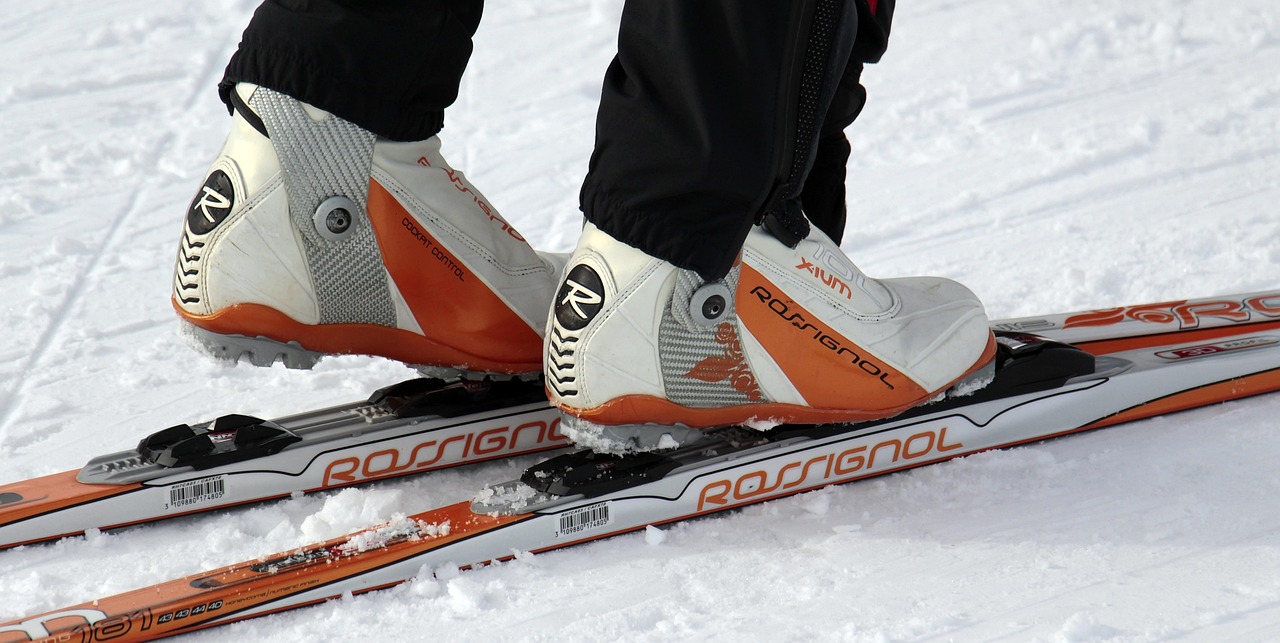
- Skate boots: a light, snug fit with a sturdy, supportive cuff around the ankle; usually the most expensive.
- Combi boots: a skate-style cuff with a classic-style flexing sole, for skiers who do both.
- Touring and backcountry boots: touring boots feel more like running shoes; backcountry boots are more like hiking boots, with ankle support.
Binding systems: the boot sole and the binding have to be the same system. NNN, Prolink and Turnamic boots and bindings are interchangeable (Salomon’s NNN-type boots are sold as Prolink). SNS (Salomon Nordic System, Pilot and older Profil) is a separate system. You can tell by the sole: NNN has two thin, shallow grooves; SNS Pilot has two bars. Wide backcountry skis may use 3-pin bindings. Race bindings come in classic and skate versions with a softer or stiffer flex bumper. Try boots on with your ski socks: snug but not tight, with room for your toes and little heel movement.
For cold-weather touring, the Whitewoods 302 NNN boots have a weatherproof upper with a Dintex membrane, 100 grams of Thinsulate insulation, a steel shank and a removable footbed, and work with standard NNN bindings (about $90).
Check the Whitewoods 302 NNN boots price on Amazon
Poles: sizing for classic and skate
- Classic: Fischer’s formula is your height in centimeters × 0.84; the grip comes to about your shoulder.
- Skate: height × 0.89; the poles reach about 10 cm above the shoulder.
- Beginners: round down, and don’t go above shoulder height for classic.
- Kids: sturdy adjustable poles can last several seasons as they grow.
- Racers: in FIS classic races, poles may be no longer than 83% of your height in ski boots (100% in skate). See our racing rules page.
For a 170 cm (5’7″) skier, that works out to about 143 cm for classic and 151 cm for skate. The Whitewoods Cross Trail is a budget touring pole with a fiberglass-wrapped 15 mm aluminum shaft, ergonomic grips and padded adjustable straps, in 5 cm steps from 120 to 160 cm (about $49).
Check the Whitewoods Cross Trail poles price on Amazon
Wax basics: glide, kick and klister
- Glide wax goes on the tips and tails of classic skis and the whole base of skate skis, to cut drag. It can be ironed in for the best result or applied as a rub-on or liquid for a quick job.
- Kick (grip) wax goes in the kick zone under your foot on waxable classic skis. It’s chosen by snow temperature: the colder the snow, the harder the wax. Crayon it on in thin layers and smooth each one with a cork.
- Klister is a sticky, tube-applied grip wax for icy, old or wet snow where hard wax won’t grip.
- Waxless skis need little more than glide wax on the tips and tails and a wipe-on treatment on the grip zone to keep snow from icing up.
- No fluoro: fluorinated waxes are banned in FIS competition at every level, and Swix has stopped selling them to the public.
A simple starter kit covers most cold days. The Swix classic kick wax kit has three hard waxes and a cork: according to Swix, V40 Blue Extra is for about −7 to −1°C, V45 Violet Special for −3 to 0°C and V55 Red Special for 0 to +1°C (about $30). For glide, Swix F4 Universal liquid glide wax is an all-temperature wipe-on for skis and snowboards (about $19 for 100 ml). Ski Rack also suggests a professional shop waxing about once a year to keep bases healthy.
Check the Swix kick wax kit price on Amazon
Layers: dress to sweat
Cross-country skiing is hard work, so you’ll dress lighter than for a chairlift, and the trick is managing sweat. AAOS recommends several layers of light, loose, water- and wind-resistant clothing for skiing, and the AAP recommends several thin layers for kids.
- Base layer: wool or synthetic, never cotton, which holds sweat against your skin. The Smartwool Classic Thermal Merino crew is a midweight, 100% merino top with flatlock seams (about $100).
- Middle and outer: a light fleece or vest and a windproof, breathable jacket you can unzip on the climbs. Pack an extra warm layer for stops.
- Extremities: a thin hat or headband, light gloves (and warmer mittens on cold days), one pair of wool socks such as Darn Tough Solstice lightweight ski socks (about $29), and a buff or gaiter for your face on windy days.
- Eyes and dark: sunglasses on bright days (the WHO notes fresh snow can reflect up to 80% of UV), and a headlamp like the Black Diamond Spot 400 (400 lumens, about $50) for evening skis.
Recovery gear for after the ski
A long classic ski works the arms, back and core as much as the legs, and a skate session leaves hips and calves tight. Many skiers like Hyperice Normatec Go calf compression sleeves (seven pressure levels, about $379; see our compression boots guide), a compact massage gun like the Hypervolt Go 3 for shoulders, lats and calves (1.6 lb, about $149; massage gun guide), a TriggerPoint GRID 1.0 foam roller (about $40), and OOFOS OOahh slides after a day in ski boots (recovery shoes guide). A PEET boot dryer (fanless, 36 W, about $50) means warm, dry boots the next morning. These are comfort tools, not treatment; pain that lingers needs a sports medicine doctor or physical therapist. More on our recovery page.
Check the Hyperice Normatec Go price on Amazon
Back to the cross-country skiing hub, gear for kids on our youth page, or the downhill version on our ski gear page. For a heart rate watch, see best wearables for cross-country skiing.
Cross-country ski gear questions
Should a beginner buy waxable or waxless skis?
For most beginners, waxless classic or touring skis: fishscale or skin bases grip without kick wax and need very little care. Waxable skis can grip and glide better when waxed right for the day, which is why racers use them.
How long should cross-country skis be?
It depends mostly on your weight, because the ski’s flex has to match you. As a rough idea, classic skis run about 10 cm longer than skate skis for the same person. A shop fitting is the best way to get it right.
How long should cross-country ski poles be?
Fischer’s rule of thumb: height in centimeters × 0.84 for classic (about shoulder height) and × 0.89 for skate. Beginners should round down.
Are NNN and SNS bindings compatible?
No. NNN, Prolink and Turnamic boots and bindings work together, but SNS is a separate system. Check the boot sole: NNN has two thin grooves, SNS Pilot has two bars.
Which kick wax should I use?
Match it to the snow temperature: harder waxes for colder snow, softer ones near freezing, and klister for icy or wet snow. Swix’s V40, V45 and V55, for example, cover roughly −7°C to +1°C between them.