This article contains affiliate links: if you buy through them we may earn a commission, at no extra cost to you. Learn more.
The night before the first ski day of the season: boots warming by the heater, goggles in their bag, base layers laid out on the bed, and a quick trip to the shop to get the bindings checked. Skiing is a gear sport, and it’s easy to spend a lot. But the ski gear that matters most for safety and comfort is simpler: a helmet that fits, boots that fit, bindings set by a pro, goggles for every kind of light, and layers that keep you dry. Here’s that ski equipment list, with how to choose each piece, plus the recovery gear for the evening.
Buying guide · Our Skiing buying guide compares the gear we'd pick, with prices and sizing:
Prices change often. The prices below are what we saw at the maker or a major retailer in October 2026; check the current price before you buy.
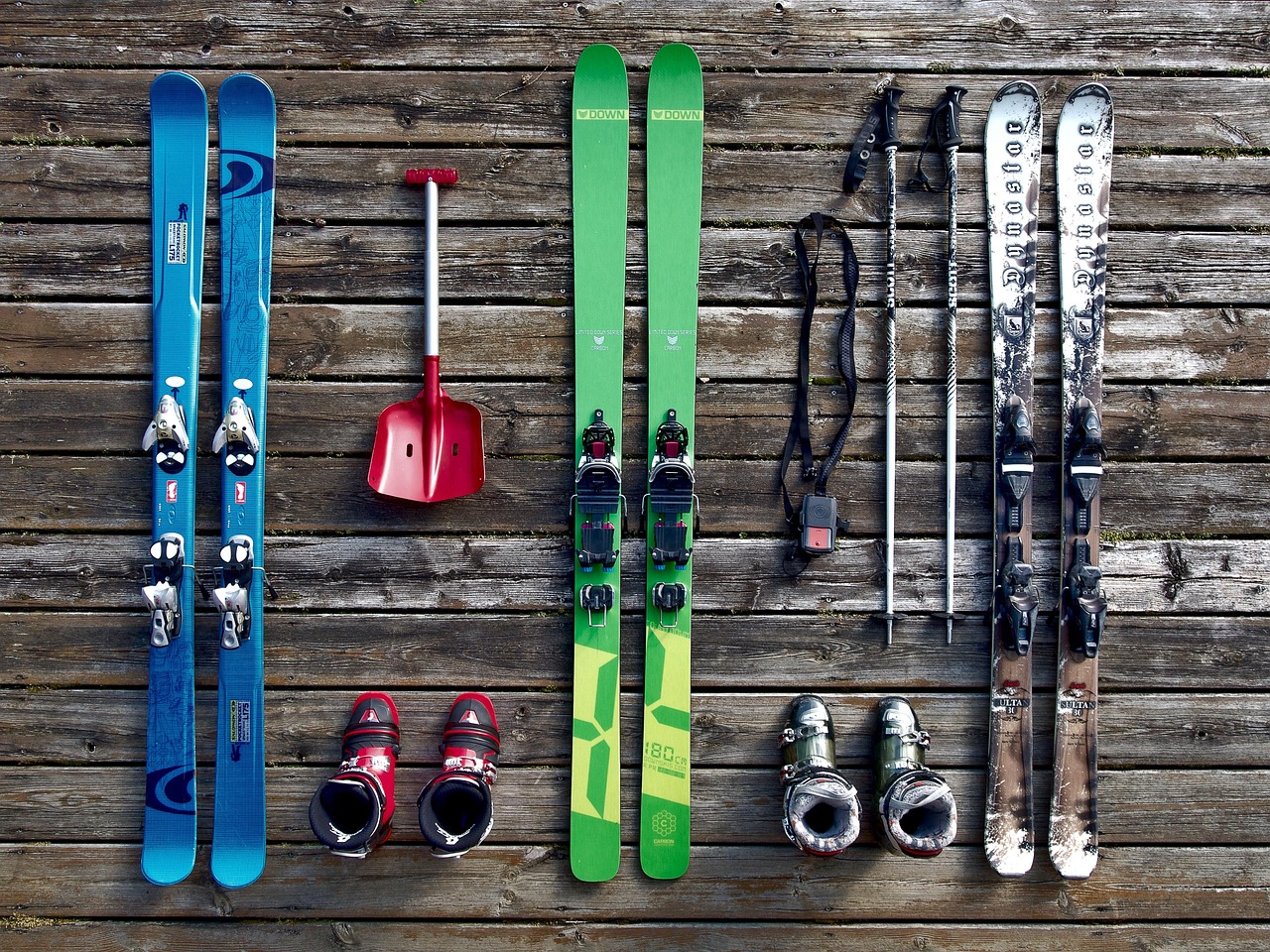
The quick checklist: a ski helmet (ASTM F2040 or EN 1077), boots and bindings set and tested by a ski shop, skis sized for your ability, goggles with UV protection, a synthetic or wool base layer, a warm mid layer, a waterproof shell, thin ski socks, gloves or mittens, sunscreen and a water bottle. The American Academy of Orthopaedic Surgeons (AAOS) sums up clothing as several layers of light, loose, water- and wind-resistant clothes.
Our top picks
Smith Mission MIPS Helmet
- ASTM F2040 + EN 1077 (maker)
- MIPS, 14 adjustable vents
- About $85 to $120
Smith Glide Jr. MIPS Youth Helmet
- ASTM F2040 + EN 1077 (maker)
- MIPS liner, dial fit
- About $110
Smith Squad Goggles (ChromaPop)
- Cylindrical ChromaPop lens
- Anti-fog coating
- About $120
Smartwool Classic Thermal Merino Base Layer Crew
- 100% merino wool
- Midweight, slim fit
- About $100 to $115
Darn Tough Solstice OTC Lightweight Ski Sock
- Over the calf, lightweight
- Knit in Vermont
- About $29
PEET Original Boot Dryer
- Fanless, silent, 36 W
- Dries overnight
- About $50
Hyperice Normatec Go
- Calf compression sleeves
- 7 pressure levels
- About $379
Hypervolt Go 3
- 1.6 lb, 5 speeds
- Up to 4 h battery
- About $149
Helmets: ASTM F2040, fit and MIPS
Helmets are the norm now: the National Ski Areas Association (NSAA) counted 91% of U.S. skiers and snowboarders wearing one in 2024/25. A 2010 meta-analysis of 12 studies found that helmet wearers were significantly less likely to have a head injury, with no increase in neck injuries. How to choose one:
- A snow-sports certification. ASTM F2040 is the US specification for helmets used in non-motorized recreational snow sports such as skiing and snowboarding; EN 1077 is the European standard. AAOS says to wear a ski-specific helmet, not a bike helmet. ASTM itself notes that the protection is limited and helps most at slower speeds.
- Fit. Measure around your head about an inch above the eyebrows and ears and match the size chart. It should be snug without pressure points, and the skin of your forehead should move with the helmet when you rock it.
- Goggle match. No gap between the top of the goggles and the helmet, and goggle vents that line up with the helmet’s so the lens doesn’t fog.
- MIPS and rotational protection. MIPS is a low-friction layer inside the helmet that makers include for rotational impacts. Treat it as a bonus, not a reason to ski faster.
- Replace it after an impact that compresses the foam, and many experts suggest every 3–5 years of use as materials break down.
The Smith Mission MIPS is a lightweight all-rounder that Smith says is certified to ASTM F2040, EN 1077 and CPSC, with zonal Koroyd, 14 vents you can adjust with one hand and a dial fit (about $85 to $120 depending on color and size). For kids, the Smith Glide Jr. MIPS has Smith’s widest youth size range, ASTM F2040 and EN 1077 certification and a MIPS liner (about $110). More for families in our kids skiing guide.
Check the Smith Mission MIPS price on Amazon
Ski boots and boot fitting
Boots are where comfort and control start, and the place most worth spending on a good fitter. The basics from retailer evo’s boot fitting guide:
- Mondopoint sizing: boots are sized by foot length in centimeters, measured from heel to longest toe while standing.
- Shell fit: with the liner out and toes touching the front, about one to one-and-a-half fingers (15–22 mm) behind the heel is considered a good performance fit.
- Snug, not painful: no cut-off circulation or hot spots. Beginners can go with their measured size or slightly longer; experts often go smaller, with a fitter’s help.
- Thin socks: extra sock thickness between foot and shell takes away control and response, so wear one thin pair of ski socks.
- Try them at home for a few hours before the mountain.
A boot dryer is the small luxury skiers swear by. The PEET Original uses gentle convection with no fan and, the maker says, dries most footwear overnight on 36 watts; add-ons for helmets and gloves are sold separately (about $50).
Check the PEET Original boot dryer price on Amazon
Bindings and release settings: leave it to the shop
Bindings hold your boot to the ski and are designed to release in a fall. The release force is set on a scale often called “DIN,” set from your weight, height, ability and boot sole length using charts based on the international standard ISO 11088. Set too high, a binding may not let go when it should; set too low, it can release when you don’t want it to. That’s why AAOS says boots and bindings should be set, adjusted, maintained and tested by a ski shop that follows ASTM standards, and evo’s guide says plainly not to set your own. The AAP adds that kids’ bindings should be adjusted at least every year.
Be honest with the technician about your weight and ability. Knee injuries, especially to the ACL, are the most common skiing injury, and researchers have found that failure of the binding to release in a knee injury is more common among women; in one small lab study, more women could release their bindings themselves when the setting was lowered by 15%, an option ISO 11088 allows on request. Talk it through with the shop rather than adjusting anything yourself. More on knees on our skiing injuries page.
Skis: length, width and shape
- Length: usually somewhere between your chin and the top of your head; beginners at the shorter end, advanced skiers longer for stability.
- Waist width: narrow skis (under about 80 mm) switch edges quickly on groomed runs; mid-width (about 90–109 mm) are all-mountain; wide skis (over about 120 mm) float in powder.
- Profile: traditional camber grips on hard snow; rocker in the tip (and tail) makes turns easier to start. Rocker-camber-rocker is the most popular all-mountain shape.
If you ski only a few days a year, renting or demoing lets you try different skis, and the rental shop sets the bindings for you.
Goggles and sun protection
The World Health Organization notes that fresh snow can reflect up to 80% of UV radiation and that skiers at altitude can get snow blindness, a painful burn of the eye’s surface. AAOS lists goggles as standard ski gear. When you choose:
- Lens tint (VLT): for bright sun, dark lenses that let through about 5–20% of visible light; for flat light and snow, light lenses (yellow, rose) at about 60–90%. Many skiers carry a second lens.
- UV protection: nearly all modern ski goggles block 100% of UV, but check.
- Helmet fit: frame size that matches your helmet, vents that aren’t blocked.
Smith Squad goggles have a semi-rimless frame, an oversized cylindrical ChromaPop lens for contrast, Smith’s anti-fog treatment and a silicone-backed strap (about $120). For kids, Giro Rev youth goggles match Giro’s youth helmets (about $30). Add sunscreen and lip balm for every exposed patch of skin.
Check the Smith Squad goggles price on Amazon
Layers, socks and warm hands
- Base layer: synthetic or wool, never cotton, which holds sweat against your skin.
- Mid layer: fleece or a light puffy (down or synthetic) that you can swap as the day warms up.
- Shell: a waterproof, breathable jacket and pants; evo suggests waterproof and breathability ratings between about 10k and 30k.
- Socks: one thin, moisture-wicking pair of ski socks that fits snugly without bunching.
The Smartwool Classic Thermal Merino Base Layer Crew is a midweight, 100% merino top with flatlock seams (about $100 to $115). Darn Tough Solstice OTC lightweight ski socks are knit in Vermont and carry the brand’s lifetime guarantee (about $29). On the coldest days, HotHands hand warmers give up to 10 hours of heat each (about $25 for 40 pairs). The AAP reminds parents that fingers, toes, ears and noses are most at risk of frostbite.
Check the Smartwool Classic Thermal base layer price on Amazon
Recovery gear for the ski trip
After a day of bumps and long groomers, quads and calves are what most skiers feel. Many pack Hyperice Normatec Go calf compression sleeves for the evening (seven pressure levels, about $379; see our compression boots guide), a small massage gun like the Hypervolt Go 3 (1.6 lb, up to 4 hours of battery, about $149; see our massage gun guide), a TriggerPoint GRID 1.0 foam roller (about $40; foam roller guide), and OOFOS OOahh slides to wear after a day in stiff boots (recovery shoes guide). These are comfort tools, not treatment; a swollen knee or pain that lingers needs a professional. More on our skiing recovery page.
Check the Hyperice Normatec Go price on Amazon
Back to the skiing hub, read the skier responsibility code, or see what to wear for riding on our snowboarding section. For how gear lists work in other helmet sports, see our cycling gear page.
Ski gear questions
What gear do you need to go skiing?
Skis, boots and bindings (rented or your own, with bindings set by a shop), poles, a ski helmet, goggles, and layers: a synthetic or wool base layer, a warm mid layer, a waterproof jacket and pants, thin ski socks and gloves or mittens. Add sunscreen.
What certification should a ski helmet have?
ASTM F2040, the US specification for recreational snow sports helmets, or EN 1077, the European standard. A bike helmet isn’t a substitute; AAOS says to wear a ski-specific helmet.
Can I set my own ski bindings?
It’s not recommended. Release settings depend on weight, height, ability and boot sole length, and AAOS says bindings should be set, adjusted, maintained and tested by a ski shop that follows ASTM standards. Have them checked every season, and every year for kids.
How should ski boots fit?
Snug all over with no painful pressure points. With the liner removed, about one to one-and-a-half fingers of space behind the heel is a good performance fit. Wear one thin pair of ski socks, and see a boot fitter if anything hurts.
What goggle lens is best for flat light?
A light lens, often yellow or rose, that lets through about 60–90% of visible light. On bright, sunny days, switch to a dark lens in the 5–20% range.