This article contains affiliate links: if you buy through them we may earn a commission, at no extra cost to you. Learn more.
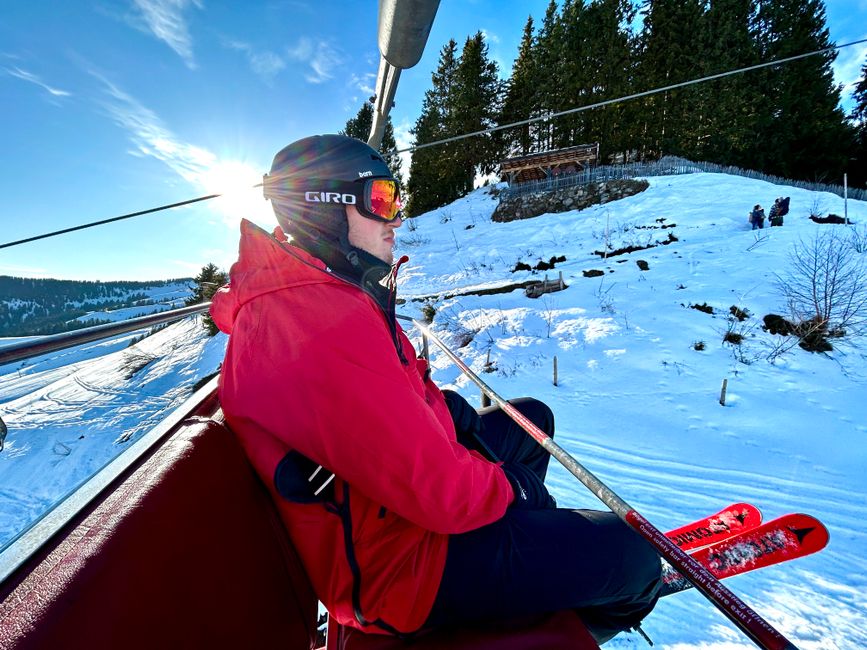
Saturday morning, first chair at the local hill: frost on the lift bar, a ski-school group of six-year-olds lined up like ducklings, and a dad tightening his daughter’s chin strap one last time. Nearly everyone in that lift line is wearing a helmet now. Picking among the best ski helmets isn’t about the flashiest shell; it’s about a snow-sports certification, a snug fit, goggles that sit flush, and whether a ski helmet with MIPS is worth the extra money. Below are six helmets really sold in 2026, four for adults and two for kids, and how to choose the right one for your head.
Prices change often. The prices below are what we saw at the maker or a major retailer in October 2026; check the current price before you buy. Prices on Amazon also vary by color and size.
Our top picks
Smith Mission MIPS
- ASTM F2040 + EN 1077 Class B (maker)
- MIPS, zonal Koroyd
- 14 adjustable vents, dial fit
Smith Vantage MIPS
- ASTM F2040 + EN 1077 Class B (maker)
- 21 vents, front and rear adjust
- BOA 360 fit
Giro Ledge MIPS
- CE EN 1077 (Giro)
- ABS hard shell, MIPS
- Stack Vent for goggles
OutdoorMaster Kelvin II MIPS
- MIPS, ABS + EPS
- 14 vents, dial fit
- Sizes 48 to 62 cm
Smith Glide Jr. MIPS
- ASTM F2040 + EN 1077 Class B (maker)
- MIPS, dial fit
- Smith's widest youth size range
Giro Crue MIPS + Goggle Combo
- Youth helmet + matching goggles
- CE EN 1077 (Giro)
- MIPS, hard shell
Ski helmets compared
| Helmet | Who | Certification (as listed) | Key feature | About (Oct 2026) |
|---|---|---|---|---|
| Smith Mission MIPS | Adult | ASTM F2040, EN 1077 Class B, CPSC | Light, 14 adjustable vents | $85–$118 |
| Smith Vantage MIPS | Adult | ASTM F2040, EN 1077 Class B, CPSC, EN 1078 | 21 vents, BOA 360 fit | $130–$170 |
| Giro Ledge MIPS | Adult | CE EN 1077 | Tough ABS shell, Auto Loc 2 | $94–$125 |
| OutdoorMaster Kelvin II MIPS | Adult and teen | “ASTM certified” (seller) | Lowest price with MIPS | $60–$66 |
| Smith Glide Jr. MIPS | Kids | ASTM F2040, EN 1077 Class B | Dial fit, AirEvac | $110 |
| Giro Crue MIPS combo | Kids | CE EN 1077 | Matching goggles included | $70 |
The best ski helmets for 2026
1. Smith Mission MIPS: best overall
The Mission is the helmet we’d hand most skiers, from the first-season adult to the weekend groomer cruiser. Smith says it is certified to ASTM F 2040, CE EN 1077:2007 Class B and CPSC, and it combines a MIPS liner with zonal Koroyd, a honeycomb-like material Smith uses for energy absorption. Its 14 vents adjust with one hand, the AirEvac system is built to pull warm air off Smith goggles so they stay clear, and a dial tightens the fit on the chairlift. The Snapfit ear pads come out and are audio-chip compatible. We saw it from about $85 to $118 depending on color and size.
- Good: US and European snow standards both listed; light in-mold build; easy vent and fit adjustment with gloves on.
- Watch out: AirEvac works best with Smith goggles; some colors were low in stock.
- Best for: most adult skiers who want one helmet for every kind of day.
Check the Smith Mission MIPS price on Amazon
2. Smith Vantage MIPS: best for all-day skiers
For the skier who’s out from first chair to last, on warm spring slush one week and a cold storm day the next, the Vantage adds more airflow control. Smith lists 21 vents with a “dual regulator” so you can open or close the front and rear separately with one hand. The BOA 360 fit system tightens around the whole head with one dial, and it carries the same MIPS, zonal Koroyd and certifications (ASTM F 2040, CE EN 1077:2007 Class B, CPSC, CE EN 1078) as the Mission. It’s the priciest pick here: about $130 for the listing we checked, up to around $170 for other colors.
- Good: the most vent control in this guide; fit adjusts all the way around.
- Watch out: costs more than most occasional skiers need; Smith now sells a newer Vantage 2 at a much higher price, so check which one you’re buying.
- Best for: season-pass holders, ski instructors, patrollers and touring days with a lot of climbing.
Check the Smith Vantage MIPS price on Amazon
3. Giro Ledge MIPS: best hard shell
Giro pitches the Ledge with freestyle styling, and its build is made to take knocks in a ski bag. It’s a hard-shell helmet: a rugged ABS outer shell formed and then attached to the EPS foam liner, with a MIPS layer inside. Giro’s Auto Loc 2 fit system self-adjusts with three circumference settings, and Vertical Tuning lets you move the fit up or down to line up with your goggles. A Stack Vent at the front is aligned with the goggle’s top vent to help keep the lens clear. Giro lists CE EN 1077 certification and 500 g for a size medium. About $94 to $125.
- Good: durable shell; simple fit; made to pair with Giro goggles.
- Watch out: fixed vents only; the Amazon listing doesn’t state ASTM F2040, so check the label inside the helmet if you want the US standard.
- Best for: park skiers, teens and families who want one sturdy, no-fuss helmet.
Check the Giro Ledge MIPS price on Amazon
4. OutdoorMaster Kelvin II MIPS: best budget
If you ski a handful of days a year, or you’re kitting out a whole family, the Kelvin II gets you a MIPS liner for about $60 to $66. It has a reinforced ABS shell over an EPS core, 14 vents, a fit dial, a removable liner and ear pads, and a soft chin strap. The seller lists three sizes: small 48 to 54 cm, medium 54 to 58 cm and large 58 to 62 cm. The listing says “ASTM certified” but doesn’t name the standard; look for an ASTM F2040 or EN 1077 sticker inside when it arrives, and return it if you can’t find one.
- Good: lowest price with MIPS here; wide size range that fits many teens.
- Watch out: certification details are vague on the listing; the seller lists a one-year warranty.
- Best for: occasional skiers, beginners and spare family helmets.
Check the OutdoorMaster Kelvin II MIPS price on Amazon
5. Smith Glide Jr. MIPS: best for kids
For the ski-school kid and the young racer in their first gates, the Glide Jr. brings grown-up protection to a small head. Smith says it has the widest youth size range in its line and is certified to ASTM F 2040 and CE EN 1077:2007 Class B, with a MIPS liner. Fixed vents and the AirEvac system work with Smith goggles to fight fog, a dial adjusts the fit on the go, and the plush lining keeps it warm. About $110.
- Good: both snow-sports standards listed; easy dial for parents at the base lodge.
- Watch out: priced like an adult helmet; vents don’t close.
- Best for: kids who ski most weekends and will wear it for several seasons.
Check the Smith Glide Jr. MIPS price on Amazon
6. Giro Crue MIPS + Goggle Combo: best kids’ set
Half the battle with kids is goggles that actually fit their helmet. This set pairs Giro’s Crue MIPS youth helmet with matching youth goggles that have a dual lens, anti-fog coating and double-layer face foam, so there’s no gap on the forehead. The helmet is a hard-shell design with MIPS, a front Stack Vent aligned with the goggles, a removable goggle retainer and removable ear pads. Giro lists CE EN 1077 and 414 g for a size medium. We saw the combo at about $70 in size extra-small.
- Good: helmet and goggles that match, for less than many helmets alone.
- Watch out: sizes and colors come and go; ASTM F2040 isn’t stated on the listing, so check the label.
- Best for: younger kids starting out, and families who want one order to cover it.
Check the Giro Crue MIPS combo price on Amazon
How to choose a ski helmet
- Check the certification. ASTM F2040 is the US specification for non-motorized recreational snow-sports helmets; EN 1077 is the European standard, in Class A and Class B (the Smith picks here list Class B). A bike helmet isn’t a substitute: the American Academy of Orthopaedic Surgeons says to wear a ski-specific helmet. ASTM itself notes the protection is limited and helps most at slower speeds.
- Measure, then do the shake test. Wrap a soft tape around your head about an inch above your eyebrows and ears and use the brand’s own size chart. A good fit is snug with no pressure points, and the skin of your forehead moves with the helmet when you rock it.
- Kids: never buy room to grow. evo’s fitting guide is blunt: a helmet that is too large is unsafe. Fit it on the day, with the hat or balaclava they’ll actually wear, and remove pads as they grow if the helmet allows it.
- Bring your goggles. There should be no gap between the top of the goggle frame and the helmet, and the goggle’s top vent should line up with the helmet’s front vent so the lens doesn’t fog. Same-brand pairs (Smith with Smith, Giro with Giro) are designed to match.
- MIPS, honestly. MIPS is a low-friction layer inside the helmet designed to move slightly in an angled impact and help redirect rotational motion away from the head. That’s a sensible extra, and it’s in every pick here. But MIPS AB itself warns that no helmet can protect from all injuries, and the U.S. Consumer Product Safety Commission says no helmet has been proven to prevent concussions. Ski as if you weren’t wearing one.
- Replace it after a crash. Most ski helmets use EPS foam built for one big impact. Replace after a hard hit, and evo notes experts suggest replacing every 3 to 5 years as materials break down.
A helmet is one piece of the kit. See the full list on our ski gear page, fitting tips for little skiers in our kids skiing guide, and what to do after a fall in common skiing injuries; if you or your child hit your head, stop for the day and see a doctor. Riding a board too? The same helmets work, and our snowboarding section covers the rest. For sore legs after a big day, see best recovery tools for athletes, start at the skiing hub, or browse more skiing articles.
Ski helmet questions
Is a ski helmet with MIPS worth it?
For most people, yes, because it often adds only a little to the price; the Kelvin II has it for about $60. MIPS is designed to help with rotational motion in certain angled impacts. It isn’t a guarantee, and a well-fitting certified helmet without MIPS beats a loose one with it.
What’s the difference between ASTM F2040 and EN 1077?
ASTM F2040 is the US specification for recreational snow-sports helmets; EN 1077 is the European one, with two classes, A and B; the Smith helmets in this guide list Class B. Many helmets carry both; the label inside the helmet tells you which.
How should a kid’s ski helmet fit?
Snug, level on the forehead just above the goggles, with the chin strap closed and the helmet not rocking on its own when they shake their head. Kids can’t always tell you it’s loose, so check it yourself, and don’t buy a size up to grow into. The American Academy of Pediatrics says all skiers and snowboarders should wear helmets, and that parents should enforce it.
Can I use my bike helmet for skiing?
No. Bike helmets are tested to different standards and aren’t built for cold, snow and goggles; AAOS recommends a ski-specific helmet. A snow helmet is certified to ASTM F2040 or EN 1077.
How often should I replace a ski helmet?
After any hard impact, even if you can’t see damage, and otherwise every 3 to 5 years of use, as evo’s guide suggests. Smith and Giro run crash replacement programs that can lower the cost of a new one.