This article contains affiliate links: if you buy through them we may earn a commission, at no extra cost to you. Learn more.
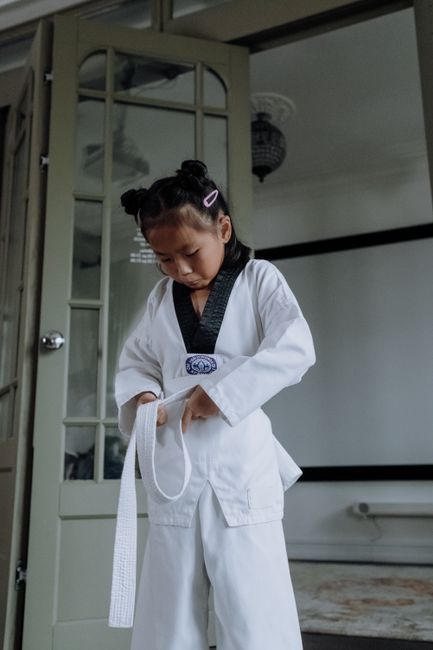
A Wednesday-afternoon kids’ class: twelve small students in white uniforms lined up by belt color, shouting their answers to “Who are we?”, practicing a front kick against a pad and then rolling across the mat like logs. Parents watch from the benches with a juice box ready. Martial arts are one of the most common activities for children in the US (the American Academy of Pediatrics counts more than 6.5 million young participants), and parents usually have the same questions: what age to start, which art, what the belts mean, how to pick a safe school and how risky sparring really is. This guide to martial arts for kids answers them, art by art.
What pediatricians say about martial arts for kids
The AAP’s clinical report on martial arts gives parents and doctors practical guidance. In short:
- The benefits are real. Martial arts can give children and teens vigorous exercise and better fitness, and can build strength, balance and flexibility.
- Instructors matter. Kids should train only under instructors trained to teach their art and to understand a child’s limits based on age, maturity, size and experience.
- Non-contact first. Non-contact forms carry a relatively low injury risk; sparring and contact raise it. Competition and contact training should wait until a child has shown physical and emotional maturity and good skills in non-contact training.
- Headgear isn’t concussion protection. There’s no evidence soft headgear lowers concussion risk, so it shouldn’t encourage more aggressive sparring. The AAP supports teaching better blocking and rule changes that remove blows to the head, and points for them, from young athletes’ competition.
- Watch the hours. Some evidence suggests training more than 3 hours a week may raise injury risk, though more study is needed.
- No MMA bouts for kids. Because of slams and chokeholds, the AAP strongly discourages children and teens from MMA bouts that use those techniques. See our youth MMA page.
The injury picture differs by art. In one study of karate students under 18 cited by the AAP, the risk of injury over 12 months was 5.6 per 100 athletes, and karate with techniques stopped short of contact had a lower injury risk than taekwondo’s contact kicks. Young judo athletes had more shoulder, upper-arm and neck injuries, and more concussions than karate athletes. Most kids’ injuries are bruises, sprains and strains.
What age can kids start martial arts?
There’s no single right age. Classes for young children usually focus on listening, balance and coordination, and the official competition structures give some guideposts:
- Brazilian jiu-jitsu: IBJJF kids’ divisions start at age 4 (Mighty Mite), with 2-minute matches up to age 6, 3 minutes for 7–9 and 4 minutes for 10–15.
- Karate: WKF rules have shorter bouts (1.5 minutes) for competitors 14 and under, and require a helmet and chest protector for those under 14.
- Taekwondo: World Taekwondo’s international age groups start with cadets at 12–14, then juniors at 15–17; local and national events have younger divisions.
- Judo: international competition starts with cadets (under 18). Children’s rules vary by country and organizer.
A better question than “how old?” is “is my child ready to follow instructions in a group for 30 to 45 minutes and enjoy it?” A trial class usually answers that.
Belt systems explained
Every art uses colored belts to mark progress, ending in black belt, but the colors and the time between them vary by art and often by school. Kids usually have extra steps (stripes or tips on a belt) so they get to celebrate progress more often.
- Karate and judo: student ranks called kyu lead up to black-belt ranks called dan. The colors and the number of kyu steps depend on the school or national federation.
- Taekwondo: color-belt ranks called geup (or gup) count down toward black belt. In Kukkiwon taekwondo, children under 15 earn a junior black-belt rank called poom, which converts to dan rank at 15.
- Brazilian jiu-jitsu: the IBJJF has a separate kids’ system with 13 belts for ages 4 to 15: white, then grey, yellow, orange and green, each in three versions (with a white bar, solid, and with a black bar). Grey belts are for ages 4–15, yellow from 7, orange from 10 and green from 13. There’s no minimum time at each kids’ belt. At 16, grey, yellow and orange belts move to blue, green belts to blue or purple at the professor’s choice, and white belts can stay white.
One thing to watch: belt testing fees and how often tests are held. Ask about them before you sign up, and remember that in BJJ the IBJJF says promotion timing is up to each professor.
Choosing a school and instructor
Watch a full class before you join, and bring these questions:
- Who teaches the kids’ class, and what’s their background? Ask about rank, how long they’ve taught children and who recognizes their rank (a national federation, the Kukkiwon, the IBJJF or a style organization).
- Background checks and SafeSport. Clubs that belong to USA Karate, USA Taekwondo or USA Judo fall under the U.S. Center for SafeSport. Its Minor Athlete Abuse Prevention Policies (MAAPP) require one-on-one contact between adults and minors to be observable and interruptible, let parents watch training, and require a parent or another adult to be copied on electronic messages to minors. Independent schools and many BJJ academies are outside SafeSport, so ask directly whether every instructor has had a background check and abuse-prevention training.
- Check names. The U.S. Center for SafeSport’s Centralized Disciplinary Database is public; search the instructors’ names.
- Can parents watch? An open viewing area or window is a good sign.
- How is sparring introduced? Look for kids grouped by size and skill, light or no head contact, mouthguards, and coaches who stop rounds that get rough.
- Safety plan. Ask what happens after a knock to the head, who handles first aid, and how the mats are cleaned.
- Contracts and fees. Read the contract length, cancellation terms and testing fees before signing.
Concerns about abuse can be reported to the U.S. Center for SafeSport at uscenterforsafesport.org. If a child is in immediate danger, call 911. More on who runs each art on our martial arts organizations page.
Safety rules for young martial artists
- Kids’ competition rules are softer. In WKF karate, head techniques for under-14s score when stopped up to 10 cm (kicks) or 5 cm (punches) short. In judo, athletes under 18 may not use the head to throw or defend. In IBJJF jiu-jitsu, kids can’t use wrist locks, neck cranks, front guillotines, Ezekiel chokes, arm triangles, omoplatas or any leg locks, and jumping guard is a foul under 15. Our rules page has the full lists.
- Concussion: recognize and remove. The CDC’s HEADS UP program says to take a child out right away if they seem dazed, confused or clumsy, or report headache, dizziness, nausea or blurry vision after a knock to the head or body, and keep them out until a healthcare provider clears them. Call 911 for danger signs like repeated vomiting, a worsening headache, seizures or unusual drowsiness.
- Tap early. In grappling classes, kids should learn to tap and to let go of a partner who taps, every time.
- Skin checks. The National Athletic Trainers’ Association advises showering after training, not sharing towels, and washing uniforms daily. Keep a child with a suspicious rash off the mat until a doctor sees it.
- No weight cutting. In judo, taekwondo and karate tournaments with weight classes, kids should compete at their natural weight. The AAP’s report on weight-class sports warns against rapid weight loss in young athletes.
- Sleep and rest. The CDC recommends 9 to 12 hours of sleep for ages 6 to 12 and 8 to 10 for teens. Pain that lasts is a reason to see a pediatrician or sports medicine doctor, not to push on.
Gear for a first season
Most schools sell or recommend a starter uniform, so ask before buying. Beyond that, a child needs a mouthguard for any sparring, such as the Shock Doctor Gel Max (sold in youth sizes), and a water bottle. For BJJ, the Hayabusa Essential Jiu Jitsu Gi Kids is listed as IBJJF compliant and comes with a white belt (about $80), and a rash guard such as the Elite Sports Kids BJJ Rash Guard (about $17) covers no-gi days. For taekwondo, the Daedo Taekwondo Beginner Uniform (about $28) is listed as World Taekwondo recognized. Sparring gear comes later, when the instructor says your child is ready; see our martial arts gear page.
Shock Doctor Gel Max Mouthguard
- Boil-and-bite gel-fit liner
- Breathing channels
- Youth and adult sizes
Hayabusa Essential Jiu Jitsu Gi Kids
- IBJJF compliant (listing)
- Pearl weave, white belt included
- About $80
Elite Sports Kids BJJ Rash Guard
- Short sleeve, flatlock stitching
- Anti-slip waistband
- About $17
Daedo Taekwondo Beginner Uniform
- WT recognized (listing)
- Pants and belt included
- About $28
Related: our martial arts guide, the youth wrestling and youth boxing pages, and the youth soccer guide for families juggling more than one sport.
Parents’ questions about martial arts
What is the best age to start martial arts?
There’s no single best age. IBJJF jiu-jitsu has competition divisions from age 4, and many schools run classes for young children. What matters more is a class built for your child’s age and a child who can follow group instructions and enjoys it.
Is karate or taekwondo safer for kids?
Studies cited by the AAP found lower injury rates in non-contact karate than in taekwondo, which uses contact kicks, including to the head. In either art, a class that delays contact sparring and keeps head contact light is the safer choice.
Is jiu-jitsu safe for kids?
With good coaching, it can be. There’s no striking, and IBJJF rules ban the riskiest techniques for children. Kids should learn to tap early and release instantly, and be paired with partners of similar size.
Should my child wear headgear for sparring?
Follow your school’s and event’s rules (WKF karate requires a helmet under 14, and taekwondo uses headgear), but know that headgear mainly prevents cuts and bruises. The AAP says there’s no evidence it prevents concussions.
How do I know if a martial arts instructor is safe?
Ask about background checks and abuse-prevention training, whether parents can watch, and how one-on-one time is handled. Search the U.S. Center for SafeSport’s Centralized Disciplinary Database, and check rank and membership with the organization the school names.
How many classes a week should a child take?
There’s no official number. The AAP notes some evidence that training more than 3 hours a week may raise injury risk, so count all the hours, including other sports, and leave rest days. A tired, sore or unhappy child is a sign to cut back.