This article contains affiliate links: if you buy through them we may earn a commission, at no extra cost to you. Learn more.
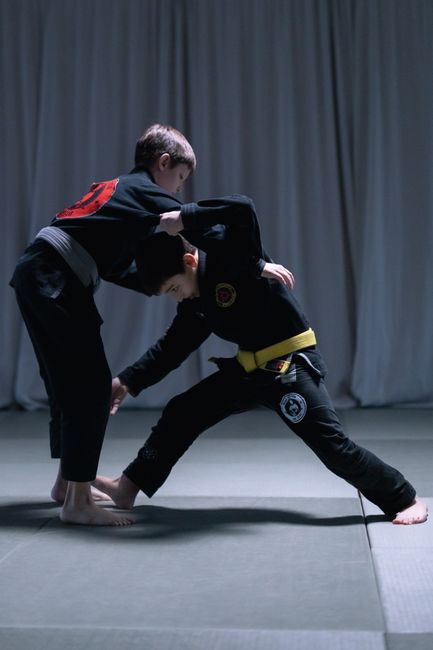
Seven a.m. on a Saturday in a middle school gym. The parents have folding chairs and coffee, the kids have singlets a size too big, and somewhere a coach is yelling “Hips! Hips!” across three mats at once. A 1-minute period feels very long the first time you watch your child wrestle. Youth wrestling teaches balance, grit and how to win and lose on your own, and it’s booming, for girls as much as boys. This page is for parents and young wrestlers: age groups and match length, the weight rules, skin checks, safety, and the questions parents ask most, from kids’ clubs to high school wrestling.
For an overview of the sport at every level, start at our wrestling hub.
Age groups: how kids are grouped
USA Wrestling, which runs most youth clubs and tournaments, groups kids in two-year bands by birth year. For the 2027 membership season (2026-27), that’s:
| Division | Born | Folkstyle nationals periods (championship bracket) |
|---|---|---|
| 8U | 2019–2020 | 1:00, 1:00, 1:00 |
| 10U | 2017–2018 | 1:00, 1:00, 1:00 |
| 12U | 2015–2016 | 1:00, 1:30, 1:30 |
| 14U | 2013–2014 | 1:00, 1:30, 1:30 |
| 16U | 2011–2012 | 2:00, 2:00, 2:00 |
| Junior | Born September 1, 2007 or later and in grades 9–12 | 2:00, 2:00, 2:00 |
Girls’ divisions use the same ages, with their own weight classes; at 8U, for example, they run from 40 to 85 pounds. Kids are also matched by weight, so a small 10-year-old wrestles other small 10-year-olds. Local tournaments often “bracket” by age and weight together. Internationally, United World Wrestling’s youngest age category is U15 (14–15).
Seasons and styles
- Winter: folkstyle. School teams and most kids’ clubs. Same style as high school, under NFHS rules with USA Wrestling changes at its events.
- Spring and summer: freestyle and Greco-Roman. The Olympic styles, through USA Wrestling clubs, state tournaments and national events such as the 16U and Junior Nationals in Fargo.
- Middle and high school: state association rules, a weight certification program, and in 40 states a separate girls’ state championship. The wrestling rules page compares the styles.
Wrestling year-round isn’t required to get good. For young athletes, a clinical study linked specializing in one sport, and training more hours a week than their age in years, with a higher injury risk, and the American Academy of Pediatrics advises against early specialization. A season off the mat, or a second sport, is good for growing bodies.
Weight management rules for kids and teens
This is the topic parents worry about most, and with reason. The American Academy of Pediatrics’ 2017 clinical report on weight control in young athletes names weight-class sports like wrestling as a place where kids may try to lose weight to compete lower, and it lays out the unhealthy methods to avoid. Here’s how the rules protect young wrestlers:
- High school: every wrestler is certified before competing. A urine hydration test (specific gravity 1.025 or lower) comes first, then body composition. The lowest weight allowed is figured at 7% body fat for boys and 12% for girls, and wrestlers may lose no more than 1.5% of body weight a week toward it.
- Growth allowance: many states add pounds in midseason because teens grow; Georgia, for example, adds 2 pounds on December 25 and 1 more in late January.
- Youth clubs: certification is a school-sports program, so at club events the habits are largely up to coaches and parents. The safe rule for kids: wrestle at the weight you are.
Red flags to watch for: skipping meals or water before weigh-ins, vomiting, laxatives or diet pills, exercising in rubber or plastic suits, using a sauna, or big swings in weight from week to week. Those methods led to three college wrestlers’ deaths in 1997 and are banned in college. If your child wants to drop a class, involve the athletic trainer or a pediatrician and a registered dietitian first. Our wrestling nutrition page covers eating for practice and weigh-ins.
Skin checks: why they matter and what to do
Wrestling means skin-to-skin contact on a shared mat, so infections spread fast: ringworm, impetigo and staph, and herpes gladiatorum. In a classic outbreak at a high school wrestling camp, 34% of 175 wrestlers caught herpes gladiatorum, mostly by direct skin contact. Before every competition, a doctor or athletic trainer checks each wrestler’s skin. A wrestler with a contagious lesion can’t compete, and covering it isn’t allowed. High schools use the NFHS medical release form, which a healthcare provider fills in to say when a treated lesion is safe for the mat.
Daily habits, from the National Athletic Trainers’ Association: shower with soap right after every practice, use your own towel and soap, wash practice clothes and towels every day, wear shower shoes, and make sure the mats are cleaned on schedule with an EPA-registered disinfectant. Check your child’s skin, scalp included, and show the coach or athletic trainer any new spot before practice. Many wrestling families keep a bar like Defense Soap (tea tree and eucalyptus oils, about $31 for five on Amazon) in the bag. Soap is for washing, not treatment; a rash that spreads or won’t clear needs a doctor.
Safety on the mat
- Ear guards: required in high school; recommended at USA Wrestling events. In a survey of college wrestlers, ear hematomas (the start of cauliflower ear) were about half as common with headgear. Youth sizes exist, like Cliff Keen’s Youth Tornado (about $53 at the maker).
- Braces: NFHS requires a mouthguard that covers both upper and lower braces, such as the Shock Doctor Double Braces (about $20, no molding needed). USA Wrestling strongly recommends one.
- Concussion: under the CDC’s HEADS UP guidance, a wrestler with signs after a knock to the head (dazed, headache, dizziness, balance problems) sits out for the rest of that day and until a healthcare provider clears them. Call 911 for danger signs such as a seizure or a headache that keeps getting worse.
- Injuries: in girls aged 5–18 treated in emergency departments for wrestling injuries, more than 60% of injuries were above the waist, and fractures were more common in the youngest group. In high school boys, the head/face and shoulder were injured most. See our wrestling injuries page.
- Rest: NFHS rules allow up to six matches in one day, with at least 30 minutes between matches. Long tournament days need food, water and sleep; the CDC recommends 9–12 hours for children 6–12 and 8–10 hours for teens.
Cliff Keen Youth Tornado Headgear
- Youth-size Tornado
- Adjustable strapping
- About $53 at the maker
Shock Doctor Double Braces Mouth Guard
- Covers upper and lower teeth
- Medical-grade silicone
- No molding needed
Defense Soap Tea Tree Bar (5-pack)
- Tea tree and eucalyptus oils
- No SLS or added fragrance
- Five bars
The full equipment list is on our wrestling gear page, and the organizations behind youth, high school and college wrestling are on wrestling leagues and associations. Parents of multi-sport kids may also like our youth soccer page.
Parents’ questions about youth wrestling
What age can kids start wrestling?
USA Wrestling’s youngest division is 8U (kids born in 2019–2020 for the 2026-27 season). Matches at that age are short: three 1-minute periods at USA Wrestling’s folkstyle nationals. Ask your local club what it offers.
Is wrestling safe for kids?
Like any contact sport, it carries injury risk, but good coaching, matching by age and weight, ear guards, skin checks and no weight cutting make a big difference. A study of a large national tournament for 13- to 18-year-olds found concussions were uncommon and declining.
Should my child cut weight?
No rapid cutting. The American Academy of Pediatrics warns against unhealthy weight-loss methods in young athletes. Kids should wrestle at their natural weight; high schoolers follow their state’s certification and may lose no more than 1.5% of body weight a week, planned with a professional.
Can girls wrestle boys?
In youth clubs and in states without girls’ wrestling, girls often wrestle boys. Forty states now hold a separate girls’ state championship, and girls can go on to NCAA, NAIA and NJCAA women’s programs.
What does my child need for the first practice?
Comfortable athletic clothes, wrestling shoes if you have them, a water bottle, and short nails. Ask the coach what the club expects. Ear guards come next, then a singlet for competition. Wash everything after every practice.
What is a skin check?
A quick look at every wrestler’s skin by a doctor or athletic trainer before weigh-ins. A wrestler with a contagious lesion, like ringworm or herpes gladiatorum, can’t compete until a provider clears them with a release form.