This article contains affiliate links: if you buy through them we may earn a commission, at no extra cost to you. Learn more.
Saturday morning, a high school gym with eight mats rolled out wall to wall. Before anyone steps on the scale, a referee walks the line checking every wrestler’s skin. Later a 132-pounder takes a hard shot to the ear. In the next match somebody’s shoulder gets cranked in a cradle. Wrestling’s injury list is its own, down to the hidden one: cutting weight the dangerous way. Here’s each in plain language, with what prevents it and when to get it checked.
This is general information, not medical advice. If you’re hurt or sick, see a sports medicine doctor, a physical therapist (PT) or a certified athletic trainer (AT). For the big picture of the sport, start at our wrestling hub.
How often wrestlers get hurt, and where
From 2005 to 2014, high school boys had 2.38 time-loss injuries per 1,000 athlete-exposures (one wrestler in one practice or match). College men had 9.28, about four times as many. High schoolers hurt the head and face and the shoulder most. A newer NCAA study (2014–2019) found injuries about four times as common in matches as in practice. The knee (21.4%), shoulder (13.4%) and head and face (13.3%) led the list, and concussion was the single most reported injury.
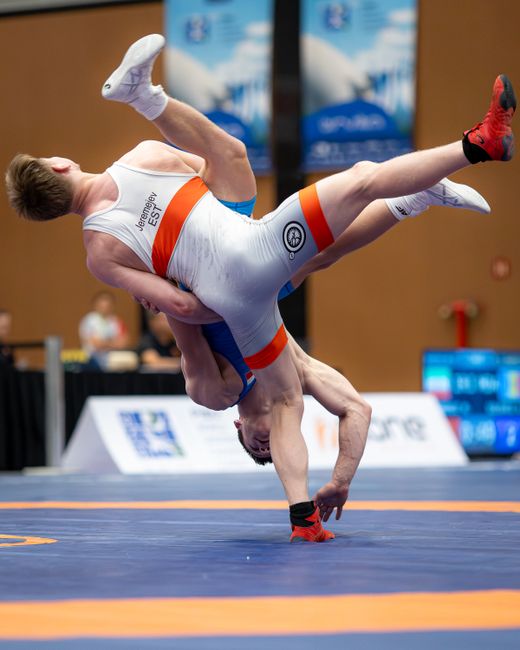
At the Rio 2016 and Tokyo 2020 Olympics, most injuries were mild head and face injuries from standing exchanges. Elbow and shoulder dislocations were the most common serious injuries.
Skin infections: the injury you can catch
No other sport has as much bare skin against bare skin. The NFHS Sports Medicine Advisory Committee says the risk of spreading skin infections is much higher in sports like wrestling. In NCAA men’s wrestling (2009–2014), skin infections came at 14.23 per 10,000 athlete-exposures. Viral infections were the most common, and most cases came from just a few team-seasons, which shows how fast one case spreads through a room. The return-to-mat rules below are the NFHS’s for high school, and your doctor and state association make the final call. College (NCAA) rules are similar, with their own checklists.
Herpes gladiatorum
This is caused by herpes simplex virus type 1, the cold-sore virus, and it spreads only skin to skin. Most outbreaks show up on the head, face and neck, where wrestlers lock up. Look for a raised rash with a cluster of small blisters. A first outbreak can also bring fever and swollen neck glands. Come off the mat right away and see a doctor. Under the NFHS guidelines, a first outbreak means at least 10 days out of practice and competition (14 days if there is fever or swollen glands). A repeat outbreak treated with antiviral medicine means at least 120 hours out. Lesions must be firmly scabbed, with no new blisters, and covering them isn’t allowed. Because the virus spreads before blisters appear, recent partners are held out of contact for eight days and checked daily. Doctors sometimes prescribe a preventive antiviral for the season; that’s their call.
Ringworm (tinea)
Ringworm is a fungus, not a worm. It shows up as a round, scaly, often itchy patch. NFHS guidance: at least 72 hours of antifungal treatment before you wrestle again, then cover the spot with a bio-occlusive (sealed) dressing once it’s no longer contagious. Ringworm on the scalp is harder to clear. It needs 14 days of oral medicine before returning.
Impetigo, boils and MRSA
Bacterial infections can look like a pimple, a crusty sore or a painful, warm lump (an abscess). The worry is MRSA, a staph germ that common antibiotics don’t kill. The NFHS says an infected wrestler should come out of practice and competition and get treated. Return may be considered after 72 hours of treatment, as long as nothing is draining and no new lesions have formed. Then the spot gets covered.
How to keep skin infections off your team
- Shower right after practice, at school, not at home hours later. NFHS medical advisers point out that a delay can leave germs on the skin for up to 12 hours.
- Clean gear every day. Wear clean practice clothes, wash knee pads weekly, and wipe headgear down with soap and water.
- Clean mats before every practice with a proper disinfectant. International rules require it before every session too.
- Daily skin checks by a coach or AT, plus your own look in the mirror. Report anything new the same day.
- Don’t share towels, razors or headgear.
- Wipes when there’s no shower. In a small Minnesota tournament study, soap-and-water body wipes after matches went with fewer skin infections the next week.
Many wrestlers keep a tub of Defense Soap body wipes in the bag for long tournament days. They’re cleansing wipes, not medicine, and no substitute for a shower.
Cauliflower ear
A hit or a grinding tie-up can pull the skin away from the ear’s cartilage, and blood collects underneath (an auricular hematoma). Left alone, it can harden into the lumpy “wrestler’s ear”. It isn’t just cosmetic. In a 2026 survey of 1,338 former wrestlers, 69% had cauliflower ear. Of those, 59% had felt pain from it, 30% had trouble sleeping and 12% had hearing issues.
- Wear headgear, in practice too. In a survey of 537 Division I wrestlers, 26% of those who wore headgear had an ear hematoma, against 52% of those who didn’t. Yet only 35% wore it all the time in practice. The researchers note headgear gives only partial protection, but it clearly helps. NCAA rules require an ear guard any time there is live wrestling, practice included (drilling and warm-ups excepted).
- Get a swollen ear seen quickly. A 2026 review of the research found that draining the blood, followed by a pressure dressing, is the main way doctors prevent cauliflower ear. Have it done by a doctor or AT. Draining it yourself in the locker room risks infection.
Light, well-fitted headgear like the Cliff Keen F5 Tornado is a common choice on high school and college teams. Our wrestling gear guide covers fit.
Cliff Keen F5 Tornado Headgear
- Maker says 43% lighter than most headgear
- PowerTab strap system
- Many team color combos
Defense Soap Body Wipes (2 x 40)
- Tea tree and eucalyptus oils
- No-rinse, extra-wet cloths
- 80 wipes in two canisters
Cliff Keen Impact Bubble Knee Pad
- Compression-molded bubble pad
- Full range of motion
- Machine washable
Shoulder and elbow
Shoulders take the brunt of shots, sprawls, front headlocks and arm bars. A 2026 review of wrestling studies found shoulder and elbow injuries together make up about 21% of all wrestling injuries. Sprains and strains (rotator cuff, the AC joint on top), shoulder instability and elbow instability lead the list, and the shoulder is the body part most often seen in US emergency rooms after wrestling (15.2%, 2015–2024). Get a shoulder that slipped out, a new bump on top of the shoulder or an elbow that bent the wrong way checked.
Knees
Shooting, kneeling, being driven to the mat in a single-leg: the knee is the most injured body part in college wrestling. A Division I program’s records from 2010 to 2020 showed what those injuries were: ligament sprains (53%), meniscus tears (22%) and kneecap injuries (10%). About one in five hurt the knee again. A knee that locks, catches, swells fast or gives way needs a doctor. Many wrestlers wear a padded knee pad like the Cliff Keen Impact for mat contact. It cushions impact but doesn’t stop twisting injuries. Our knee sleeve guide covers sleeves for lifting days.
Neck and “stingers”
In NCAA wrestling, spine injuries came at 0.71 per 1,000 athlete-exposures. They were twice as likely in matches, and the most common diagnosis was a brachial plexus injury, better known as a stinger or burner (20%). AAOS describes it as a burning or electric-shock feeling down one arm after the nerves in the neck and shoulder are stretched or pinched. It usually fades within seconds to minutes. See a doctor if weakness lasts more than a few days, if you have neck pain, if both arms are affected or if it keeps happening. Don’t return to the mat until all symptoms are gone. Any neck injury with numbness in both arms or legs, or severe neck pain, is an emergency. Don’t move the athlete. Call 911.
Concussion: recognize and remove
Emergency-room data show a peak at ages 15 and 16, and researchers warn that wrestlers may write symptoms off as normal training fatigue. The CDC’s HEADS UP program asks coaches and parents to watch for an athlete who looks dazed, is slow to answer or moves clumsily. Listen for headache, dizziness, nausea, blurry vision or feeling foggy.
- Remove the wrestler from the match or practice right away. When in doubt, sit them out.
- Keep them out the rest of the day and until a healthcare provider clears them.
- Return in steps, which usually takes a week or more.
- Call 911 for danger signs: a headache that gets worse, repeated vomiting, a seizure, passing out or growing drowsiness, slurred speech, weakness or unequal pupils.
A mouth guard protects the teeth and lips, not the brain. Many wrestlers with braces use one like the Shock Doctor Gel Max to keep their lips off the brackets.
Unsafe weight cutting: the injury nobody tapes
In late 1997, three healthy college wrestlers died within about a month while trying to cut weight fast. The CDC reported that all three wore vapor-impermeable (rubber or plastic) suits, exercised hard in hot rooms and restricted food and fluids. They were trying to lose an average of 15% of their body weight. The rules changed after that:
- Banned methods: laxatives, making yourself vomit, saunas, steam rooms, hot rooms and rubber or plastic suits. Diuretics (water pills) are banned at any time. High school rules (see California’s handbook) also ban excessive food and fluid restriction and IV rehydration.
- A minimum weight set before the season with a hydration test and a body-fat test: 7% body fat for high school boys and 12% for girls, 5% for college men.
- A slow descent: no more than 1.5% of body weight lost per week.
- Practice rooms no hotter than 80°F at the start of practice (NCAA rule).
Rapid cutting still causes harm. In a study following Division I wrestlers over seven seasons, each extra 1% of body weight cut before competition went with an 11% higher risk of getting hurt in the match. The NCAA’s own weight packet says performance drops once water loss passes 2–3% of body weight. If a wrestler is dizzy, confused, not urinating, or has a racing heart or cramps while cutting, stop and get medical help. More on doing it safely on our wrestling nutrition page.
When to see a doctor, PT or athletic trainer
- Any new skin spot, rash, blister cluster or lump that’s warm, painful or draining.
- A swollen, puffy ear after a match or practice.
- A shoulder or elbow that slipped out, or a joint that looks out of place.
- A knee that locks, gives way or swells fast.
- Arm tingling or weakness that doesn’t fade, or symptoms in both arms.
- Any concussion signs.
- Dizziness, fainting or confusion while making weight.
A sports medicine physician diagnoses and manages most injuries and clears skin conditions (in high school, often on the NFHS skin form), a physical therapist guides rehab, and athletic trainers work with physicians in many high school and college rooms.
Wrestling injury FAQs
What is the most common injury in wrestling?
It depends on the level. In college the knee is injured most and concussion is the most reported single injury; in high school the head and face and the shoulder lead.
How long is a wrestler out with herpes gladiatorum?
Under NFHS guidelines, at least 10 days for a first outbreak (14 if there’s fever or swollen glands). A repeat outbreak treated with antivirals means at least 120 hours out. All lesions need firm scabs and there can be no new blisters. A doctor decides when you’re cleared.
Does headgear prevent cauliflower ear?
It lowers the risk but doesn’t remove it. In a survey of Division I wrestlers, ear hematomas were about half as common with headgear (26% against 52%). Wear it in practice too, and get a swollen ear drained by a professional quickly.
Is cutting weight dangerous?
Dehydration-based cutting is. It’s behind the 1997 deaths that changed the rules, and in college wrestlers more weight cut before a match went with a higher injury risk. Gradual loss within your certified minimum weight and the 1.5%-per-week limit is the safe route. Ask your AT or a sports dietitian.
Keep going with our wrestling training, meet and tournament day and recovery guides, plus our soccer injuries page for warm-up research.