This article contains affiliate links: if you buy through them we may earn a commission, at no extra cost to you. Learn more.
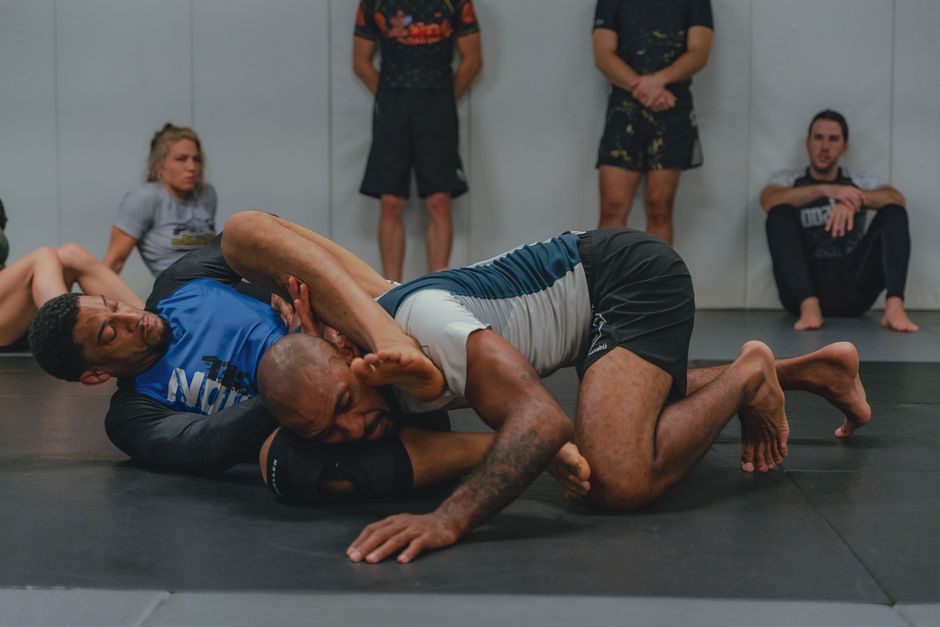
The first week of November in a cramped wrestling room above the school gym. Mats wall to wall, a jump rope slapping in the corner, thirty kids drilling stand-ups until their legs shake. Across the country, a college team is doing the same in a bigger room. An Olympian is somewhere in a training center working one tie-up a hundred times. Wrestling training looks simple from outside: drill, live go, run. Done well, it’s a careful build of strength, power, grip and match fitness, plus a weight plan that leaves you strong on the scale and on the mat. This page covers the training year at every level, from youth clubs to the Olympic styles.
General information, not medical or coaching advice. Talk to your coach, a certified strength coach or an athletic trainer before changing your program. New to the sport? Start at our wrestling hub and the rules page.
What a match asks of your body
Matches are short but brutal. A college match is seven minutes: a three-minute first period and two two-minute periods. In Ohio high school varsity, periods are two minutes. International freestyle and Greco-Roman bouts for seniors are two three-minute periods with a 30-second break (two minutes per period for under-15s and under-17s).
Researchers filmed 94 matches at the 1998 Greco-Roman World Championships. Wrestlers worked in bursts averaging 37 seconds with about 14 seconds of rest between them. Blood lactate (a marker of very hard anaerobic work) averaged 14.8 mmol/L, which is very high. Most wrestlers felt it most in the forearm muscles, the grip. A study of 92 male wrestlers found elite wrestlers beat amateurs on maximal strength, muscle power, upper-body anaerobic power, grip and back strength. Running speed and body fat didn’t separate the two groups. So the job is strength, power, grip, and the fitness to repeat hard bursts for six or seven minutes, several times a day.
The wrestling year
In US schools, the folkstyle season runs through the winter. In Ohio, for example, 2026-27 high school coaching starts November 13, the first match is December 3 and the season ends March 14. After that, thousands of young wrestlers switch to freestyle and Greco-Roman, the Olympic styles, for spring and summer tournaments. In college, the NCAA’s competition season starts September 1 and runs through the national championships. That leaves a natural rhythm:
- After the season: a real break. Let small injuries settle, eat normally and do other sports.
- Off-season: the main time to build strength and add muscle, with technique work at a club or camp.
- Preseason: sharpen match fitness, get your minimum weight assessed, and plan a slow descent if you need one.
- In season: maintain strength with shorter lifts, keep conditioning match-like, and protect sleep and food.
Strength and power
Strength gains show up on the mat. The study of elite and amateur wrestlers found elite wrestlers 8–25% stronger and 14–30% more powerful than amateurs. Most wrestlers lift two or three times a week in the off-season and once or twice in season. Focus on:
- Legs and hips: squats, deadlifts, lunges and jumps for shots, lifts and finishes.
- Pulling and back: pull-ups, rows and carries for hand fighting and holding positions. Pull-up bands like the WODFitters set help lighter or younger wrestlers build up to strict reps.
- Grip: rope climbs, towel pull-ups and holds. Forearms are where world-level Greco wrestlers felt the load most.
- Neck: gradual, controlled neck strengthening is common in wrestling rooms. Be honest about the evidence, though. A 2026 systematic review found it isn’t yet clear that a stronger neck lowers concussion risk.
Conditioning that matches the match
Long, slow runs have their place for base fitness, but a match is repeated 30- to 40-second efforts with short pauses. Build conditioning the same way: live goes, short sprint intervals, shark-bait rounds and circuits that mimic match time. A review of US wrestling research found a high-intensity taper after a hard training block clearly improves performance. Dehydration of about 3–4% of body weight impairs muscular endurance in high-intensity work. In other words, a rested, fed, hydrated wrestler beats a drained one. A plain speed rope like the WOD Nation jump rope is a classic warm-up and conditioning tool in wrestling rooms.
A chest-strap heart rate monitor like the Polar H10 shows how hard intervals really are and how fast you recover between them. Wear it in conditioning and lifting, never in live wrestling, where a strap or watch can hurt you or your partner. More on our wrestling wearables page.
WOD Nation Speed Jump Rope
- Adjustable steel cable
- Light, fast speed rope
- About $19
WODFitters Pull-Up Assistance Bands (5)
- Five layered-latex bands
- Assisted pull-ups to stretching
- Sold as a complete set
Polar H10
- Chest strap, ECG-type sensor
- Bluetooth and ANT+
- Up to 400 h battery
Your weight plan is part of training
In wrestling, weight is a training decision, not a last-week scramble. High school and college programs set a minimum weight before the season using a hydration test and a body-fat assessment. Descent is limited to 1.5% of body weight per week. The National Athletic Trainers’ Association (NATA) suggests aiming for about 1 to 2 pounds a week. The NCAA’s weight program states its goal plainly: set a healthy weight class early in the season, with time to reach it safely.
- Choose your class with your coach and AT in preseason, based on your assessment, not on who’s in the lineup.
- Lose slowly, through food, not sweat. Never train in rubber or plastic suits or hot rooms to drop weight. These are banned at every level for a reason. NCAA rules require practice rooms to be no hotter than 80°F at the start of practice.
- Keep eating enough carbohydrate to train hard. The review above suggests about 8–10 g per kg of body weight a day for wrestlers in heavy training. A sports dietitian can turn that into meals.
Details and food ideas are on our wrestling nutrition page.
Practice habits that prevent injuries
- Warm up properly before live wrestling: jump rope, movement drills, stance and motion, then build to live.
- Wear headgear in live practice. NCAA rules require it, and the research on ear hematomas backs it up.
- Keep skin clean: clean mats before every practice, fresh gear daily, a shower right after. See our wrestling injuries page.
- Manage load. An IOC consensus statement calls poor load management a major injury risk. That includes training, competition, travel and stress. Watch for big jumps in volume, like a preseason camp right after weeks off.
The mental game
You walk out alone, and the result is yours. Many wrestlers build a simple routine: the same warm-up, music, breathing and a few cue words before every match. They practice it in the room so it holds up at a big tournament. Some use breathing or focus apps; our mental training tools guide compares a few. If anxiety, eating or weight worries start to take over, talk to your AT, a doctor or a sports psychologist. The NCAA’s weight program warns that rapid weight changes can be a sign that a wrestler is struggling.
Training young wrestlers
The American Academy of Pediatrics (AAP) says supervised, technique-focused resistance training is safe for children and teens. Most gains come from two or three sessions a week for at least eight weeks. Start with body weight and light loads, and add weight only when form is solid. Kids shouldn’t be cutting weight: the AAP’s report on weight control in young athletes warns against unhealthy loss in weight-class sports. Match limits also protect young bodies. Ohio, for example, caps high schoolers at six matches in a one-day tournament and requires at least 30 minutes of rest between matches. More on our youth wrestling page.
Wrestling training FAQs
How should wrestlers do conditioning?
Mostly in short, hard bursts like a match: about 30–40 seconds of work with short rests, repeated for match length, plus live wrestling. Keep some easy aerobic work for base fitness, and taper before big tournaments.
How often should wrestlers lift weights?
Many wrestlers lift two or three times a week in the off-season and once or twice in season to hold strength. For young athletes, the AAP notes gains from two or three supervised sessions a week.
Can I train in a sauna suit to make weight?
No. Rubber, plastic and neoprene suits for weight loss are banned in high school and NCAA wrestling. They were part of the methods used by the three college wrestlers who died in 1997. Lose weight slowly, through food, within your certified plan.
Does neck training prevent concussions in wrestling?
The evidence isn’t settled. A 2026 systematic review found no clear link between neck strength and concussion risk, though some studies trended that way. Neck strength still helps in wrestling positions; build it gradually and under supervision.
When should I start getting ready for wrestling season?
Build strength in the off-season, then give yourself at least several weeks of preseason conditioning before the first practice. That leaves time for your weight assessment and a slow, safe descent.
Next: what to do on the big day in our meet and tournament day guide, and how to bounce back in our wrestling recovery guide. For bands and grip work, see our resistance bands guide, and for heart rate straps, our heart rate monitor guide.