This article contains affiliate links: if you buy through them we may earn a commission, at no extra cost to you. Learn more.
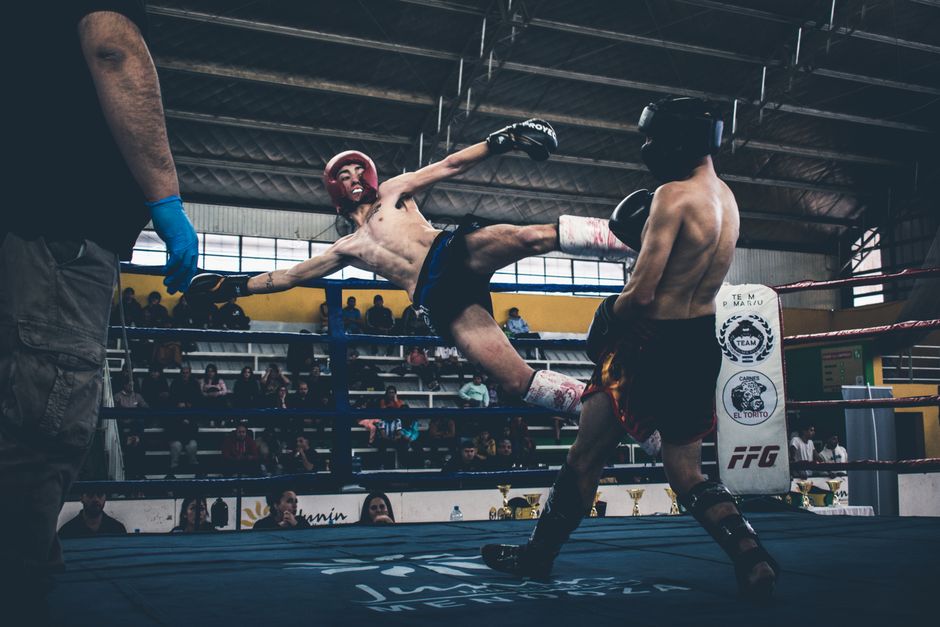
A sports hall on tournament morning. Fighters in hoodies queue for the scale, a doctor checks eyes and blood pressure at a folding table, and by early afternoon the Java pipe, cymbals and drums start up as the first pair kneels in the ring for the Wai Kru, the bow to their teachers, with the Mongkon headband still on. By evening, the same fighters will be wrapped, gloved and bouncing behind a curtain waiting for their names. Muay Thai fight day is the payoff for weeks of work, and how you handle the weigh-in, fluids, food and nerves can decide whether you show up as your best self. This page covers the day for amateur tournaments under IFMA rules, pro cards under a state commission or a promotion such as ONE Championship, and first-time interclub bouts.
General information, not medical or nutrition advice. Plan your weight and fight-day eating with your coach and, ideally, a registered sports dietitian. Back to the Muay Thai hub.
How Muay Thai weigh-ins work
- Amateur (IFMA and its national federations, such as USA Muaythai): a medical check and weigh-in every morning you compete, with the first bouts no earlier than three hours after the weigh-in closes. You get one trip to the official scale each day, and the number is final. A check before your bout can disqualify you if you’re 5% or more above your class.
- Pros in the US: each state’s athletic commission sets the rules. California’s rules for boxing and kickboxing, for example, have fighters weigh in within 30 hours of the bout, allow rehydration by mouth only (IV fluids bar you from competing), may require a urine sample to check hydration, and have the commission doctor examine you at least an hour before you fight, including checks for dehydration.
- ONE Championship: the Asia-based promotion that stages some of the world’s biggest Muay Thai bouts combines a hydration test with the weigh-in. A urine specific gravity of 1.0250 or below passes; fail the hydration test and you can’t step on the scale until you pass it.
Same-day weigh-ins and hydration tests leave no room to “dry out and refill”. The safest plan at every level: make weight by eating well over weeks, not by dehydrating in the last days. Our Muay Thai nutrition page shows how.
Why “regaining the weight” isn’t the same as being rehydrated
Many fighters still cut water. Among Australian Muay Thai fighters, both winners and losers had typically dropped around 5 to 6% of body weight in the week before the fight. Studies of fighters who do this aren’t reassuring. A 2026 study followed ten elite kickboxers who lost about 4% of body weight in the week before the weigh-in and regained it all before fighting, yet urine tests showed every one of them was still dehydrated on competition day. In a 2026 study of MMA and Muay Thai fighters who cut by dehydration, urine and blood tests around the weigh-in and fight day pointed to acute strain on the kidneys. And a 2025 review found that rapid weight loss in combat sports raised muscle damage, fatigue and injury rates. The scale can say you’re back; your body may not be.
Safe rehydration after the scale
- Fluids with sodium first. The International Society of Sports Nutrition’s 2025 position stand on combat sports puts an oral rehydration solution (water with electrolytes) first after the weigh-in, then easy-to-digest carbohydrate, with little fiber. An electrolyte tablet like Nuun Sport or a mix like Skratch Labs in a marked bottle such as a 32 oz Nalgene makes it simple.
- Sip over time, don’t chug. The National Athletic Trainers’ Association (NATA) warns that drinking far more than you’ve lost can dilute the sodium in your blood (hyponatremia).
- By mouth only. IV drips are banned for rehydration by California’s commission, and under the World Anti-Doping Agency’s 2026 list, which IFMA follows, infusions of more than 100 mL in 12 hours are a prohibited method outside of hospital care.
- Check your pee. Pale yellow is a simple sign you’re getting there; dark means keep sipping.
Feeling dizzy, faint, confused, or having a racing heart or cramps after a weight cut is a reason to tell the ringside doctor, not to push through. Fighting dehydrated, in a sport of head kicks, knees and elbows, is a risk no belt is worth.
Fueling on fight day
The American College of Sports Medicine (ACSM) and dietitians’ joint position suggests about 1 to 4 grams of carbohydrate per kilogram of body weight in the 1 to 4 hours before competing, with less fat and fiber so it sits easily. In real food:
- After the weigh-in: a familiar meal such as rice with a little chicken, a bagel with honey, or oatmeal with a banana. Nothing new on fight day.
- Waiting around: tournaments and long fight cards mean hours of waiting. Pack small snacks (pretzels, rice cakes, bananas, a sports drink) and keep sipping.
- Last hour: small sips and maybe a few bites of something easy. Teens should skip energy drinks; the American Academy of Pediatrics says they have no place in young people’s diets.
Wraps, gear checks, Wai Kru and warm-up
- Wraps and gloves are checked. IFMA allows soft bandage or hook-and-loop wraps up to 5 m per hand, with tape only as a wrist strap, and officials sign off the gloves. Amateur gloves are 10 oz, supplied by the organizer. Pros wear what the commission or promotion sets: ONE uses 4 oz gloves for Muay Thai.
- Amateur protection: IFMA provides headgear, shin guards and elbow guards, and youth and masters fighters wear body protectors. Pros under the unified pro Muay Thai rules wear no protective gear on the upper body other than gloves.
- Mouthguard: required everywhere (IFMA says not red or pink). Bring a spare, like the Shock Doctor Gel Max.
- Wai Kru: IFMA requires every athlete to perform the Wai Kru before the first round, wearing the Mongkon and bowing to the canvas three times, to the sound of the Java pipe, small cymbals and two drums. It lasts up to 2 minutes in preliminary bouts, and the fuller Ram Muay dance is kept for finals. Many fighters use it to settle their breathing and loosen up, so warm up first (easy movement, shadowboxing, a few rounds on pads) and stay warm until you walk out.
Handling nerves
Pre-fight nerves are normal, even for veterans. In a 2026 study of professional kickboxers, anxiety and self-confidence scores didn’t separate winners from losers; winners simply threw more attacks and landed them better. So don’t read your nerves as a forecast. Things that help many fighters:
- A set routine for the day: meal times, wrap time, warm-up start.
- Slow breathing with a longer breath out when your heart races, which the Wai Kru gives you time for.
- Two or three simple keys from your coach (“teep to keep distance, kick off the punch, win the inside in the clinch”), not a whole game plan.
Our guide to mental training tools has more.
After the bout
Get checked by the doctor if you took hard shots, even if you feel fine; the CDC notes concussion symptoms can show up hours later, and danger signs (worsening headache, repeated vomiting, confusion, slurred speech) mean the emergency department. Cuts from elbows need the doctor’s eye before you leave the venue. After a knockout or stoppage for head blows, IFMA rules bar competition and sparring for at least 30 days. IFMA also sets mandatory rest after every tournament, from 7 days after a one-round win up to 28 days after ten or more rounds. In a 2026 study at an official Muay Thai championship, fighters’ jump and push-up power dropped sharply right after their bouts, so expect to feel flat for a while. Then refuel, rehydrate and sleep: our recovery page takes it from there, and injuries covers what needs a doctor.
Fight-day bag: what we’d pack
Nuun Sport Electrolyte Tablets
- 300 mg sodium per tablet
- 1 g sugar
- Informed Choice (maker)
Skratch Labs Hydration Drink Mix
- Sodium + carbohydrate
- 20 servings
- NSF Certified for Sport (maker)
Nalgene Sustain 32 oz Bottle
- 32 oz, wide mouth
- BPA-free Tritan
- About $16
Shock Doctor Gel Max Mouthguard
- Boil-and-bite fit
- Adult and youth sizes
- About $12
For gloves, shin guards and the rest of your kit, see Muay Thai gear; for what’s legal in the ring, the rules page. Compare with kickboxing fight day and boxing fight day.
Muay Thai fight day: FAQs
When is the weigh-in for an amateur Muay Thai tournament?
Under IFMA rules, on the morning of each day you compete, together with a medical check, and bouts start at least three hours after the weigh-in closes. Local events may differ, so check the event’s rules.
What is the ONE Championship hydration test?
A urine specific gravity test done with the weigh-in. A reading of 1.0250 or below passes; a fighter who fails can’t weigh in until they pass. It’s designed to discourage cutting weight by dehydration.
Can I use an IV to rehydrate after weighing in?
Generally no. California’s commission bars fighters who rehydrate by IV, and WADA’s list, followed by IFMA, prohibits infusions over 100 mL in 12 hours outside of hospital care. Rehydrate by mouth with fluids that contain sodium.
What should I eat before a Muay Thai fight?
A familiar, carbohydrate-based meal 1 to 4 hours before, low in fat and fiber, such as rice and chicken or oatmeal and a banana, then small snacks and sips while you wait.
Do I have to do the Wai Kru?
In IFMA amateur competition, yes: every athlete performs at least the basic Wai Kru before the first round, up to 2 minutes in preliminary bouts. Most traditional Muay Thai events include it. Your coach will tell you what the event expects; many fighters use it to calm their breathing before the first bell.