This article contains affiliate links: if you buy through them we may earn a commission, at no extra cost to you. Learn more.
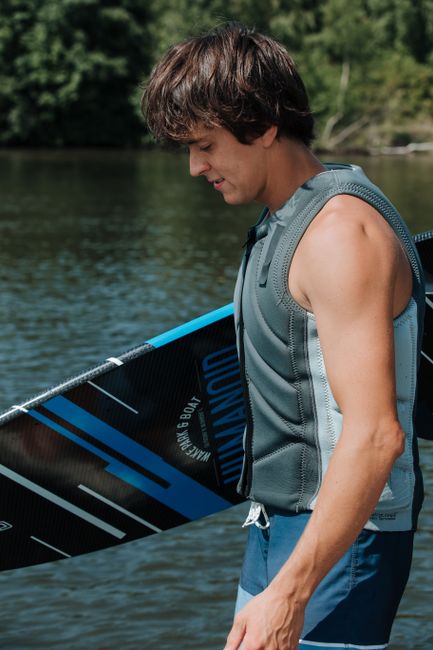
The sun is going down, the ballast is draining, and the crew is replaying the best rides of the day. Your legs feel like you held a half squat for an hour, because you did. The next morning your calves and the backs of your thighs complain on the stairs, your lower back is stiff, and your shoulders remember every swim back to the board. Wakesurfing is gentle on the body compared with jumping a wakeboard, but a full lake day of low stance, pumping, sun and falls still adds up. This page covers wakesurfing recovery: the first hour off the water, a quick check for exhaust exposure, food, sleep, sore legs and back, lake weekends and contest weekends, and which recovery tools are worth it.
General information, not medical advice. Soreness is normal; pain that is sharp, swollen or getting worse is not. See a sports medicine doctor, physical therapist (PT) or athletic trainer (AT) for anything that doesn’t settle. Prices are what we saw in October 2026. Back to the wakesurfing hub.
What a surf day does to you
Wakesurfers ride without bindings in a low, bent-knee stance, shifting weight and pumping the board to stay in the pocket, so the work lands on the quads, glutes, calves and the small muscles that keep you balanced. Every fall means a swim back to the board in a life jacket. Add hours of sun and heat and the body has real work to undo. There’s no research yet on wakesurf recovery itself, so the advice here comes from general sports-medicine guidance, applied to life on the boat.
The first hour off the water
- Check for a headache or dizziness. Wakesurfers ride close to the stern of a slow boat, where exhaust collects. The Coast Guard warns that carbon monoxide (CO) symptoms (irritated eyes, headache, nausea, weakness, dizziness) are easy to mistake for seasickness or drinking. If anyone feels that way, get them into fresh air and get medical help unless you’re sure it isn’t CO. More on our injuries and safety page.
- Get dry and warm. On cool mornings or in spring and fall water, change out of wet gear quickly. Shivering, confusion, fumbling hands or slurred speech can mean hypothermia; the CDC says to get the person somewhere warm, remove wet clothes and warm the core, and to get emergency help if body temperature is below 95°F.
- Rinse off. If you’ve been in water that might have an algae bloom, the CDC says rinse off right away with tap water. Clean any cuts with soap and running water.
- Drink. The American College of Sports Medicine (ACSM) suggests replacing about 1.25 to 1.5 liters of fluid for every kilogram of body weight lost. Without a scale on the boat, drink steadily through the evening, with salty food, until your urine is pale.
- Eat carbohydrate and protein. ACSM suggests about 15 to 25 g of protein (roughly 0.25 to 0.3 g per kilogram) soon after hard exercise, with carbohydrate to refill energy stores. A turkey sandwich and fruit, chocolate milk, a burrito or rice with chicken all work.
Cool-down and mobility
A review in Sports Medicine found that an active cool-down does little for next-day performance or soreness, so a long routine isn’t required. Many riders still like 5 to 10 minutes of easy movement once they’re dry: walking, gentle squats, calf and quad stretches, hip-flexor stretches after a day bent over the board, and some easy trunk rotations for the lower back. Do it if it makes you feel better.
Sleep
Sun, heat and effort make most riders sleepy, which is good. The American Academy of Sleep Medicine recommends at least 7 hours a night for adults, 8 to 10 hours for teens aged 13 to 18, and 9 to 12 hours for children aged 6 to 12. A research review on sleep in athletes notes that caffeine and alcohol late in the day disturb sleep, and that a short nap can help when nights run short, which is useful when the lake is glassiest at dawn. A tracker such as the Oura Ring 5 can show how your sleep and heart-rate variability respond to big days; see our best wearables page and HRV for athletes.
Sore legs, back and shoulders
- Normal soreness peaks a day or two later, is spread through the muscle, and eases with gentle movement.
- Not normal: pain in one exact spot; a knee that popped, swelled or gives way (the American Academy of Orthopaedic Surgeons lists these as signs of an ACL tear); an ankle you can’t walk on; a weak, bruised or misshapen upper arm after the rope tangled (a 2023 case report describes a torn biceps that way); a headache that lingers or gets worse after a hit from the board. See a professional.
- Massage helps how you feel. A large analysis of 99 recovery studies found massage was the most effective technique for reducing muscle soreness and perceived fatigue. A massage gun or foam roller is the do-it-yourself version for quads, calves, glutes and upper back.
TriggerPoint GRID 1.0 Foam Roller
- Firm, textured foam
- Packs in a boat bag
- About $40
OOFOS OOahh Recovery Slide
- Soft foam, cupped heel
- APMA Seal of Acceptance
- About $60
Recovery tools: what’s worth it
- Massage gun: the Hypervolt Go 3 is light enough for a weekend bag; the Theragun Mini is a smaller, pricier option. Keep it off bones, joints, injured spots and the front of the neck. Compare more in our best massage guns guide.
- Foam roller: the TriggerPoint GRID is cheap, simple and good for legs and upper back. See best foam rollers.
- Recovery footwear: slides like OOFOS are comfortable on the dock and after a long day on your feet. See best recovery shoes.
- Ice baths: think twice. You’ve been in the lake all day. Cold-water immersion can ease soreness a little, but a study found regular cold baths after strength training reduced strength gains, so skip them after off-season gym sessions. Anyone with a heart condition should ask a doctor before cold plunging.
Lake weekends and contest weekends
- Day two starts the night before: dinner with plenty of carbohydrate and protein, fluids, and a real night’s sleep.
- Easy first set. Find the pocket and carve a little before you try airs or spins; stiff legs land badly.
- Fewer, shorter sets on the third or fourth day in a row. Short sets also mean less time breathing near the stern.
- Kids and teens need days off. The American Academy of Pediatrics recommends at least one to two days a week off organized sport. A camp week or a run of contests should be followed by rest.
- Between contest heats, stay in the shade, sip fluids, snack, and keep warm on cool mornings. Our Lake Day page has the full plan.
Off-season balance and strength work prepares your legs for summer; see training. For more ideas across sports, read how to recover faster after a workout, or compare soccer recovery. Wakeboarders have their own version at wakeboarding recovery.
Wakesurfing recovery: FAQs
Why are my legs so sore after wakesurfing?
You spend every ride in a low, bent-knee stance, shifting weight and pumping the board, which works the quads, glutes and calves hard. Soreness that eases over a day or two is normal. Pain in one spot, swelling or a knee that gives way is not; see a doctor or PT.
Why do I get a headache after wakesurfing?
Sun, heat and too little water are common causes, but a headache, dizziness or nausea after riding close to a boat’s stern can also be carbon monoxide. Get into fresh air, and get medical help unless you’re sure it isn’t CO. A headache after a hit from the board can be a concussion.
What should I eat after a day of wakesurfing?
A meal with carbohydrate and about 15 to 25 g of protein, plus plenty of fluids and some salt. Keep drinking through the evening until your urine is pale.
Is it OK to wakesurf several days in a row?
For most healthy adults, yes, if you eat, drink and sleep well, start each day with easy riding and shorten sets as fatigue builds. Kids and teens should get at least one or two days off a week, as the AAP recommends.
How much sleep do wakesurfers need?
At least 7 hours a night for adults, 8 to 10 for teens and 9 to 12 for children, according to the American Academy of Sleep Medicine. Protect the night after a big lake day.