This article contains affiliate links: if you buy through them we may earn a commission, at no extra cost to you. Learn more.
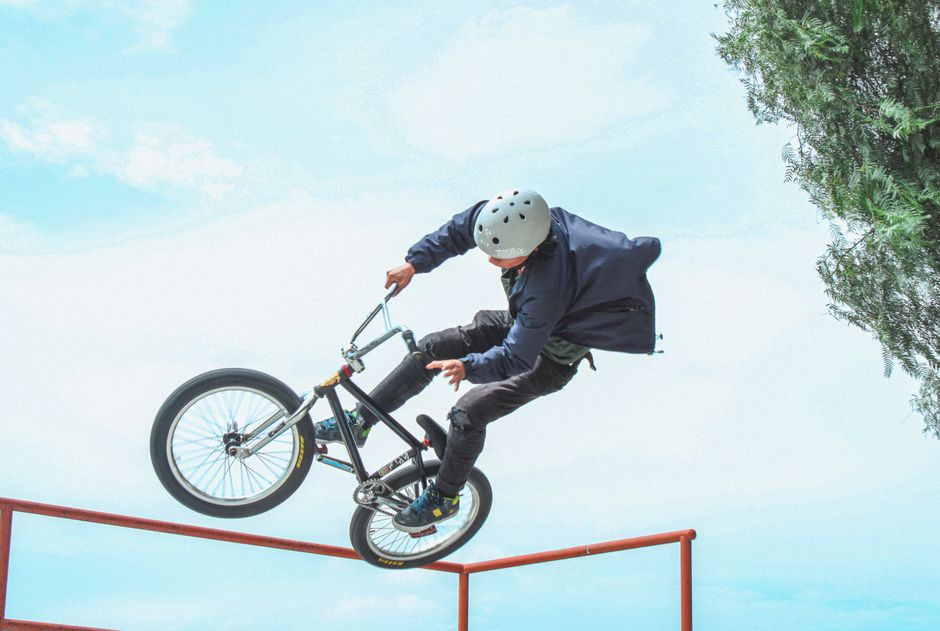
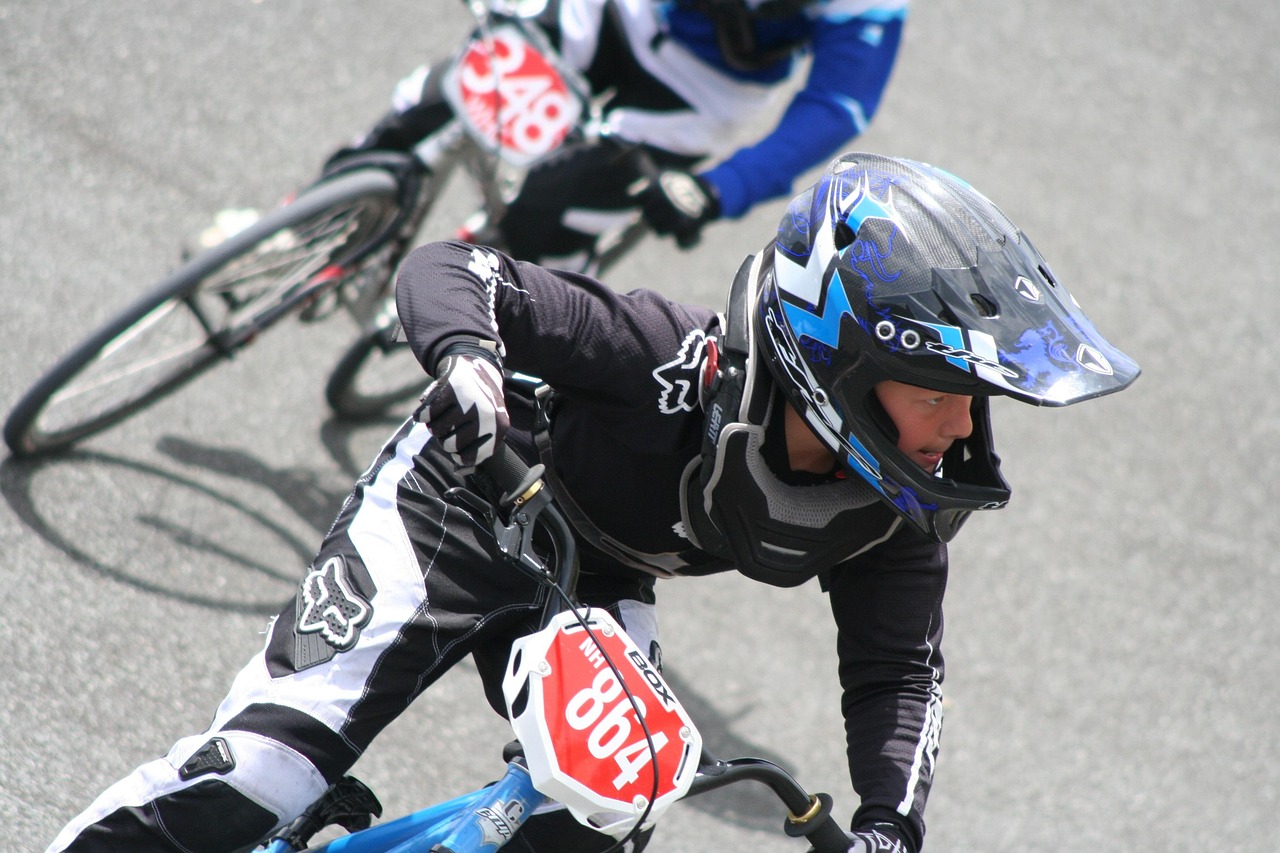
“OK riders, random start. Riders ready? Watch the gate.” Four tones, the gate slams down, and eight riders explode down the start hill. By the first turn, the race is often half decided. That moment is what a BMX racer trains for, from the 8-year-old novice doing gate drills at the club track on a Tuesday night to Olympians in a World Cup final. Freestyle riders train for something different: a 60-second run of tricks with the whole crowd watching. This page covers how BMX training works: what the sport demands, gate starts and sprint power, strength in the gym, skill progressions and how to learn tricks without paying for it in the emergency room.
General information, not a training plan or medical advice. Kids and teens should train with a qualified coach; anyone coming back from an injury should get the go-ahead from a sports medicine doctor or PT. Start at our BMX hub for the bigger picture.
What BMX racing asks of your body
A BMX race is short and violent. A 2025 systematic review of BMX performance research reports elite races lasting about 39 seconds for men and 44 for women. In a study of elite riders on video, men spent about 12 seconds pedaling, 10 jumping and 17 “pumping” (generating speed by pushing the bike through rollers and turns), with only about 30 pedal strokes per lap. Hips and knees extend about 30 times a lap on take-offs, landings and pumps, and the shoulders work hard pushing and pulling the bars.
The start is explosive. In a study of 14 male riders racing with power meters, peak cadence came about 2 seconds after the gate dropped and peak power at about 2.3 seconds, and relative peak power was strongly linked to race time. Elite riders in the research produce peak power well over 1,000 watts. But it isn’t only sprinting: in a study of 12 riders doing six laps with 15 minutes between them, oxygen use reached over 80% of each rider’s maximum on every lap, and the link between peak power and lap time weakened lap after lap. The authors’ conclusion: train both anaerobic power and aerobic fitness, because race days have several laps.
Gate starts and sprint power
Know the rules first. USA BMX requires your front wheel against the gate when the starter begins the cadence; breaking the plane of the gate before it drops is a “gate jump” and can get you disqualified. At UCI races, the voice box calls “OK riders, random start”, then “Riders ready? Watch the gate”, followed by four tones and lights. The gap after “gate” is random, between 0.1 and 2.7 seconds, so you can’t time it; you react to the tones and lights. Gate practice is about a repeatable routine:
- Balance and setup: a still, balanced stance with the lead pedal at your chosen angle, weight ready to move.
- Reaction: go on the tones and lights, not the sound of the gate falling.
- First cranks: big, powerful strokes while the bike moves forward under you.
- Feedback: film your starts. In a small study of six Spanish national-team riders, adding video and coach feedback cut the gate-start time from about 1.26 to 1.05 seconds, and the gain held weeks later.
Off the track, short all-out sprints are the engine. A 2026 study of ten international riders found that peak power in a 5-second sprint tracked closely with time over the first 15 meters of a real start, while jump height did not; the authors caution that the sample was small. Typical tools: short hill or flat sprints from a standstill, sprints on a stationary bike, with full recovery between efforts so every rep is fast. More gear ideas in our speed training equipment guide.
Strength in the gym
Because take-offs, landings and pumps are mostly hip and knee extension, the BMX research recommends exercises for the extensors of the hips, knees and ankles and for the shoulder muscles that push and pull the bars. A 2025 review of BMX freestyle adds upper-body strength to absorb landings, a strong core for rotations, and eccentric (lowering) strength. In practice, many BMX programs include:
- Legs and hips: squats, deadlifts or hip hinges, split squats, step-ups, calf raises.
- Power: jumps, bounds and medicine-ball throws, low volume and high quality.
- Upper body: push-ups, presses, rows and pull-ups for bar control; band work for the rotator cuff to keep shoulders healthy.
- Core: planks, side planks and anti-rotation holds.
- Neck (especially youth): a study of youth racers suggests neck-strength work, along with neck braces, could help reduce head accelerations. Keep it gentle and coached.
Kids and teens can lift. The American Academy of Pediatrics (AAP) says supervised, technique-focused resistance training is safe for children and adolescents, with gains from 2 to 3 sessions a week for at least 8 weeks. Bands are an easy way to start at home; see our resistance bands guide.
Bodylastics Resistance Band Set
- Stackable tube bands with handles
- Door anchor and ankle straps
- Set sizes vary on Amazon
Champion Sports Rhino Elite Medicine Ball
- Rubber ball for throws and slams
- Multiple weights
- Price varies by weight
Skills progressions on the track
Fast BMX riders are smooth before they are strong. Track coaches usually build skills in an order like this (a general progression, not a rule from a governing body):
- Body position: standing “attack” position, heels down, elbows and knees bent, eyes ahead.
- Braking and cornering: controlled stops, then berms (banked turns) with the inside foot on the pedal and weight low.
- Pumping: rollers and backsides without pedaling. Remember, elite riders spend more time pumping than pedaling.
- Manuals: riding on the back wheel across a gap, the base for clearing rhythm sections.
- Small jumps: tabletops before doubles, so a short landing costs speed, not a crash.
- Gate starts and race craft: the start, the first turn, passing and holding a line.
USA BMX keeps riders 12 and under, and all Novice riders, on flat pedals; clipless pedals come later. That’s a sensible order for skills too: learn to move the bike with your body before you’re clipped in.
Safe trick progressions for freestyle and park
Freestyle tricks keep escalating; a 2025 review mentions runs with cork 720s and triple barspins. Nobody starts there. The BMX injury research shows that falls over the bars and stunts are common causes of injury, so the habits that keep you riding are worth more than any single trick:
- One new thing at a time. Master the trick on flat ground or a small ramp before taking it to a bigger feature.
- Use a foam pit or resi ramp (a padded landing) for rotations and anything inverted, until you land it consistently.
- Learn to bail. Practice stepping off and letting the bike go, rather than holding on into a bad landing.
- Warm up and stop while fresh. The “one last try” at the end of a long session is a classic crash moment.
- Full gear for new tricks: helmet, gloves, knee and shin pads. See our BMX injuries page.
- Ride with a friend who can get help if something goes wrong.
Putting a week together
A typical in-season week for a committed amateur racer might include one or two track sessions (skills plus gate starts), one or two strength sessions, one short sprint session, a race, and at least one full rest day. The AAP recommends young athletes take 1 to 2 days off a week from organized sport. Plan bigger strength blocks for the off-season and keep in-season lifting short so your legs are fresh for the gate. Track your effort with a heart rate monitor if you like (see BMX wearables), fuel the work (BMX nutrition) and recover well (BMX recovery). Road and track sprinters train some of the same qualities; compare our cycling training page.
BMX training: FAQs
How long is a BMX race?
Elite races last roughly 35 to 45 seconds; a 2025 review reports about 39 seconds for men and 44 for women. Freestyle competition runs are typically 60 seconds.
How do I get a faster gate start?
Practice on a real gate with a coach, react to the tones and lights rather than the falling gate, and film your starts. Off the bike, short maximal sprints and leg strength help: in one small study, 5-second sprint power tracked closely with start times.
Should BMX riders lift weights?
Most coaches say yes. The research points to hip, knee and ankle extensors, shoulders and core. The AAP says supervised resistance training is safe for kids and teens when technique comes first.
Does BMX need endurance training?
Some. Races are short, but riders in one study reached over 80% of their maximum oxygen uptake on every lap, and a race day means several laps. Aerobic fitness helps you recover between motos.
What’s the safest way to learn BMX tricks?
Small steps: master each trick low and slow, use foam pits or padded landings for rotations, learn to bail, wear full protection and stop before you’re exhausted.