This article contains affiliate links: if you buy through them we may earn a commission, at no extra cost to you. Learn more.
Sunday evening after a three-game tournament: the drive home smells of chlorine and sunscreen, the throwing shoulder aches, the legs feel like they’ve eggbeatered to the moon, and there’s school or work in the morning. What happens in the next 12 hours decides how you feel at Monday’s practice. This page is about water polo recovery: the swim-down, refueling and rehydrating, sleep, reading your body’s signals, getting through tournament weekends, and which recovery tools are worth it, for youth and high school players, college athletes, masters and Olympians.

General information, not medical advice. Pain that doesn’t settle with rest, or anything that changes how you swim or throw, deserves a visit to a sports medicine doctor, physical therapist or athletic trainer. Back to the water polo hub.
What players actually do (and what the science says)
A 2024 worldwide survey asked 231 water polo players and 76 coaches about recovery. Most called it very important, and the most common reason to do it was to lower injury risk. Players rated stretching as the most useful method and used it most; coaches favored active recovery. The biggest obstacle for both was time. The researchers noted a gap between what players do and what the science supports. So here is the short version of the evidence, in order of what matters most.
The swim-down
Five to ten minutes of easy swimming after practice or a game is a habit worth keeping. In one study of young swimmers, 10 minutes of easy swimming after a hard 200 m cleared blood lactate about two and a half times faster than resting. A broader 2018 review found that cool-downs don’t do much for next-day performance or soreness and don’t appear to prevent injuries, but may help the heart and breathing settle. Think of it as a gentle bridge from game to rest, plus a chance to loosen the shoulders. At tournaments, a short swim-down between games, if the pool allows it, is a good use of time.
Refuel and rehydrate
Water polo players sweat more than they realize: elite players in one study lost about 786 mL of sweat an hour in games and drank only about half that. The ACSM joint position statement suggests carbohydrate soon after hard sessions when the next one is close, about 15 to 25 grams of protein in the first couple of hours, and drinking about 1.25 to 1.5 liters for every kilogram of body weight lost. In practice: a bottle and a snack in your bag, then a real meal with carbohydrate, protein and some fruit or vegetables. Chocolate milk, a turkey sandwich, or rice with chicken all work. More on our water polo nutrition page.
Sleep: the recovery tool that works
Sleep experts endorsed by the American Academy of Pediatrics recommend 9 to 12 hours a night for children aged 6 to 12 and 8 to 10 hours for teens aged 13 to 18; adults need at least 7. Water polo makes that hard, with early-morning pool time and late games. A study of 70 nationally ranked athletes found early morning training cut their sleep and raised their tiredness before practice; the researchers suggested naps and good sleep habits to compensate. Count back from your alarm to set a bedtime, keep the room dark and cool, put the phone away, and skip caffeine late in the day. A short nap between tournament games or after morning practice can help.
Reading your body: heart rate variability and how you feel
Elite water polo teams increasingly track morning heart rate variability (HRV), a measure of how rested the nervous system is. In one study, HRV in elite players dropped after the first game of an international tournament and bounced back by the next morning. In another, HRV and perceived recovery improved once in-season training load was cut by about 30% after a heavy preseason. Before the Tokyo Olympics, an Olympic men’s team wore WHOOP straps overnight for 16 weeks; their day-to-day HRV readings were no more variable than with other common methods, which makes this kind of tracking practical. You don’t need a device to start, though: rating your sleep, soreness, mood and energy each morning works too, and the under-16 tournament study found those simple ratings tracked game load. For devices, see our water polo wearables page and our HRV for athletes guide.
Tournament weekends and rest days
- Between games: dry off, get warm, eat, drink, and get off your feet in the shade (details on our game day page).
- The night between days: a proper dinner, a shower, and an early night beat any gadget.
- The day after: an easy swim, light band work for the shoulders, or a real day off.
- Young players: the AAP recommends 1 to 2 days off a week from the main sport and time away from it during the year.
Ongoing tiredness, slower swims despite hard work, poor sleep, low mood or frequent illness are signs to talk to your coach, and to a doctor if they persist. They can also mean you’re not eating enough for your training (see RED-S on our nutrition page). Shoulder soreness that fades in a day is normal; shoulder pain that lingers, wakes you at night or changes your shot is not. See our water polo injuries page.
Recovery tools: what the research says
- Foam rolling: in a 2025 randomized trial of 27 water polo players over a 7-week competitive period, male players who foam rolled improved throwing speed and a blood marker of antioxidant capacity compared with players who didn’t; the women’s results were less clear.
- Massage: a 2018 analysis of 99 studies found massage the most effective technique for reducing soreness and perceived fatigue. Massage guns are the at-home version; many players use them on lats, upper back, chest, hips and quads.
- Cold water immersion: a meta-analysis found it slightly better than passive rest for soreness, best at about 10 to 15 °C for 10 to 15 minutes. But regular ice baths after strength sessions blunted strength and muscle gains in a 12-week study, so many athletes save them for tournament weeks. Check with a doctor first if you have a heart condition, high blood pressure or Raynaud’s, and never plunge alone.
- Compression: compression garments showed small benefits in a meta-analysis, mostly for strength recovery.
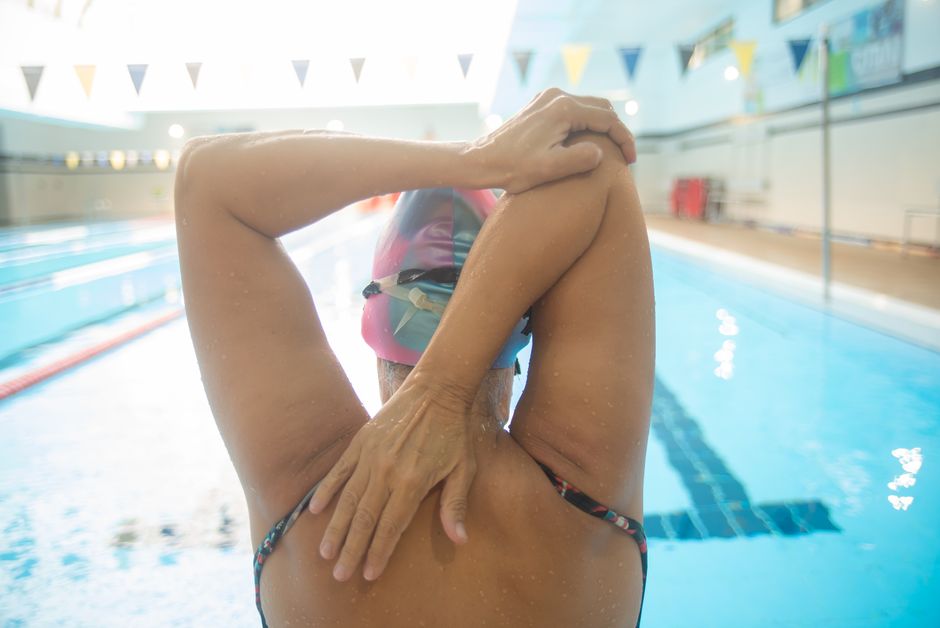
- Stretching: players’ favorite. It feels good and helps keep the shoulder’s range of motion, which water polo shoulder programs work on, but on its own it’s not a substitute for sleep and food.
Many players keep a foam roller like the TriggerPoint GRID or a small massage gun like the Hypervolt Go 3 in their bag, slip into cushioned sandals like OOFOS OOahh on the deck, and some wear a ring like the Oura Ring 5 to track sleep. These are comfort and tracking tools, not treatment. Compare more in our best foam rollers, best massage guns and best recovery tools guides, and see how swimmers handle it on our swimmer recovery page.
TriggerPoint GRID 1.0
- 13 in, hollow core
- Multi-density surface
- About $40
OOFOS OOahh Slide
- OOfoam slide
- APMA Seal of Acceptance
- Machine washable
Oura Ring 5
- Titanium, water resistant to 100 m
- 6 to 9 day battery
- From about $399 + $5.99/month
Water polo recovery: FAQs
What’s the best way to recover after a water polo game?
An easy swim-down, then fluids, carbohydrate and some protein within a couple of hours, and a full night’s sleep. Tools like foam rollers and massage are extras on top of those basics.
How do I recover between games at a water polo tournament?
Dry off, get warm, eat and drink to match the gap before your next game, and rest in the shade. Studies of tournaments show players can bounce back overnight when food, fluids and sleep are covered.
How much sleep do water polo players need?
Teens 8 to 10 hours, children 6 to 12 years 9 to 12 hours, and adults at least 7, per sleep guidelines endorsed by the AAP. With early practices, that means an early bedtime and naps when possible.
Does foam rolling help water polo players?
One 2025 trial in water polo players found foam rolling over seven weeks improved throwing speed in male players, with less clear results in women. More broadly, massage-type techniques reduce soreness and perceived fatigue.
Are ice baths good for water polo recovery?
They can ease soreness a little, but regular ice baths after strength sessions may reduce strength gains, so many athletes save them for busy tournament weeks. Check with a doctor first if you have heart or blood pressure problems, and never plunge alone.