This article contains affiliate links: if you buy through them we may earn a commission, at no extra cost to you. Learn more.
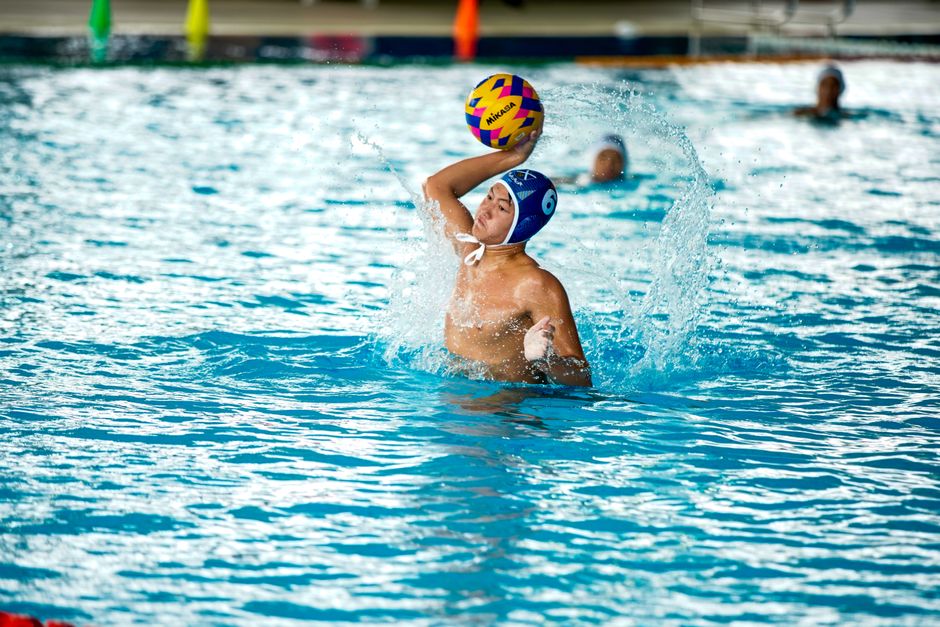
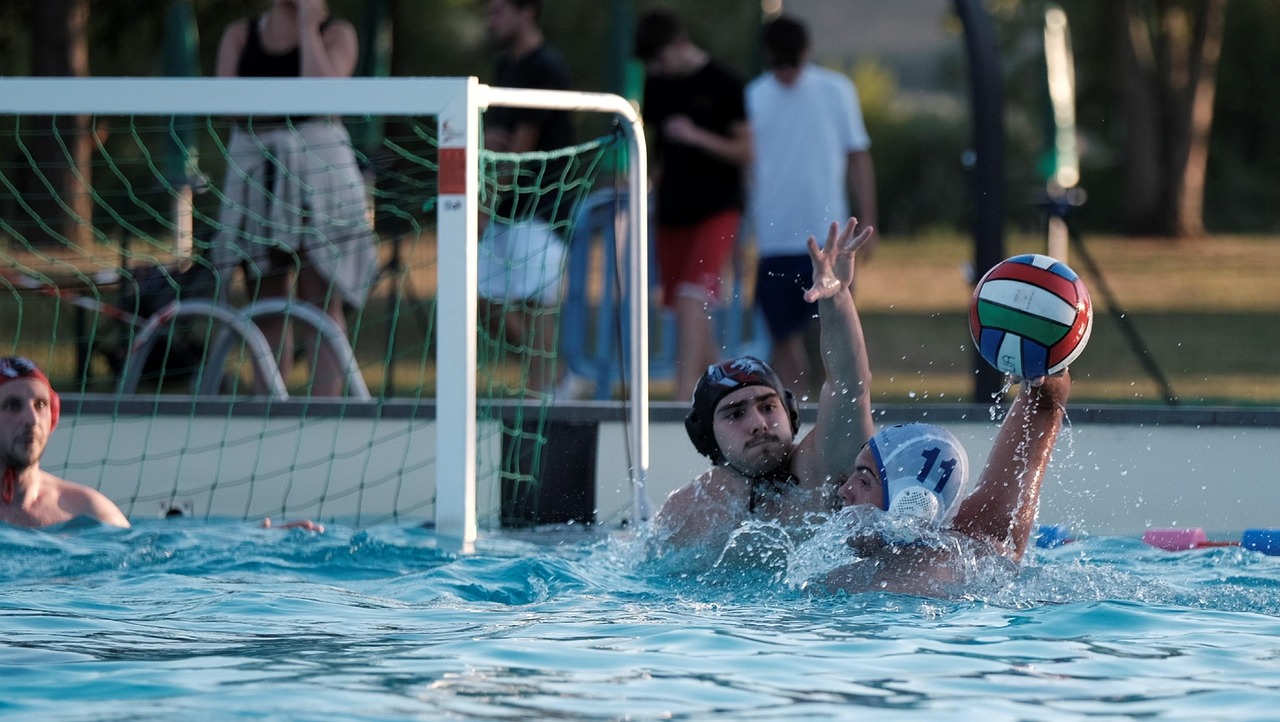
Saturday at a summer tournament: the first game is at 8 a.m. in the outdoor pool, the second at 1 p.m. across town, and maybe a third under the lights. In between, a cooler full of snacks, a pop-up tent on a hot deck, parents comparing brackets and players wrapped in parkas eating bagels. A water polo weekend is as much about what happens between games as during them. This page covers water polo game day at every level, from youth and club tournaments to high school, college and international play: how games run, fueling between games, hydration when you’re surrounded by water, and the sun and lightning rules for outdoor pools.
General guidance, not a personal nutrition plan. Players with diabetes, food allergies, heat illness history or other health conditions should plan game days with their doctor or a sports dietitian. Back to the water polo hub.
How a game day runs
Under World Aquatics rules a game is four periods of eight minutes of actual play, with the clock stopped at every whistle, so a game takes well over half an hour. There are two-minute breaks after the first and third periods, a three-minute break at halftime, and each team gets two one-minute timeouts. Youth, high school and some club games use shorter periods, so check your league’s rules. Those breaks are your fueling and drinking windows: short, so the bottle and snack need to be at the bench, not in the bag in the stands.
Tournament weekends: what the research shows
Many club, youth and international events pack several games into a few days. Two studies give a feel for what that does to players. In a group of Italian under-16 boys who played 12 games in 7 days, higher game loads went with more fatigue, lower well-being and lower perceived recovery, and players felt better recovered for morning games. In elite players at an international tournament with three hard games in four days, heart rate variability (a marker of how rested the nervous system is) dropped after the first game but bounced back by the next morning. The takeaway: the body handles a busy weekend if the basics between games are covered, which means food, fluid, rest and sleep.
- Get out of the sun between games. Shade, a tent, or indoors if you can.
- Dry off and get warm. A parka or dry clothes after you get out keeps you from shivering away energy, especially at early outdoor games.
- Rest your legs. Sit or lie down between games instead of wandering the venue; nap if you have a long gap.
- Protect the night’s sleep. It’s the most important recovery tool of a tournament weekend. More on our water polo recovery page.
The pre-game meal
The joint position statement of the American College of Sports Medicine (ACSM), the Academy of Nutrition and Dietetics and Dietitians of Canada suggests about 1 to 4 grams of carbohydrate per kilogram of body weight in the 1 to 4 hours before exercise that lasts more than an hour, and says high-fat, high-protein or high-fiber choices may need to be limited to avoid stomach trouble. For a 60 kg (132 lb) player eating three hours out, that’s a real meal: rice or pasta with some chicken, a bagel with peanut butter and a banana, or oatmeal with fruit. Closer to the game, keep it small and familiar. Nothing new on game day.
Fueling between games
A rule of thumb many coaches and sports dietitians use, matched to the gap between games:
- Under an hour: something light and easy: a banana, orange slices, pretzels, a sports drink.
- One to two hours: a bigger carbohydrate snack with a little protein: a bagel, a turkey sandwich, Greek yogurt with granola, chocolate milk.
- Three hours or more: a proper meal, then a snack closer to the next game.
After each game, ACSM suggests carbohydrate to refill energy stores and about 15 to 25 grams of protein within a couple of hours. USA Swimming’s sports dietitian advice for multi-day meets fits water polo too: pack familiar, portable snacks instead of relying on the snack bar, plan when you’ll eat so you aren’t grazing all day, and keep eating the way you do at home. Tournament food is often thin on carbohydrates, so pack more than you think you need.
Hydration in the pool
It’s easy to forget you sweat when you’re in water. A study of elite male water polo players measured average sweat losses of about 786 milliliters per hour in games, while players drank only about 380 milliliters per hour, about half of what they lost. Players lost less body fluid than land athletes usually do, but individual players varied widely. World Aquatics sets competition water at 26 °C (about 79 °F), give or take one degree, so you’re working hard in water that isn’t cold, and outdoor decks add sun and heat.
- Keep a labeled bottle at the bench and drink at quarter breaks and timeouts.
- Aim to lose less than about 2% of body weight over a game, the target the National Athletic Trainers’ Association (NATA) uses; weighing before and after a hard session shows your own sweat rate.
- Don’t overdo it either. NATA says you shouldn’t gain weight during exercise from drinking too much; drinking to thirst is a safe approach when you don’t know your sweat rate.
- On long, hot tournament days, a drink or tablet with sodium, like Nuun Sport or Skratch Labs Hydration Sport Drink Mix, helps replace salt; Skratch also adds carbohydrate. A big bottle such as the Nalgene 32 oz makes it easy to see how much you’ve had. See our best electrolyte powders guide.
Nuun Sport Electrolyte Tablets
- 300 mg sodium per tablet
- 1 g sugar
- About $7.50 per tube of 10
Skratch Labs Hydration Sport Drink Mix
- 400 mg sodium per serving
- 19 g carbohydrate
- About $24 for 20 servings
Shock Doctor Gel Max Mouthguard
- Boil-and-bite gel-fit liner
- Youth and adult sizes
- About $12
Warm-up and the first whistle
Get in the water to warm up. In a 2026 study of international-level players, in-water warm-ups led to much better sprint-test performance than a dryland-only routine. If the pool is busy, do band work and dynamic moves on deck first, then make the most of your in-water time with swimming, eggbeater, passing and a few hard sprints. Check your cap’s ear guards and chin strap, trim your nails, and take off rings, earrings and watches: World Aquatics rules require players to remove anything likely to cause injury and to arrive with nails properly cut.
Outdoor pools: sun, heat and lightning
For outdoor tournaments, bring shade, a hat for between games and water-resistant sunscreen, and reapply it. Watch for heat illness on the deck: headache, dizziness, nausea or confusion in a player who’s been standing in the sun. Lightning is the big one. NATA’s lightning position statement says that if you can hear thunder, lightning is close enough to strike; that swimming pools are unsafe places in a storm, indoor ones included, because their plumbing and wiring connect to the outside; and that play should wait until 30 minutes after the last thunder or lightning. Get everyone out of the water and into a substantial building or a closed vehicle.
The game-day bag
Two suits, a cap with intact ear guards (and a spare), towels, a parka or warm layer, a mouthguard if you use one, a full water bottle and electrolytes, snacks for every gap, sunscreen, flip-flops or recovery slides for the deck, and a dry set of clothes. Swimmers face many of the same issues at meets; see our swim meet day page, and for team-sport tournament tips our soccer game day page. What players eat the rest of the week is on our water polo nutrition page.
Water polo game day: FAQs
What should I eat before a water polo game?
A familiar carbohydrate-based meal 1 to 4 hours before, lighter the closer you get. ACSM suggests about 1 to 4 g of carbohydrate per kilogram of body weight in that window and limiting heavy, fatty or high-fiber foods.
What should I eat between games at a water polo tournament?
Match it to the gap: something light like fruit or pretzels if it’s under an hour, a bigger snack with some protein if it’s one to two hours, and a meal if it’s three hours or more. Pack familiar snacks rather than relying on concessions.
Do water polo players need to drink water during games?
Yes. Elite players lost about 786 mL of sweat per hour in games but drank only about half of that. Keep a bottle at the bench and drink at breaks and timeouts.
How long is a water polo game?
Under World Aquatics rules, four periods of eight minutes of actual play, with breaks of two, three and two minutes between periods and two timeouts per team. With clock stoppages a game takes much longer. Younger age groups and high school often play shorter periods.
Can you play water polo in a thunderstorm?
No. NATA says pools, indoor and outdoor, are unsafe in a lightning storm. Clear the water when thunder is heard and wait 30 minutes after the last thunder or lightning before resuming.