This article contains affiliate links: if you buy through them we may earn a commission, at no extra cost to you. Learn more.
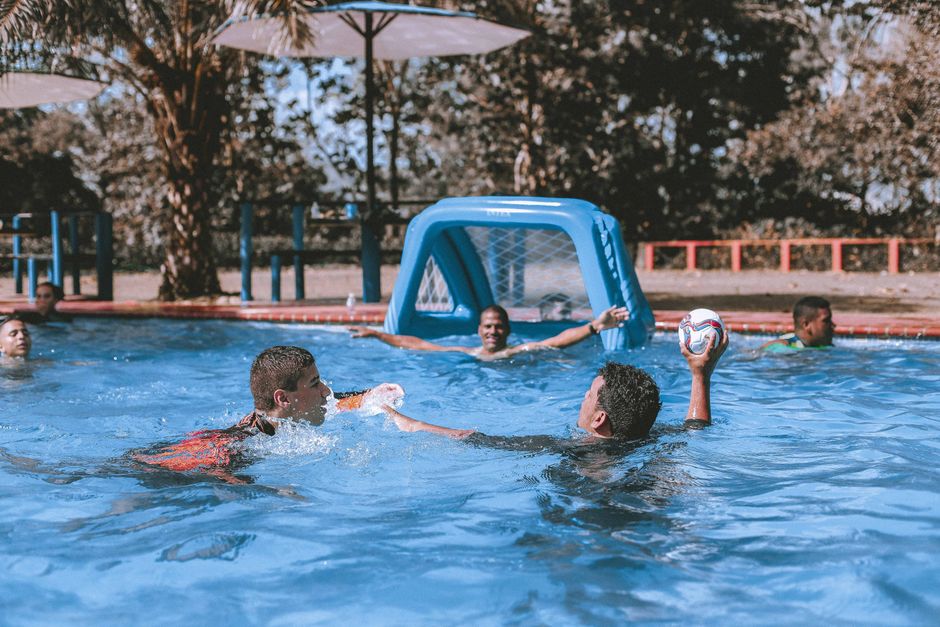
A row of eight-year-olds in bright caps, bobbing at the side of the pool, waiting for the coach’s whistle to sprint for a soft little ball. Two summers later, the same kids are treading water for a full quarter, cheering each other at their first Junior Olympics. Youth water polo grows confident swimmers into tough, team-first athletes, and many families find it when a child who loves the pool wants more than lap swimming. This guide is for parents: how kids start, the swim skills they need, how the game changes by age, how high school and club fit together, what to know about safety, and how college recruiting works.
How kids start: Splashball
Splashball is USA Water Polo’s learn-to-play program for children 5 to 12. It teaches basic skills and the idea of the game in a recreational, fun setting, and clubs often describe it as non-contact. Programs register with USA Water Polo, and you can search for one near you on its website. Many clubs also run a summer or after-school intro for kids who already swim on a team.
The swim skills kids need first
Water polo is played in water too deep to stand in, so swimming comes first. Requirements vary by club. One program, for example, asks Splashball kids to swim 15–25 yards of freestyle and elementary backstroke safely in the deep end, know a little breaststroke kick, and tread water for one to two minutes. Before signing up, make sure your child is comfortable in deep water and can get in and out of the pool on their own. The American Academy of Pediatrics notes that swimming can be a child’s first sport, and our youth swimming guide covers lessons and swim teams. Many water polo kids keep swimming on a swim team too; it builds the speed and endurance the game needs.
Age groups and how the game changes
| Age group | Format (USA Water Polo) | Ball |
|---|---|---|
| Splashball (5–12) | Learn-to-play, recreational | Small youth balls |
| 10U | 5v5 on about 15–18 × 10–12 m, four 5-minute quarters, 30-second shot clock | Size 2 |
| 12U | 6v6 on about 20 × 15 m, four 6-minute quarters, smaller goal | Size 3 |
| 14U | 7v7, full game | Size 4 (girls and boys) |
| 16U and 18U | 7v7, full game | Size 4 for girls, size 5 for boys |
USA Water Polo changes a few rules for 10U and 12U to help young players develop: there is no fixed time to serve on an exclusion (the player swims to the re-entry area and may return as soon as their head comes up there), and they can’t shoot directly from a free throw or corner throw. Ball sizes in the table are the ones used at the National Junior Olympics. The details are on our water polo rules page.
Club, high school and the Junior Olympics
Club water polo runs through USA Water Polo, which counts more than 500 member clubs. Clubs play sanctioned tournaments, and the summer peak is the USA Water Polo Junior Olympics, which USA Water Polo calls the world’s largest water polo tournament. Strong players may be invited into the Olympic Development Program (ODP), which serves about 3,500 athletes nationwide.
High school water polo is offered in some states, not all. In 2024-25 about 40,000 high schoolers played nationwide, about two-thirds of them in California, where boys play in the fall and girls in the winter. Texas, Illinois and Florida have the next-largest programs. Varsity games are usually four 7-minute periods. If your school has no team, a club is the way to play. See water polo leagues and associations.
Safety for young players
- Concussion: knocks to the head from the ball or another player happen. Know the CDC HEADS UP signs (headache, dizziness, confusion, a dazed look, feeling “off”) and pull a player out of the water if you see them; no return that day, and only with a healthcare provider’s clearance. Under USA Water Polo’s rules, a referee may stop play to check a player after a hard blow to the head. The CDC offers free online HEADS UP training for youth coaches.
- Mouthguards and ear guards: the cap’s ear guards are required. Mouthguards aren’t required, but they are allowed without special permission in high school, and a survey of 347 players found that more than half had a mouth or face injury in one season while very few wore one.
- Breath-holding: the American Red Cross, the YMCA of the USA and USA Swimming warn that hyperventilating and long breath-holds can cause hypoxic blackout. No underwater contests, and never practice them alone.
- Shoulders: the shoulder is the most commonly injured body part in college water polo. Shoulder pain that comes back with throwing is a reason to see a sports medicine doctor, physical therapist or athletic trainer, not to play through.
- Ears: swimmer’s ear is common in kids who spend hours in the pool. The CDC suggests drying ears well and never using cotton swabs in the ear canal; ear pain or discharge means a trip to the doctor.
More on our water polo injuries page.
College recruiting
Water polo players can play in college at NCAA varsity schools (one National Collegiate championship each for men and women, plus Division III) or on club teams, many in the Collegiate Water Polo Association. A few basics for families:
- Timing: NCAA Division I coaches in most sports, water polo included, may start recruiting communication on June 15 after the sophomore year, and official and unofficial visits can begin August 1 before the junior year.
- Eligibility: register with the NCAA Eligibility Center to play in Division I or II. Division I asks for 16 core courses and at least a 2.3 GPA in them.
- Scholarships: under the 2025 House settlement, Division I schools that opted in replaced the old caps (4.5 scholarships for men’s water polo, 8 for women’s) with a 24-player roster limit and may fund any rostered player. Division III schools give no athletics scholarships, though many students get academic or need-based aid.
- Get seen: club tournaments, the Junior Olympics and ODP give players chances to be seen. Keep grades up, and when coaches may reply, send short, honest emails with game video.
What your water polo kid needs
Teams supply the numbered game caps (rules require every team to have its own sets). Players need a sturdy suit, a practice cap with ear guards, a mouthguard, a water bottle and a ball to throw around at home. For 12U, the KAP7 HydroGrip size 3 is the ball KAP7 sells as the official ball for 12-and-under water polo (about $34 on Amazon in October 2026). The Turbo practice cap by KAP7 is a single no-number cap made of chlorine-resistant fabric (about $15), and the Shock Doctor Gel Max comes in a youth size (about $12). The full list, including suits and ball sizes for older players, is on our water polo gear page.
KAP7 HydroGrip Water Polo Ball (Size 3)
- Size 3
- Official ball for 12U (maker)
- About $34 on Amazon
Turbo No Number Water Polo Practice Cap
- Chlorine-resistant PBT
- Sold individually
- About $15
Shock Doctor Gel Max Mouthguard
- Gel-Fit liner
- Youth and adult sizes
- About $12
After a long tournament weekend, the recovery shoes guide has slides that fit kids and parents alike. Multi-sport family? See our youth soccer guide. Back to the water polo hub.
Parents’ questions about youth water polo
What age can kids start water polo?
USA Water Polo’s Splashball program is for ages 5 to 12. Age-group club play starts at 10U. What matters most is swimming ability: your child should be comfortable in deep water first.
How well does my child need to swim?
It depends on the club. One Splashball program asks for 15–25 yards of freestyle and elementary backstroke in the deep end plus one to two minutes of treading water. Ask your local club for its requirement.
Is water polo safe for kids?
Younger age groups play a smaller, modified game, and the rules require caps with ear guards. Like any contact sport it has risks, mostly to the head, hands, mouth and shoulders, so a mouthguard, good coaching and taking any head knock seriously all help.
Should my child do swim team and water polo?
Many families do both, because swim training builds the speed and endurance water polo needs. Watch the total load, especially on the shoulders, and make sure there are rest days.
When can college coaches contact my child?
In NCAA Division I, recruiting communication can start June 15 after the sophomore year, and visits from August 1 before the junior year. Division II and III rules differ, so check the NCAA’s site.