This article contains affiliate links: if you buy through them we may earn a commission, at no extra cost to you. Learn more.
A wooden board above a bedroom doorway, a timer app on the phone, chalk dust on the carpet. For many climbers, the hangboard is where winter training happens: seven seconds on, three off, fingers burning. It’s also where a lot of finger injuries start. This page is climbing training done safely: when a hangboard makes sense and how to progress on it, why pushing exercises belong in a pulling sport, how to build general strength and mobility, and how much rest fingers really need. It’s written for every level, from teens on a youth team to gym regulars, college club climbers, outdoor projectors and athletes chasing the World Climbing Series and the LA28 Olympics.
General information, not a training prescription. If you’re coming back from an injury or have pain, work with a sports medicine doctor, physical therapist or a qualified climbing coach. Back to the climbing hub.
Climb first, train second
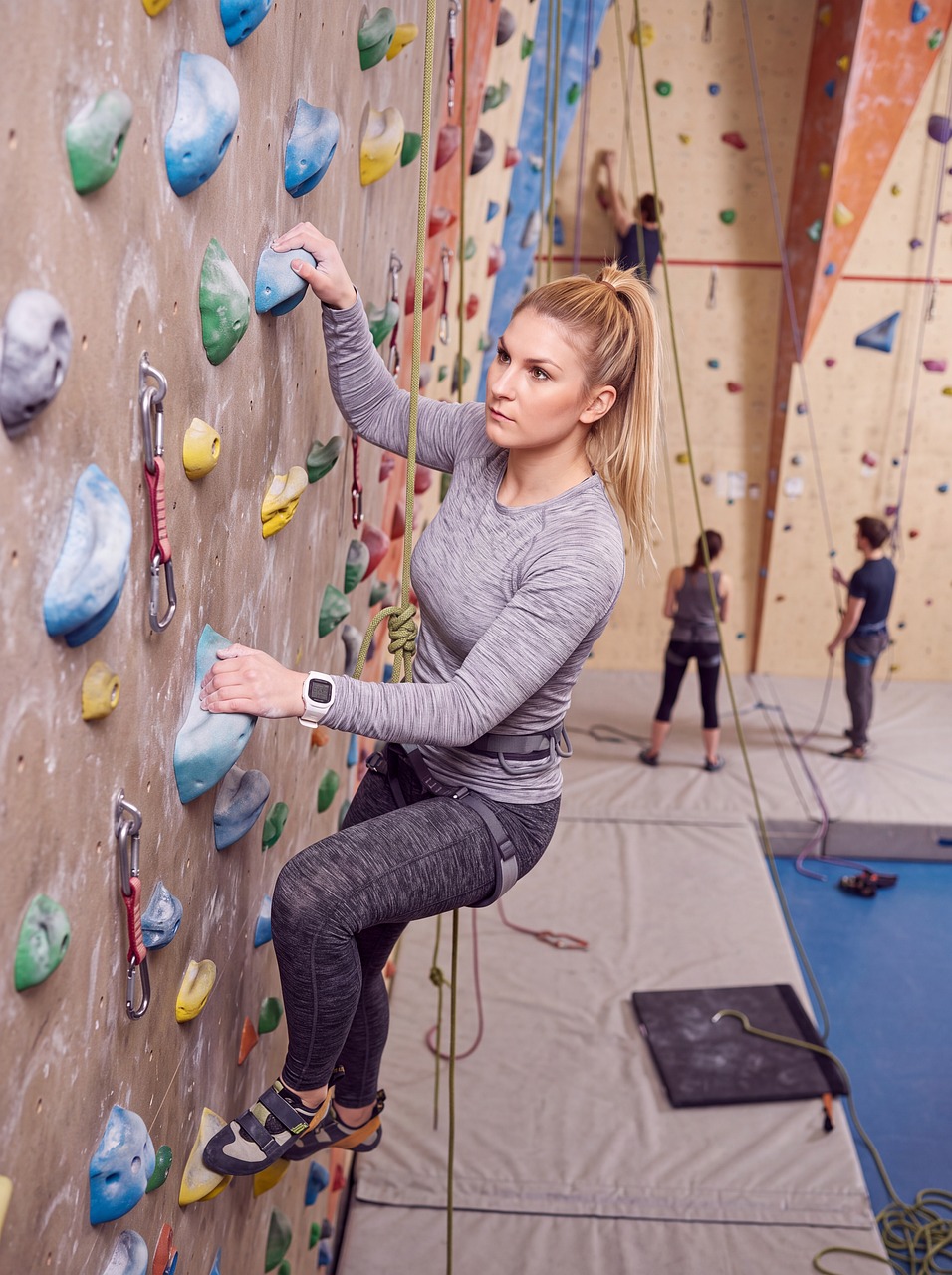
For beginners, climbing itself is the best training: technique, footwork and body position matter more than finger strength for the first year or two, and the tendons and pulleys in your fingers adapt more slowly than your muscles do. A 2024 review of resistance training for climbers says fingerboard and campus board training should be limited in lower-graded climbers because of the high load on the finger flexors. Climb two or three times a week on a variety of holds and angles, and add structured finger training later.
Hangboard safety and progressions
A hangboard (fingerboard) lets you load your fingers in a controlled, measurable way. Research supports it for climbers ready for it: in a 2021 randomized trial of 30 intermediate to advanced climbers, an 8-week program that added 1.25 kg each week to timed hangs improved overall grip strength more than normal climbing training alone. A 2022 study of 54 experienced climbers training twice a week for 4 weeks on a 12 mm edge found that hangs near maximal effort raised maximum finger strength, while lighter, repeated hangs at 60–80% of max built endurance.
- Who: climbers with a solid year or more of regular climbing and no current finger pain. Under-18s: talk to a qualified youth coach first (see below).
- How often: the 2024 review describes structured, low-volume, high-resistance hangs twice a week as a feasible approach.
- Grip: train open-hand and half-crimp positions on a comfortable, fairly deep edge (research tests often use edges of 20–25 mm). Avoid full crimps and one- or two-finger pockets until you’re experienced.
- Start light: take weight off with your feet on a chair or a pulley system, then add load in small steps from week to week, not from set to set.
- Stop short of failure. Long rests between sets (the studies above used minutes, not seconds) and ending a set with a few seconds in reserve keep the quality high and the risk down.
- Warm up with easy hangs or easy climbing first, and stop at any sharp pain in a finger.
The review gives a useful rule of thumb for what a hang trains: about 1–5 seconds at a load you can barely hold biases maximum strength, 3–30 seconds biases muscle growth, and over 30 seconds biases strength endurance. A classic home board like the Metolius Simulator 3D has edges, slopers and pockets in many sizes; climbers who want numbers use a force gauge such as the Tindeq Progressor 200 to measure pull strength and track progress without guessing.
Young climbers
Teen fingers are still growing, and finger growth plate stress injuries are the most common sport-specific injury in adolescent climbers. The British Mountaineering Council’s guidance, written with climbing surgeon Dr. Volker Schöffl, says campus board use is not recommended for anyone under 18, along with added weights while climbing, lots of explosive dynamic moves and constant crimping. Youth climbers build strength best with lots of varied climbing, bodyweight exercises and coaching on technique; any structured hangboard work should be light and planned with a qualified youth coach. The American Academy of Pediatrics advises young athletes to take 1–2 days a week off their sport. More on the climbing youth page.
Antagonist training: push to balance the pull
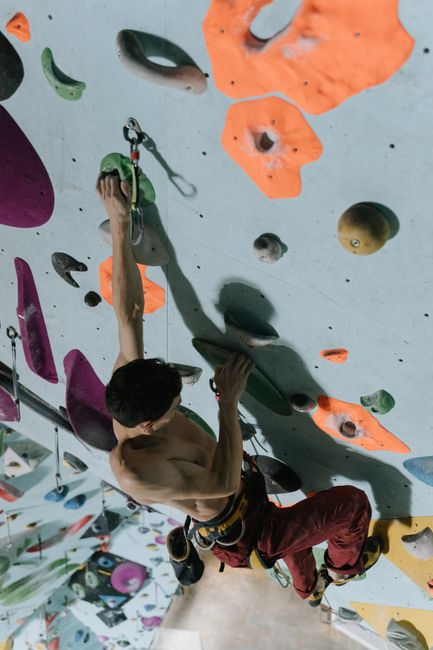
Almost every climbing move pulls: fingers close, elbows bend, shoulders pull down. Over months, that can leave the pushing muscles, the rotator cuff and the finger extensors comparatively weak, and many physios and coaches believe the imbalance feeds shoulder and elbow problems. The 2024 review recommends brief resistance training aimed at the finger flexors, shoulder and back muscles. A simple antagonist routine, two or three times a week:
- Push-ups or dips and an overhead press for the chest, shoulders and triceps.
- Rotator cuff work: external rotations and “Y-T-W” raises with a light resistance band.
- Wrist and finger extensors: reverse wrist curls, and opening the fingers against a rubber band or a trainer like the Metolius GripSaver Plus.
- Scapular control: scap pull-ups and slow, controlled lowering from a pull-up.
Resistance bands cover most of this at home or at the crag; see our best resistance bands for athletes guide.
General strength and core
Research on advanced climbers links pull-up endurance and shoulder-girdle strength to climbing performance about as closely as finger endurance, so the big pulling muscles matter too. Weighted pull-ups, lock-off holds, rows and core work (hanging knee raises, front-lever progressions, planks) build the tension that keeps your feet on steep walls. Legs matter for high steps and heel hooks: squats, lunges and single-leg work also help bouldering landings. Keep sessions short and heavy rather than long and exhausting, so they don’t eat into your climbing.
Mobility
Hip mobility lets you get your weight over your feet: high steps, frog positions, drop knees and wide stems all depend on it. Hamstring and hip-flexor flexibility help heel hooks and getting your hips close to the wall. Shoulder mobility, especially overhead reach, matters for big moves. A few minutes of hip openers, deep squats and shoulder circles after a session, done consistently, is more useful than a long stretch once a month.
Rest: fingers recover slower than muscles
- Don’t stack hard finger days. Put a rest day or an easy, big-hold day between hard bouldering, limit climbing and hangboard sessions.
- Plan easier weeks. Many coaches drop volume every few weeks so tendons can catch up.
- Watch the warning signs: fingers stiff in the morning, a knuckle that aches after every session, grades dropping, sleep getting worse. Back off, and see a professional if pain lasts.
- Eat enough. Under-fueling is common in climbing and linked to injury (see climbing nutrition).
More on rest days, sleep and skin on our climbing recovery page, and on spotting injuries early on climbing injuries.
Training tools many climbers use
Metolius Simulator 3D Training Board
- Edges, slopers and pockets
- 28 × 8.75 in
- About $120
Tindeq Progressor 200
- Measures pull force via app
- 200 kg design load, 80 Hz
- USB-C rechargeable, Bluetooth
Metolius GripSaver Plus
- Finger loops resist opening
- Fingers, wrist and forearm
- About $20
WODFitters Pull-Up Assistance Bands
- 5-band set
- Layered latex loops
- Assisted pull-ups and rotator cuff work
Climbing training: FAQs
When should I start hangboarding?
Once you’ve climbed regularly for a good while, technique is no longer your main limit, and your fingers are pain-free. A 2024 research review says fingerboard training should be limited in lower-graded climbers. Under-18s should only do light, coach-planned work, and no campus board.
How often should I hangboard?
Twice a week is a common, research-backed frequency: short, low-volume sessions with long rests between hangs. Don’t do it on the same day as hard bouldering if your fingers are tired, and leave at least a day between finger sessions.
What is antagonist training for climbers?
Training the muscles that do the opposite of climbing: pushing (push-ups, presses, dips), rotator cuff external rotation, and the finger and wrist extensors. Many coaches and physios use it to balance a pulling-only sport and support shoulder and elbow health.
Is a campus board safe?
It’s a high-load tool for strong, experienced adult climbers. Studies in advanced climbers show it can improve bouldering performance, but the British Mountaineering Council says it is not recommended for anyone under 18 because of the risk to finger growth plates.
How many rest days do climbers need?
It depends on your level and age, but fingers need more recovery than muscles. Most recreational climbers do well with a rest or easy day after each hard session. The American Academy of Pediatrics advises young athletes to take 1–2 days a week off.