This article contains affiliate links: if you buy through them we may earn a commission, at no extra cost to you. Learn more.
The boat’s back on the trailer, the sun is going down and you’re tired in a way that doesn’t quite make sense: you were “only” fishing. But you were up before five, stood on a rocking deck for ten hours, made hundreds of casts, fought a couple of good fish, squinted into the glare, and drank half of what you sweated. Your lower back is tight, your casting shoulder aches, your face is glowing red and tomorrow is day two of the tournament (or a Monday at work). Recovery after fishing is simple, and it decides how you feel the next morning. This page is for everyone who fishes: kids after a summer day at the lake, high school and college tournament anglers, weekend warriors, guides and pros on back-to-back days, and older anglers who want to keep fishing for decades.
General information, not medical advice. Pain that lasts, numbness or weakness, a wound that looks infected or a bad sunburn with fever or blisters over a large area need a doctor. Prices change often; prices below are from our buying guides, checked in October 2026. Back to the fishing hub.
What you’re recovering from
- Fluid and fuel: long days in sun and wind with irregular drinking and snacking.
- Sun: hours of UV from above and reflected off the water, which the CDC notes adds to your exposure.
- Repetition: a 2025 review found low back pain and repetitive strain of the shoulder, elbow and wrist are commonly reported by regular anglers.
- Legs and balance: wading a stream rates about 6 METs in the 2024 Compendium of Physical Activities, real exercise for the legs.
- Cold: ice fishing, early spring and late fall days, and wet clothes.
- Short nights: early launches, long drives and adrenaline.
The first hour: drink, eat, check yourself
Rehydrate. The American College of Sports Medicine (ACSM) suggests replacing about 1.25 to 1.5 liters of fluid for every kilogram of body weight lost; if you don’t weigh yourself, keep drinking until your urine is pale again, and include some sodium (a meal, salty snack or electrolyte drink) after a long hot day.
Refuel. ACSM suggests about 15 to 25 g of protein (or 0.25 to 0.3 g per kg) soon after activity, with carbohydrate to restore energy. That’s a real dinner (fish tacos count), a turkey sandwich and fruit, or chocolate milk on the drive home if dinner is far away. On a tournament night, make it a proper meal so you start day two topped up.
Check your skin and hands. Wash any hook punctures or fish-spine cuts with soap and clean water and cover them loosely; the CDC advises washing cuts that touched seawater right away. Watch over the next days for redness, swelling, warmth, drainage or fever, and make sure your tetanus shot is current (MedlinePlus advises a booster every 10 years). Dry wet feet and hands well after wading.
Sunburn and sun-tired skin
If you got burned anyway, the American Academy of Dermatology (AAD) suggests frequent cool baths or showers, a moisturizer with aloe vera or soy while the skin is still damp, an over-the-counter pain reliever such as ibuprofen if it’s safe for you, drinking extra water (a sunburn draws fluid to the skin), and leaving any blisters alone so they can heal. Then cover up the next day: long sleeves, a hat and a UPF neck gaiter, because burned skin needs protection while it heals. Large, blistering burns, fever, chills or feeling unwell need a doctor. And keep an eye on your skin over the years: show a dermatologist any spot that’s new, changing or won’t heal, especially on the face, ears, lips, neck and backs of the hands.
Tired, gritty eyes after a day of glare? Rest them, and next time wear sunglasses with 100% UV protection; polarized lenses cut the glare that makes you squint.
Back, shoulders and elbows
Most post-fishing aches are the ordinary soreness of a long day and fade in a day or two. In a survey of fly anglers, most arm pain after fishing lasted less than a day or up to a week, and most people didn’t need a doctor. A research review in Sports Medicine (2018) found a formal cool-down doesn’t do much for next-day soreness or performance, so think of these as feel-good habits, not magic:
- Stand up and move after the drive home: a short walk loosens a back that’s been sitting and standing in one position all day.
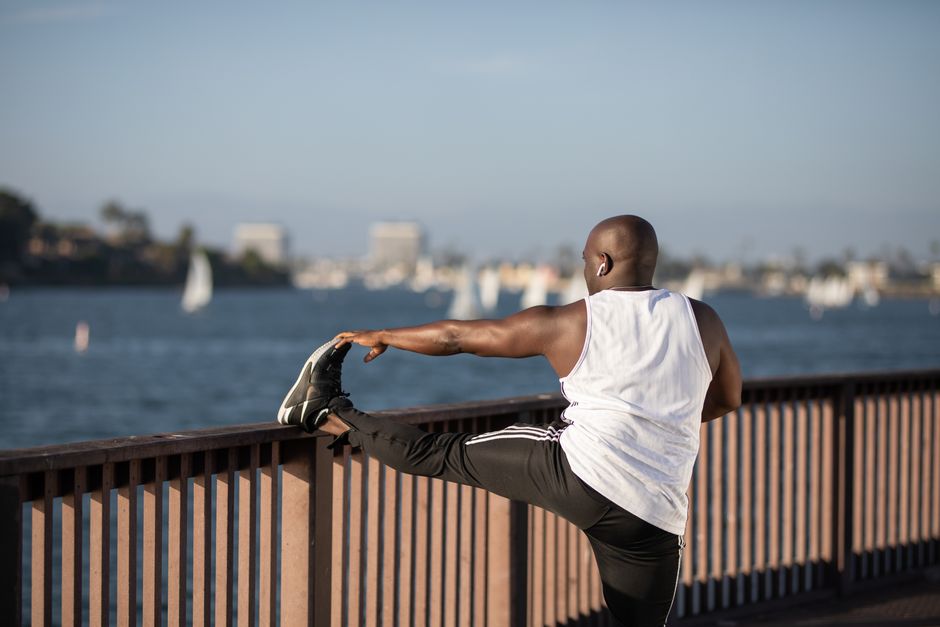
- Gentle mobility: cat-cow, child’s pose, open-book rotations for the upper back, a doorway chest stretch, slow arm circles and wrist stretches. Five easy minutes.
- Foam roller or massage gun on the upper back, glutes, calves and forearms. A 2018 review of 99 studies found massage was the most effective recovery method for muscle soreness and perceived fatigue; a massage gun or roller is the do-it-yourself version. Avoid the spine itself, the front of the neck and any injured area.
- Ice or heat: use whichever feels better for ordinary soreness. A swollen, hot or bruised joint after a fall is different: that needs rest and a check.
Pain that sharpens with every cast, an elbow that hurts to grip a coffee cup, a shoulder that wakes you at night, or back pain with numbness or weakness in a leg deserves a sports medicine doctor or physical therapist. Our fishing injuries page has the warning signs, and Fishing Fitness builds the strength that prevents most of this.
After a cold day
Ice fishing, a raw spring morning or a fall in the river leaves you chilled to the core. The CDC’s advice for warming up: get to a warm place, take off wet clothes, warm the center of the body first (chest, neck, head and groin) with blankets or skin-to-skin contact, and have warm, non-alcoholic drinks. Shivering, confusion, fumbling hands, slurred speech or drowsiness are signs of hypothermia, and a body temperature below 95°F is an emergency. For cold fingers and toes, the CDC warns against rubbing them or warming them with a heating pad, heat lamp or fireplace, since numb skin burns easily; use warm (not hot) water. Anyone pulled out of cold water should be checked by a medical professional even if they seem fine.
Sleep: the cheapest recovery tool
The American Academy of Sleep Medicine recommends at least 7 hours a night for adults, 8 to 10 hours for teens aged 13 to 18, and 9 to 12 hours for children aged 6 to 12. Fishing schedules fight that: a 4 a.m. alarm needs an early bedtime the night before. A short nap after a dawn session helps, but keep it short and early so you can sleep at night. Research on athletes’ sleep notes that caffeine late in the day and alcohol at night both get in the way of good sleep, so the “one more beer at the dock” can cost you on day two.
Multi-day tournaments and fishing trips
- Between days: rehydrate and eat dinner before you re-rig, then rig the boat quickly and get to bed. Lay out tomorrow’s clothes, sunscreen and food.
- Protect what’s sunburned or sore: sun shirt and gloves on day two, and switch hands or casting styles if your elbow is grumbling.
- After the event: a lighter day or two (a walk, easy mobility) before hard training again.
- Young anglers: the American Academy of Pediatrics recommends at least one to two days a week off from any organized sport, and kids on fishing teams are no exception, especially in summer heat.
Recovery tools anglers like
None of these is essential, but they make the routine easier: a small massage gun for the back, shoulders and forearms, a foam roller, and recovery sandals for feet that stood on a deck all day. Compare more in our guides to the best massage guns, foam rollers and recovery shoes, or the full recovery tools roundup.
Hypervolt Go 3
- 1.6 lb travel massage gun
- 5 speeds
- Up to 4 h battery (maker)
TriggerPoint GRID 1.0 Foam Roller
- 13 x 5 in
- Multi-density grid
- About $40
OOFOS OOahh Recovery Slide
- OOfoam cushioning
- APMA Seal of Acceptance
- About $60
Theragun Mini (3rd Gen)
- Compact massage gun
- 3 speeds (maker)
- About $220
Want to see how hard a fishing day really was, or how you slept before day two? Our best fishing watches and trackers page covers it, and HRV for athletes explains the recovery numbers. For a team-sport comparison, see soccer recovery.
Fishing recovery: FAQs
Why am I so tired after a day of fishing?
Early starts, hours of sun and wind, too little water and food, constant small balance adjustments on a moving boat, and hundreds of casts add up. Rehydrate, eat a real meal and get a full night’s sleep.
How do I treat a sunburn from fishing?
The AAD suggests cool baths or showers, an aloe or soy moisturizer, ibuprofen if it’s safe for you, extra water, and leaving blisters alone. Cover up the next day. A large blistering burn, fever or chills needs a doctor.
My lower back hurts after fishing. What helps?
A short walk, gentle mobility (cat-cow, child’s pose, hip stretches), heat or ice, and a foam roller on the glutes and upper back. Strengthen your hips and core between trips. Pain with leg numbness or weakness, or that lasts more than a few days, needs a professional.
How should I warm up after ice fishing?
Get somewhere warm, change out of wet clothes, warm your chest and core first, and drink something warm without alcohol. Don’t rub numb fingers or toes or warm them with a heating pad or fire; the CDC suggests warm water. Confusion or drowsiness is an emergency.
Is a massage gun worth it for anglers?
It’s a nice-to-have. Research finds massage helps with soreness and perceived fatigue, and a small massage gun is easy to use on the back, shoulders and forearms after a long day. A foam roller costs less and does a similar job.