This article contains affiliate links: if you buy through them we may earn a commission, at no extra cost to you. Learn more.
The pile on the mudroom floor the night before opening day: boots with fresh laces, a harness coiled on top of the pack, an orange vest and hat, a headlamp with new batteries, a thermos waiting to be filled. The right hunting gear keeps you safe, warm and out long enough to make the hunt happen. This guide covers the essentials around the hunt, the hunting safety gear first, then optics, boots, layers, packs and the recovery gear many hunters keep for the drive home.
Buying guide · Our Hunting buying guide compares the gear we'd pick, with prices and sizing:
Prices change often. The prices below are what we saw at the maker or a major retailer in October 2026; check the current price before you buy.
A note on what’s here: this page covers non-weapon gear only. For firearms and archery equipment, learn from your hunter education instructor and a knowledgeable local dealer, and follow your state’s rules.
The quick checklist: a full-body tree stand harness (if you hunt from a stand); blaze orange vest and hat that meet your state’s rules; boots for the terrain and temperature; base and insulating layers plus a dry spare; binoculars; a headlamp; a first-aid kit; hearing protection; tick protection in warm months; water and snacks; your license and tags.
Our top picks
Hunter Safety System Ultra-Lite Harness
- Full-body, shock-absorbing tether
- Tree strap + suspension relief strap
- About $135-$145
Allen Company Blaze Orange Hunting Vest
- Quiet polyester
- Hook-and-loop, adult or child
- Fits 26-60 in chest
Vortex Diamondback HD 10×42 Binoculars
- 10×42, 21.3 oz
- Waterproof, fogproof
- About $330 list
Vortex Impact 1000 Rangefinder
- To 500 yd on deer
- Angle-compensated mode
- About $270 list
Irish Setter VaprTrek 8 in Boot
- 400 g insulation
- UltraDry waterproofing
- About $200
LaCrosse AlphaBurly Aero 17 in 800G
- Rubber over 5 mm neoprene
- 800 g Solarcore aerogel
- About $240
ALPS OutdoorZ Pathfinder Pack
- 44 L / 2,700 cu in
- Waist pack to daypack
- Padded waist belt
Adventure Medical Kits Mountain Series Hiker
- Trauma pad + elastic bandage
- Wilderness first aid guide
- About $34
Black Diamond Spot 400 Headlamp
- 400 lumens
- Red night-vision mode
- About $60
Sawyer Permethrin Clothing Treatment, 24 oz
- For clothing and gear
- Lasts 6 weeks or 6 washes
- About $18
Tree stand harness: the most important purchase
Falls from tree stands are now the leading cause of deer-hunting accidents in Pennsylvania, and in one study of serious tree stand injuries only 4% of victims reported using a safety belt. A full-body harness (not a waist belt) with a tether, worn from the moment you leave the ground, is the fix. State agencies recommend stands and harnesses made to Treestand Manufacturers Association (TMA) standards, a lifeline or lineman’s strap so you’re connected while climbing, and a suspension relief strap so you can take pressure off your legs if you do fall and hang. Practice using it at ground level before the season, and inspect it every time.
The Hunter Safety System Ultra-Lite is a padded full-body harness with ventilating mesh, a shock-absorbing tether, rubber-coated leg buckles and no weave-through buckles. It comes with an adjustable tree strap, a suspension relief strap (which doubles as a deer drag) and a safety DVD. Sizes run by body weight, from S/M (100–175 lb) to 2X/3X (250–300 lb), for about $135 to $145 at the maker. For kids, see the youth harness on our youth hunting page.
Check the Hunter Safety System Ultra-Lite price on Amazon
Blaze orange
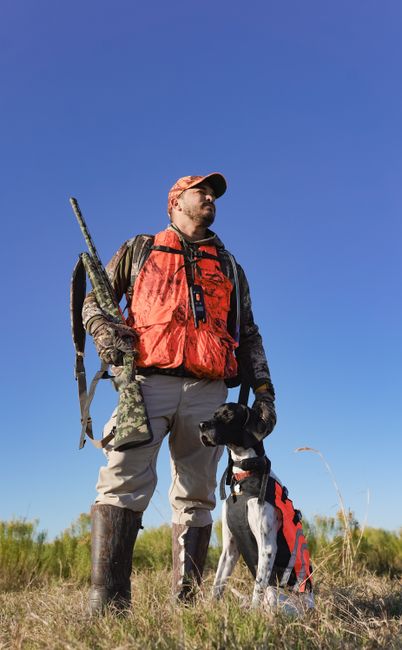
Most states require fluorescent orange during firearm seasons, and some also accept fluorescent pink. Requirements range from Pennsylvania’s 250 square inches on the head, chest and back to Colorado’s 500 square inches above the waist plus a head covering, so check your state’s rule and buy enough. Solid orange is the safe default; a few states allow orange camo only if enough of it is orange. Wear it over your outermost layer, and add an orange hat.
The Allen Company Blaze Orange Hunting Vest is the simple, budget option: quiet polyester, no zippers, an adjustable hook-and-loop closure, sized to fit over a jacket from a 26- to a 60-inch chest, in adult and child versions.
Check the Allen blaze orange vest price on Amazon
Binoculars and rangefinders
Good optics are safety gear: they let you identify game and see what’s behind it without pointing a firearm at anything. A 10×42 binocular is the classic all-around choice for woods and fields. The Vortex Diamondback HD 10×42 weighs 21.3 oz, focuses as close as 5 feet, is waterproof, fogproof and tripod adaptable, comes with a GlassPak harness and lists at about $330 at Vortex, with the maker’s unlimited, unconditional lifetime warranty.
A laser rangefinder tells you how far away an animal is, which helps you stay within your effective range. The Vortex Impact 1000 ranges up to 500 yards on a deer (1,000 on reflective targets), has an angle-compensated mode for steep uphill or downhill shots and from tree stands, weighs 5.5 oz and lists at about $270.
Check the Vortex Diamondback HD price on Amazon
Boots and socks
Two kinds of boots cover most hunting. Laced leather or synthetic boots are best for walking and hills; knee-high rubber boots are best for wet ground, swamps and early-morning dew, and many hunters like them for keeping scent down. Choose insulation for how much you’ll sit versus walk: lighter (around 400 g) for active hunts and milder weather, heavier for long, cold sits. Wear wool or synthetic socks, never cotton, and pack a spare pair.
The Irish Setter VaprTrek 8″ is a lightweight hunting boot with a full-grain leather and nylon upper, UltraDry waterproofing and 400 g insulation (other versions go to 800 g and 1,200 g), about $200 at Irish Setter. The LaCrosse AlphaBurly Aero 17″ is a waterproof, scent-free knee boot of hand-laid rubber over a 5 mm neoprene core, with an adjustable neoprene gusset, a kick-off heel plate and 800 g of Solarcore insulation made with aerogel; about $240 on Amazon (seen October 2026). It is a warm boot for cold sits; on mild early-season hunts an uninsulated or lighter boot is cooler.
Check the Irish Setter VaprTrek price on Amazon
Layers, warmers and tick protection
The CDC warns that hypothermia can happen even above 40°F if you’re chilled by rain, sweat or water. Layer up: a wicking base layer, an insulating middle layer and a wind- and waterproof shell, opened on the walk in so you don’t sweat, closed at the stand. The Smartwool Classic Thermal Merino Base Layer Crew is a midweight, 100% merino top with flatlock seams (about $100 to $115). Add HotHands hand warmers (air-activated, up to 10 hours of heat) for long sits.
Early seasons mean ticks. The CDC recommends treating clothing and gear with 0.5% permethrin, using an EPA-registered repellent on skin and checking for ticks after every outing. Sawyer Permethrin fabric treatment comes in a 24 oz trigger spray (about $18 at Sawyer); the maker says one treatment lasts 6 weeks or 6 washes. Spray clothing outdoors and let it dry before wearing, and follow the label.
Check the Sawyer Permethrin price on Amazon
Pack, headlamp, first aid and hearing protection
A day pack carries the things that keep a small problem from becoming a big one. The ALPS OutdoorZ Pathfinder is a 44-liter (2,700 cubic inch) convertible pack that works as a waist pack for short hunts and unrolls into a daypack, with a padded waist belt, shoulder harness and lashing straps for hauling gear. Inside: the Black Diamond Spot 400 headlamp (400 lumens, a red night-vision mode that’s kinder to your eyes in the dark, about $60) for walking in before dawn; and a first-aid kit like the Adventure Medical Kits Mountain Series Hiker, which includes a trauma pad and elastic bandage for severe bleeding plus a wilderness first aid guide (about $34).
Pack hearing protection too. NIOSH recommends that impulse noise not exceed 140 dB peak, and its measurements show common firearms usually exceed that, even for one shot. Foam earplugs are cheap; electronic earmuffs let you hear normal sounds while blocking loud ones. Add a phone, a whistle, water, snacks and a spare dry layer.
Check the Adventure Medical Kits Hiker price on Amazon
Recovery gear for after the hunt
Wet boots in the morning ruin a hunt, so a dryer like the DryGuy DX (four ports, heat or no-heat, 1–3 hours) earns its spot by the door. After a day in heavy boots, many hunters slip into OOFOS OOahh recovery slides (about $60), and a Theragun Mini is handy for legs and back after a long drag or a steep pack-out. These are about comfort, not treatment. See our recovery shoes guide, massage gun guide and recovery tools guide.
How to choose hunting gear
- Safety first: buy the harness and the orange before anything else, and make sure the harness fits your weight with your hunting clothes on.
- Match insulation to activity: sitting hunts need much warmer boots and layers than walking hunts; layers beat one big coat.
- Break boots in on walks and preseason hikes, never on opening day.
- Check your state’s rules for orange (square inches, hat, pink) before you buy.
- Buy optics you’ll carry: a lighter binocular you always have beats a heavy one left in the truck.
Back to our hunting guide, or read our hunting laws and safety rules and hunter education pages. For more gear, browse Recovery & Regeneration and Training & Performance.
Hunting gear questions
What gear does a beginner hunter need?
Start with safety and comfort: blaze orange that meets your state’s rules, a full-body harness if you’ll hunt from a stand, boots and layers for the weather, a headlamp, a small first-aid kit, hearing protection, water and your license and tags. Binoculars are the best next purchase.
Do tree stand harnesses expire?
Follow the maker’s instructions for inspection and replacement, inspect the harness and straps before every season and every use, and stop using any harness that has held a fall or shows wear. When in doubt, replace it.
How many grams of insulation do hunting boots need?
It depends on how much you move. Around 400 g suits active hunting and cool fall days; long sits in a stand in cold weather call for much more (makers sell 800 g to 1,600 g versions). Good wool socks and a dry spare pair matter as much as the boot.
Is permethrin safe to use on hunting clothes?
The CDC recommends 0.5% permethrin for treating clothing and gear (not skin) to protect against ticks. Apply it outdoors, let clothes dry completely before wearing and follow the product label.
Why don’t you list firearms or bows?
This page focuses on the safety, comfort and recovery gear that every hunter needs. Choosing a firearm or bow is best done in person with a hunter education instructor or an experienced dealer, under your state’s laws.