This article contains affiliate links: if you buy through them we may earn a commission, at no extra cost to you. Learn more.
The cross-country racer weighing out oats at 5 a.m. before a 90-minute race. The downhill rider at the bike park eating a burrito between lift laps. The high school team sharing bagels and bananas under the team tent. The trail rider who meant to eat on the ride and found the bar still in the pack at the car, legs empty and head pounding. Mountain bike nutrition isn’t complicated, but it matters: hard climbs run on carbohydrate, crashes and lifting need protein and strong bones, and riding through the woods for hours burns a lot more than most people eat. This page covers what riders eat every day and which supplements have evidence and third-party testing.
General information, not medical or dietary advice. Talk to your doctor or a registered dietitian (ideally a board-certified sports dietitian) before starting any supplement, especially if you have a health condition, take medication, are pregnant or are under 18. For fueling during rides and races, see ride day and race day; for the sport as a whole, the mountain biking hub.
Carbohydrate: match it to your riding
The joint position of the American College of Sports Medicine (ACSM), the Academy of Nutrition and Dietetics and Dietitians of Canada sets daily carbohydrate targets by training load. Mountain bike disciplines land in different rows:
| Training load | Mountain bike example | Carbs per kg per day | 70 kg rider |
|---|---|---|---|
| Light | Skills sessions, pump track, easy short rides | 3–5 g | 210–350 g |
| Moderate | About 1 hour a day: after-work trail loops, gym + ride days | 5–7 g | 350–490 g |
| High | 1–3 hours a day, moderate to hard: XC training, big trail days | 6–10 g | 420–700 g |
| Very high | 4–5+ hours a day: marathon training, stage races, bike trips | 8–12 g | 560–840 g |
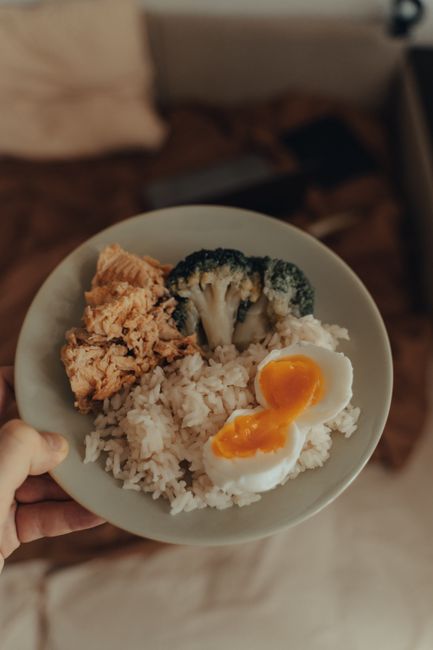
That means real portions of rice, pasta, oats, potatoes, bread, tortillas and fruit, plus sports foods on long days. Gravity riders spend less time pedaling but long days at the bike park and lifting sessions still add up; eat for the day you’re actually having.
Protein, iron, calcium and vitamin D
- Protein: ACSM suggests 1.2–2.0 g per kg of body weight a day, spread across meals, and about 15–25 g after hard sessions. Riders who lift and gravity riders building muscle tend toward the higher end. Most people get there with food: eggs, dairy, meat, fish, beans, tofu.
- Iron: female athletes have higher needs, and low intake, low energy intake and blood loss can lower iron status (ACSM). Fatigue that won’t go away is a reason to ask your doctor for a blood test. Don’t take iron “just in case”: UEFA’s expert group warns that routine iron supplementation can do more harm than good.
- Calcium and vitamin D: both support bone, and pedaling is low-impact. A 2025 review found cyclists and swimmers at higher risk of low bone density. Dairy or fortified alternatives, leafy greens, fish and some sun cover most needs; ask your doctor before supplementing vitamin D. Strength training and some jumping help bone too (see mountain bike training).
The big risk: not eating enough
Climbing rewards light riders, and long rides burn more than most people realize, so under-fueling is common. The International Olympic Committee’s 2023 consensus on Relative Energy Deficiency in Sport (REDs) describes how not eating enough for your training can affect hormones, periods, bone health, immunity, mood and performance, in men and women. Warning signs: missed or irregular periods, stress fractures, constant fatigue, frequent illness, falling performance despite training, low libido, mood changes, or thinking about food and weight all the time. If that sounds familiar, see a sports medicine doctor and a sports dietitian. Fuel the riding first.
Supplements: what has evidence, and the rules
The IOC consensus statement on dietary supplements (2018) and UEFA’s expert group (2021) agree: food first; a few supplements have good evidence; many don’t; and contamination is a real risk. A study cited by UEFA found about 15% of 634 supplements from 13 countries contained prohormones not on the label. Racers who can be drug-tested are responsible for whatever is in their sample. Third-party programs like NSF Certified for Sport and Informed Sport lower that risk but don’t remove it.
Sports foods: gels, drink mixes, bars
For most mountain bikers the most useful “supplements” are sports foods that make it easy to eat on the move, such as Maurten Gel 100 (25 g carbs; Informed Sport, the maker says) and drink mixes like Skratch Labs. Both the IOC and UEFA statements list sports foods as a separate, useful category. Compare them in our best energy gels and best electrolyte powder guides.
Caffeine
UEFA’s experts list caffeine among the supplements with stronger evidence; many riders use coffee or caffeinated gels. Responses vary, and side effects include anxiety, nausea, poor sleep, tremor and a racing heart, which isn’t what you want before a technical descent. It isn’t for people with heart problems, during pregnancy or for anyone sensitive to it, and the American Academy of Pediatrics says energy drinks and stimulants have no place in kids’ and teens’ diets.
Creatine
One of the most studied supplements, with good evidence for repeated sprints and strength training, so riders who lift, short-track racers and gravity riders often ask about it. UEFA notes it typically adds 1–2 kg of body mass, which XC climbers may not want. Thorne Creatine is NSF Certified for Sport. The AAP recommends against creatine for athletes under 18, which covers NICA racers.
Protein powder and multivitamins
Convenient, not necessary. Thorne Whey Protein Isolate (21 g protein per serving) and the Klean Athlete Klean Multivitamin are both NSF Certified for Sport. A multivitamin can fill gaps in a restricted diet; it doesn’t replace food or a blood test for a suspected deficiency. Beta-alanine and nitrate (beetroot) also appear in the IOC statement, but UEFA’s experts judged their evidence weaker.
| Product | What it is | Third-party testing | About per serving |
|---|---|---|---|
| Thorne Whey Protein Isolate | 21 g whey protein | NSF Certified for Sport | $2.17 ($65 / 30) |
| Thorne Creatine | 5 g creatine monohydrate | NSF Certified for Sport | $0.49 ($44 / 90) |
| Klean Multivitamin | Multivitamin, no iron listed | NSF Certified for Sport | $1.53 (about $46 / 30) |
| Maurten Gel 100 | 25 g carbohydrate gel | Informed Sport (maker says) | $3.75 ($45 / 12) |
| Skratch Labs Hydration Sport Drink Mix | About 19–20 g carbs, 400 mg sodium per scoop | NSF Certified for Sport per the maker (not found in NSF’s database when we checked) | $1.20 ($23.95 / 20) |
Prices change often; these are what we saw in October 2026. Follow the label, and talk to your doctor or a dietitian before adding supplements.
Thorne Whey Protein Isolate
- 21 g protein per serving
- 30 servings, about $65
- NSF Certified for Sport
Thorne Creatine
- 5 g creatine monohydrate
- 90 servings, about $44
- NSF Certified for Sport
Klean Athlete Klean Multivitamin
- 2 tablets per serving
- 1,000 IU vitamin D3
- NSF Certified for Sport
Maurten Gel 100
- 25 g carbs per gel
- Glucose:fructose 1:0.8
- Box of 12, about $45
A day of eating for a mountain biker
- Breakfast (2–3 hours before a big ride): oatmeal with banana, honey and yogurt, or eggs on toast with fruit.
- On the ride: drink mix in the pack, a gel or bar every 20–30 minutes on long rides, real food early.
- After: a recovery meal with carbs and 15–25 g protein: a burrito, a rice bowl with chicken or beans, chocolate milk and a sandwich.
- Dinner: pasta, potatoes or rice with fish, meat or tofu and plenty of vegetables.
- Snacks: fruit, nuts, cheese, yogurt, trail mix.
These are examples, not a meal plan. See also mountain bike recovery, cycling nutrition for road riders, our best protein powder for athletes, best creatine and best multivitamin for athletes guides, and soccer nutrition to see how team-sport needs differ.
Mountain bike nutrition: FAQs
How many carbs does a mountain biker need a day?
It depends on how much you ride: ACSM guidance runs from 3–5 g per kg of body weight on light days to 6–10 g/kg for 1–3 hours of training a day, and 8–12 g/kg for 4–5 hours or more.
How much protein do mountain bikers need?
About 1.2–2.0 g per kg of body weight a day per ACSM, spread over meals, with 15–25 g after hard sessions. Food covers this for most riders; a powder is a convenience.
Is creatine good for mountain biking?
It has good evidence for sprints and strength training, so riders who lift and gravity riders may be interested. It usually adds 1–2 kg of body mass, which climbers may not want. Pick an NSF Certified for Sport product, follow the label and talk to your doctor first. The AAP recommends against it under 18.
Can high school mountain bikers take supplements?
Food first. The AAP says energy drinks and stimulants have no place in kids’ diets and recommends against creatine under 18. Sports drinks and gels during long rides and races are sports foods, not supplements, and are fine. Talk to a doctor or dietitian about anything else.
Are supplements safe for drug-tested racers?
No supplement is risk-free: one study found about 15% of products contained undeclared prohormones, and racers are responsible for what’s in their sample. NSF Certified for Sport or Informed Sport lowers the risk; check with USADA or your federation if unsure.