This article contains affiliate links: if you buy through them we may earn a commission, at no extra cost to you. Learn more.
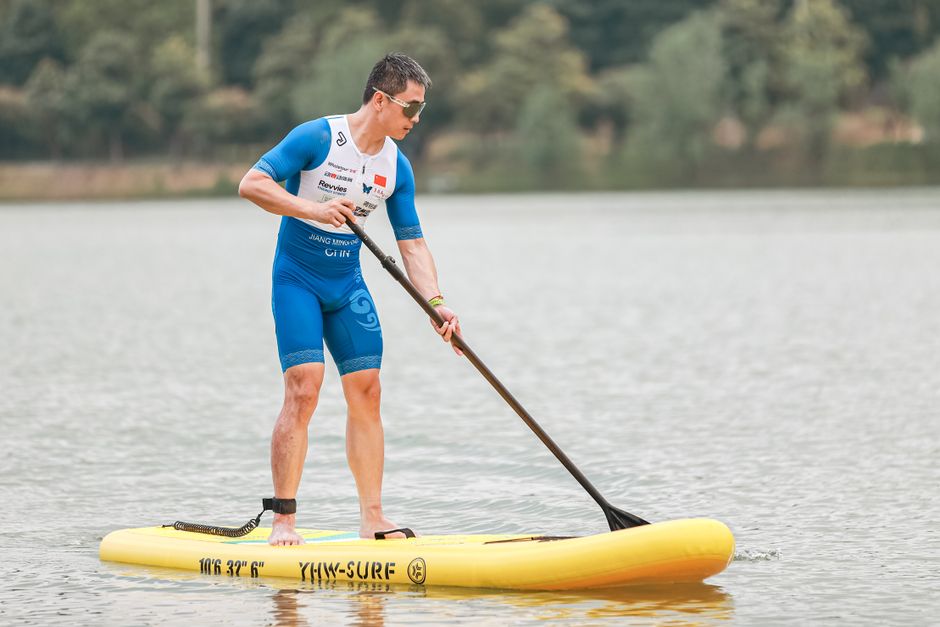
The best paddle days start the night before: you check the wind, pick a route, pack a bottle and a snack, and text a friend where you’re going. The next morning the lake is flat, the coffee’s in the cup holder, and the only decision left is which cove to explore. Race mornings are the same, just louder: a beach full of boards, a buoy course, a start horn. This is our Paddle Day & Race Day guide for stand-up paddleboarders at every level, from a family’s first rental to the 2026 world championships: weather and wind, the float plan, what to carry, hydration, sun and fuel.
General information. Local rules and conditions vary; check with the park, harbor or race organizer. Back to the paddleboarding hub.
Wind and weather planning
Wind is the paddleboarder’s biggest variable. Standing up, your body works like a sail, and a breeze that feels pleasant on the beach can make the trip home slow and exhausting. Before you go:
- Check the forecast for the water, not just the town. The National Weather Service publishes marine forecasts for coasts and big lakes. If a Small Craft Advisory is out, a SUP is a small craft: NWS says any vessel that may be adversely affected should consider itself one, and the thresholds (which vary by region) start at wind speeds no casual paddler should be out in.
- Watch the wind direction. Wind blowing from the land out over the water (offshore) makes the water near shore look calm while it pushes you away from the beach. Many paddlers avoid offshore wind entirely, and paddle into the wind first so the wind helps them home when they’re tired.
- Look at the whole day. Afternoon breezes and thunderstorms are common in summer. Plan the long paddle for the morning.
- On the coast, check tides and currents too. On rivers, check flow levels, and remember the leash rules on our injuries and safety page.
Lightning: the National Athletic Trainers’ Association’s rule is “When Thunder Roars, Go Indoors!” No place outside is safe, and the open water is among the worst. Get off the water at the first thunder and wait 30 minutes after the last thunder before going back out.
The float plan
The Coast Guard’s advice is simple: always leave a float plan with a responsible person. It says where you’re going, who’s with you, what you’re paddling, what safety gear you have, and when you’ll be back, with instructions to call the Coast Guard or local authorities if you don’t check in within a reasonable time. There’s no official form required; the Coast Guard Auxiliary offers a free one at Float Plan Central. For a paddleboard, a text works: “Launching at the north ramp 8 a.m., paddling to the island and back, home by 11, red board, blue life jacket.” Then text again when you’re off the water.
What to carry
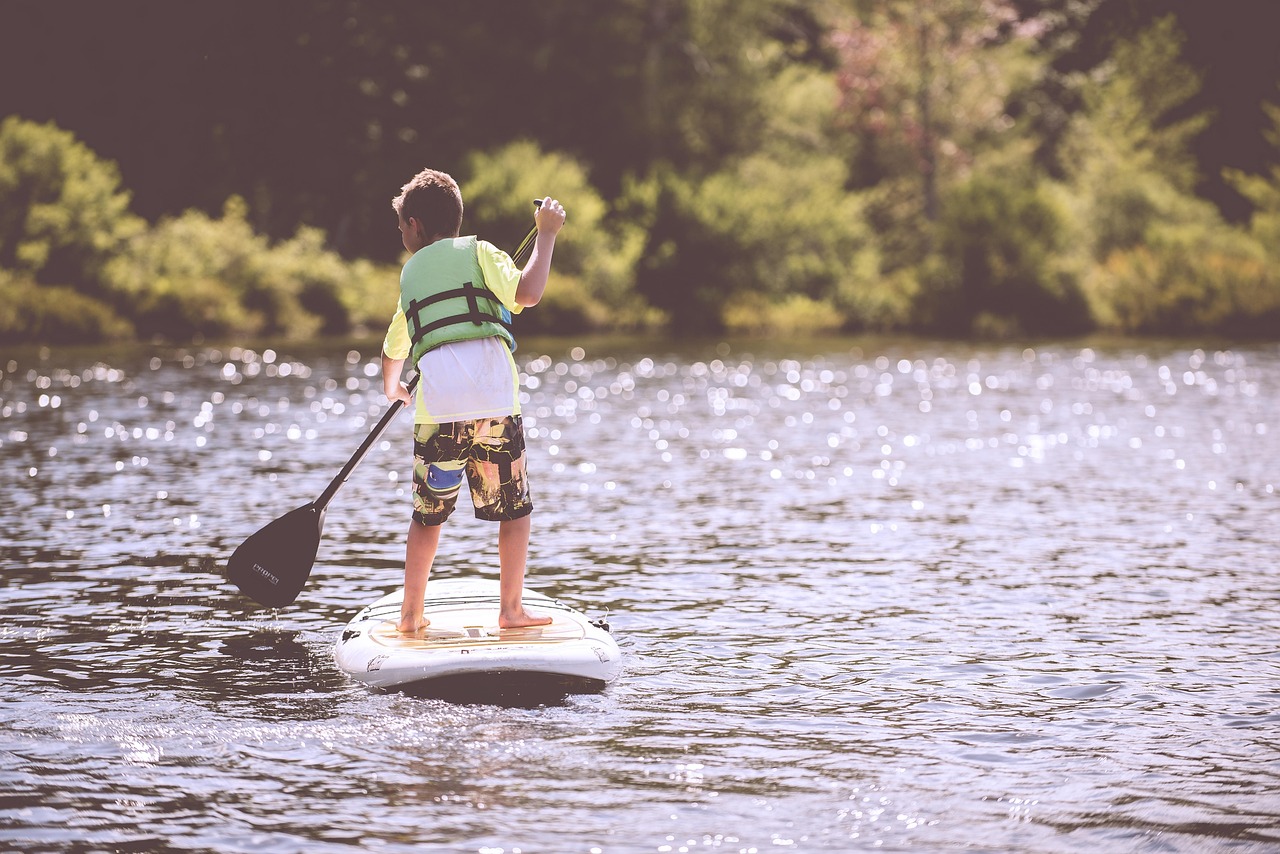
- Life jacket (worn). Outside swimming and surfing areas a SUP is a vessel, so the Coast Guard requires a Coast Guard-approved life jacket for each person, and kids under 13 must wear one.
- Whistle (a sound-producing device is required) and a light if you could be out between sunset and sunrise.
- The right leash for the water: a regular leash on flat water and the ocean, a quick-release leash at the waist on rivers.
- A way to call for help: a phone in a waterproof pouch clipped to you (not the board), and on remote or open water a personal locator beacon. Options are on our SUP wearables page.
- Water, a snack, sunscreen and a hat, in a small deck bag or dry bag.
JOTO Waterproof Phone Pouch (2 pack)
- IPX8 rated
- Fits phones up to 7 in
- Clip it to you, not the board
Skratch Labs Hydration Sport Drink Mix
- 400 mg sodium per serving
- NSF Certified for Sport (maker)
- 20 or 60 servings
Blue Lizard Sport Mineral SPF 50
- Zinc oxide and titanium dioxide
- 80 min water resistant
- 3 fl oz
Hydration: you sweat more than you think
A 2021 study weighed 30 recreational and competitive paddlers before and after their usual sessions (about 68 minutes on average). They lost an average of 0.82 kg, about 1.2% of body weight, and losses were bigger in hotter air, in men, at higher heart rates and in longer sessions. The authors suggest drinking before you go and having a plan to rehydrate.
- Before: the American College of Sports Medicine and the sports dietitians’ joint position suggests about 5 to 10 mL of fluid per kg of body weight in the 2 to 4 hours before exercise. For a 70 kg (154 lb) paddler, that’s roughly 350 to 700 mL.
- During: the National Athletic Trainers’ Association suggests keeping losses under about 2% of body weight, and drinking to thirst when you don’t know your sweat rate. On paddles longer than about an hour, or in heat, carry a bottle on deck. An electrolyte mix such as Skratch Labs or Nuun Sport adds sodium; see our best electrolyte powders guide. Don’t overdrink either.
- Know your number: weigh yourself before and after a paddle, dry, in the same clothes.
Sun and heat
There’s no shade on a paddleboard. The American Academy of Dermatology recommends a broad-spectrum, water-resistant SPF 30 or higher, applied about 15 minutes before you go out, about an ounce for the body, and reapplied every two hours and after swimming or sweating, plus an SPF 30 lip balm. Add a long-sleeve rash guard, a wide-brim hat and polarized sunglasses on a strap. A mineral sunscreen like Blue Lizard Sport SPF 50 is a common choice.
Watch for heat exhaustion: heavy sweating, weakness, dizziness, headache, nausea. Get to shade, cool off in the water with your life jacket on, and drink. Confusion or collapse means heat stroke: call 911 and start cooling right away; NATA says cold-water immersion is the most effective way to cool someone with heat stroke. Cold water is the opposite risk in spring and fall: the National Weather Service calls water 70°F or below cold and says to dress for the water temperature, not the air.
Race day
SUP racing runs from local summer series to the ICF Stand Up Paddling World Championships, which as of the 2026 season are scheduled for Sabaudia, Italy, on October 14 to 18, with world titles in sprint, technical and long-distance racing. Sprints are all-out; technical races add buoy turns and beach starts and finishes; distance races are long, steady efforts at a high heart rate. Race-day basics:
- Eat early. ACSM’s guidance is a carbohydrate-based meal 1 to 4 hours before, familiar and low in fat and fiber. Nothing new on race day.
- Fuel the long ones. For efforts of about 1 to 2.5 hours, sports nutrition guidelines suggest roughly 30 to 60 g of carbohydrate an hour: a drink mix, gels or chews you’ve practiced with. A hydration pack helps if the rules allow it.
- Warm up on the water for 10 to 15 minutes with a few hard pushes, then stay loose and warm before the start.
- Know the course and the rules: buoy order, which side to round, leash and life jacket rules. Race organizers set these, so read the race bulletin.
- Between heats: shade, fluids, a small snack, dry layers if it’s cool.
After the paddle, refuel and rest: see paddleboarding recovery and nutrition. Surfers have their own version of this page: Session Day.
Paddle day and race day: FAQs
How windy is too windy to paddleboard?
It depends on your skill, the wind direction and the water, so there’s no single number. If a Small Craft Advisory is out, stay off. Avoid offshore wind, which pushes you away from shore, and plan to paddle into the wind first so it helps you home.
Do I need a float plan for a short paddle?
The Coast Guard recommends always leaving one with a responsible person. For a short paddle it can be a text: where you’re launching, your route, what your board and life jacket look like, and when you’ll be back. Text again when you’re off the water.
How much water should I bring on a paddleboard?
Paddlers in a 2021 study lost about 1.2% of body weight in roughly an hour. For anything over an hour, or in heat, carry a bottle on deck and drink to thirst; NATA suggests keeping losses under about 2% of body weight.
What should I do if a thunderstorm comes up while I’m paddling?
Head for shore at the first thunder and get indoors or into a fully enclosed vehicle. NATA’s guidance is to wait 30 minutes after the last thunder before going back out.
What should I eat before a SUP race?
A familiar, carbohydrate-based meal 1 to 4 hours before, low in fat and fiber, per ACSM guidance. For long-distance races, practice a drink mix or gels in training so you know what sits well.