This article contains affiliate links: if you buy through them we may earn a commission, at no extra cost to you. Learn more.
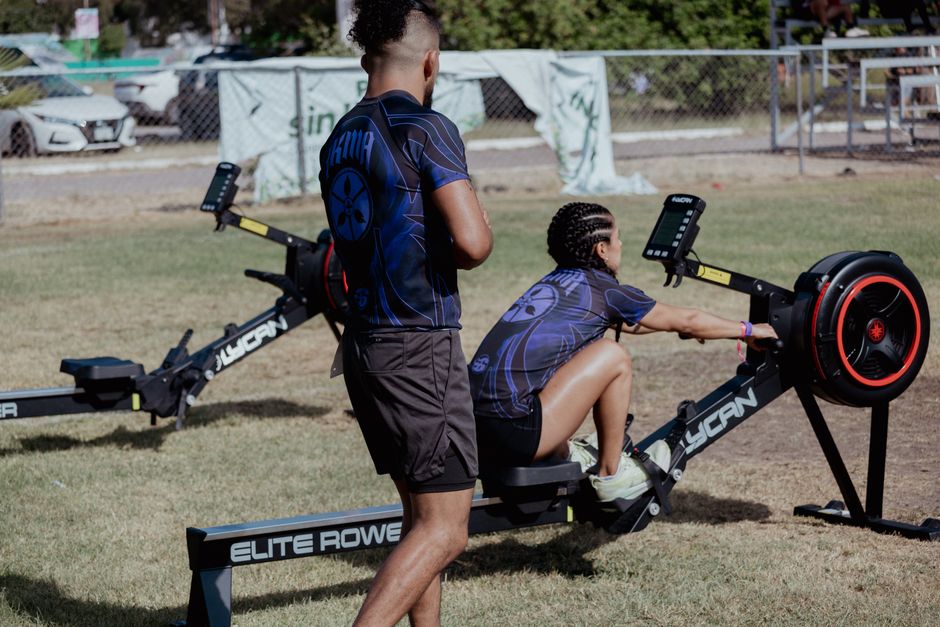
Ask a rower what winter is for and you’ll hear one word: miles. Long, steady pieces on the erg while the river is frozen or too cold to row, a few hard intervals that leave everyone flat on the floor, and lifting sessions in between. Then spring comes, the boats go back in, and all that work has to show up over 2,000 meters. Rowing training is endurance training first, with a lot of strength and a technique you never stop polishing. This page covers erg training zones, technique, strength, and how volume and periodization fit together, for juniors, college crews, masters and indoor rowers.

General information, not a personal training plan. Young rowers should train under a qualified coach; anyone with a heart condition or other health problem should check with a doctor before starting hard training. Back to the rowing hub.
Erg training zones
Most rowing training is set by heart rate or by split (your pace per 500 meters on the erg). Concept2, the maker of the most widely used rowing machine, describes five heart-rate zones as a share of your maximum heart rate:
| Zone (Concept2) | % of max heart rate | What it feels like | Traditional rowing name |
|---|---|---|---|
| 1 Recovery | 50–60% | Very light, easy talking | Easy / recovery paddling |
| 2 Endurance | 60–70% | Steady, can hold a conversation | UT2 (steady state) |
| 3 Aerobic | 70–80% | Tempo, moderately hard | UT1 |
| 4 Anaerobic threshold | 80–90% | Hard breathing, short phrases | AT |
| 5 VO2 max | 90–100% | All-out | TR / AN (race pace and above) |
Concept2 offers 220 minus your age as a starting point for maximum heart rate but admits it isn’t exact; a coach-led test gives better numbers. Rowing has long used its own names for the bands, from UT2 (“utilization 2”, long steady work) up to AT, TR and AN, and clubs draw the lines a little differently, so ask your coach which numbers your program uses. A chest strap such as the Polar H10 pairs with the Concept2 PM5 monitor over Bluetooth or ANT+, and Concept2 calls chest straps the most accurate way to track heart rate. More on devices on our rowing wearables page.
How much easy, how much hard
A 2025 systematic review of elite rowers’ training found weekly volumes from 10 to 31 hours, typically 14–20 hours, and that most elite crews use a “pyramidal” pattern: the most time at low intensity (below the first lactate threshold), less in the middle zone, and the least above threshold. Low-intensity work was always more than half of training, and harder work (zones 2 and 3 in the research model) approached or passed 20% in some phases. In a German study of national-level rowers, about 93–94% of training was low intensity, and adding more top-end work over 11 weeks (“polarized”) was not better than the pyramidal pattern.
The takeaway for everyone else: most of your rowing should feel easy, at a low stroke rate with good technique, and the hard sessions should be few and truly hard. A high-school or masters rower on 4–6 sessions a week can follow the same idea at a fraction of the volume. Remember that long, heavy erg pieces are also where back and rib trouble starts (see rowing injuries), so build them up gradually.
Technique: legs, body, arms
Every stroke has two parts: the drive, where you work, and the recovery, where you slide back up for the next one. Concept2’s technique guide puts the sequence simply:
- Catch: shins vertical (or as close as comfortable), arms long, body leaning slightly forward from the hips.
- Drive: push with the legs first, then swing the back through vertical, then finish with the arm pull.
- Finish: legs flat, body leaning back slightly, handle drawn in to the lower ribs.
- Recovery: reverse it: arms away, hips fold forward, then knees bend and the seat slides up.
Common mistakes are opening the back before the legs have pushed, pulling hard with the arms early, and rushing up the slide on the recovery. On the water you add balance, blade work and timing with a crew, which is why coaches spend so much time on drills at low rates. On the erg, keep the damper sensible: Concept2 recommends 3–5 for most workouts, notes that a high damper isn’t “harder rowing” (the monitor measures your work either way), and warns that very high settings tire the muscles before the heart and lungs and may lead to injury.
Strength training for rowers
Rowing is a power-endurance sport: every stroke is a leg press and a pull. Most programs lift two to three times a week in the off-season and less in racing season. Good choices cover the legs and hips (squats, deadlift variations, lunges), the back and pulling muscles (rows, pull-ups), the core (planks, anti-rotation work) and the hips and upper back for posture. A few points matter especially for rowers:
- Technique before load. Studies of college rowers have linked free-weight training to back pain, so learn the lifts with a coach and add weight slowly.
- Don’t pile lifting on top of long heavy erg weeks without lowering something else; total load is what drives back and rib injuries.
- Juniors: the American Academy of Pediatrics supports supervised, technique-first resistance training for children and teens. Light bands such as the Fit Simplify Loop Bands are an easy start for hips and shoulders at home.
Volume and periodization through the year
Most rowing years have two seasons: fall head races (long processional races against the clock) and spring and summer sprint racing over 2,000 meters. A typical plan, adapted by your coach:
- Fall: back on the water, technique, steady mileage, head races.
- Winter base: the most volume, mostly easy, much of it on the erg; heaviest lifting block. This is also peak season for rib stress injuries and back pain, so watch the long, heavy pieces and listen to early warning signs.
- Late winter to spring: more threshold and race-pace work, less lifting volume, more water time and racing starts.
- Racing season: shorter, sharper sessions, a taper before big regattas.
- Break: a few easy weeks after the last race, with other sports.
Build volume gradually, plan an easier week every few weeks, and give hands time to toughen after a break. The elite review linked flexible seasonal patterns, rather than one fixed recipe, with better improvement. For young athletes, the AAP also recommends one to two days off a week from organized sport.
Rowers’ training gear
The Concept2 RowErg is the standard erg in boathouses and gyms, and its PM5 monitor gives the comparable splits that college and national-team selection often use. A heart-rate strap turns the zone table above into something you can actually follow, and a foam roller like the TriggerPoint GRID 1.0 is a cheap warm-up and cool-down tool. Prices change often; these are what we saw in October 2026.
Concept2 RowErg (PM5)
- PM5 monitor, Bluetooth + ANT+
- Separates in two for storage
- About $990
Fit Simplify Loop Bands
- Set of 5, extra light to extra heavy
- 12 x 2 in natural latex
- About $16
TriggerPoint GRID 1.0
- 13 in, hollow core
- Multi-density surface
- About $40
Keep going with rowing recovery, rowing nutrition, our guides to VO2 max training and the best heart rate monitors, or see how another endurance sport trains on our cycling training page.
Rowing training: FAQs
What is UT2 in rowing?
UT2 is rowing’s name for long, steady, easy aerobic work, the low-intensity zone where most of a rower’s training happens. It roughly matches Concept2’s endurance zone, about 60–70% of maximum heart rate. You should be able to talk in short sentences.
How many hours a week do elite rowers train?
A 2025 systematic review found 10 to 31 hours a week, typically 14–20, most of it at low intensity. Juniors, college walk-ons and masters train far less, but the same “mostly easy, a little hard” pattern applies.
What damper setting should I use on a Concept2?
Concept2 suggests 3–5 for most workouts. A higher damper doesn’t make the workout count more; it changes the feel, tires the muscles sooner and, the maker warns, may raise injury risk.
What is the correct rowing stroke order?
On the drive: legs, then body, then arms. On the recovery: arms, then body, then legs. Most technique faults come from mixing up that order.
Should rowers lift weights?
Yes, most programs include strength training, especially in the off-season. Learn the lifts with a qualified coach, add load gradually and balance it against erg volume, since total load drives back and rib injuries in rowers.